Azuma Kofun: A Late-Sixth-Century Burial Mound in Japan
Site at a Glance
- Rating
- 4
- Popularity
- Very Low
- Country
- Japan
- Primary era
- Medieval
- Eras represented
- Medieval
- Civilizations
- Yamato
- Site type
- Burial
- Remains
- Burial Mound
On this page9 sections
History
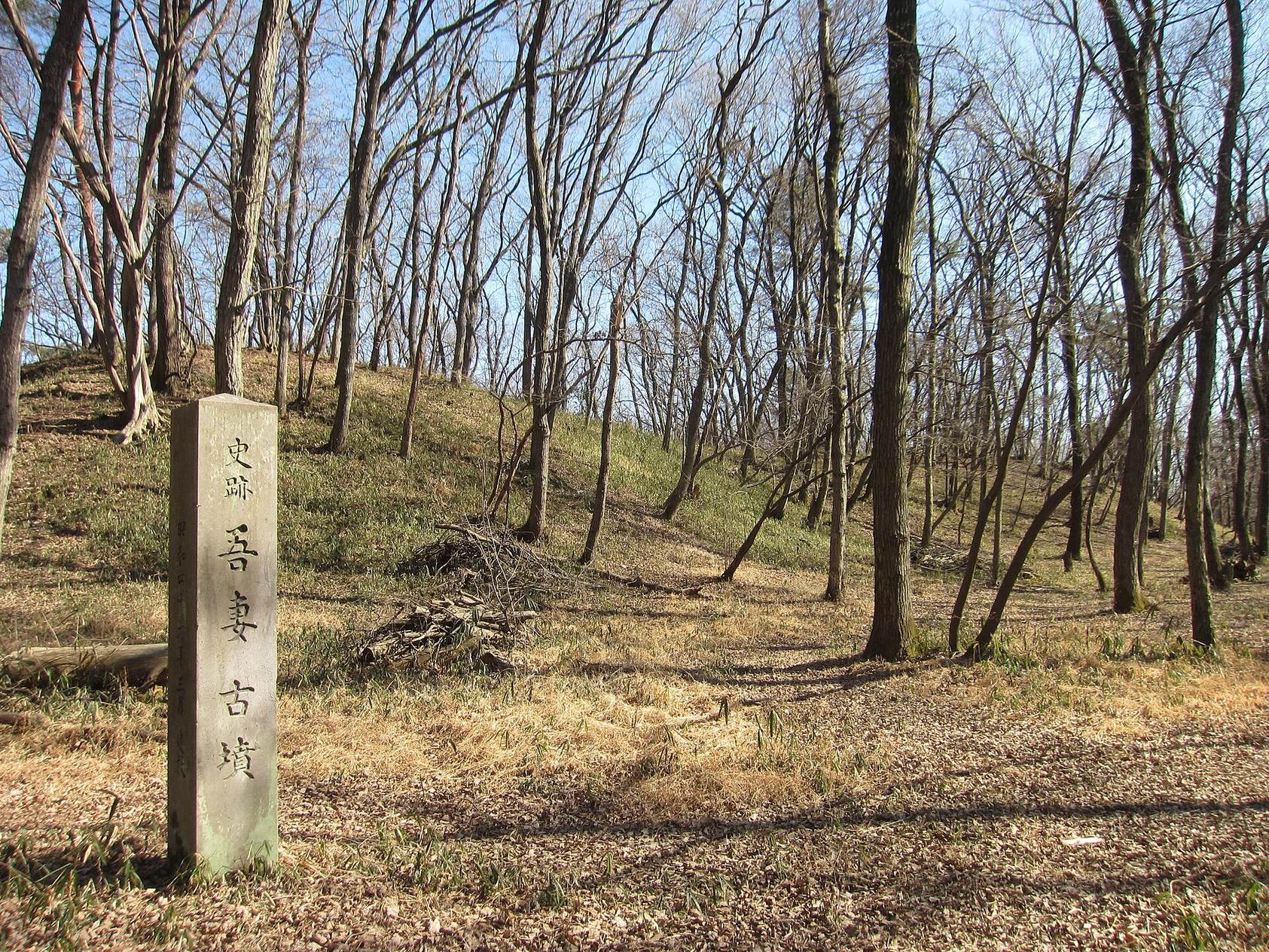
Azuma Kofun is a late-sixth-century Japanese burial mound in Mibu, Tochigi, Japan, built during the Kofun period, an era of large earthen tombs dating generally from the third to the seventh centuries. It is a keyhole-shaped tomb, combining a rounded rear section with a projecting rectangular front, and is regarded as an important chief’s burial associated with control of the Shimotsuke region.
The Shimotsuke Kofun Group
The mound stands in the Azuma area on the border of Tochigi City and Mibu Town. It forms part of the Iizuka–Kokubunji area of the Shimotsuke Kofun Group, a regional concentration of burial mounds. Its great size, sophisticated stoneworking, and rich burial goods indicate the authority of the person buried there.
Opening and Investigation
A description of the stone chamber was made in 1850, when the chamber was already open. During the early Meiji period, the lord of Mibu Domain removed its capstone for use as a garden stone. He was identified as Torii Tadafumi, although this may have been an erroneous reference to Torii Tadahō. The removal damaged the chamber.
Archaeological investigations carried out during fiscal years 2007 to 2010 established the extent of the mound and clarified the remains of its burial facility. After the 2010 investigation, the chamber was backfilled to preserve it. Azuma Kofun became a National Historic Site on July 22, 1970, and its stone-chamber components were designated Tochigi Prefectural Tangible Cultural Properties on January 31, 2014.
Remains
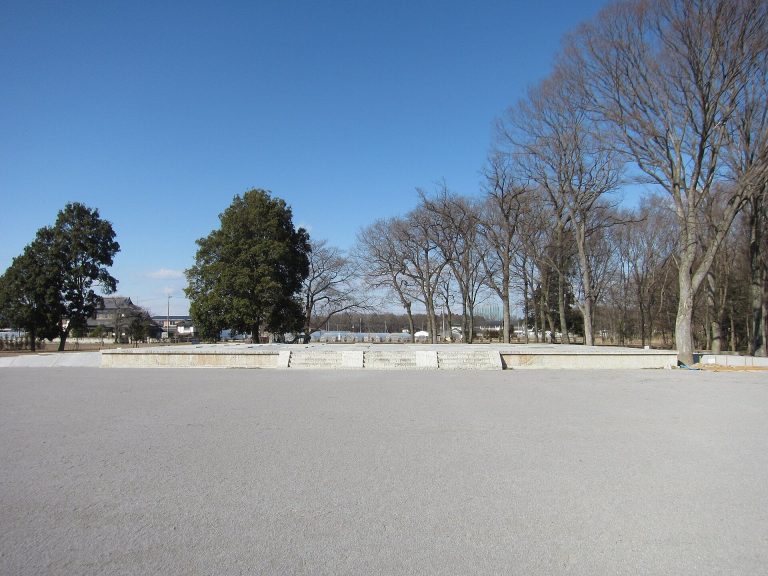
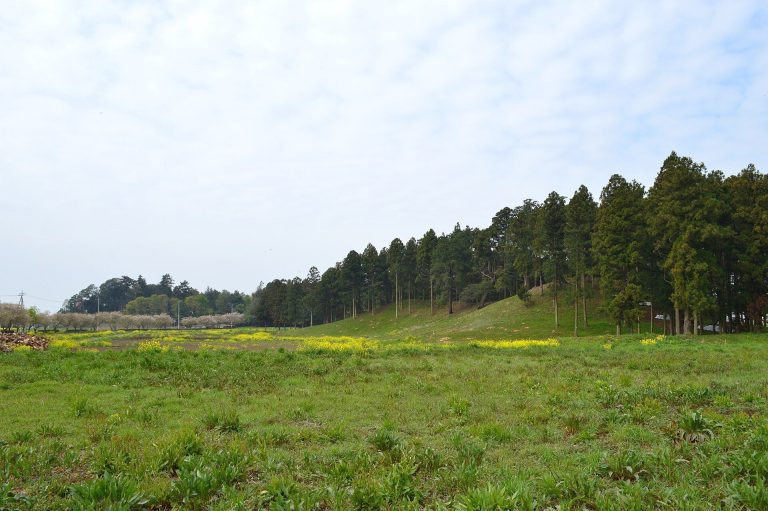
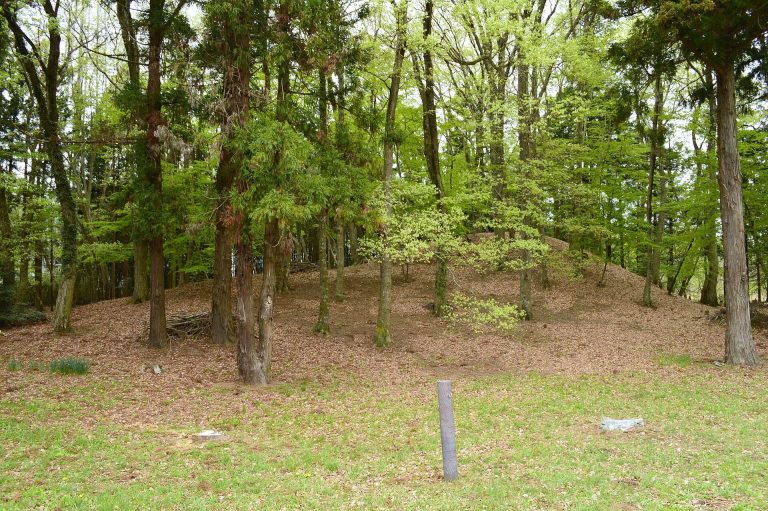
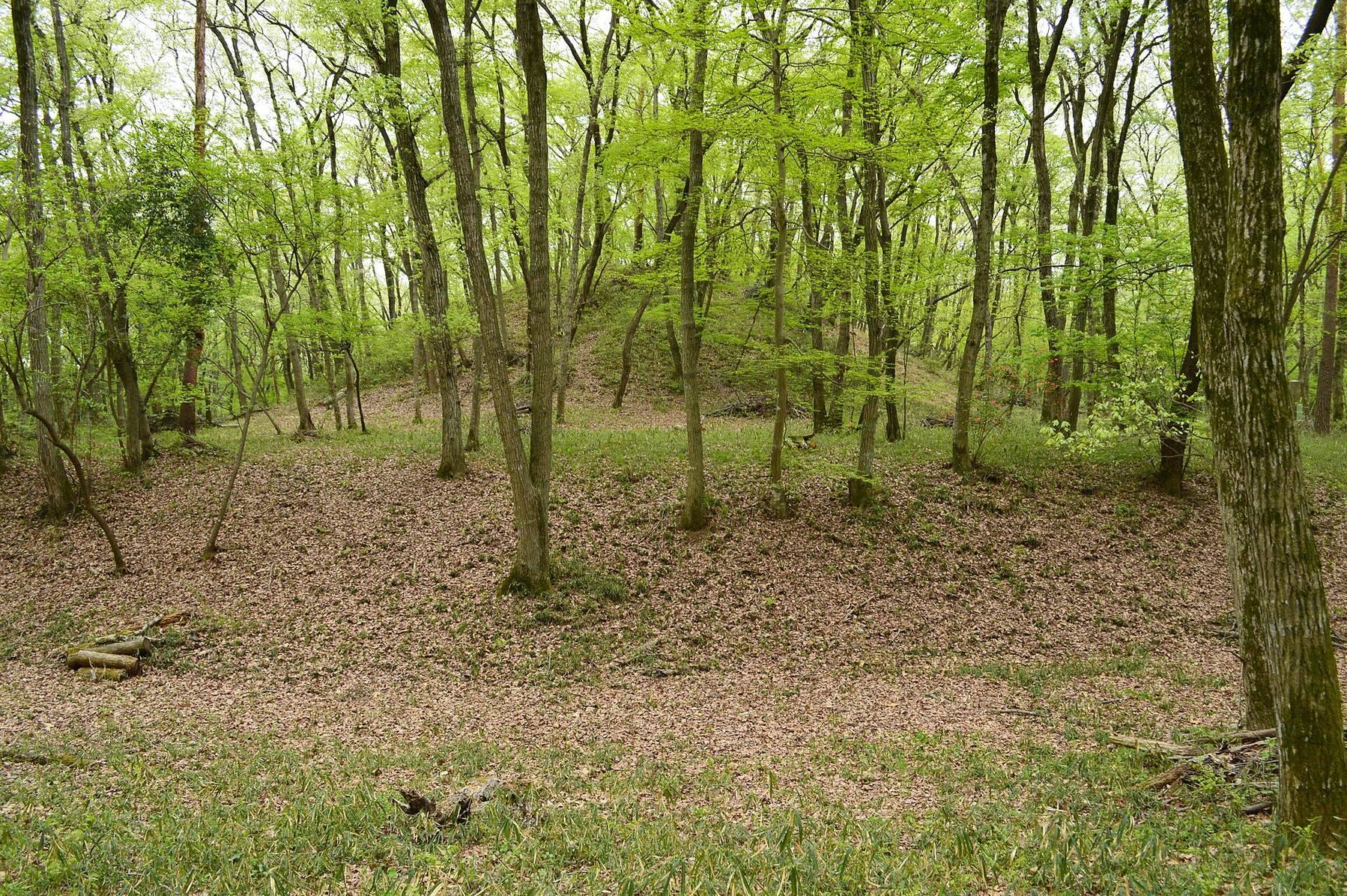
Azuma Kofun is a two-tier keyhole-shaped mound with its front section facing south. Its broad, flat first tier forms a platform-like base characteristic of a Shimotsuke-type tumulus, a regional form defined here by the wide first level beneath the upper mound. The two tiers differ in plan, and the first tier is asymmetrical.
Mound and Moat
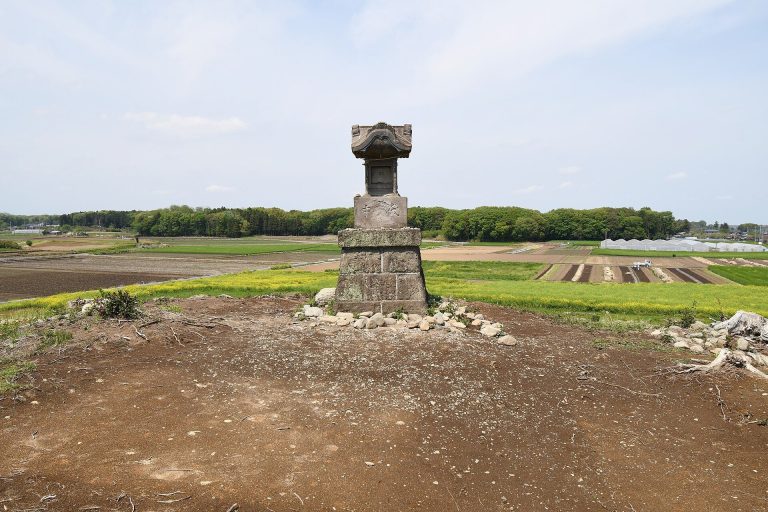
The mound measures 127.85 metres in length, making it the largest kofun in Tochigi Prefecture. Including the surrounding moat, the monument extends for approximately 162 metres. Cylindrical haniwa, clay objects placed on or around burial mounds, covered the mound surface. Among them were trumpet-shaped examples and representational pieces showing houses, shields, quivers, and other forms. Revetment stones were also identified on the mound.
A moat encircles the mound. Its fill contains deposits of Asama B pumice from the 1108 eruption of Mount Asama, showing that the moat had not been completely buried by that date.
Stone Burial Facility
Burial Chamber
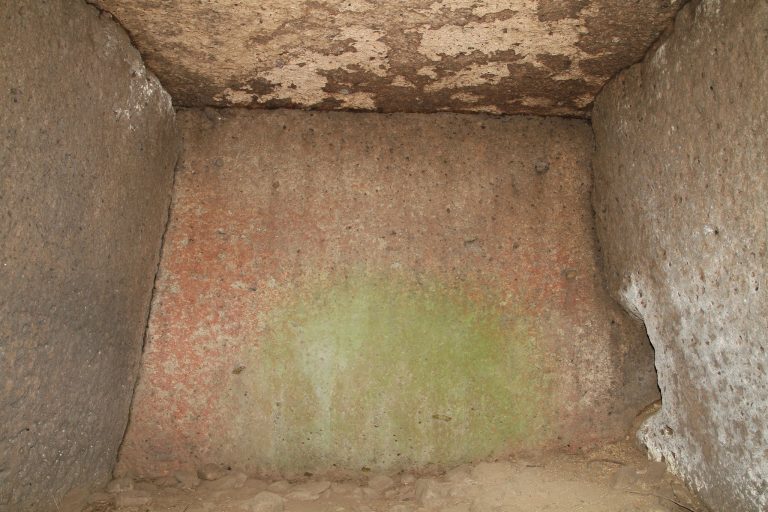
The burial facility lies at the tip of the front section and is a multi-chamber, horizontal-entry stone chamber, meaning that the burial space was reached through a side passage rather than from above. It opened toward the south-southeast. The reconstructed plan includes a burial chamber and a front chamber with a combined length of 8.4 metres. The burial chamber itself measures 2.4 metres in length, 1.7 metres in width, and approximately 2.0 metres in height.
Single blocks of hard green stone with basaltic characteristics formed the rear and side walls of the burial chamber. The use of this material alongside softer tuff is regarded as evidence of advanced stoneworking, described as surpassing that of contemporary examples in Kinai. Red pigment survives on the chamber’s interior surfaces.
Entrance and Transferred Stones
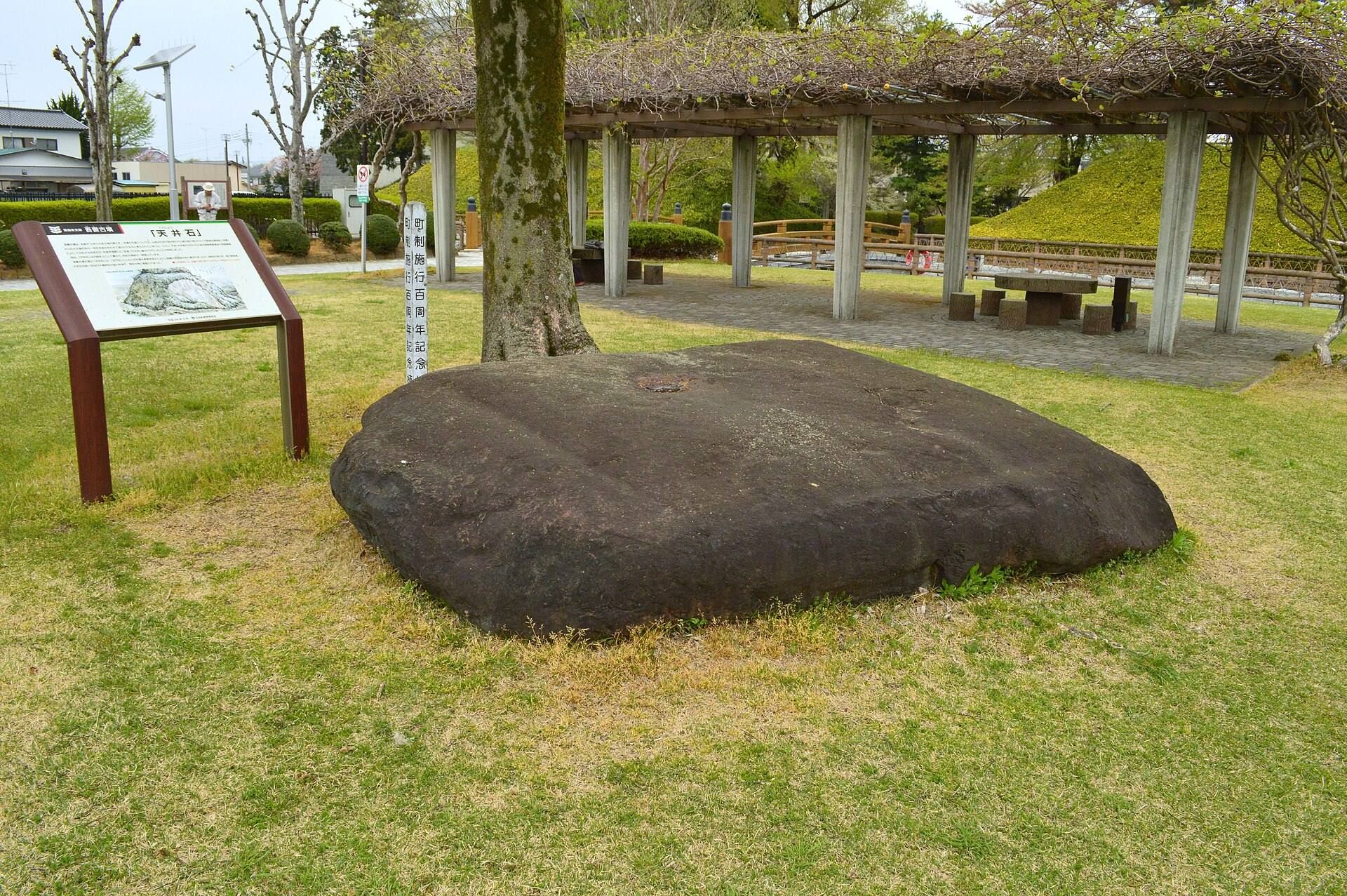
After the chamber was opened, it suffered heavy damage, and only a hollow remains at its original position. Excavation nevertheless located the rear and side walls and established that the stones transferred elsewhere belonged to the same chamber. The removed capstone measures 2.6 metres in length, 3.5 metres in width, and at least 0.8 metres in thickness. U-shaped cuttings along its edges were made to receive the side walls.
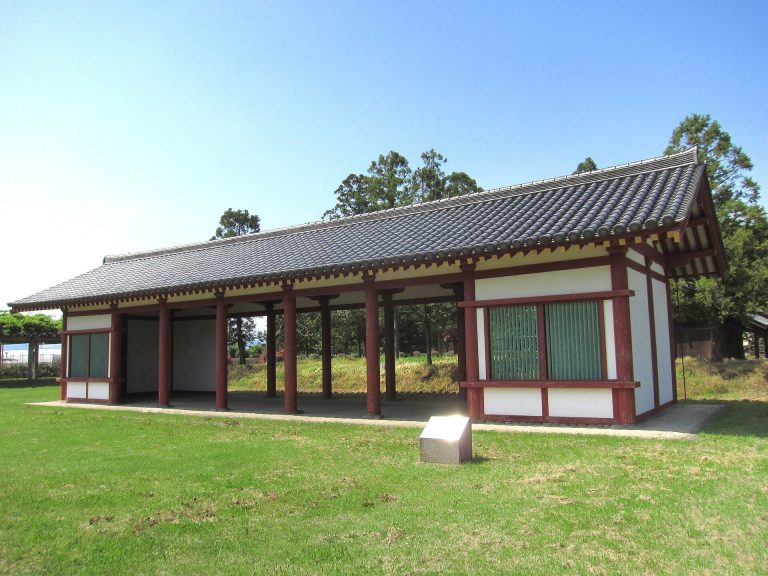
The entrance stone is a single tuff block pierced by a doorway. It measures 2.3 metres vertically, 1.8 metres horizontally, and 0.45 metres in thickness. Cuttings around its upper and side edges received blocking stones. The front chamber was built with river stones laid end-on, while tuff formed the entrance passage. The capstone and entrance stone are displayed at Mibu Castle Ruins Park.
Burial Goods
Excavated objects include small plates from lamellar armor, a silver-mounted knife, gilt-bronze belt fittings, glass beads, and fragments of haniwa. These finds, together with the scale of the mound and the construction of its stone chamber, contribute to the interpretation of Azuma Kofun as a chief’s tomb connected with regional authority. The excavated objects are displayed at the Tochigi Future Creation Foundation Archaeological Cultural Properties Center.