Shimotsuke Kokubun-ji Remains: An Eighth-Century Provincial Buddhist Monastery
Site at a Glance
- Rating
- 3.7
- Popularity
- Very Low
- Country
- Japan
- Primary era
- Medieval
- External website
- Open
- Eras represented
- Medieval
- Civilizations
- Yamato
- Site type
- Religious
- Remains
- Monastery
On this page10 sections
History
Shimotsuke Kokubun-ji Remains in Japan preserve an eighth-century provincial Buddhist monastery established in Shimotsuke Province under Emperor Shomu’s decree. His government promoted Kokubunji, provincial monasteries founded as part of a nationwide religious and political program. The monastery stood in an ancient cultural and political center associated with the Shimotsukeno clan, and its remains are now maintained as a historic-site park.
Foundation and Early Development
Shimotsuke was an ancient province corresponding broadly to present-day Tochigi Prefecture. During the middle of the eighth century, the monastery’s pagoda, Golden Hall, and other buildings were constructed. The complex followed a Tōdai-ji-style plan, modeled on the arrangement associated with Tōdai-ji, in which the principal buildings were organized along a central axis and the central gate and Golden Hall were linked by a cloister.
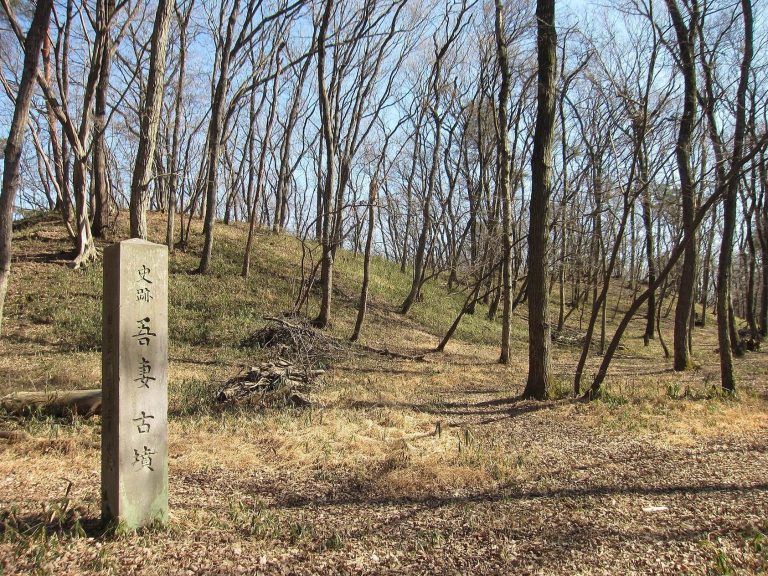
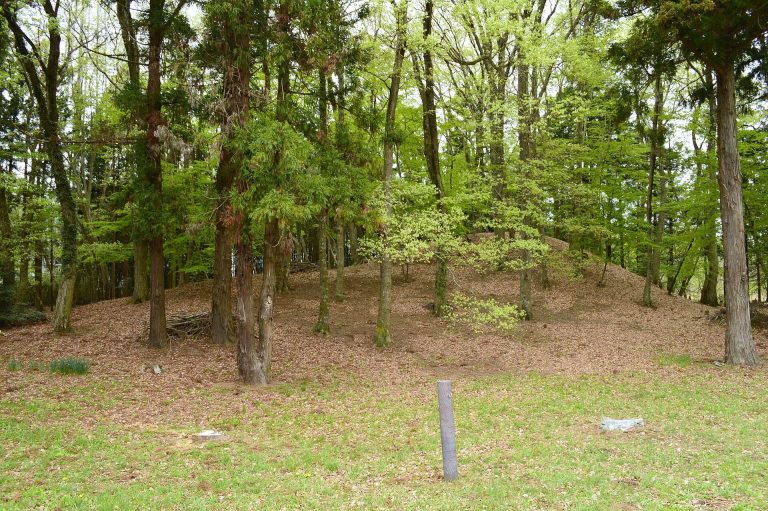
From the late eighth century to the first half of the ninth century, the principal halls and pagoda were completed. The temple precinct was enclosed by a fence built with upright wooden posts. The monastery formed part of a wider political and religious landscape. Large keyhole-shaped burial mounds, ancient Japanese tombs combining a rectangular rear section with a rounded front section, stand in the regional setting at Azuma, Biwazuka, and Marishiten-zuka. Across the Omoigawa River are the remains of the Shimotsuke provincial government office.
Renovation and Decline
During the latter half of the ninth century, the monastery was renovated. Its precinct was reduced in size, and the post-built fence was replaced with an earthen wall. From the tenth century onward, repairs to the principal buildings and the recutting of drainage ditches ceased, marking a period of decline.
The date of the monastery’s final end is unknown. Archaeological evidence indicates that its Buddhist tradition continued until the eleventh or twelfth century. The associated Shimotsuke Kokubun-niji Remains, the site of the provincial nunnery, lie about 600 meters east of the monastery. Kokubun-niji were convents established alongside Kokubunji under the same program. The two sites have been excavated as an east-west pair and are incorporated into Tenpyo-no-Oka Park.
Protection and Presentation
Shimotsuke Kokubun-ji Remains became a National Historic Site on March 3, 1921. The protected area was expanded on March 2, 2005, and again on March 10, 2015. The associated nunnery remains received National Historic Site designation on April 9, 1965, with an additional area protected on July 28, 1977.
Remains
Monastery Precinct
Central Axis and Cloister
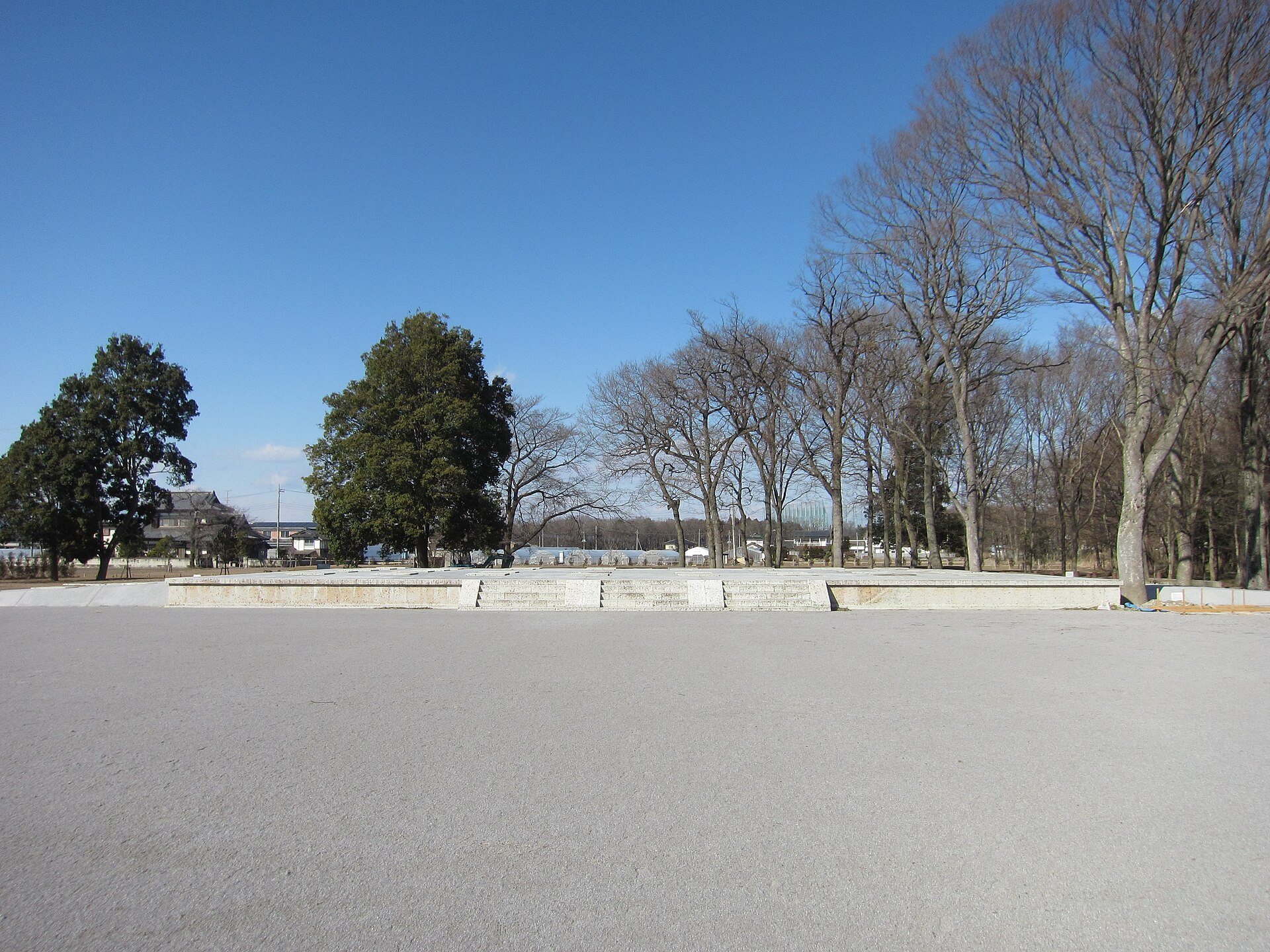
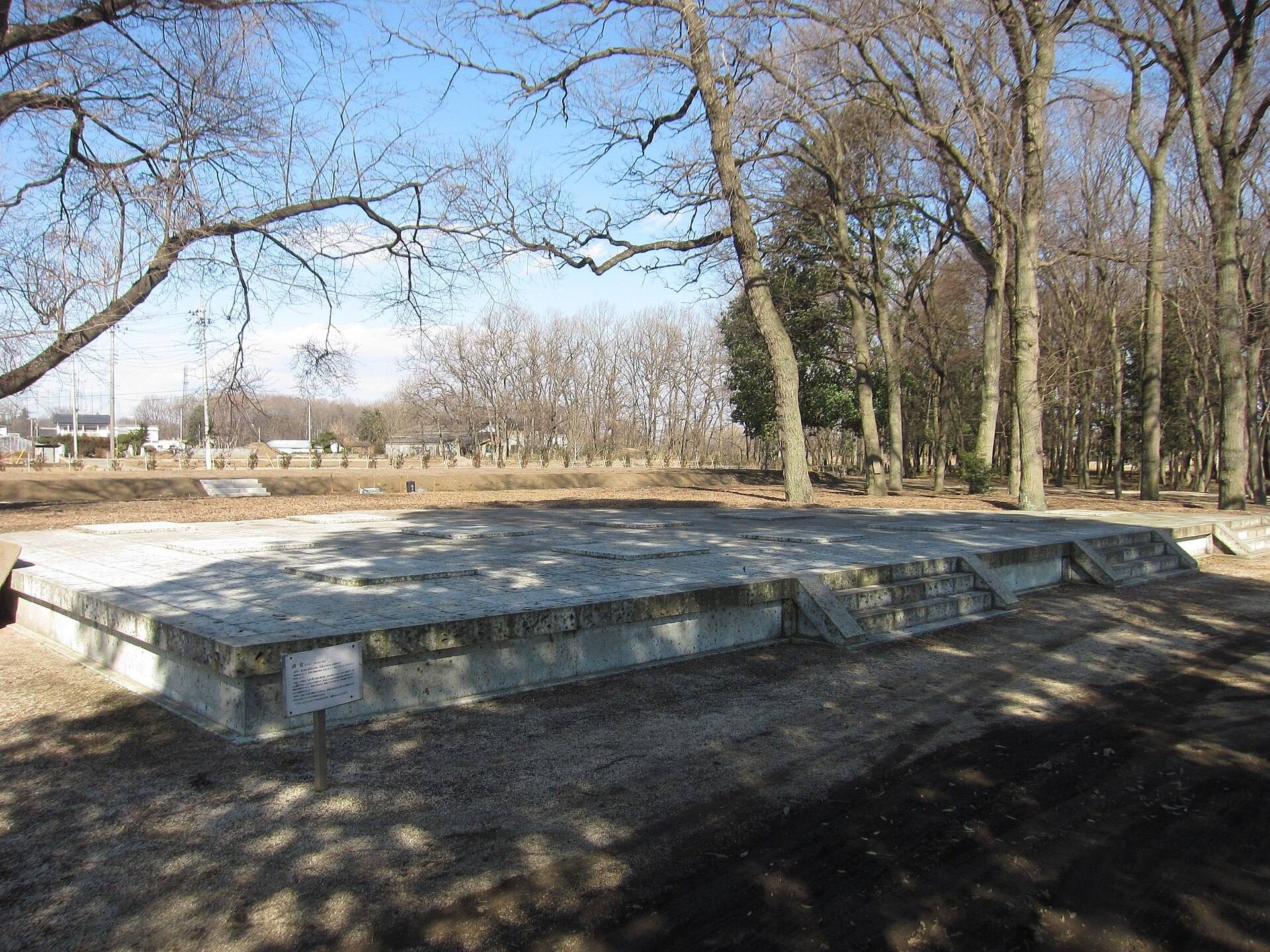
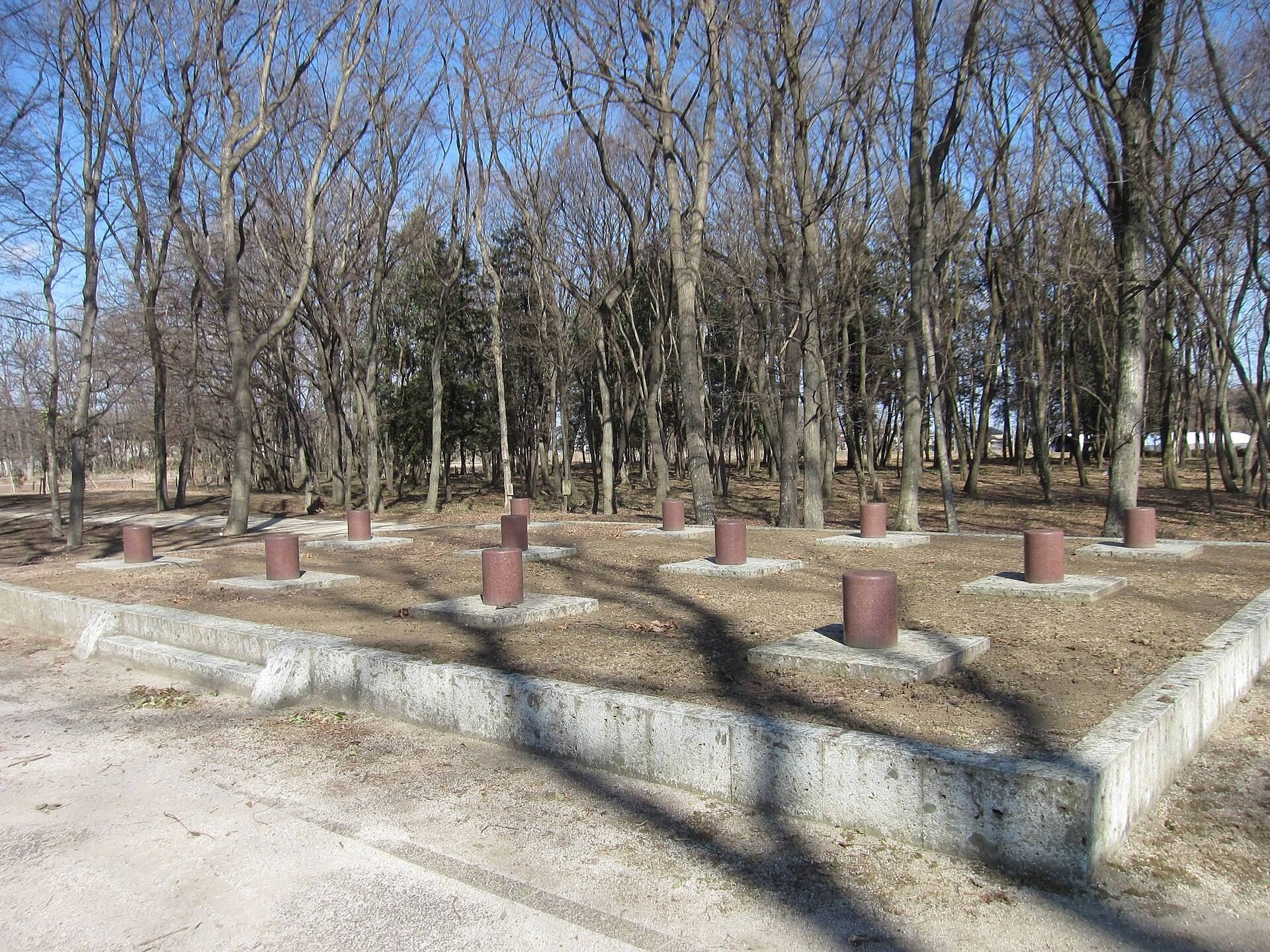
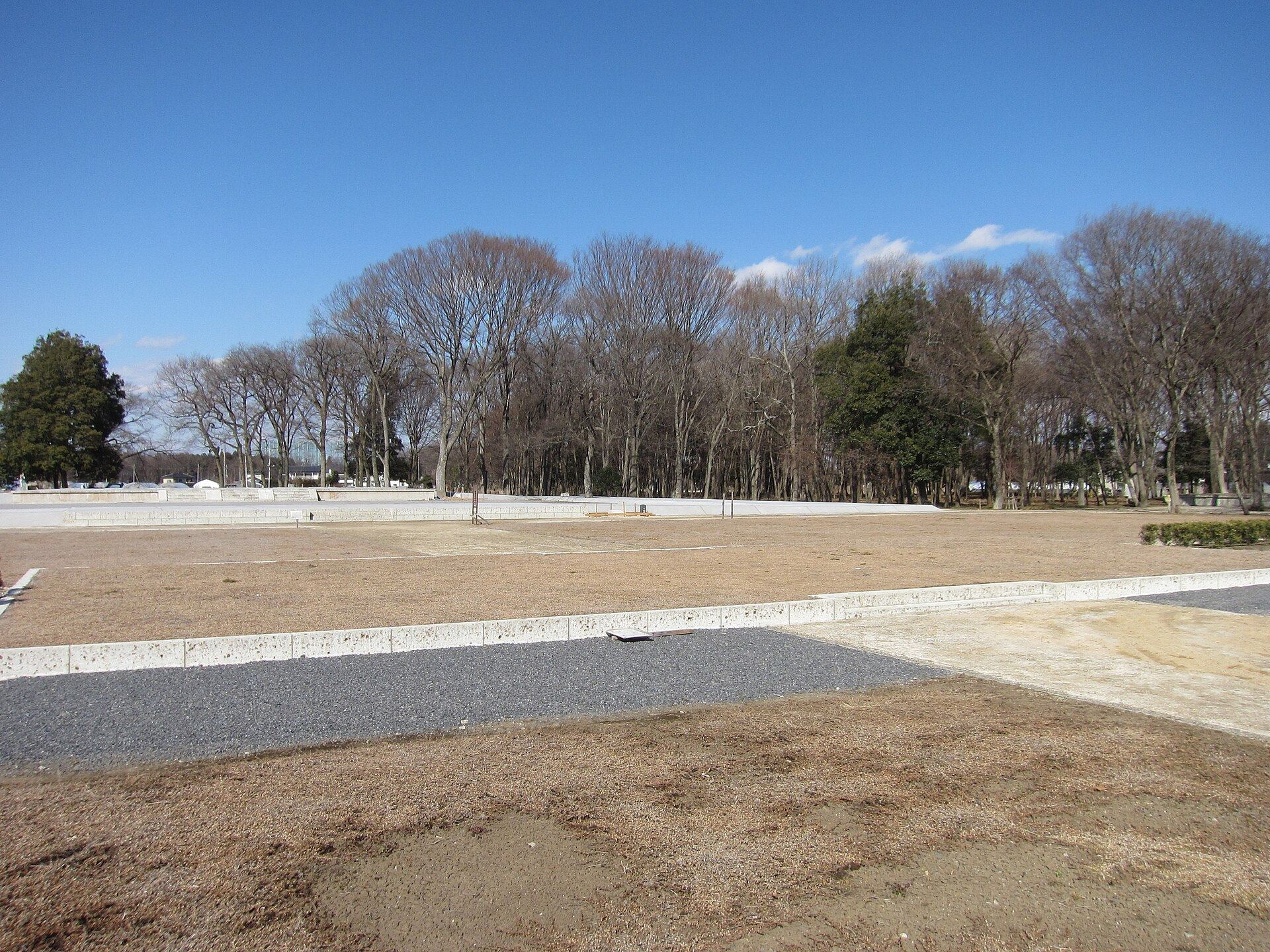
The monastery occupied a precinct approximately 457 meters from north to south and 413 meters from east to west, on a plateau between the Sugata and Omoigawa rivers. Its Tōdai-ji-style arrangement placed the Great South Gate, Middle Gate, Golden Hall, and Lecture Hall in a north-south line. A cloister connected the Middle Gate with the Golden Hall, defining the central religious area.
Pagoda and Service Buildings
A pagoda stood east of the cloister. Its large foundation platform indicates that the structure was probably seven stories high. A bell tower and a sutra repository occupied positions east and west, respectively, between the Golden Hall and Lecture Hall. These buildings formed part of the organized precinct alongside the principal halls.
Nunnery Precinct
The associated nunnery covered an area approximately 270 meters north to south and 145 meters east to west. An eastern projection extended about 211 meters from north to south and 52 meters from east to west. Its compound also followed a Tōdai-ji-style arrangement, adapting the same broad pattern of organized gates and principal buildings to a community of Buddhist women.
Park Landscape
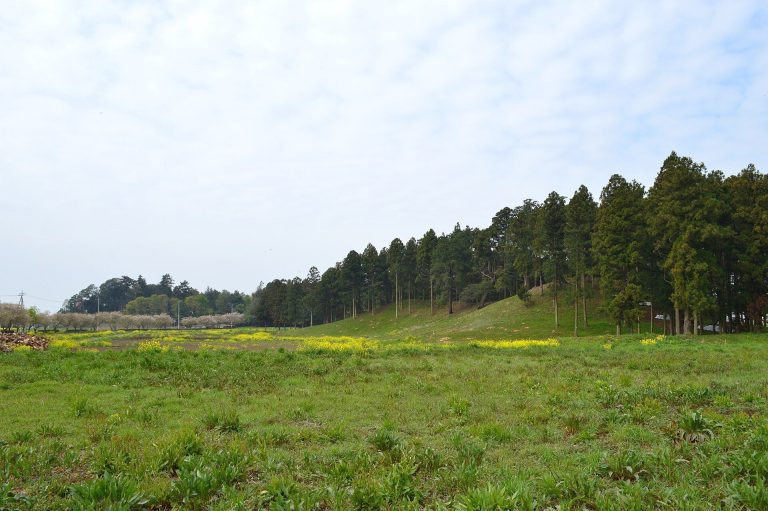
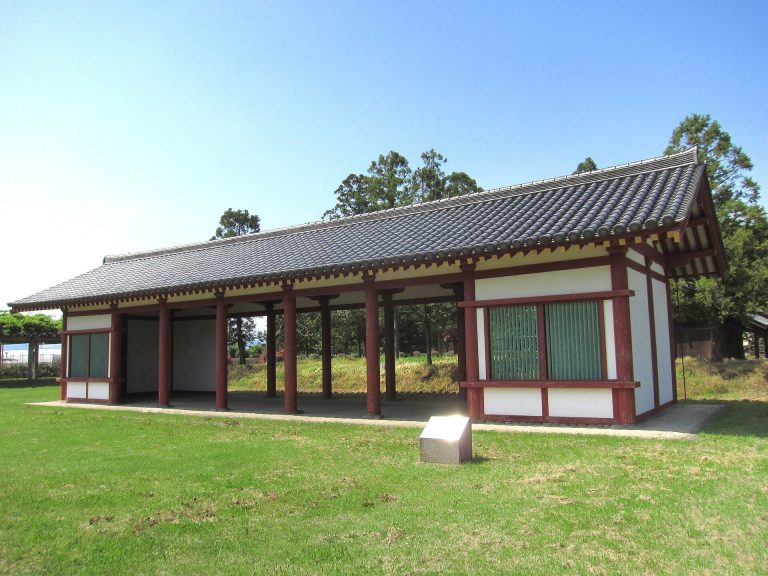
The former monastery and nunnery precincts have been archaeologically investigated and landscaped within Tenpyo-no-Oka Park. The surrounding woodland is a representative plain forest of northern Kanto, dominated by konara oak, kunugi oak, and zelkova. It is protected as the Kokubunji Green Space Environmental Conservation Area.