Kabutoyama Kofun: A Kofun-Period Burial Mound in Japan
Site at a Glance
- Rating
- 3.9
- Popularity
- Very Low
- Country
- Japan
- Primary era
- Classical
- External website
- Open
- Eras represented
- Classical
- Civilizations
- Unclassified
- Site type
- Burial
- Remains
- Burial Mound
On this page5 sections
History
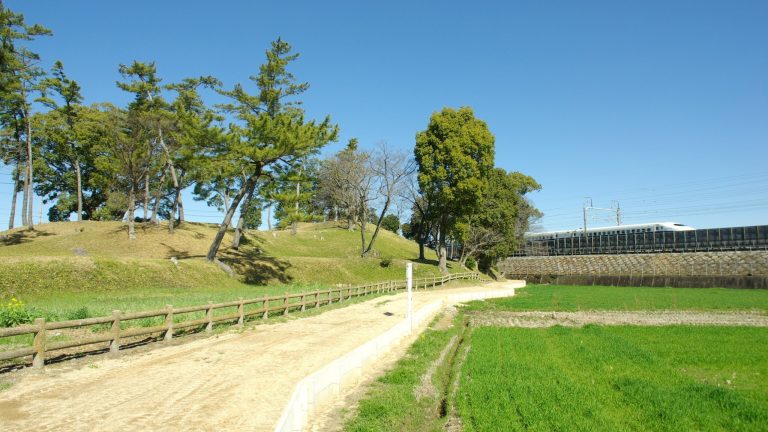
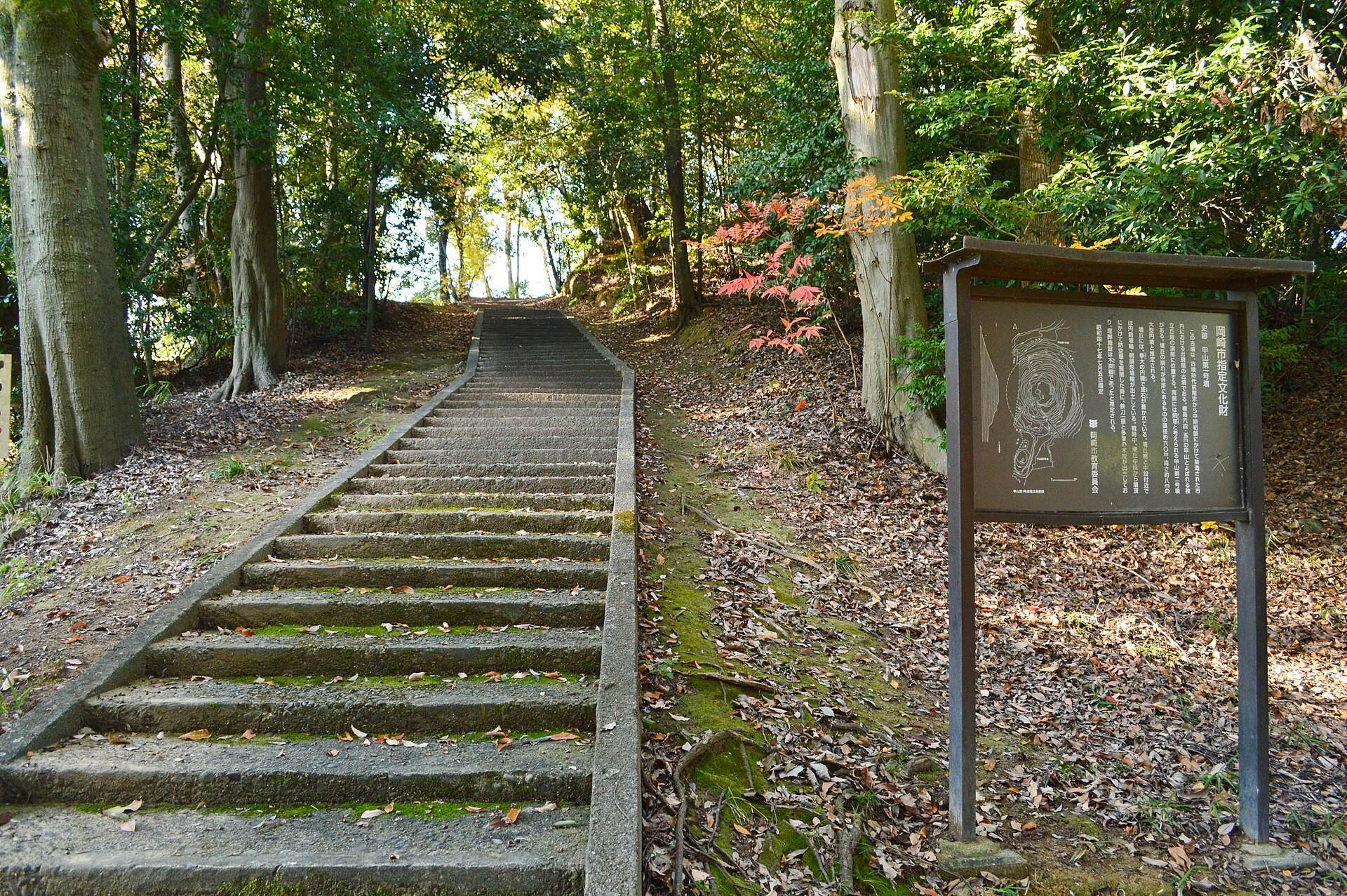
Kabutoyama Kofun is a burial mound in Okazaki, Japan, built during the middle Kofun period, probably between the late fourth and early fifth centuries. The Kofun period, roughly spanning the third to sixth centuries, was an era when large earthen mounds were constructed for members of the ruling elite. Also called Kabutoyama No. 1 Kofun, it forms part of the Kabutoyama Kofun Group in Rokkucho, on the left bank of the middle Yahagi River.
The Burial Group and Local Tradition
The name Kabutoyama is traditionally connected with a legend about Yamato Takeru, a legendary imperial prince known from early Japanese chronicles. The surrounding mounds have been interpreted as subordinate burial mounds, smaller graves associated with a principal mound and understood as part of the same funerary complex. The group includes No. 2 Kofun, No. 3 Kofun, and another mound. One interpretation proposes that No. 2 may instead be identical with No. 1, reflecting continuing uncertainty about the group’s arrangement and identification.
Wartime Intervention and Modern Recognition
In 1944, an air-defense observation post was installed on the summit, and an air-raid shelter was cut into the mound. Charcoal and an iron sword were recovered during the work, but both were later lost in a wartime fire. The charcoal prompted the interpretation that the burial facility was a charcoal-surrounded coffin chamber, in which charcoal formed part of the structure around the coffin.
Okazaki City designated the mound a Historic Site on July 5, 1972, under the name Kabutoyama No. 1 Kofun. The designated area covers 706.50 square meters and is owned by a temple. A survey of the mound was later undertaken for the compilation of the Okazaki City History, with the results published in 1989.
Remains
Kabutoyama Kofun occupies the independent Kabutoyama hill, which rises to 64.5 meters. Its original form remains debated. It was traditionally understood as a large circular mound about 60 meters in diameter and 8 meters high, while a more recent interpretation identifies it as a keyhole-shaped kofun. This form combines a circular rear mound with a rectangular front section. On that interpretation, the mound would measure about 120 meters in total length. The southern No. 2 Kofun, or the temple to the west, has been proposed as the possible front section. If No. 2 formed that section, the complex would represent the largest kofun in the Mikawa region of central and eastern Aichi.
Surface Features and Burial Evidence
Fragments of cylindrical haniwa were found on the mound’s outer surface. Haniwa were clay funerary objects placed on and around burial mounds, often in cylindrical or figurative forms. The burial facility itself has not been directly confirmed. Charcoal recovered during the 1944 shelter excavation supports the proposed interpretation of a charcoal-surrounded coffin chamber, while the associated iron sword was lost in the wartime fire.