Konryū-ji Temple: A Shingon Buddhist Temple in Kakegawa, Japan
Site at a Glance
- Rating
- 4.2
- Popularity
- Very Low
- Country
- Japan
- Primary era
- Early Modern
- External website
- Open
- Eras represented
- Early Modern
- Civilizations
- Tokugawa
- Site type
- Religious
- Remains
- Monastery
On this page12 sections
History
Konryū-ji Temple is a Shingon Buddhist temple in Kakegawa, Japan, traditionally founded in 729 during the Nara period. The establishment is associated with the monk Gyōki and Emperor Shōmu, an eighth-century ruler closely connected with state-supported Buddhism and the creation of major religious institutions. The site was selected for its relationship with mountains and water, and Gyōki is said to have preached there.
Foundation and Medieval Development
Gyōki traditionally established the Buddhist monastic community at the imperial request. Shingon Buddhism, an esoteric tradition introduced to Japan in the early ninth century, later became the temple’s defining religious affiliation. In 1204, during the Kamakura period, a Kannon Hall was built together with twelve monastic quarters, indicating the scale of the medieval establishment. Konryū-ji was formerly known by another temple name.
Destruction and Restoration
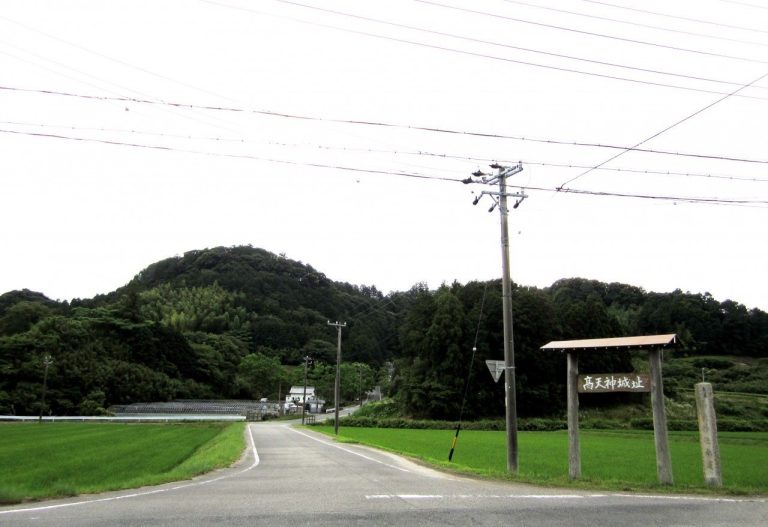
During the Warring States period, an era of prolonged political and military conflict in Japan from the fifteenth to the late sixteenth century, the temple became involved in battles around Takatenjin Castle. Its halls and other buildings were destroyed by fire, while its cultural properties and records were lost. The disaster brought an end to the temple’s earlier prosperity as a center of Shingon esoteric practice.
The institution received the name Konryū-ji in 1615. Local residents revived it in 1622, the year to which the main hall is traditionally dated. The Edo-period scholar Uchiyama Masatatsu recorded that the temple possessed a five-koku red-seal estate under shogunal authorization. A koku was a measure of rice used to assess land income, while a red-seal grant was an official land or privilege authorization issued under the shogunate’s seal.
Religious and Local Heritage
Konryū-ji now belongs to the Kōyasan branch of Shingon Buddhism, associated with Mount Kōya and the tradition founded by Kōbō Daishi, also known as Kūkai. The temple is the thirty-second pilgrimage temple of the Tōtōmi Thirty-Three Kannon Pilgrimage and the seventy-fourth temple of the Enshū Ogasa District Southern New Shikoku Eighty-Eight-Site Pilgrimage. Its precincts also contain a Kannon image dedicated to protection against cognitive decline, where prayers are offered for difficulties associated with old age.
The temple bell was requisitioned under a wartime order collecting metal for military purposes. A replacement bell was installed in October 1982. Two Japanese nutmeg trees and two sago palms in the grounds were designated natural-monument cultural properties by Daitō Town on April 6, 1990. Daitō Town later became part of Kakegawa municipality in 2005.
Remains
The surviving precincts combine the main hall, a guest hall, a bell tower, and the Sanmon, the principal gate of a Japanese Buddhist temple. Religious images remain central to the buildings and grounds, while old trees form part of the gate structure and the broader cultural landscape of the temple.
Main Hall and Buddhist Images
Nyoirin Kannon
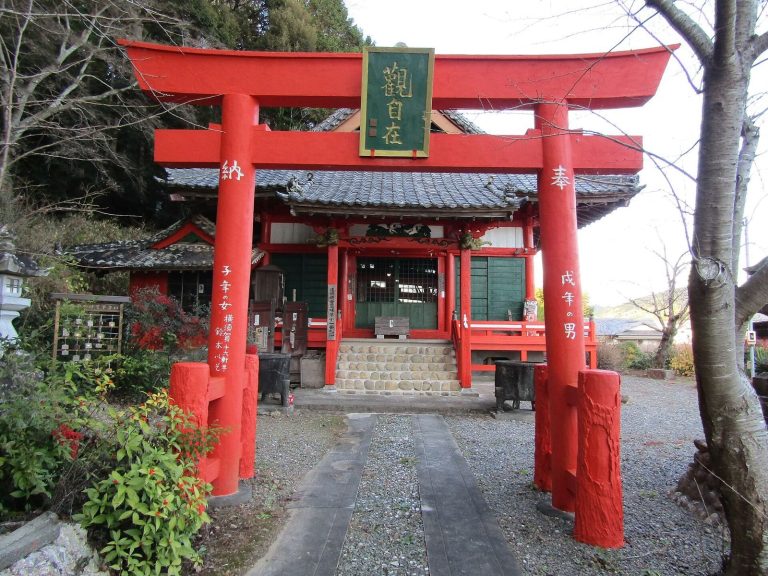
The main hall, traditionally dated to 1622, houses a wooden seated statue of Nyoirin Kannon, traditionally said to have been made by Gyōki in 729. Nyoirin Kannon is a form of the compassionate bodhisattva Kannon associated with the wish-granting wheel, fulfillment of wishes, and relief from suffering. The statue is flanked by Bishamonten, a guardian deity linked with protection and prosperity, and Fudō Myōō, a fierce Buddhist wisdom king regarded as a protector. The principal image is opened for public viewing once every sixty years.
Guest Hall
The guest hall contains a central image of Fudō Myōō. Statues of Kōbō Daishi and Yakushi Nyorai stand beside it. Kōbō Daishi is the posthumous title of Kūkai, the founder of Shingon Buddhism in Japan, while Yakushi Nyorai is the Buddha associated with healing.
Gate, Bell Tower, and Sacred Trees
Sanmon Gate
The Sanmon is formed from two Japanese nutmeg trees, each estimated to be approximately 400 years old. Their use in the principal gate makes the trees part of the temple’s built structure as well as its living landscape.
Bell Tower
The bell tower contains the replacement bell installed in October 1982. It represents the surviving bell tradition after the earlier temple bell was taken during the wartime metal-collection order.
Precinct Trees and Kannon Image
Two sago palms in the temple grounds are also estimated to be approximately 400 years old. The precincts additionally contain the Kannon image dedicated to preventing cognitive decline, which remains an object of prayer for protection against difficulties associated with old age.