Yoshida Shrine: A Historic Shinto Center in Kyoto


Site at a Glance
- Rating
- 4.3
- Popularity
- Medium
- Country
- Japan
- Primary era
- Early Modern
- External website
- Open
- Eras represented
- Early Modern
- Civilizations
- Tokugawa
- Site type
- Religious
- Remains
- Sanctuary
On this page13 sections
History
Yoshida Shrine is a Shinto shrine in Kyoto, Japan, founded in 859 by Fujiwara Yamakage, a Fujiwara court noble, on Mount Yoshida. Its principal sanctuary was built in the Kasuga-zukuri style associated with Kasuga Taisha, and the shrine was established to house the four Kasuga deities invited from Nara as tutelary deities of the Fujiwara clan and protectors of Heian-kyo, the capital then known as Kyoto. Mount Yoshida was traditionally called Kaguraoka, meaning “the hill where the gods gather.”
Imperial Recognition and Fujiwara Patronage
Yoshida Shrine later became the tutelary shrine of the wider Fujiwara lineage. Although it was not included in the Engishiki, a tenth-century compilation of court regulations and ritual procedures that also listed officially recognized shrines, it received imperial ceremonial offerings from 987. In 991, Emperor Ichijo added it to the group that developed into the Twenty-Two Shrines, a circle of major shrines that received special imperial offerings. Yoshida Shrine was counted among the Lower Eight Shrines.
Imperial attention had already extended to the shrine during the early Heian period. In 965, Emperor Murakami ordered imperial messengers to report important events to the guardian kami of Japan at designated shrines, and Yoshida Shrine was included in the list established by Emperor Ichijo in 991. The Eiga Monogatari also relates that Anshi, the wife of Emperor Murakami, was cremated and buried near Yoshida Shrine in 964.
From the Kamakura period onward, hereditary shrine offices were held by the Urabe family. In 1375, Urabe Kanekiyo adopted the surname Yoshida, establishing the Yoshida lineage that later controlled the shrine. This family’s authority became especially extensive through the work of Yoshida Kanetomo, a priest and court diviner who lived from 1435 to 1511.
Yoshida Shinto and the Daigengū
During the late fifteenth century, Yoshida Kanetomo established Yoshida Shinto, also called Yuitsu Shinto. This medieval and early-modern religious system presented the Saijōsho Daigengū as a universal center of Shinto, containing or representing the divine presence of all Japanese shrines. Yoshida Shrine became the movement’s principal center and acquired broad authority within the Shinto world.
The shrine suffered partial destruction by fire during the Onin War, the civil conflict that divided much of Japan between 1467 and 1477. It was restored in the late fifteenth century under Kanetomo. With financial support that included donations from Hino Tomiko, a prominent court noblewoman, he founded the Saijōsho Daigengū on the shrine grounds on November 24, 1484. The deity placed there had previously been enshrined at Kanetomo’s residence.
Yoshida Shinto regarded the Daigengū’s principal deity, the Great Origin Deity, as the source of the universe and all phenomena. Kanetomo claimed that worship at the Daigengū was equivalent to worshipping every shrine in Japan and that the shrine ranked above Ise Shrine. In 1489, he further claimed that the Yata no Kagami, the sacred mirror associated with Amaterasu, had been transferred to the site, and that all Japanese kami came daily to Mount Yoshida.
Early Modern Authority
In 1590, Yoshida Kanemi relocated and re-established at the shrine the eight deities formerly worshipped in the Department of Divinities. The Hachishinden was established behind the Daigengū by imperial order from Emperor Go-Yozei. Another tradition places an earlier Hachishinden at a separate sanctuary of the Department of Divinities before its transfer to the Daigengū.
In 1609, an imperial order designated Yoshida Shrine as the deputy Department of Divinities. The shrine performed rites for the imperial envoy sent to Ise until 1871. During the Edo period, it held an estate assessed at 590 koku, a unit used to measure agricultural production and income.
After the shogunate issued regulations for shrine priests in 1665, the Yoshida family received authority to appoint and dismiss priests at shrines throughout Japan and to issue certificates authorizing Shinto priestly practice. These certificates helped settle jurisdictional disputes among religious specialists, and the family’s influence over the Shinto world continued until the end of the shogunate.
Meiji Reorganization and Continuing Rituals
The Meiji government removed the Yoshida family’s priestly privileges. In 1872, the Hachishinden was transferred to the Imperial Palace, while the symbolic center of national Shinto under the new state system shifted from Yoshida Shrine to Ise Shrine. Yoshida Shrine was classified as a government-supported Kanpei-chūsha shrine, the second rank in the prewar state classification of such shrines. The Daigengū, once the center of Yoshida Shinto worship, was reduced to the status of an ordinary subsidiary shrine.
The shrine retained its official Kanpei-chūsha status from 1871 to 1946 and was added to the Association of Shinto Shrines’ Beppyo Shrine list in 1948. It remains one of the Kasuga-type shrines and is associated with the Kasuga deities Takemikazuchi, Futsunushi, Ame-no-Koyane, and Himegami. Ame-no-Koyane was traditionally associated with ritual authority and with the ancestral identity of the Nakatomi and Fujiwara lineages.
The Setsubun Grand Festival, held from February 2 to 4, has continued since the Muromachi period and is a major traditional event in Kyoto. Its principal rites are the Ekijin Festival, the Tsuina exorcism, and the Karo Festival. Tsuina is a ritual intended to drive away harmful forces, disease, impurity, and misfortune. The rite, popularly described as driving out the oni, was revived by residents of Kaguraoka in 1928 from the court’s Heian-period exorcism ceremony. During the Karo Festival, old protective talismans are burned in an octagonal furnace before the second torii. The annual festival takes place on April 18.
Remains
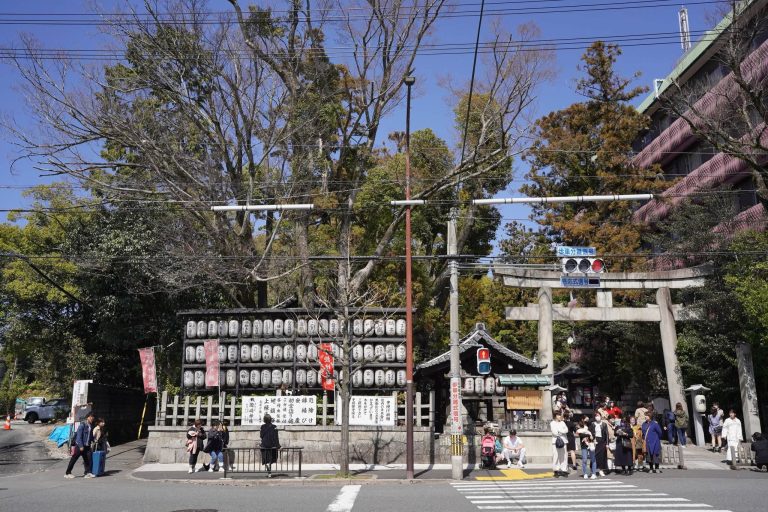
Yoshida Shrine occupies Mount Yoshida at the foot of the Higashiyama range, within a densely wooded setting. A torii marks the entrance into sacred space, while numerous further torii line the path ascending the mountain. The complex combines a principal group of Kasuga-style sanctuaries with the distinctive octagonal Daigengū and several subsidiary shrines.
Principal Sanctuary
The principal sanctuary consists of four honden, or main sanctuaries, built in the Kasuga-zukuri style. This form is associated with Kasuga Taisha and uses a compact sanctuary with a projecting gabled roof over the front entrance. The complex also contains a simple roofed structure in place of a conventional heiden, as well as a gyojisho-ya used by priests for specialized spiritual exercises.
Saijōsho Daigengū
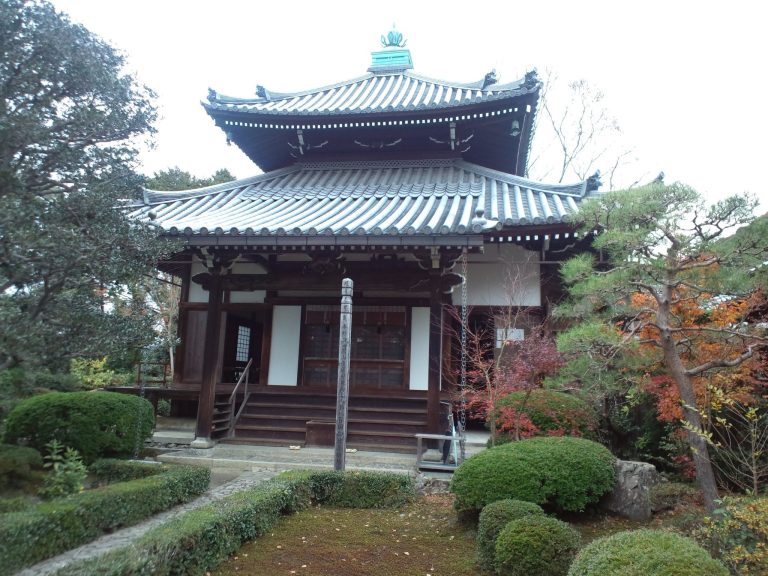
The Saijōsho Daigengū is an unusual shrine building with an octagonal floor plan and a hexagonal rear chamber. Its construction is estimated to date from 1601. The roof combines hipped and gabled forms and is covered with thatch. Its ridge runs from north to south and carries chigi, forked finials placed at the roof ends, together with five katsuogi, short timbers set across the ridge. The building reflects influences from Buddhist octagonal pavilions and the architecture of Ise Shrine.
A well stands on the Daigengū’s octagonal base, surrounded by 3,132 stones. Their number corresponds to the kami listed in the Engishiki. Numerous small shrines dedicated to the kami of Japan stand on both sides of the pavilion, arranged in two long buildings. The Daigengū is an Important Cultural Property and was designated a protected historic building on July 31, 1902, under the former protection system.
Subsidiary Shrines and Sacred Features
Wakamiya Shrine
Wakamiya Shrine is dedicated to Ame-no-Oshikumone. Yoshida Kanekiyo founded it in 1336, and it became a sessha, or affiliated shrine, in 1877. Its model is the Wakamiya Shrine at Kasuga Taisha. The present honden was rebuilt at its current location in 1648 and is accompanied by a worship hall.
Kaguraoka Shrine
Kaguraoka Shrine is dedicated to Ōikazuchi, Oyamatsumi, and Takaokami. It is regarded as the tutelary shrine of Kaguraoka Town and as a protector against lightning. Its date of establishment is unknown, but it was already present when Yoshida Shrine was founded. It is traditionally identified with the “thunder deity” listed in the Engishiki. Its main shrine was rebuilt at its current location in 1648 and has a worship hall. Its festival is held on September 23, with a procession on the last Sunday of October.
Shrine of Yoshida Kanetomo
A small shrine dedicated to Yoshida Kanetomo stands along the route from the honden to the Daigengū. It was built over his grave, an arrangement described as unusual for a Shinto shrine.
Yaku-zuka and the Deity of Misfortune
The deity of misfortune and disease is worshipped in a honden before which stands the Yaku-zuka, or “hill of misfortune.” Eight shimenawa, sacred ropes used to mark spiritually important places, connect the honden with the mound. During the Setsubun exorcism rite, bags of soybeans are thrown onto the Yaku-zuka.