Ōarai Isosaki Shrine: A Historic Shinto Shrine in Japan


Site at a Glance
- Rating
- 4.4
- Popularity
- High
- Country
- Japan
- Primary era
- Early Modern
- External website
- Open
- Eras represented
- Early Modern
- Civilizations
- Tokugawa
- Site type
- Religious
- Remains
- Sanctuary
On this page17 sections
History
Ōarai Isosaki Shrine is a Shinto shrine in Oarai, Japan, dedicated to the kami Ōkuninushi and Sukunabikona. Its traditional foundation date is 856, when the two kami were believed to have returned from the eastern sea to help local people. Ōkuninushi was enshrined at Ōarai, while Sukunabikona was enshrined at Sakatsura Isosaki Shrine across the Naka River, creating a closely related two-shrine tradition.
Foundation and early recognition
The shrine’s foundation tradition appears in the Nihon Montoku Tennō Jitsuroku. A salt maker reportedly saw a light over the sea at night. The following day, two unusual stones, each about one shaku high, appeared at the water’s edge. More than twenty smaller stones were found around them on the next day. They were described as brightly colored, with some resembling seated Buddhist monks. A divine oracle identified the stones with Ōkuninushi and Sukunabikona and declared that the two kami had returned after completing the creation of the land.
In the mid-Heian period, the shrine appeared in the Engishiki Jinmyōchō, the shrine register within a tenth-century legal and ritual compilation. It was listed under the historical name Ōarai Isosaki Yakushi Bosatsu Myōjin-sha and ranked among the Myōjin Taisha, shrines granted the high-ranking designation Myōjin. On August 30, 857, it became an officially recognized government shrine, and on November 5 of that year it received the title “Yakushi Bosatsu Myōjin.”
Destruction and rebuilding
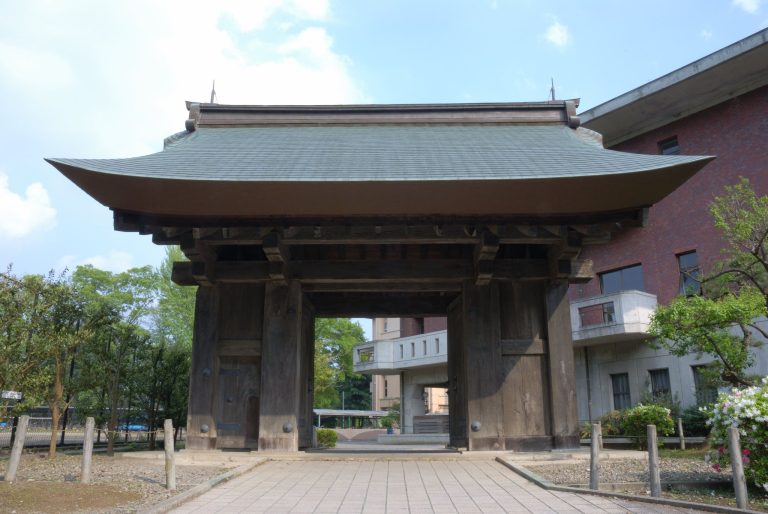
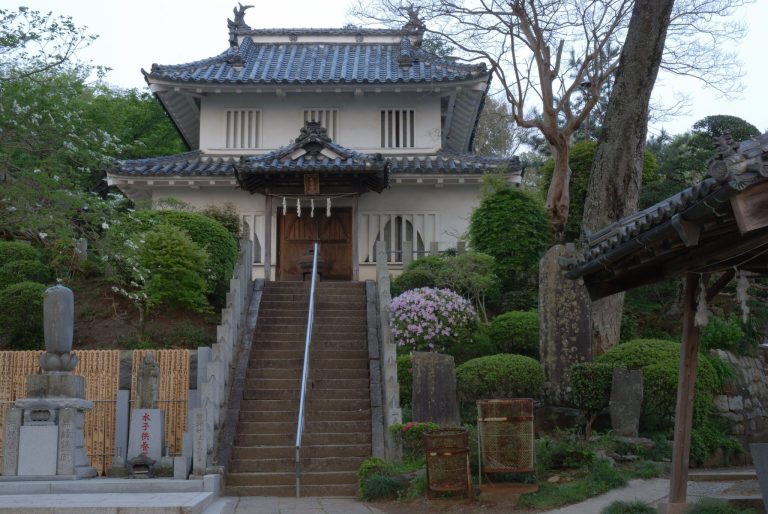
Warfare during the Eiroku era, from 1558 to 1570, devastated the shrine. Reconstruction began in 1690 under Tokugawa Mitsukuni, the second lord of the Mito Domain. The work continued during the tenure of his successor, Tokugawa Tsunaeda, and produced the main sanctuary, worship hall, and Zuishinmon gate that define the shrine’s present central complex.
The main sanctuary was moved to its current position in 1730. Under Japan’s modern prewar shrine-ranking system, Ōarai Isosaki Shrine was classified as a Kokuhei Chūsha in 1885, a nationally supported shrine of middle rank. It is now listed as a Beppyo Shrine by the Association of Shinto Shrines, a category reserved for shrines regarded by that organization as especially significant. Ōkuninushi is also identified here with Daikokuten, one of the Seven Lucky Gods.
Festivals and twentieth-century events
The annual grand festival is the Hassaku Grand Festival on August 25. “Hassaku” refers to the first day of the eighth month and historically meant the first day of the eighth lunar month. Other observances include a Daidai Kagura festival of ritual music and dance, a June 30 summer purification ceremony involving passage through a ring of reeds, and a July 16 rice-planting rite at Doso Shrine.
On September 5, 1918, about 300 fishermen who had stopped work for the Hassaku Festival took a mikoshi, a portable sacred shrine carried in processions, from the subsidiary Shizu Shrine and threw it into the sea. They then attacked rice merchants while carrying the wet mikoshi. The incident took place amid the nationwide rice riots of 1918. A memorial service for the Imperial Japanese Navy light cruiser Naka is another distinctive observance associated with the shrine.
The main sanctuary and worship hall became Ibaraki Prefectural Tangible Cultural Properties in 1970. The Zuishinmon gate was designated a tangible cultural property by Ōarai Town.
Remains
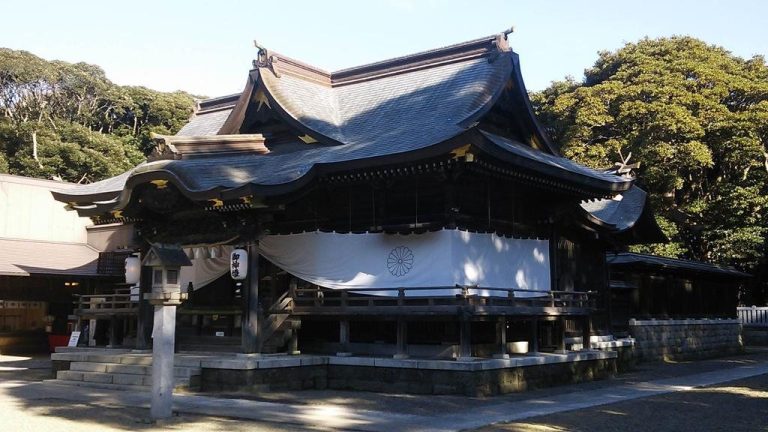
The shrine buildings stand on a hill above Ōarai Beach and face the Pacific Ocean to the east. The central precinct combines a thatched main sanctuary in the Nagare-zukuri style, whose gently curved gabled roof extends over the front entrance, with a larger worship hall in the Irimoya-zukuri style, which combines a gabled upper roof with a hipped lower roof. The Zuishinmon, a gate traditionally associated with guardians of the sacred precinct, forms another principal element of the surviving complex.
Central shrine buildings
Main sanctuary
The main sanctuary is a single-bay building with a thatched roof. Its Nagare-zukuri form has a long, gently curved roof extending over the front entrance. The sanctuary was transferred to its present location in 1730 and remains the principal structure for the worship of Ōkuninushi and Sukunabikona.
Worship hall
The worship hall has a frontage of five bays and a depth of two bays, with a one-bay porch projecting at the front for worship. Its Irimoya-zukuri construction combines a gabled upper roof with a hipped lower roof, giving the building a form distinct from the sanctuary.
Zuishinmon gate
The Zuishinmon is the principal designated gate of the precinct. Its name refers to the guardian figures traditionally associated with protecting a Shinto shrine’s sacred grounds. Ōarai Town has designated the gate a tangible cultural property.
Shore and memorial features
Kamiiso Torii
The Kamiiso Torii stands on the shore at a rocky outcrop traditionally connected with the descent of the enshrined kami. It is regarded as a symbol of Ōarai Isosaki Shrine and Ōarai and has a particular association with sunrise on New Year’s Day.
Naval memorial
A monument commemorating those who died aboard the Imperial Japanese Navy light cruiser Naka stands within the shrine precinct. The memorial is linked to the service held for the vessel.
Subsidiary shrines
Shrines east of the main sanctuary
Three subsidiary shrines stand on the right side of the main sanctuary. Daijingū is a branch shrine of Ise Jingū dedicated to Amaterasu. Shizu Shrine is a branch of the second-ranked shrine of Hitachi Province at Naka and is dedicated to Takehazuchi, Tajikarao, Takamimusubi, and Omoikane. Suitengū is a branch of the Suitengū in Kurume, Fukuoka, and is dedicated to Amenominakanushi, Emperor Antoku, and Kenreimon-in.
Shrines west of the main sanctuary
Three more subsidiary shrines stand on the left side of the main sanctuary. Ōsugi Shrine is dedicated to Ōmononushi and is associated with the Anba faith centered on Ōsugi Shrine in Inashiki. Suijin Shrine is dedicated to Mizuha-no-me, while Hachimangū is dedicated to Tamayorihime, Ōtarashihime, and Emperor Ōjin.
Other precinct shrines
Other shrines in the precinct include Ontake Shrine, dedicated to Kuninotokotachi, Ōkuninushi, and Sukunabikona; Seiryō Shrine, dedicated to Obata Yūen; and Eboshi Rock Shrine, which enshrines the spirit of a rock called Eboshi Rock near the parking area. The precinct also contains Chagama Inari Shrine, dedicated to Ukanomitama; Kushigatayama Shrine; Ōmika Isosaki Shrine; Yoriki Shrine, dedicated to Takeminakata; and Sekison Shrine, a branch of Ōyama Afuri Shrine in Isehara, Kanagawa.
Inscribed sword
A sword bearing an inscription was made in 1852. It became an Ibaraki Prefectural Tangible Cultural Property in 1990, adding a preserved historical object to the shrine’s architectural and ritual remains.