Jūgorōana: A Japanese Cemetery of Artificial Cave Tombs
Site at a Glance
- Rating
- 4
- Popularity
- Medium
- Country
- Japan
- Primary era
- Medieval
- Eras represented
- Medieval
- Civilizations
- Yamato
- Site type
- Burial
- Remains
- Necropolis
On this page5 sections
History
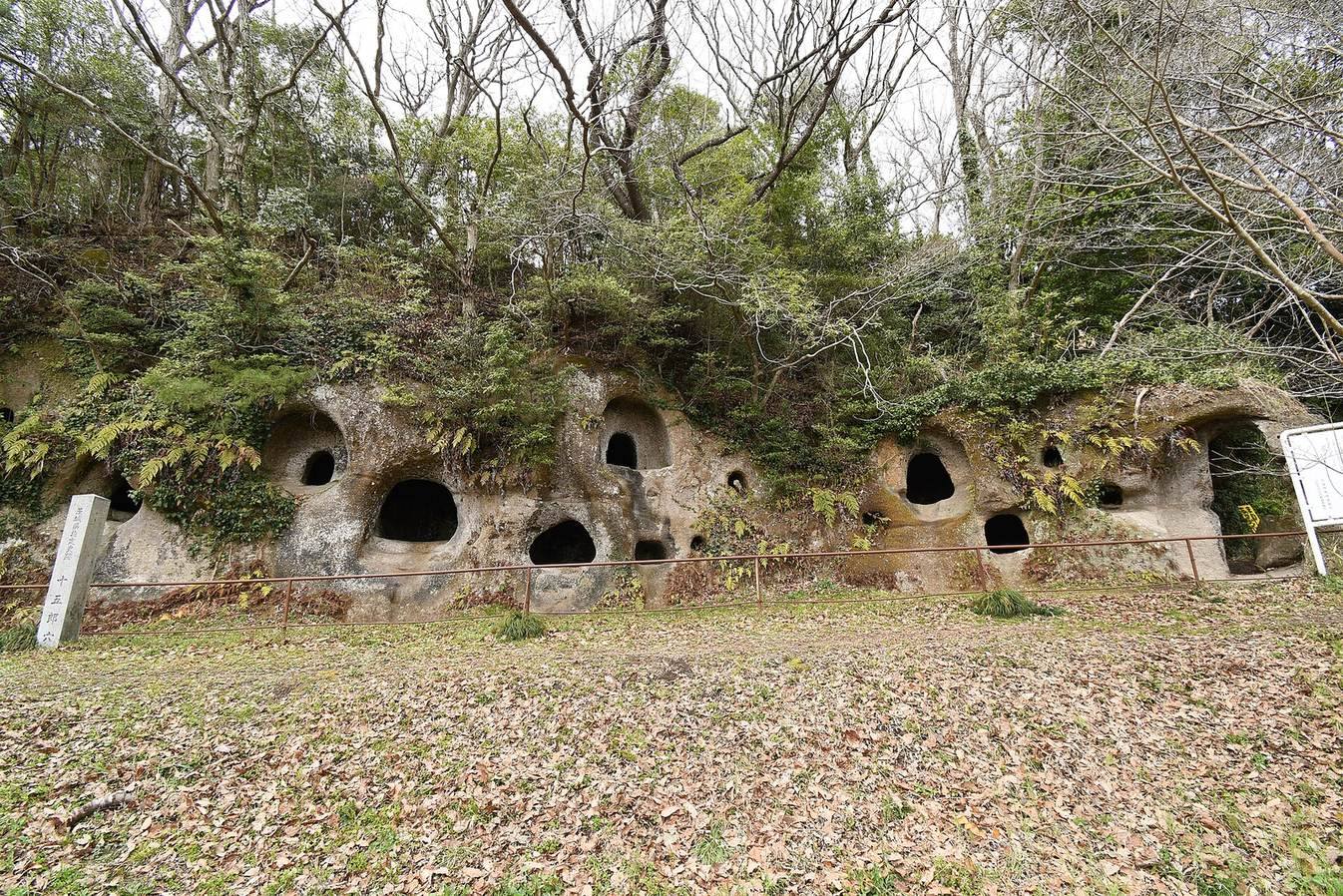
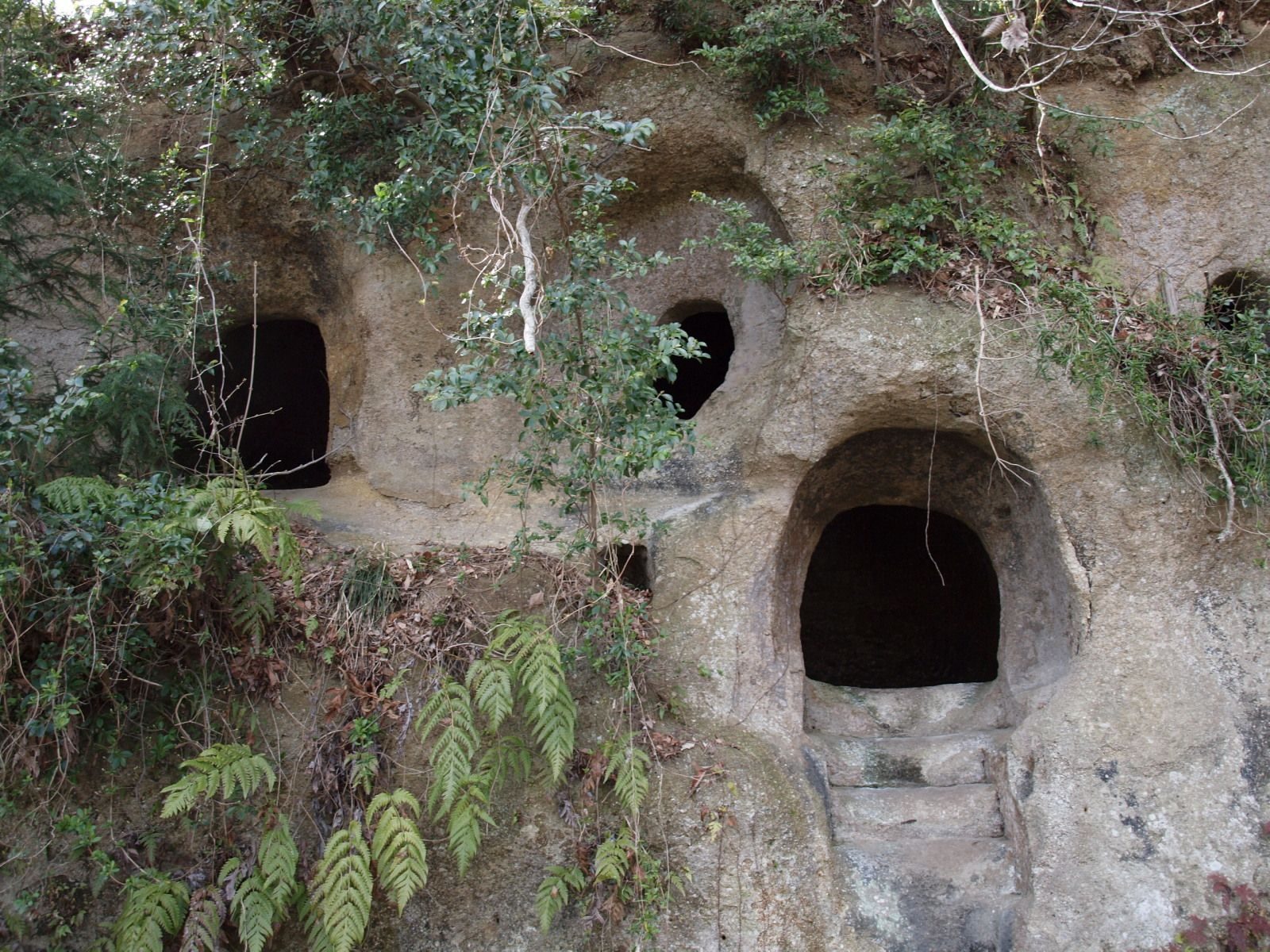
Jūgorōana is a cemetery of artificial cave tombs in Japan, with tombs dating broadly from the early seventh to early ninth centuries, spanning the late Kofun and Nara periods. The Kofun period was associated with large burial mounds, while the Nara period takes its name from the time when Nara was Japan’s capital.
The cemetery’s name comes from a legend that the brothers Gorō and Jūrō hid there. They are the Soga brothers, legendary protagonists of Soga Monogatari, a Japanese tale of vengeance.
Modern investigations and recognition
Excavations at Sashibu from 1976 to 1980 identified 119 tombs. By 2014, surveys across the cemetery had confirmed 272; the total is estimated to exceed 300, though the exact number is unknown.
In 1940, 34 tombs in the Tatedashi cluster were designated an Ibaraki Prefectural Historic Site. A sword from Tatedashi Tomb No. 32 received Hitachinaka City cultural-property designation in 2002, and finds from Tomb No. 35 received city designation in 2017. In 2024, the cemetery became a National Historic Site, and finds from it were designated Ibaraki Prefectural tangible cultural properties.
Remains
Layout and tombs
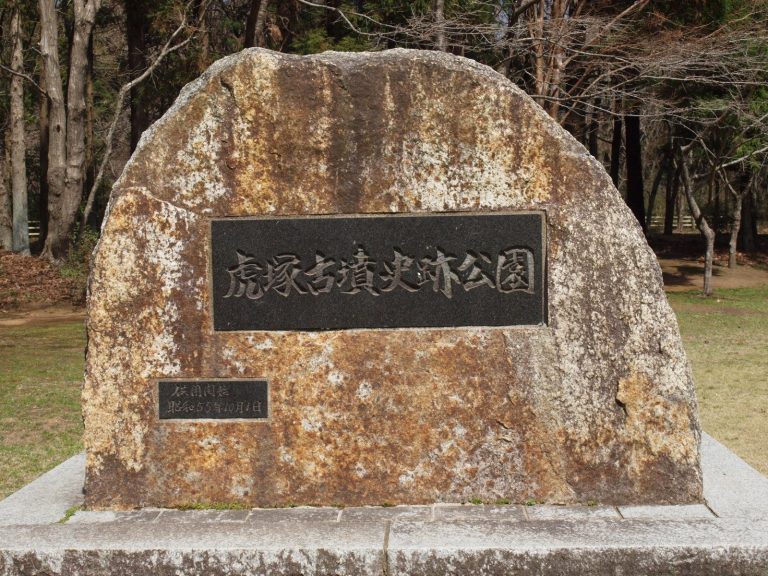
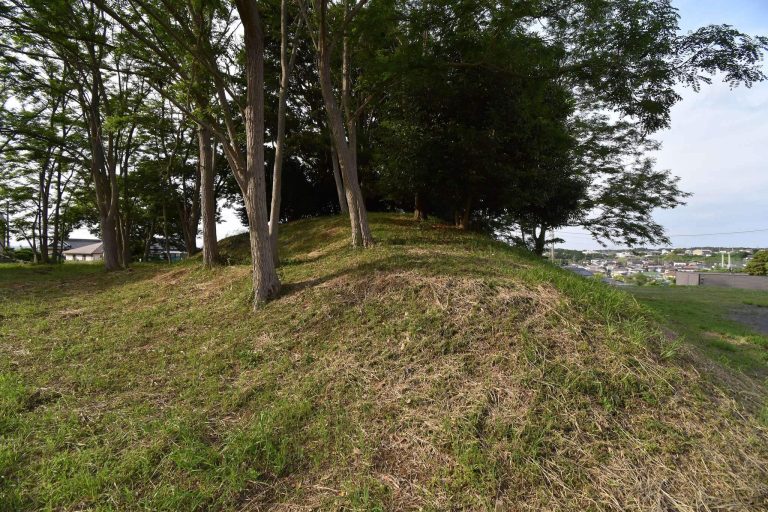
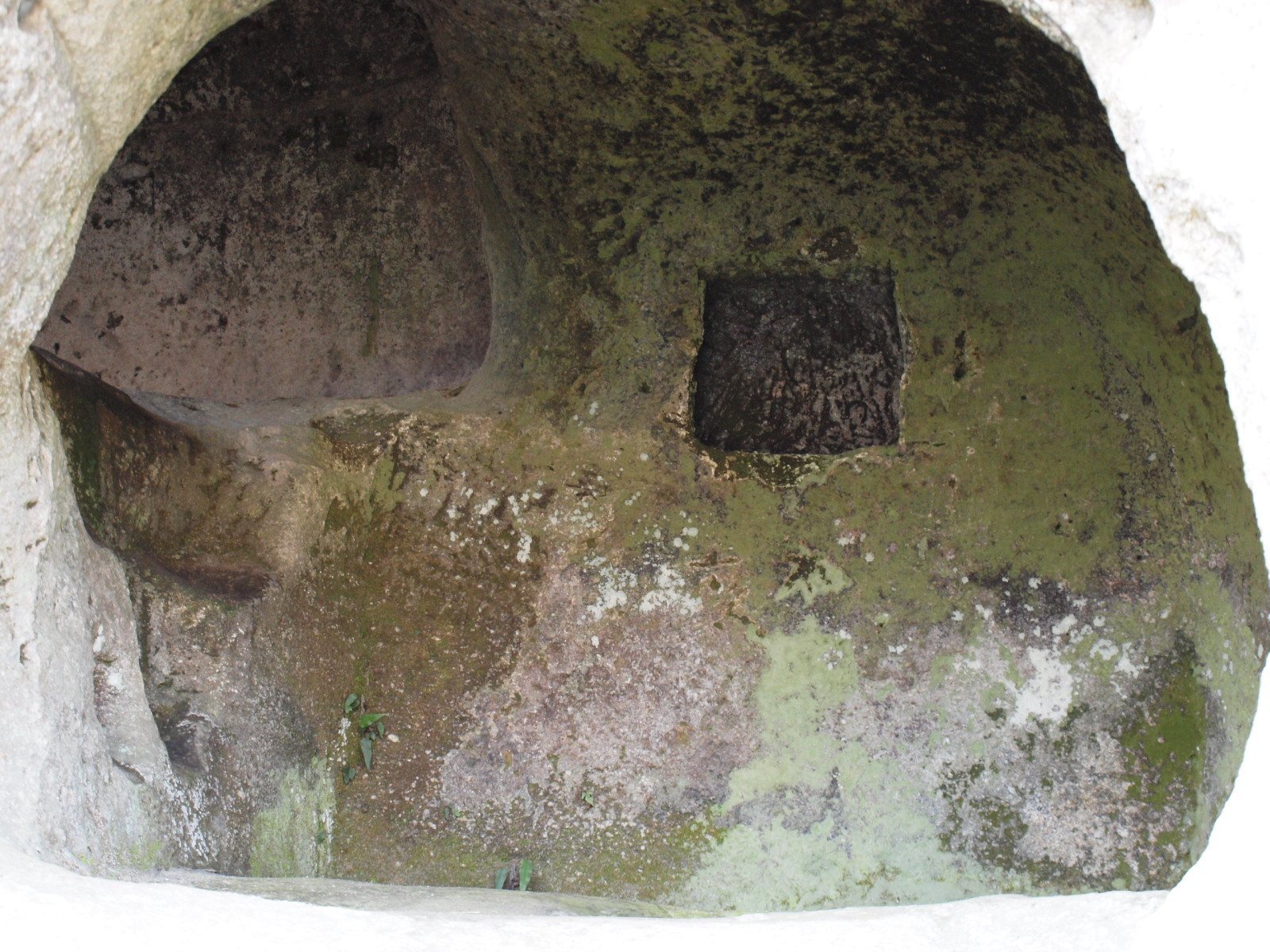
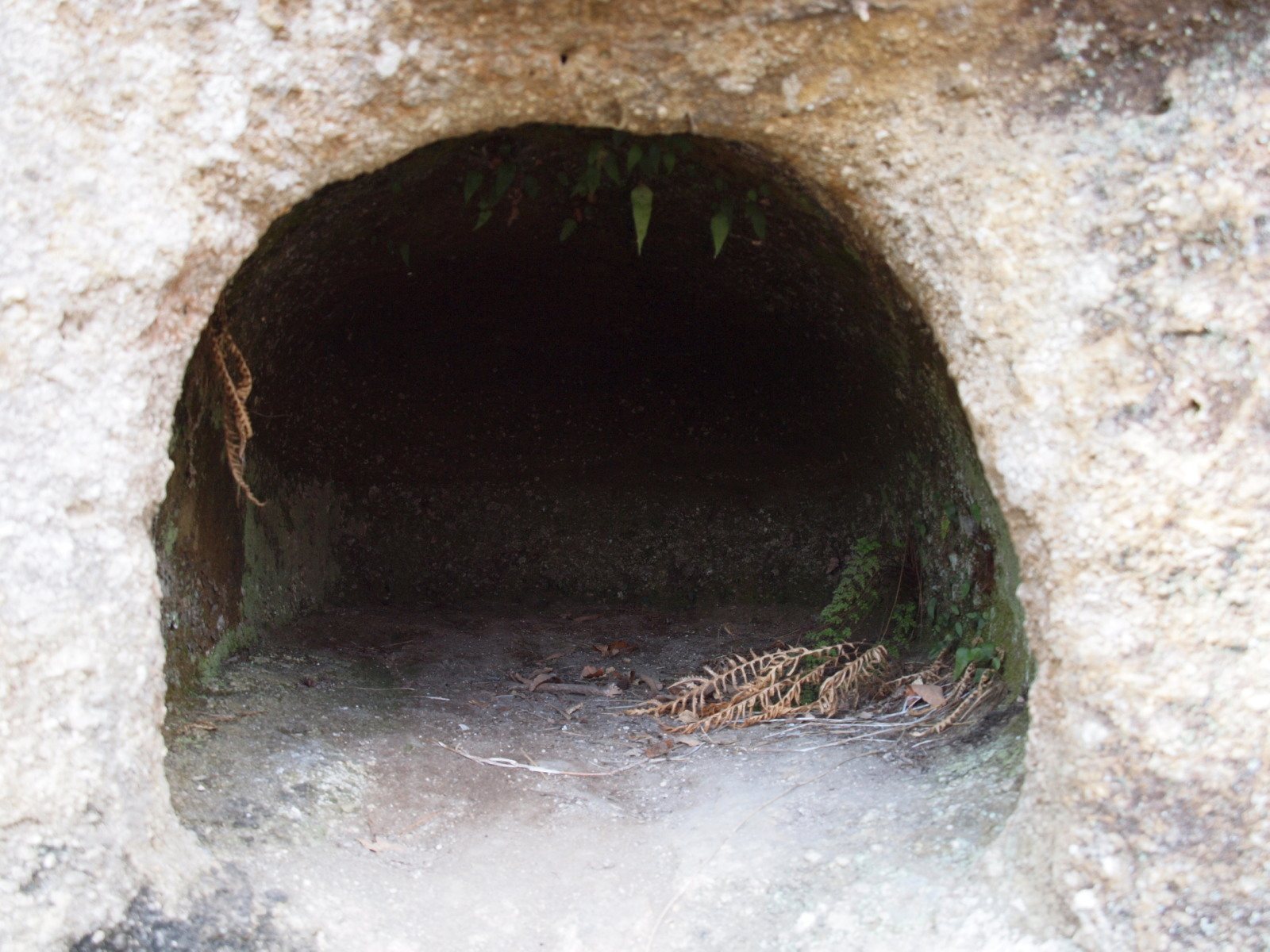
The cemetery occupies a tongue-shaped plateau between the Okawa and Hongo rivers, tributaries of the Naka River. Its horizontal cave tombs are burial chambers cut into slopes or cliffs and reached through entrance passages. At Jūgorōana, they were excavated into cliffs of tuff, a type of volcanic rock. Valleys divide the cemetery into three clusters: Sashibu, Tatedashi, and Kasaya. Sashibu is associated with Tora-zuka Kofun, Tatedashi with Tora-zuka Kofun No. 2, and Kasaya with the Kasaya Kofun group. These are named burial-mound sites.
Excavated finds
Finds from Sashibu include human bones, Sue ware, a high-fired Japanese stoneware, magatama, curved comma-shaped beads, and cut-glass beads. A large iron sword with a square copper fitting at its pommel was recovered from Tatedashi Tomb No. 32 in 1950. Excavation of Tatedashi Tomb No. 35 in 2011 yielded a knife with decorative fittings for its scabbard end and belt, as well as a warabi-hilt sword, whose handle is shaped like a curled bracken shoot. The knife was noted for its resemblance to an object in the Shōsōin, an imperial repository in Nara known for preserving historical objects. The sword was the second of its type found in Ibaraki Prefecture. The designated finds are kept at the Hitachinaka City Buried Cultural Property Investigation Center.