Senkō Temple: A Shingon Buddhist Temple in Onomichi


Site at a Glance
- Rating
- 4.4
- Popularity
- Medium
- Country
- Japan
- Primary era
- Medieval
- External website
- Open
- Eras represented
- Medieval
- Civilizations
- Mōri
- Site type
- Religious
- Remains
- Temple
On this page9 sections
History
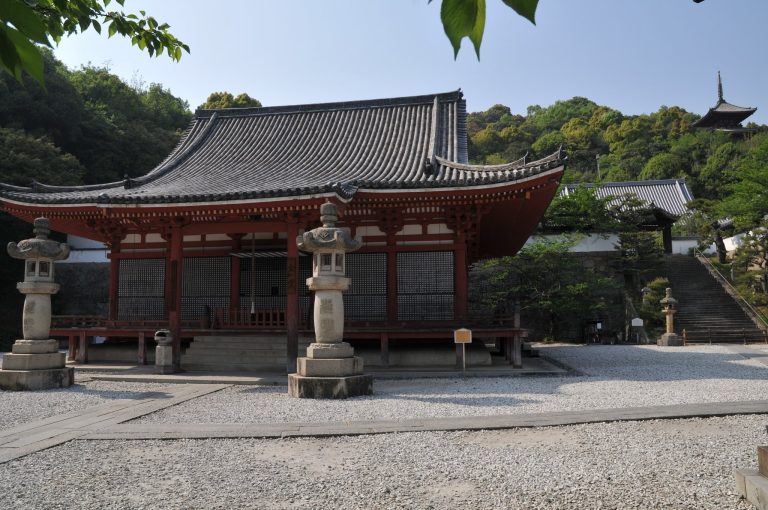
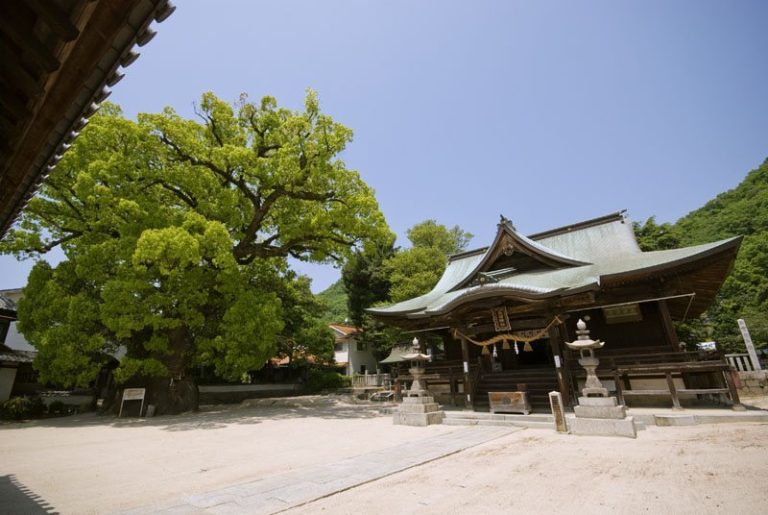
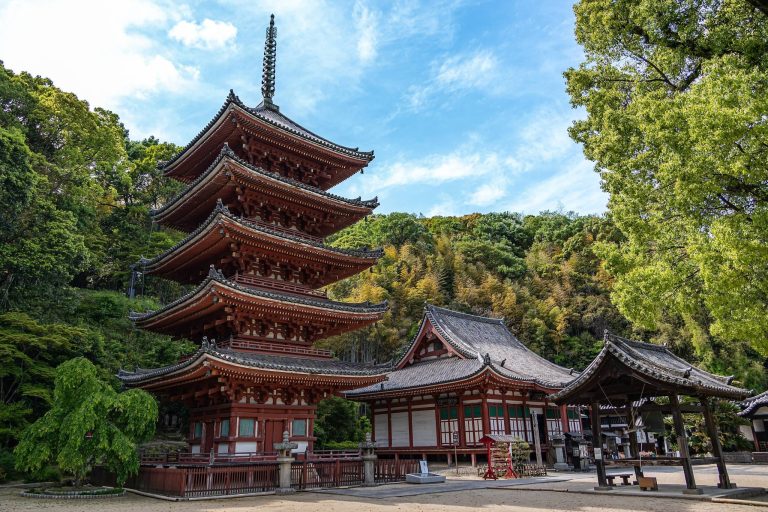
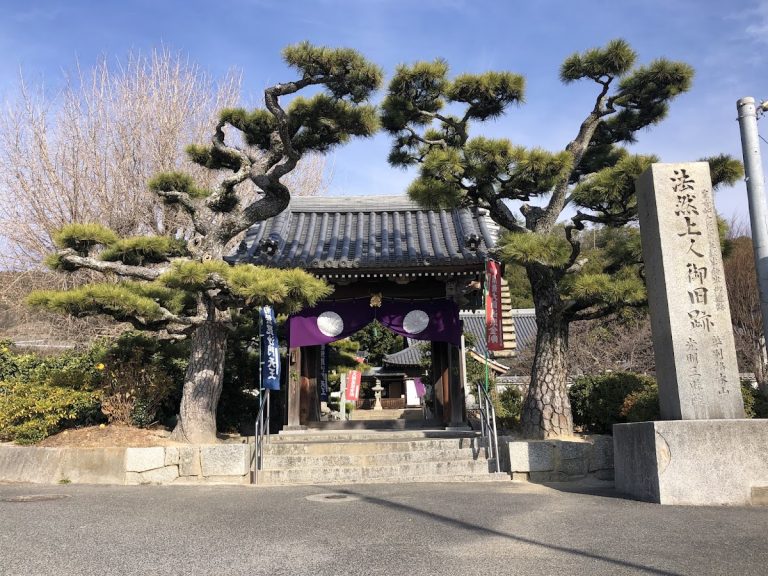
Senkō Temple is an independent Buddhist temple of the Shingon school in Onomichi, Japan. Traditionally founded in 806, the first year of the Daidō era, it is formally known as Daihōzan Gongen-in Senkōji. Its founder is unknown, while its revival is traditionally associated with Minamoto no Mitsunaka, also called Tada Mitsunaka, in the tenth century.
Foundation and revival
Shingon Buddhism is a Japanese esoteric tradition centered on ritual practice, mantras, mandalas, and devotion to Buddhas and bodhisattvas. Senkō Temple’s early history is preserved through temple tradition, which places its foundation in the first year of the Daidō era. The temple was later revived by Minamoto no Mitsunaka, a Heian-period aristocrat and military leader, with the restoration traditionally dated to the tenth century.
Fortification and pilgrimage roles
During the Sengoku period, an era of prolonged warfare among competing regional powers from roughly the fifteenth to the late sixteenth century, Sugihara Mototsune built a detached fortification at the site. He was the lord of Kinashi Castle in Kinashi Village. In religious history, Senkō Temple became the tenth station on the Chūgoku Thirty-Three Kannon pilgrimage, a circuit linking thirty-three temples in the Chūgoku region. It is also the twentieth site on the Sanyō Flower Temples circuit, which connects temples known for seasonal flowers.
Creation of Senkōji Park
In 1894, the temple’s abbot converted 1,347 tsubo of temple-owned land beside the precinct into a park named Kyōraku-en. A tsubo is a traditional Japanese unit of area measuring approximately 3.3 square metres. The park was created to attract pilgrims. In 1903, the temple donated it to the authorities of Onomichi, after which it became Senkōji Park.
The 1976 landslide
In 1976, torrential rain associated with Typhoon 17 caused the western slope of the mountain carrying the temple to collapse. The resulting debris flow swept away houses downstream and caused deaths, adding a modern disaster to the site’s long history.
Remains
Mountain setting and temple precinct
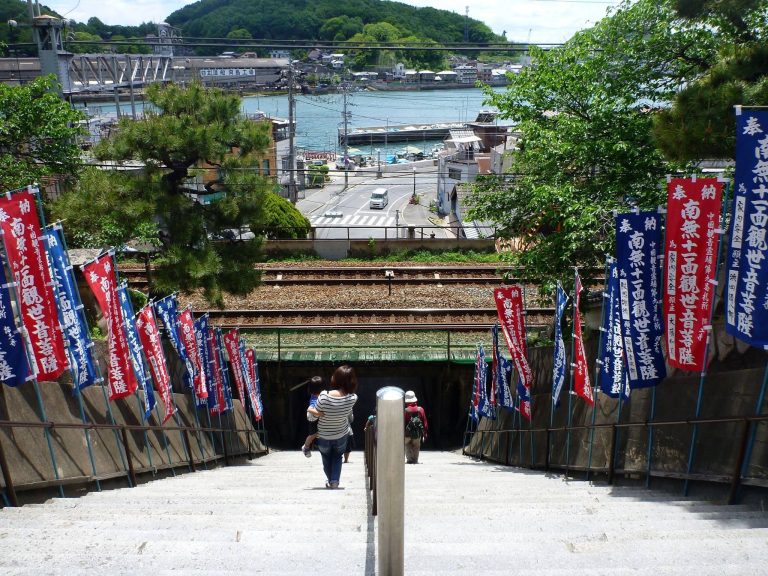
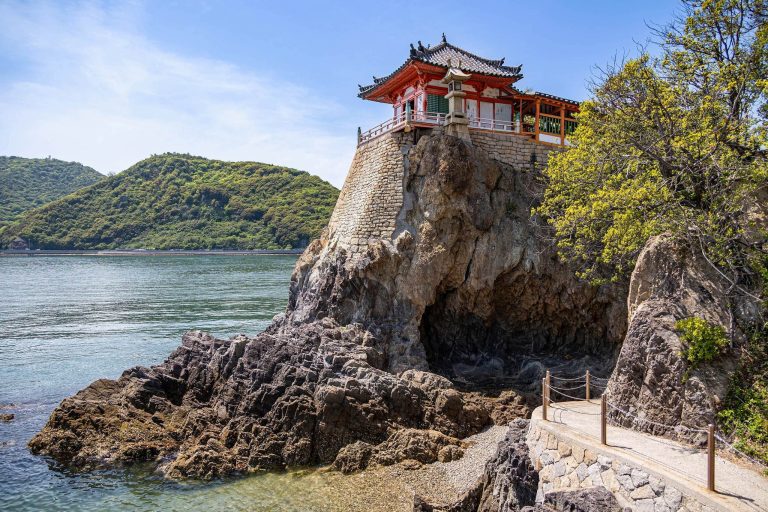
Senkō Temple stands on a mountainside within Senkōji Park, in Onomichi’s Higashitsuchidō district. Its elevated position looks across central Onomichi, the Onomichi Strait, the Seto Inland Sea, and the island of Mukaishima. The mountain itself is called Mount Senkōji after the temple and is regarded, together with Mount Atago and Mount Ruri, as one of Onomichi’s three mountains.
Sacred image and unusual rocks
The principal image is a Thousand-Armed Kannon kept as a hidden Buddhist image. Kannon is the Japanese Buddhist form of Avalokiteshvara, a bodhisattva associated with compassion; the thousand-armed form represents the ability to respond to suffering in many ways. The precinct also contains unusual rocks known as the Couples’ Rock, Mirror Rock, and Tama Rock. Tama Rock is linked with a legend that a luminous rock once stood there.
Literary route through the park
The route descending through Senkōji Park toward the temple forms the Path of Literature, associated with approximately twenty-five writers connected with Onomichi, including Naoya Shiga and Fumiko Hayashi. A literary museum stands midway along the route. On the stairway leading to the temple, footprints from the Footprint Path are displayed, connecting the approach to the literary associations of the park.