Shōmyō-ji Temple: A Kamakura-Period Buddhist Center in Yokohama


Site at a Glance
- Rating
- 4.4
- Popularity
- Low
- Country
- Japan
- Primary era
- Medieval
- External website
- Open
- Eras represented
- Medieval
- Civilizations
- Kamakura shogunate
- Site type
- Religious
- Remains
- Monastery
On this page8 sections
History
Shōmyō-ji Temple is a Buddhist temple in Japan, located in Yokohama, and a special head temple of the Shingon Risshu school, a tradition combining esoteric Buddhism with strict monastic discipline. Known by the mountain name Kintakusan and the temple name Miroku-in, it developed during the Kamakura period as the mortuary temple of the Kanazawa Hōjō family. Its principal image is Maitreya, the future Buddha, and the temple is the 75th site on the New Shikoku Eighty-eight Sacred Sites of Eastern Japan pilgrimage.
Foundation under the Kanazawa Hōjō
The exact foundation date is uncertain. Temple tradition places its origin in 1258, when Hōjō Sanetoki, founder of the Kanazawa branch of the Hōjō family, established a hall for worship of Amitabha within his residence at Mutsuura-Kanazawa. Amitabha is the Buddha associated with the Pure Land of Ultimate Bliss. In 1267, following a recommendation by Ninshō of Gokuraku-ji Temple in Kamakura, Shinkai, a monk from Yakushi-ji Temple in Shimotsuke, was invited to become the temple’s founder. Shōmyō-ji then became part of the Shingon Risshu school.
The institution expanded under Sanetoki’s successors, Hōjō Akitoki and Kanazawa Sadayaki, the second and third heads of the Kanazawa Hōjō family. They supported the development of the buildings and garden while strengthening the temple’s role within the family’s religious foundation. Around 1275, shortly before his death from illness, Sanetoki also established the Kanazawa Bunko library at his residence. Its collection included works on politics, history, literature, and Buddhism.
A center of learning
Shōmyō-ji became one of the leading centers of learning in the eastern provinces and was known as the Kanazawa School. Its intellectual connections reached across Tokyo Bay. In 1306, a trading ship sailed to the Yuan dynasty, the Mongol-founded regime that ruled China from 1271 to 1368, to obtain funds for construction at the temple. One of Shōmyō-ji’s monks traveled aboard the vessel. Buddhist documents copied at Chiba-dera Temple and Dainichidō Temple also survive, reflecting the movement of monks between Kanazawa and Chiba by sea.
The Pure Land garden was laid out in 1320 during Kanazawa Sadayaki’s tenure. A Pure Land garden is a religious landscape designed to represent a Buddha’s paradise, generally through a pond, bridges, and an architectural focus. At Shōmyō-ji, this landscape reinforced the temple’s religious and educational importance within the Kanazawa Hōjō family complex.
Decline, dispersal, and revival
When the Kamakura shogunate, Japan’s military government based at Kamakura, and the Kanazawa Hōjō family fell in 1333, Shōmyō-ji lost its principal patronage. The temple took responsibility for the Kanazawa Bunko, but its books gradually dispersed as the institution declined. Tokugawa Ieyasu later transferred many of the library’s books to the Momijiyama Bunko. Manuscripts and books carrying the Kanazawa Bunko seal, now known as Kanazawa Bunko books, remain in collections throughout Japan.
The temple was subsequently substantially revived, and its surviving buildings date from this period of renewal. The Kanazawa Bunko itself reopened as a prefectural library in 1930. A new building was completed in 1990, and the institution now operates as a museum and library devoted to medieval culture. Most of Shōmyō-ji’s cultural properties, apart from some items including the principal image of Maitreya, are deposited there for exhibition and reading.
The temple precinct was designated a national historic site in 1922, with an additional designation in 1972. Shōmyō-ji remains associated with the subtemples Kōmyō-in and Taihō-in, as well as with Buddhist scriptures connected to the Tachikawa branch of Shingon Buddhism.
Remains
Precinct and Pure Land garden
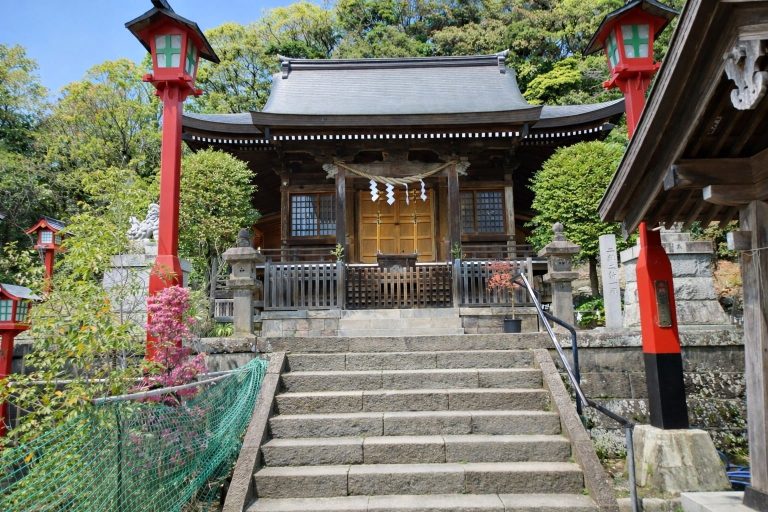
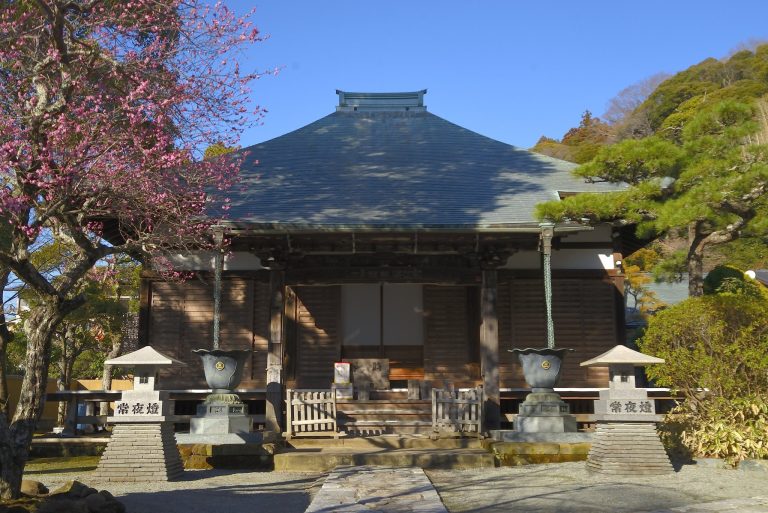
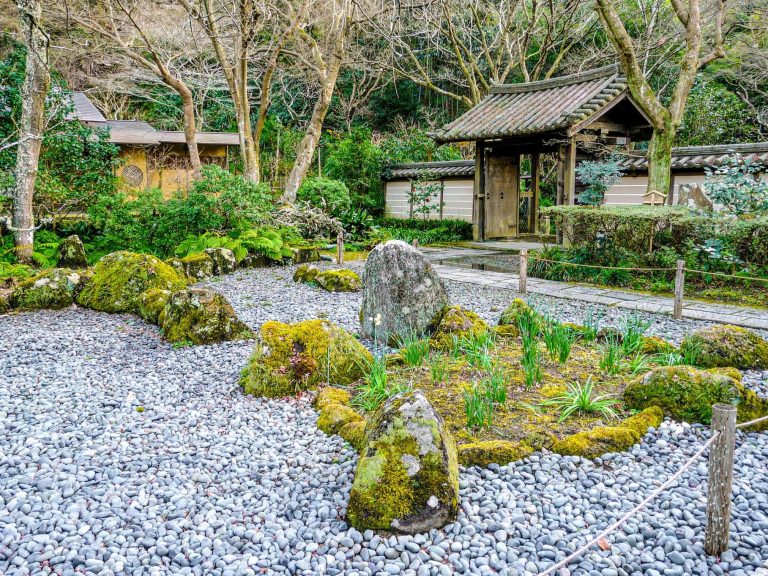
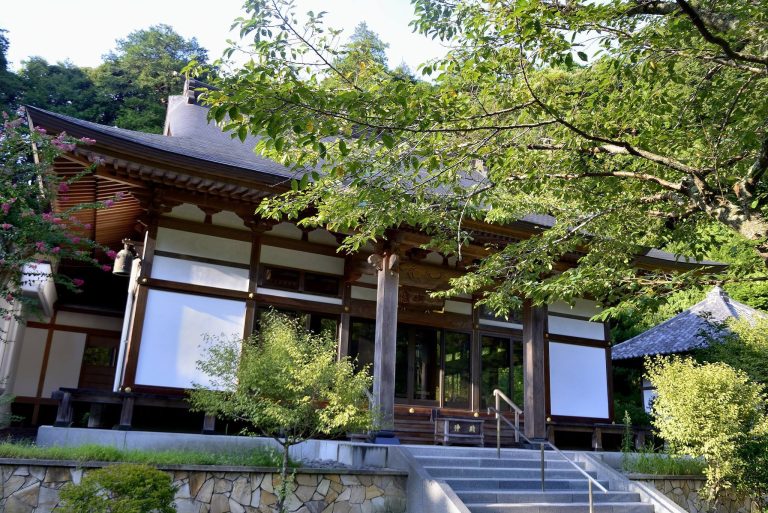
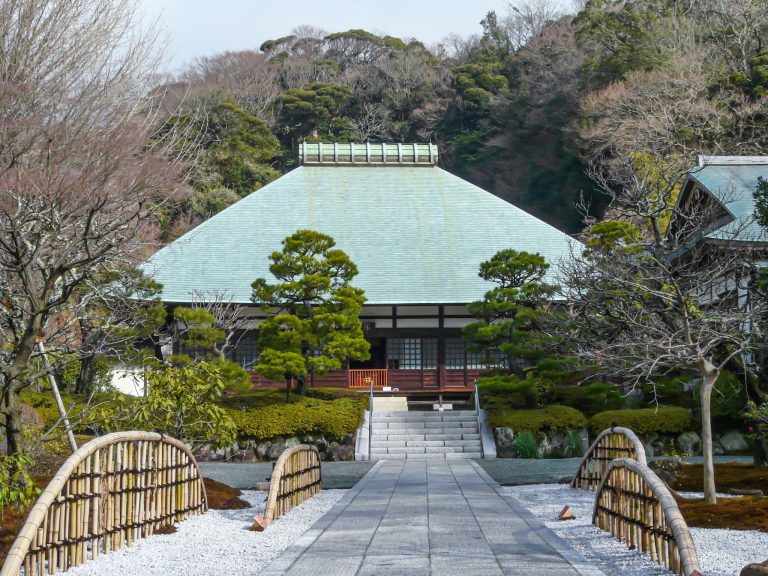
The precinct contains the Red Gate, a Niō Gate with traditional guardian figures, the Main Hall, the Shaka Hall dedicated to Shakyamuni, the historical Buddha, and the associated subtemples Kōmyō-in and Taihō-in. In front of the Main Hall, the Pure Land garden is organized around Aji Pond. Its layout follows the Pure Land mandala tradition and reflects the arrangement created in 1320 under Kanazawa Sadayaki.
Archaeological excavations and an important cultural-property plan of the temple guided the restoration of the garden, completed in 1987. Two bridges have been reconstructed across the garden landscape. The flat bridge measures 17 meters, while the arched bridge measures 18 meters. Together with the pond and the Main Hall, these features preserve the garden’s religious composition as a connected landscape.
Buddhist images and portraits
Shōmyō-ji’s principal image is a wooden standing statue of Maitreya, designated an Important Cultural Property. Kōmyō-in houses a statue of Daitoku Myōō attributed to Unkei, a leading sculptor of the Kei school whose naturalistic Buddhist images are associated with the Kamakura period. Daitoku Myōō is a wrathful Buddhist deity regarded as a protector and a subduer of obstacles.
The temple’s associated cultural properties include silk portraits of Hōjō Sanetoki, Hōjō Akitoki, Kanazawa Sadayaki, and Kanazawa Sadamasa, together with an attached portrait of Kenben. The group represents four generations of the Kanazawa Hōjō family and preserves the connection between the temple, its patrons, and the Kanazawa Bunko tradition.
Manuscripts and archaeological evidence
The National Treasure Wenxuan jizhu is a Heian-period manuscript containing commentaries on Wenxuan, a Chinese literary anthology. It is regarded as rare because no transmitted copy is known in China. The Shōmyō-ji Buddhist scriptures comprise 16,692 items, while the Kanazawa Bunko documents number 4,149 pieces. Most of these designated cultural properties are managed by the adjacent Kanazawa Bunko rather than kept within the temple precinct.
A Jōmon-period shell midden extends near the main gate. The Jōmon period was a prehistoric era associated with hunter-gatherer communities and cord-marked pottery. This archaeological feature places the temple precinct within a much older record of human activity, alongside the medieval religious, residential, and scholarly remains associated with Shōmyō-ji.