Satsuma Kokubun-ji Remains: A Provincial Buddhist Temple in Japan

Site at a Glance
- Rating
- 3.6
- Popularity
- Very Low
- Country
- Japan
- Primary era
- Medieval
- External website
- Open
- Eras represented
- Medieval, Early Modern
- Civilizations
- Yamato
- Site type
- Religious
- Remains
- Monastery
On this page14 sections
History
Satsuma Kokubun-ji Remains in Satsumasendai, Japan, preserve the site of a provincial Buddhist temple probably founded in the latter part of the eighth century during the Nara period, with a plan modeled on the Kawara-dera arrangement. Satsuma Kokubun-ji belonged to the network of kokubunji, provincial Buddhist monasteries established under Emperor Shomu’s order of 741 to promote Buddhism and strengthen the centralized Ritsuryo government, an ancient Japanese system organized through administrative and criminal codes.
Foundation and early rebuilding
The temple was established somewhat later than many other kokubunji temples. It does not appear in the entry for 756 in the Shoku Nihongi, but excavations place its likely foundation in the latter eighth century. The original complex declined early, was destroyed by fire, and was rebuilt on a larger scale during the tenth century. That reconstruction soon disappeared as well.
Medieval and early modern phases
During the Kamakura period, Satsuma Kokubun-ji was rebuilt on a much smaller scale. It continued as the Jingu-ji, a Buddhist institution attached to the Kokufu Tenman-gu shrine, reflecting the historical coexistence of Buddhist and kami worship in Japan. The temple remained in existence into the Muromachi period.
Toyotomi Hideyoshi’s forces completely burned the temple during the conquest of Kyushu in 1586. Shimazu Mitsuhisa rebuilt it during the Edo period, after which it survived in reduced circumstances as a subordinate temple of Taiheiji. The temple was finally abolished in 1869 during the early Meiji movement to suppress Buddhism and separate Buddhist institutions from Shinto.
Identification and protection
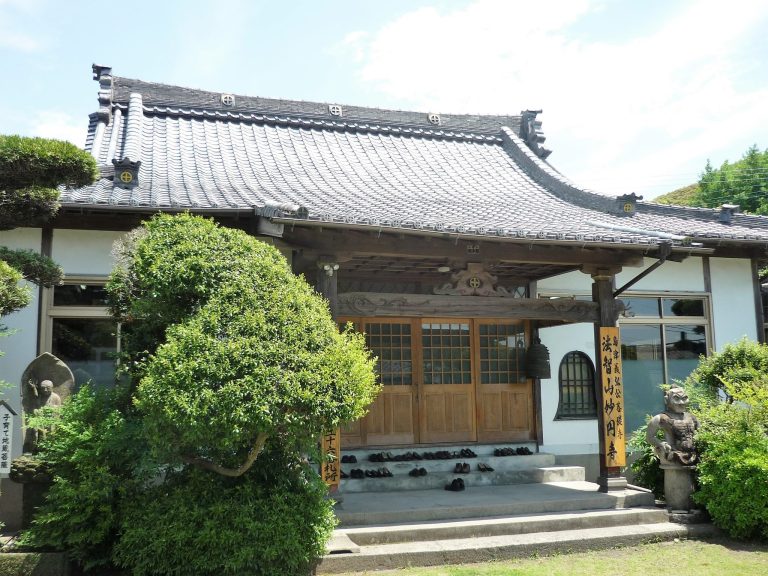
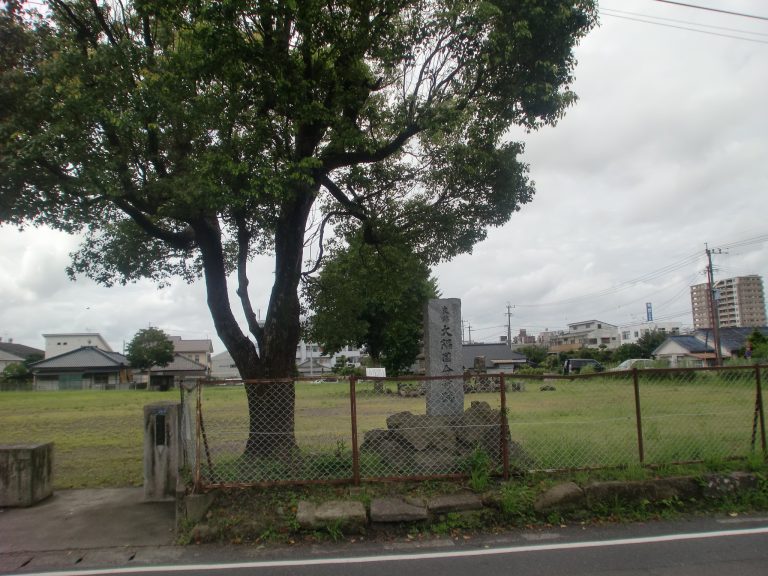
The pagoda remains were identified at an early date. A foundation stone was moved to a temple elsewhere in the city in 1888, returned to the discovery site in 1944, and incorporated into the nationally protected historic site. Satsuma Kokubun-ji was designated a National Historic Site in 1944 as the Satsuma Kokubun-ji Pagoda Ruins. Archaeological investigations began in 1968, and results available by 1983 clarified the general plan of the temple complex.
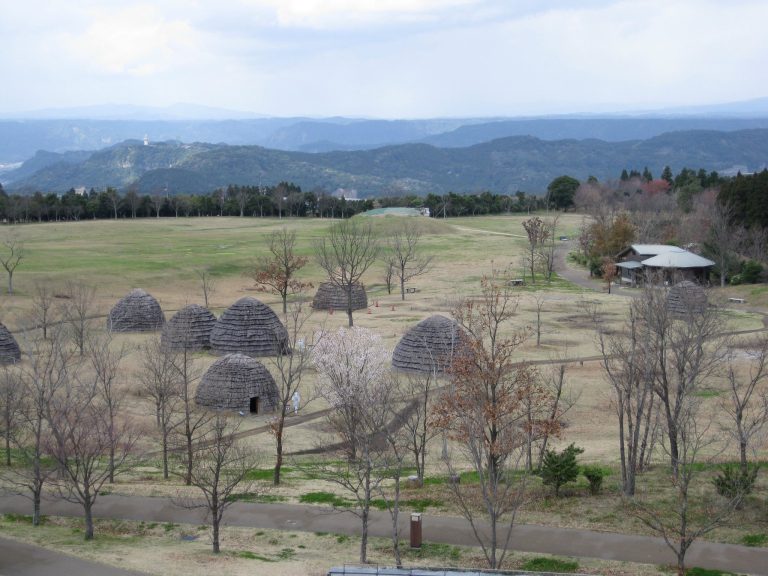
The protected designation expanded in 1976 to cover nearly the entire temple precinct and the Tsurumine tile kiln, extending the protected area to approximately 1.5 hectares. In 1982, adjoining land to the southwest was added after another building foundation was found there. The remains were developed as Satsuma Kokubunji Site Park in 1985 and are now maintained as Satsuma Kokubunji Ruins Historical Park.
Remains
Temple precinct and layout
The remains occupy the eastern edge of a plateau about 13 meters above sea level, north of the present city. The precinct measured approximately 130 meters from north to south and 120 meters from east to west, a smaller area than that of most other kokubunji complexes. Its principal buildings followed a central north-to-south axis, beginning with the South Gate and Middle Gate, continuing through the Main Hall and Lecture Hall, and ending at the North Gate.
A pagoda stood east of and in front of the Main Hall, while a secondary Main Hall occupied the western side of the complex. This arrangement follows the Kawara-dera style, a temple plan modeled on the layout of the important Asuka-period temple Kawara-dera. The smaller scale and unusual arrangement may have been related to Satsuma’s distance from the capital.
Restored architectural remains
Pagoda foundations
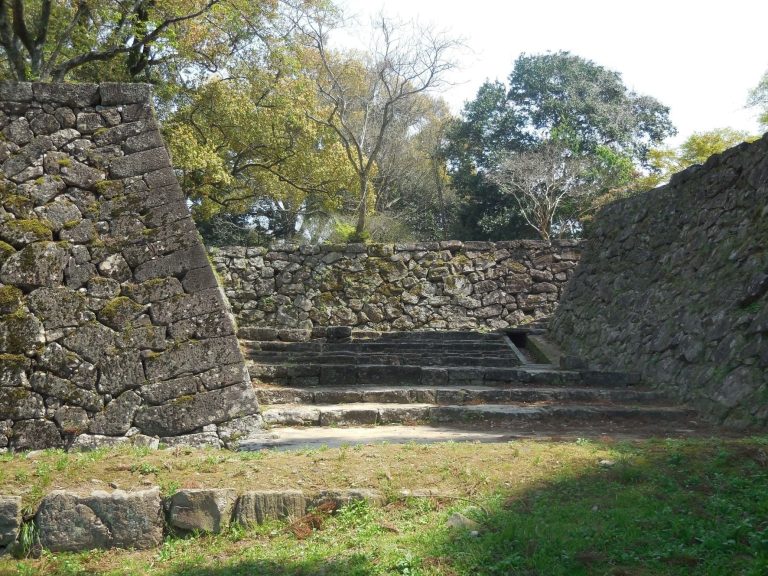
The pagoda is represented by fourteen foundation stones. A foundation stone is a block that supported a building’s posts or structural framework, and these stones mark the positions of the pagoda’s former supports. The pagoda remains have been restored for presentation in the historical park.
Main Hall and Lecture Hall
The Main Hall and Lecture Hall are preserved through restored remains within the park. Their positions reflect the central sequence of buildings along the temple’s north-to-south axis, with the pagoda placed east of and in front of the Main Hall. The restored foundations present the arrangement established through archaeological investigation.
North Gate
The North Gate remains have also been restored for presentation. It formed the northern end of the main axial sequence that connected the South Gate, Middle Gate, Main Hall, and Lecture Hall.
Associated features
Tsurumine tile kiln
The Tsurumine tile kiln lies approximately one kilometer northeast of the temple. It produced roof tiles for the complex and was included within the expanded historic-site protection in 1976.
Southwestern building foundation
A building foundation found on land adjoining the designated area to the southwest was added to the protected site in 1982. Its inclusion extended the preserved archaeological area beyond the principal temple precinct.
Relocated foundation stone
One Satsuma Kokubun-ji foundation stone was transported from Kagoshima to Kameyama in Mie Prefecture. It remains privately owned and was designated a Kameyama municipal tangible cultural property in 1952.