Hayatozuka: A Buddhist Archaeological Complex in Kagoshima, Japan
Site at a Glance
- Rating
- 3.9
- Popularity
- Medium
- Country
- Japan
- Primary era
- Medieval
- Eras represented
- Medieval, Modern
- Civilizations
- Japanese
- Site type
- Religious
- Remains
- Pagoda
On this page10 sections
History
Hayatozuka is a Buddhist archaeological complex in Uchiyamada, Kirishima, Kagoshima Prefecture, Japan, generally dated to the late Heian period (794–1185). One leading interpretation regards it as a predecessor to Shōkoku-ji, although its precise institutional role remains debated. A stone Buddha inscribed with the date 1142 supports the late-Heian dating.
Origins and historical interpretations
A text preserved in the Kuwahata family papers describes three five-storied stone pagodas and Four Heavenly Kings along a route used for a Buddhist release ceremony. The surviving copy was made in 1737, while the original text is thought to date to the early Northern and Southern Courts period, when rival imperial courts competed for authority. Its account indicates that Hayatozuka existed by that time.
Another interpretation identifies the site as a nunnery associated with Ōsumi Kokubunji, a provincial Buddhist temple. Earlier proposals connected it with ceremonies to appease the spirits of the Kumaso, an ancient people of southern Kyushu, including a tradition that it was built in 708. Others thought it commemorated people killed in the Hayato Rebellion, an uprising in 720, or identified it with Shōkoku-ji itself. A further theory treated the complex as Buddhist remains moved during the early-Meiji suppression of Buddhist institutions and objects, but archaeological evidence has largely ruled out relocation from another site.
Naming and later history
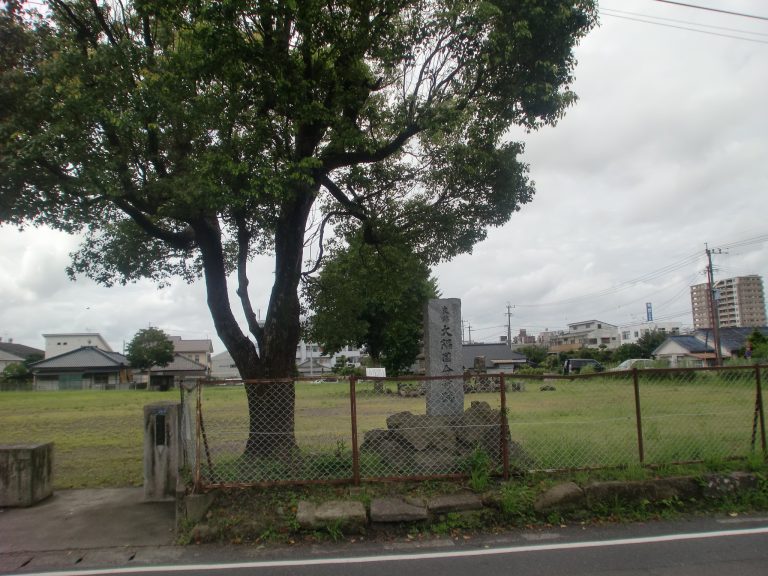
The name Hayatozuka was introduced in 1903 by Kuwahata Kimiyuki, a priest of Kagoshima Shrine. Earlier names included Gunjinzuka, Shogunzuka, and Kumasozuka. The site was designated a National Historic Site on March 3, 1921.
The pagodas were restacked and repaired with mortar in 1970. Weathering and the mortar had affected their appearance, prompting a site-improvement project in 1992. Archaeological investigations followed from 1994, and restoration and site work were completed in 2000.
Remains
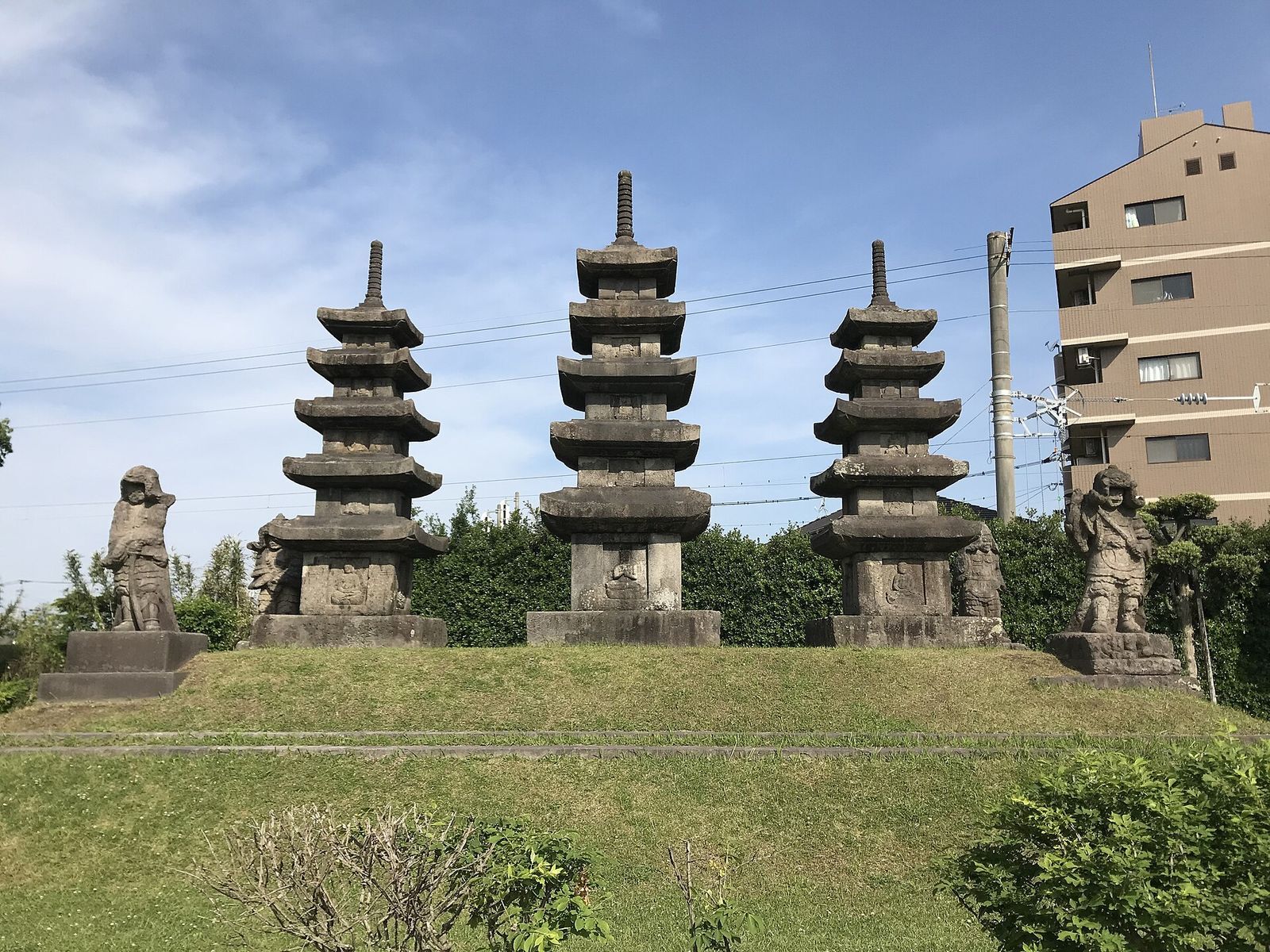
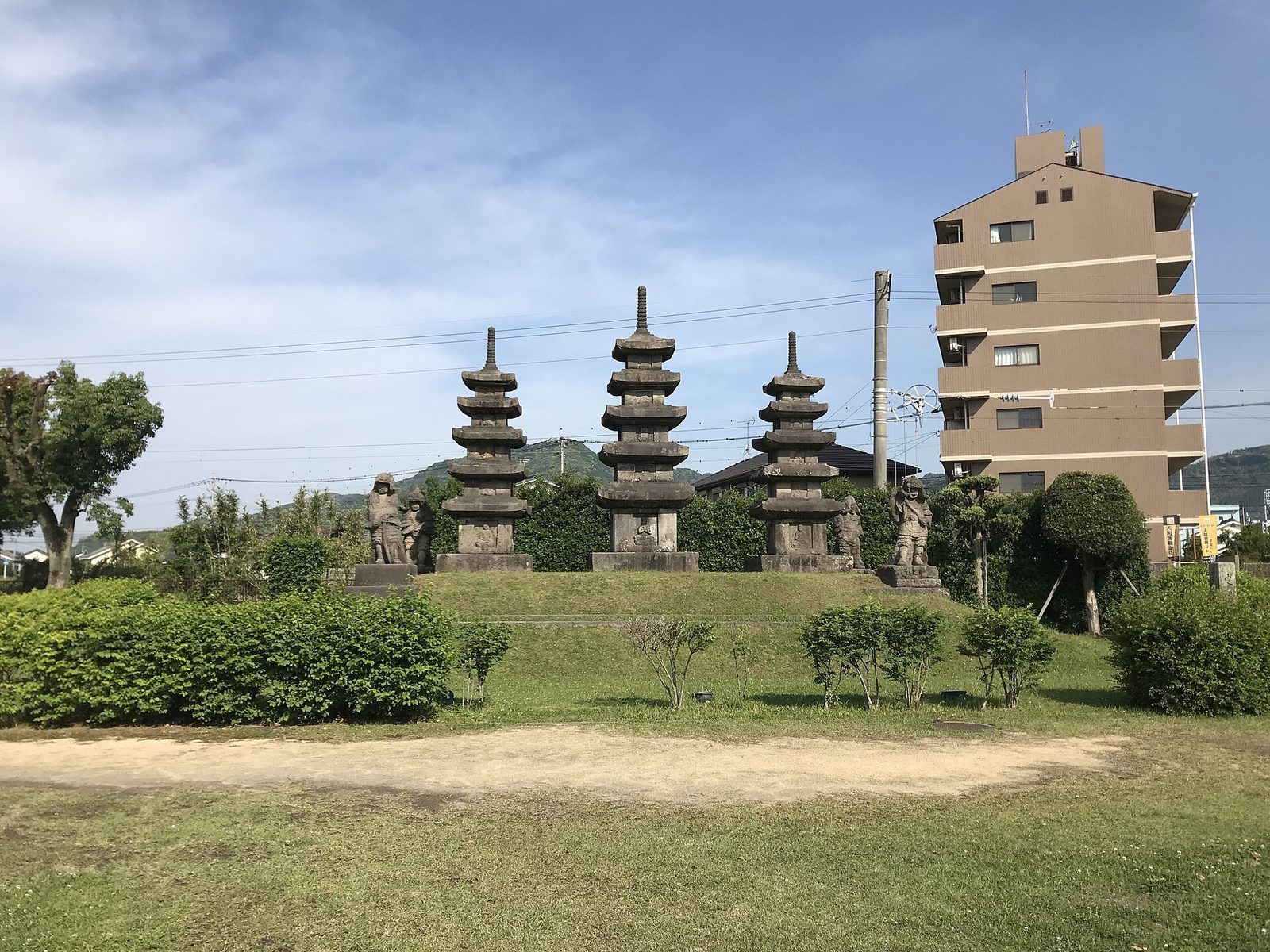
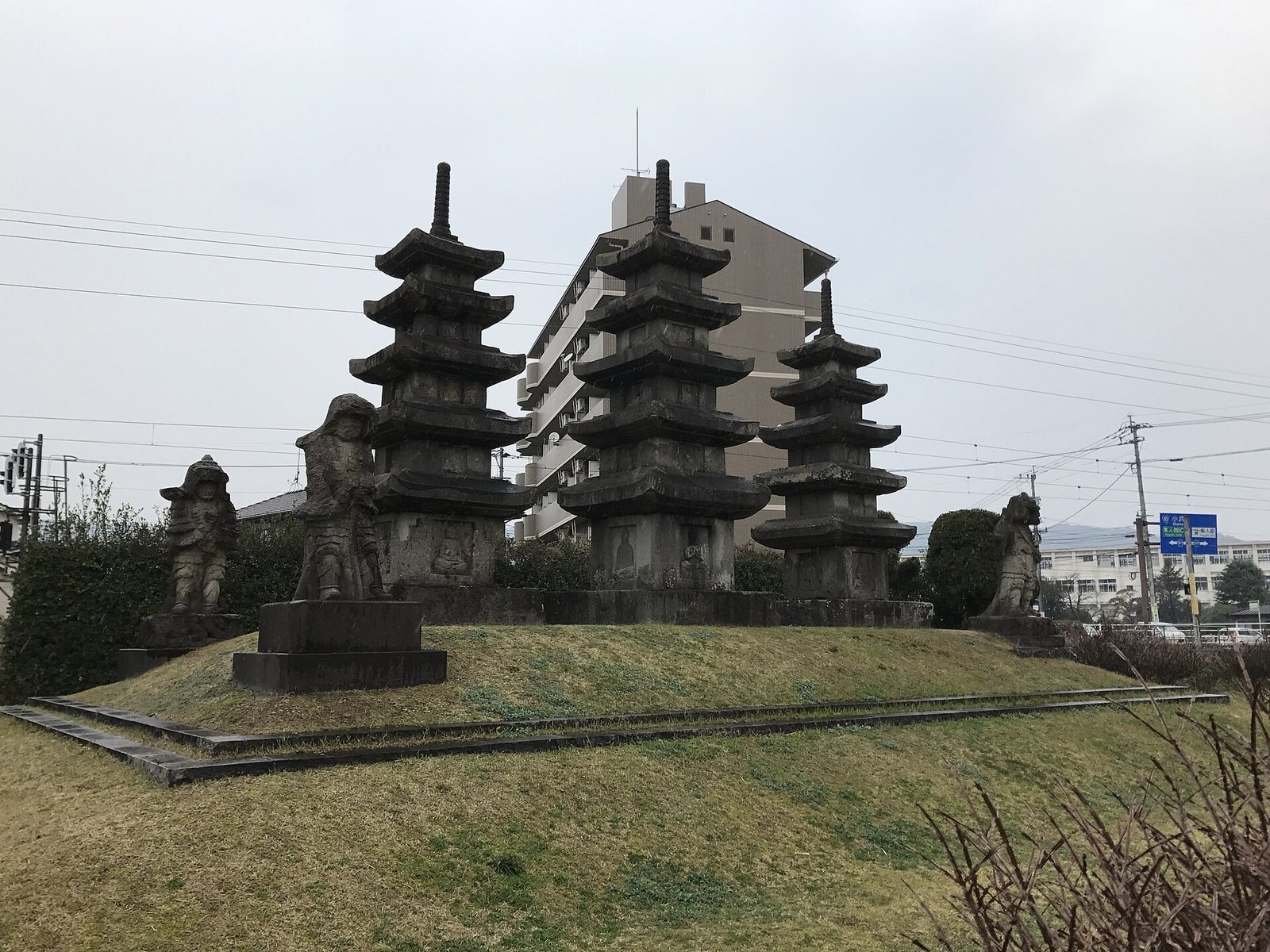
The complex covers about 50 square metres and is organized around a mound with three stone pagodas and four guardian figures. The mound is made of volcanic tuff, a soft rock formed from volcanic ash, and two stone walls enclose it.
Mound and pagodas
The mound
The mound measures approximately 15 metres long and 2 metres high. It was reshaped from an oval into a square during restoration, changing its outline while retaining its central place in the complex.
The stone pagodas
Three five-storied stone pagodas stand on the mound. The central tower is 6.6 metres tall, while the two flanking towers measure about 5.5 to 5.6 metres. Recovered stone blocks allowed all three to be reconstructed as five-storied towers. Their design imitates wooden structures: the undersides of the eaves have shallow two-step profiles, and the central tower’s first level has vermilion-painted wooden roof supports, 18 along the upper row and 16 along the lower. Images of Buddhas are carved on the upright stones, each of which has a square opening near the top of the first level. The towers’ upper ornaments were reconstructed with reference to western Japanese examples, including a stone pagoda associated with the Kajiki clan at Aira and dated to 1242.
Guardian figures and carved remains
The Four Heavenly Kings
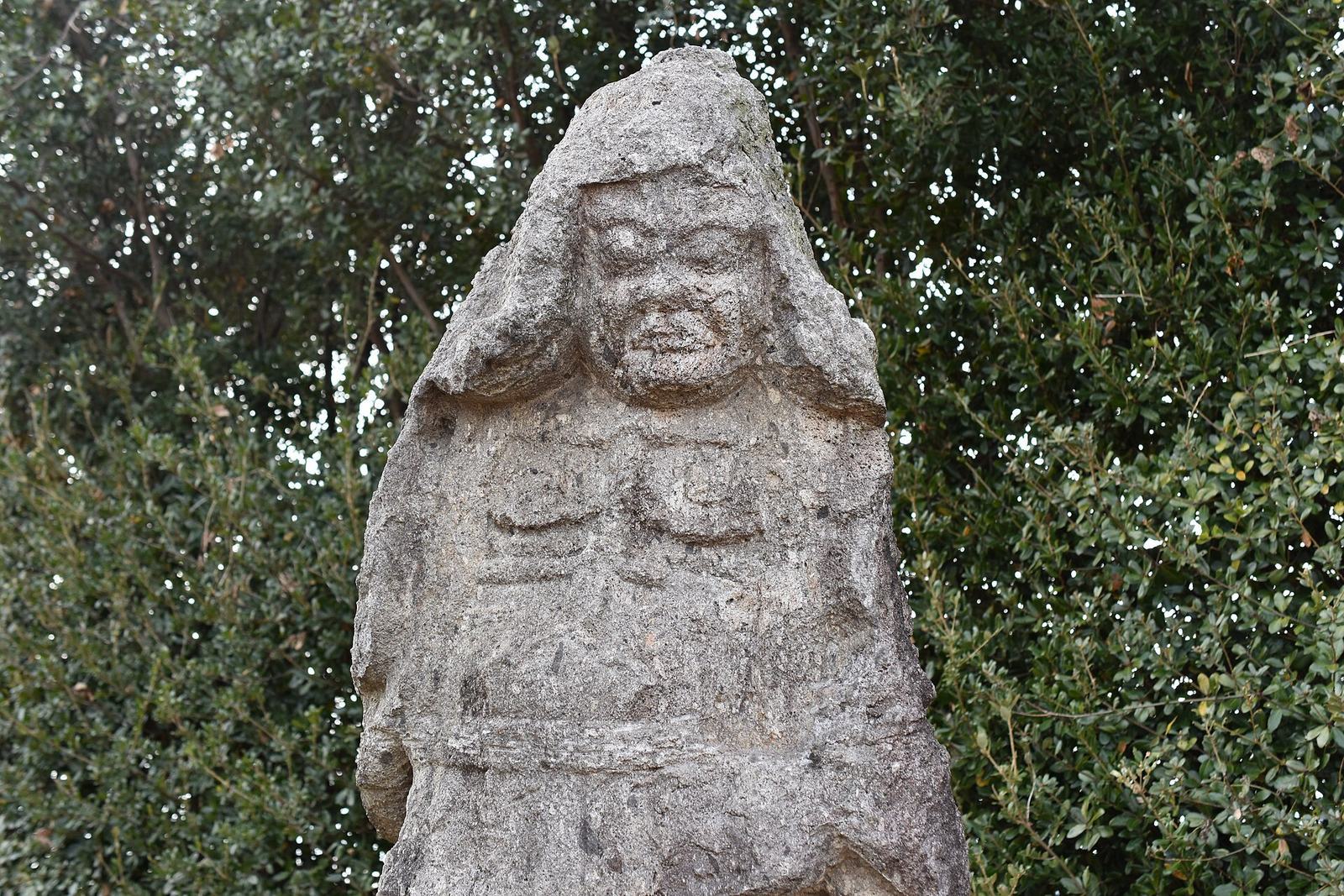
Four stone statues of the Four Heavenly Kings, Buddhist guardian deities, are arranged around the pagodas. They represent Jikokuten, Zōjōten, Kōmokuten, and Tamonten. Before restoration, two figures stood some distance from the mound and were partly buried. Jikokuten had remained upright; Zōjōten was removed in the latter part of the Meiji period and returned in 1915, while Kōmokuten and Tamonten had been buried separately.
Other carved stones
Excavation also yielded stone fragments that did not join the four figures and pieces of a pedestal for a demon figure. These finds add to the sculptural remains associated with the pagodas and guardian statues.