Futagozuka Kofun (Fukuyama): A Seventh-Century Keyhole Burial Mound
Site at a Glance
- Rating
- 4
- Popularity
- Very Low
- Country
- Japan
- Primary era
- Medieval
- External website
- Open
- Eras represented
- Medieval
- Civilizations
- Unclassified
- Site type
- Burial
- Remains
- Burial Mound
On this page11 sections
History
Futagozuka Kofun (Fukuyama) is a Kofun-period monumental burial mound in Japan, built in the early seventh century as a keyhole-shaped tomb. Archaeological dating places its first burial in the first quarter of the seventh century. The mound is regarded as one of the last keyhole-shaped burial mounds constructed or used in western Japan, placing it at the end of a long tradition of monumental tomb building that flourished from the third through the seventh centuries.
A burial mound at the end of the Kofun period
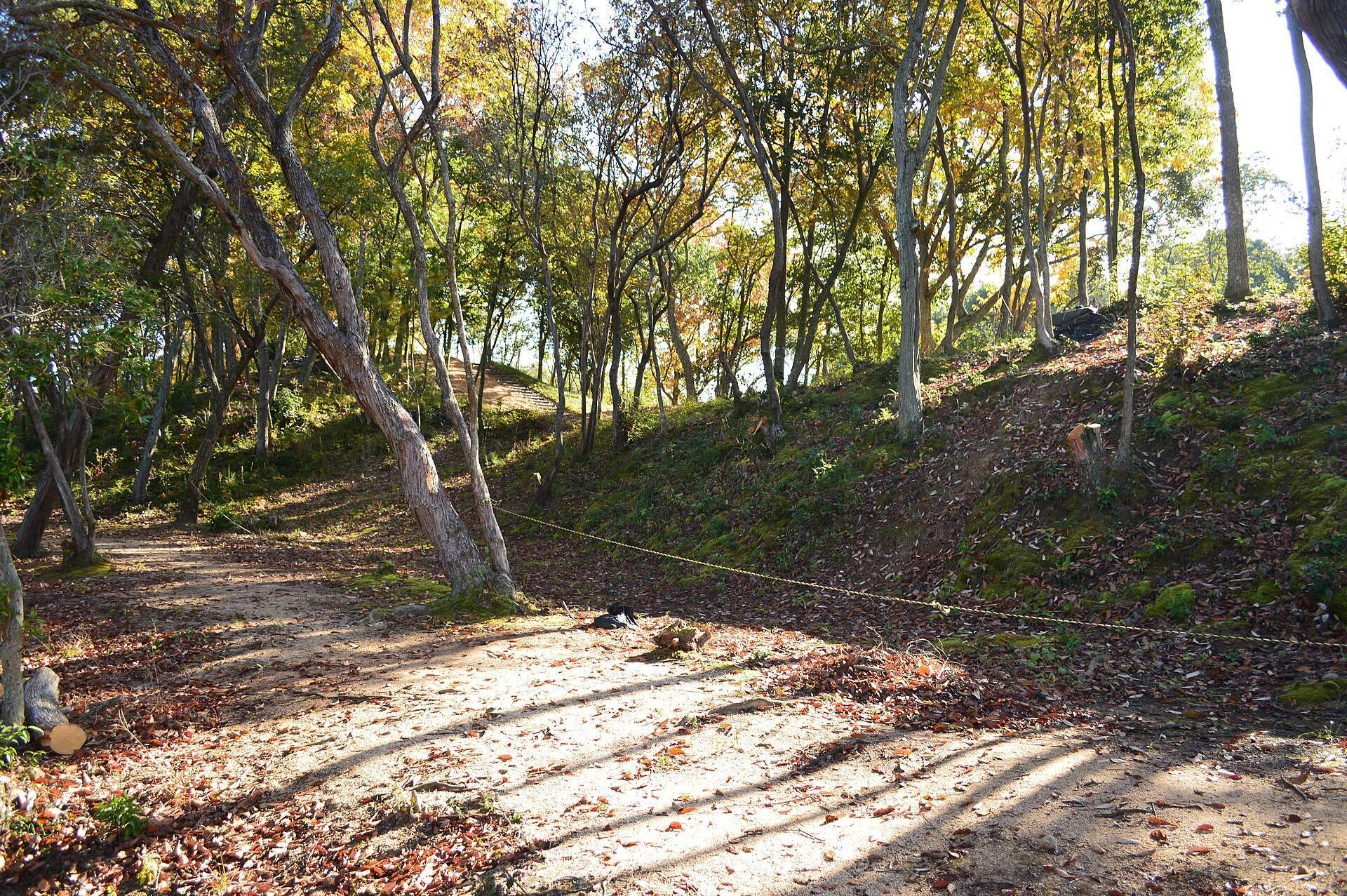
The tomb occupies a low hill about 50 metres above sea level in Nakashima, Ekiyachō, Fukuyama, in the San’yō region. Its position was strategically connected to movement through the area. The ancient San’yōdō highway ran along the southern foot of the hill, near an east-west route that linked settlements and political centres. The location therefore placed the mound within a landscape shaped by travel and communication as well as burial practices.
Further burials probably took place during the early seventh century and may have continued into the later part of the first half of that century. The mound consequently reflects a period when the keyhole form was still being used, even as the long Kofun-period tradition was approaching its end in western Japan.
Regional and political connections
Stone from Tatsuyama in Harima was used in the burial construction instead of stone available locally. This choice has been interpreted as evidence of a strong connection with the Yamato regime, the early centralized ruling power based in the Kinai region that expanded its influence across the Japanese archipelago during the Kofun period. The relationship is especially notable in the former Kingdom of Kibi, a major political region in what is now southwestern Honshu, where the tomb was built.
Excavation and protection
The Fukuyama City Board of Education excavated the mound between 2002 and 2005 in preparation for national designation. The investigations examined the mound and its large rear burial chamber, revealing that the chamber had been heavily disturbed, apparently by grave robbers in antiquity. Although few objects remained in their original positions, the excavation recovered a substantial group of weapons, horse equipment, tools, pottery, and other burial goods.
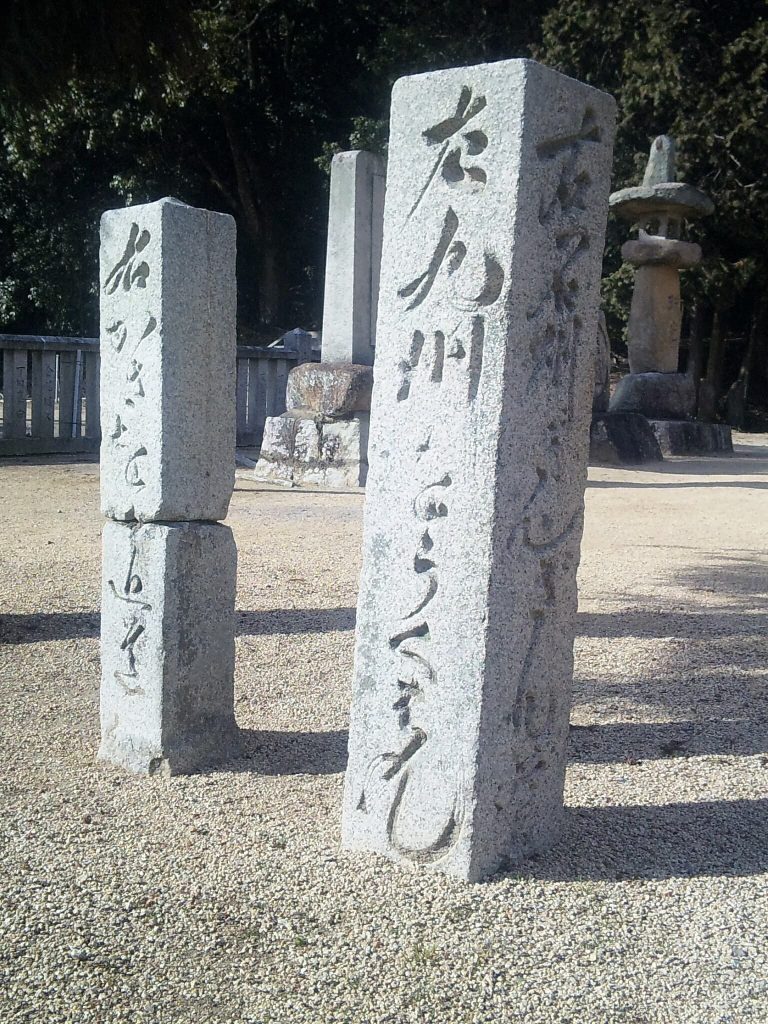
Futagozuka Kofun became a National Historic Site of Japan on July 23, 2009. It had also been included in Fukuyama’s Kofun Road archaeological route in 2006. Local heritage groups and the city installed explanatory signs and carried out improvements to the site, contributing to its interpretation and preservation.
Remains
Futagozuka Kofun is a 68-metre-long keyhole mound, a form that combines a circular rear section with a rectangular front section. It is oriented west-southwest. The rear circular part measures 41 metres across, while the anterior section is 30 metres wide. The mound rises approximately 6 metres and is bordered at its foot by a narrow encircling moat. The moat measures between 1.6 and 4 metres in width and is approximately 1.8 metres deep.
Mound construction
The mound was built without haniwa, ceramic funerary figures or cylinders placed on some Japanese burial mounds, and without fukiishi, stones laid over a mound as protection or facing. Its principal burial installations occupy both the circular rear section and the rectangular anterior section. Together, these chambers give the monument an unusually extensive internal arrangement for its period.
Burial chambers
Rear stone chamber
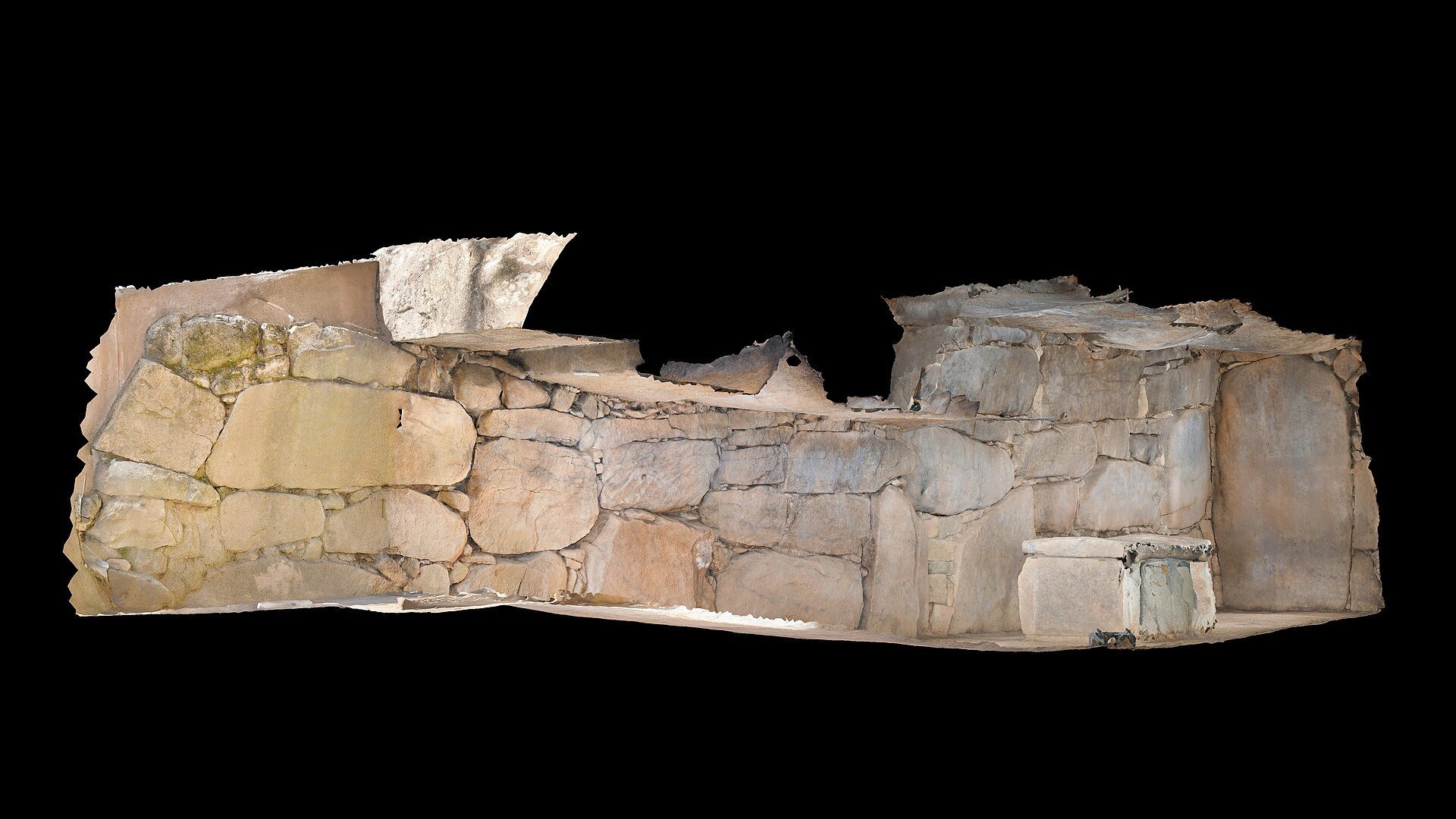
The rear burial chamber is a large horizontal stone chamber, meaning that it is entered through a passage extending laterally into the mound. Its double-sleeved form has projecting side sections where the main chamber meets the passage. The main chamber is 6.7 metres long. Its width expands from 2.1 metres beside the rear wall to 2.6 metres near the inner entrance, and its height increases from 3.3 metres at the rear to 3.4 metres at the entrance.
The passage is 8.1 metres long. It measures 1.6 metres wide at the inner entrance and 1.9 metres at the outer entrance, with heights of 2.2 and 2.6 metres respectively. Beyond the passage is a long, stone-lined grave approach approximately 10 metres long and reaching about 3 metres in width in places. Natural stones form the chamber, whose rear wall consists of one large, nearly vertical flat slab.
Anterior stone chamber
A second burial chamber was built in the anterior section of the mound. Its passage extends for 12.5 metres, making it among the largest burial-chamber passages in Hiroshima Prefecture. The chamber forms part of the monument’s two-part funerary arrangement and shows that burial activity was not confined to the circular rear section.
Sarcophagus and coffin remains
In the front half of the rear chamber, excavators found the remains of a modified assembled house-shaped stone sarcophagus. Its bottom stone remained approximately in place, while two lid slabs and two end boards were recovered separately from accumulated soil. The lid slabs are flat rather than house-shaped. The sarcophagus stone is tuff quarried at Tatsuyama in Harima, linking the physical construction of the tomb with the wider regional connections indicated by its materials.
Iron nails near the rear of the chamber indicate that a wooden coffin was probably placed separately from the stone sarcophagus. This evidence points to more than one form of container within the burial chamber and helps explain the arrangement of the funerary installation.
Weapons, horse equipment, and pottery
The recovered grave goods include an iron sword, spears, arrowheads, knives, iron nails, and horse equipment such as oval-shaped pendants and saddle fittings. Among the most distinctive objects is a gilt-bronze double-dragon ring pommel from an iron sword. It shows two dragons facing each other, with each creature holding a ball in its mouth. No other example of this design is known in Japan.
Haji ware, a low-fired earthenware made in ancient Japan, and Sue ware, a high-fired gray ceramic often placed in Kofun-period elite burials, were found in several parts of the chamber. Sue ware was particularly abundant. The forms of its high-footed cups correspond to middle and late phases of the TK209 typological sequence associated with the Toga kilns, an important ancient ceramic-producing complex in the Izumi area. These vessels support the placement of the first burial in the first quarter of the seventh century.