Okishio Castle: An Akamatsu Clan Mountain Stronghold in Japan

Site at a Glance
- Rating
- 4.3
- Popularity
- Very Low
- Country
- Japan
- Primary era
- Medieval
- External website
- Open
- Eras represented
- Medieval
- Civilizations
- Ashikaga shogunate
- Site type
- Military
- Remains
- Castle
On this page11 sections
History
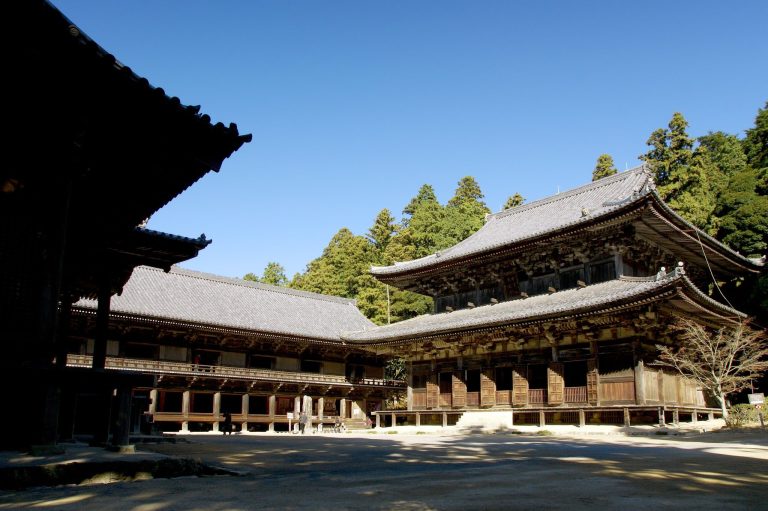
Okishio Castle, also known as Ojio Castle, is a Muromachi-period mountain castle in Himeji, Japan, built in 1469 by Akamatsu Masanori on Mount Ojioyama. The Muromachi period was the era of the Ashikaga shogunate from the fourteenth to the sixteenth century. The castle became the residence of five successive generations of the Akamatsu clan, a medieval military family that held power in western Japan, especially Harima.
Foundation during the Ōnin War
During the Ōnin War, Akamatsu Masanori supported the Hosokawa clan, captured Bizen, Mimasaka, and most of Harima, and established Ojio Castle in a more central position from which to govern these territories. The Akamatsu clan’s former stronghold, Shirahata Castle, was abandoned as the new base took on this regional role.
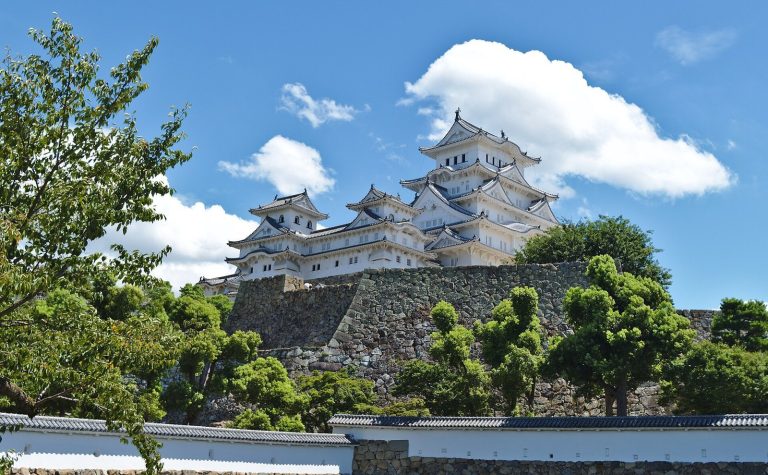
Masanori was appointed military governor of Harima and also used Himeji Castle as his base. Because he needed a mountain stronghold to guard against invasions from Tajima, Ojio Castle became an important part of the area’s defensive organization. For a time, Himeji Castle was treated as a branch castle of Ojio Castle, with a member of the Kōdera family installed as its lord.
Submission and dismantling
In 1577, during the lordship of Akamatsu Norifusa, the castle surrendered to Hashiba Hideyoshi, later known as Toyotomi Hideyoshi, during his invasion of Harima. Hideyoshi was a sixteenth-century military ruler who expanded his control over Japan.
Hideyoshi’s castle-demolition order of 1580 required specified fortifications to be dismantled or abandoned as part of the consolidation of political and military control. Ojio Castle was abandoned and dismantled by 1581. Its buildings and stone walls were removed, and some materials were transferred to Himeji Castle. The gate called Tono-ichi Gate at Himeji Castle is traditionally said to have been moved from Ojio Castle.
Archaeological investigation and protection
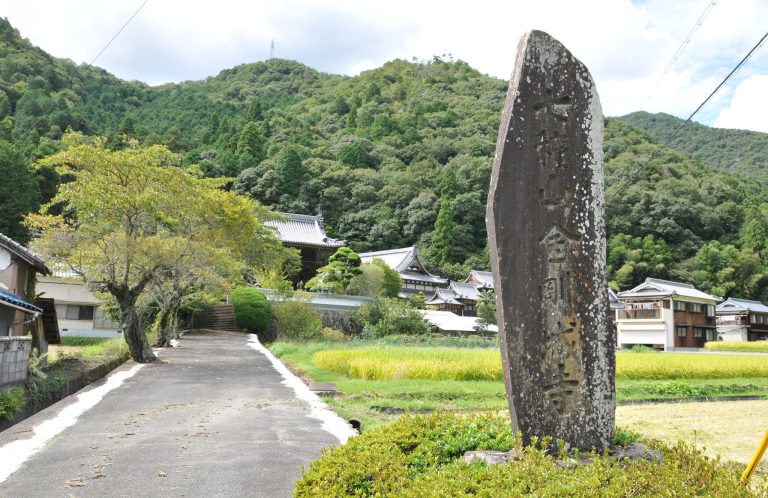
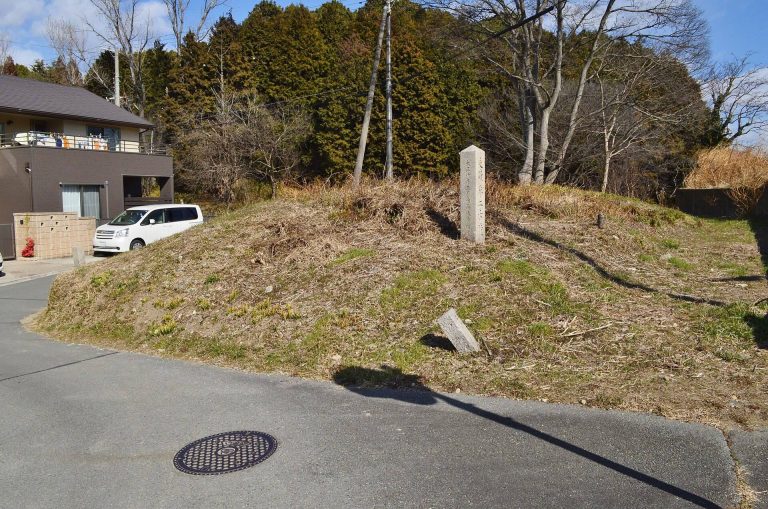
The former Yumesaki Town administration investigated the site while seeking national historic-site protection. Modern excavations identified tower foundations and residential remains, clarifying the former arrangement of the castle. On 28 March 1996, Okishio Castle was designated a National Historic Site together with Shirahata Castle and Kanjōsan Castle under the collective designation “Akamatsu Clan Castle Sites.”
Remains
Okishio Castle occupies Mount Ojioyama, also called Castle Mountain, a 370-meter-high mountain in the Miyaoki and Itoda areas of Yumesaki, Himeji. The site lies north of central Himeji, in a narrow valley along the Yumesaki River and near the road connecting the San’yōdō and San’in regions. The castle extended along a ridge approximately 600 meters from east to west and 400 meters from north to south, with more than 60 enclosures distributed across the hill.
Enclosures and summit areas
Central baileys
The castle’s enclosures included a main bailey, second bailey, third bailey, and additional terraces. A bailey was an enclosed functional area within a Japanese castle. The main bailey generally served as the principal administrative or defensive enclosure, while secondary baileys supported it. The central area consisted of three levels of terraces, with a front gate and front side slopes protected by stone walls.
Terraces and residential remains
Numerous terraces survive across the hilltop. Archaeological excavations revealed residential structures in several enclosures, while tower foundations were found in the central enclosure. A building made with rows of baked bricks was interpreted as a turret, adding evidence of the structures that once occupied the fortified ridge.
Defensive construction and access
Retaining walls
Low stone walls were built along the lower edges of enclosure embankments to retain the earth. Collapsed stone walls are scattered throughout the site, and a partial line of stones remains. These walls formed part of the construction of the terraces and the fortified enclosure edges.
Mountain approach
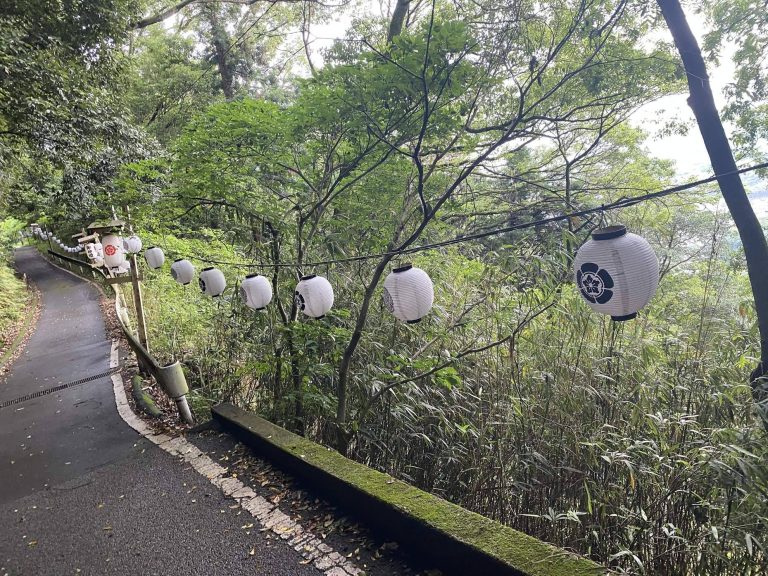
Access to the inner bailey at the summit required climbing a steep, winding route more than 1.8 kilometers long. The principal summit area is placed at about 300 meters in elevation, while Mount Ojioyama rises to 370 meters. The long ascent and the distribution of ridges, terraces, enclosures, and retaining walls used the mountain terrain as part of the castle’s defensive design.