Ōtoriiyama Ruins: A Heian-Period Fortified Residence in Japan

Site at a Glance
- Rating
- 3.7
- Popularity
- Very Low
- Country
- Japan
- Primary era
- Medieval
- External website
- Open
- Eras represented
- Medieval
- Civilizations
- Unclassified
- Site type
- Military
- Remains
- Castle
On this page11 sections
History
Ōtoriiyama ruins are the remains of a Heian-period fortified residence in Yokote, Japan, probably begun in the second half of the tenth century and completed in the second half of the eleventh century. The site is traditionally associated with the Dewa Kiyohara clan, especially the local leaders Kiyohara Mitsuyori and Ōtoriiyama Tarō Yorien. The Heian period, conventionally dated from 794 to 1185, was an era of imperial court rule when powerful regional families built fortified residences and administrative centers.
The Kiyohara stronghold
The ruins occupy a central position in the Yokote Basin, in the former Dewa Province of northern Japan. Their large scale and sophisticated defenses show that heavily fortified mountain strongholds existed more than 200 years before the formerly accepted emergence of samurai-built mountain castles in the fourteenth century. The arrangement also resembles the later Yanagi-no-Gosho residence at Hiraizumi, associated with Fujiwara Kiyohira, founder of the Northern Fujiwara dynasty. It may have influenced that residence’s design.
During the Former Nine Years’ War, an eleventh-century conflict in northern Japan involving the Abe and Kiyohara families and forces representing the imperial government, Ōtoriiyama Tarō Yorien reportedly sheltered Abe Masatō, an Abe-aligned figure. The Mutsu Waki, a chronicle of the conflict, relates that forces led by the governor of Dewa traditionally surrounded Ōtoriiyama in response.
Recognition and investigation
Castle-history specialist Yoshihiro Senda judged the fortification’s scale comparable to that of castles from the Sengoku period, the era of political fragmentation and warfare conventionally dated from the fifteenth to the late sixteenth century. He also regarded its earthen defenses as an exceptionally advanced form of fortification. The site was discovered when the former Yokote municipality investigated land intended for a comprehensive sports park. Excavations took place from 1977 to 1983, followed by a further three-year investigation completed by 2009 after the municipal merger that created the present city of Yokote.
Japan designated the ruins a National Historic Site in February 2010. Most of the area was later backfilled and incorporated into the planned sports complex, with sports fields, tennis courts, and an outdoor pool established over parts of the site. Other sections became residential land.
Remains
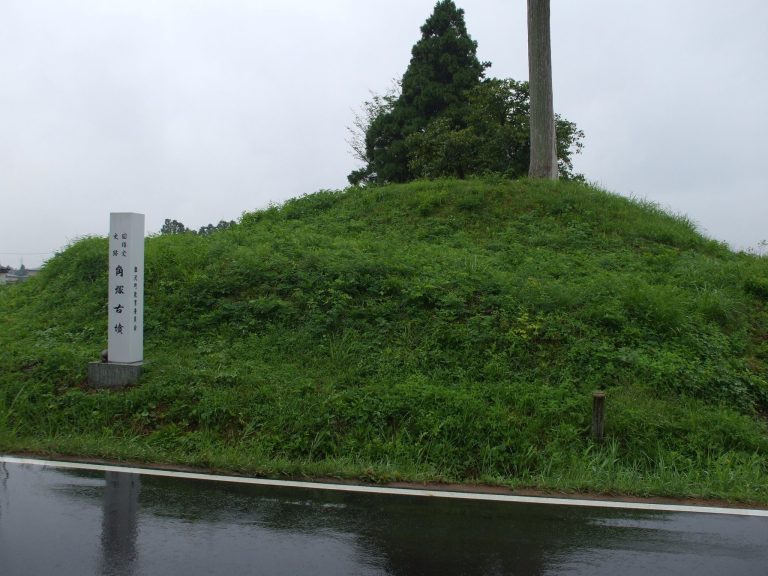
The fortified area extends about 680 meters from north to south and 200 meters from east to west. It occupies two small isolated hills on the eastern side of the confluence of the Yokote and Yoshizawa rivers, approximately 20 meters above the river surface. The river protected one side, while massive earthen ramparts and moats enclosed the other three sides.
Ramparts and moats
The defenses formed two successive moat lines arranged from outside to inside as rampart, open moat, rampart, and open moat. The earthen ramparts were about 10 meters wide and 2 meters high. One moat measured roughly 8 meters wide and 3.5 meters deep, while the largest dry moat reached approximately 10 meters in width and 3 meters in depth.
On the eastern slope, a series of undulating dry moats created an additional defensive arrangement. This type of earthwork was formerly thought to have appeared only in the fifteenth and sixteenth centuries. A wooden fence ran along the inner side of the dry moat, and foundations beside it belonged to a building interpreted as a watchtower. Archaeologists also identified the point where a bridge crossed the outer moat.
Buildings and excavated features
Summit building
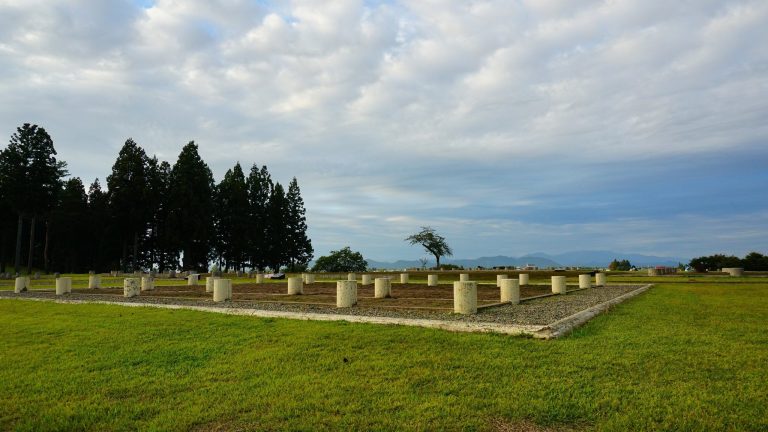
The summit area contained foundations for a pillared building with eaves on all four sides. This form was associated with high-status architecture during the period and indicates the character of the residence established on the hilltop.
Other structures
Excavations revealed foundations of post-built structures and traces of pit dwellings. Together with the defensive works, these remains show that the site included both substantial buildings and more modest occupied spaces within its fortified area.
Artifacts and shrine
Heian-period objects
Artifacts dating from the second half of the tenth century through the twelfth century were recovered at Ōtoriiyama. They include an inkstone and small earthenware dishes associated with banqueting and with the presence of the Kiyohara clan. Finds from this period are uncommon in the Tohoku region, particularly on the Sea of Japan side.
Ōtoriiyama Shrine
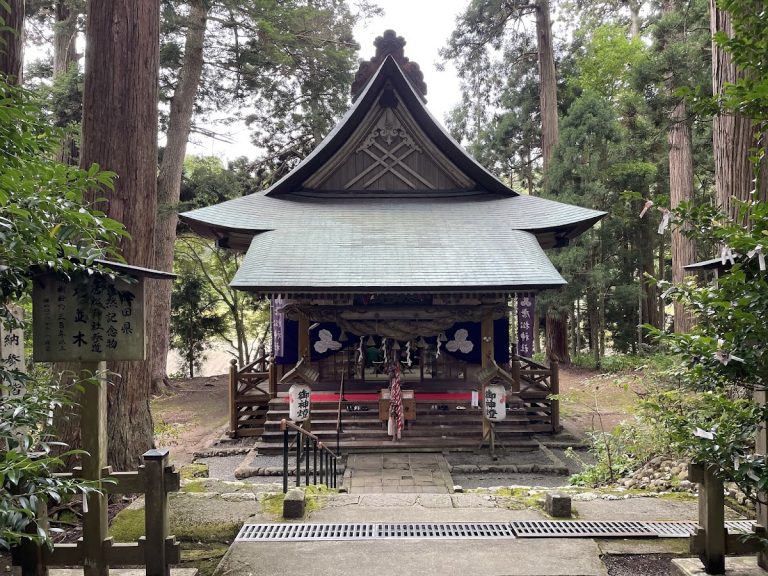
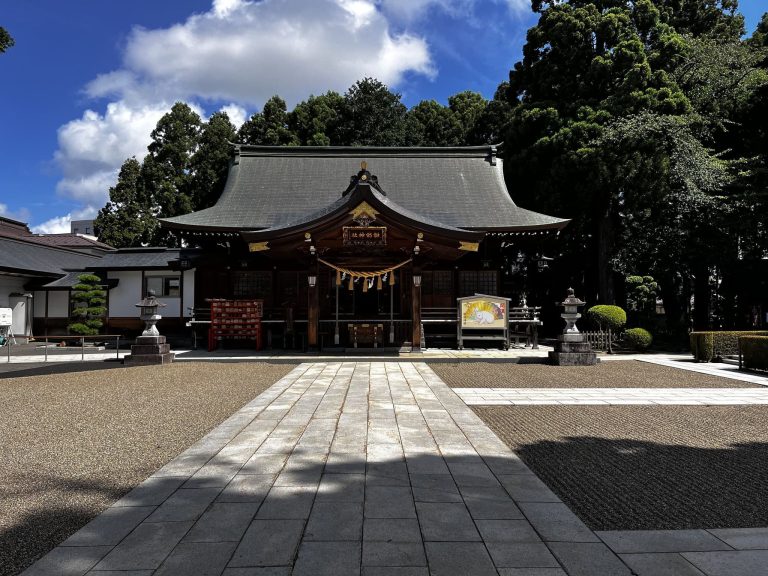
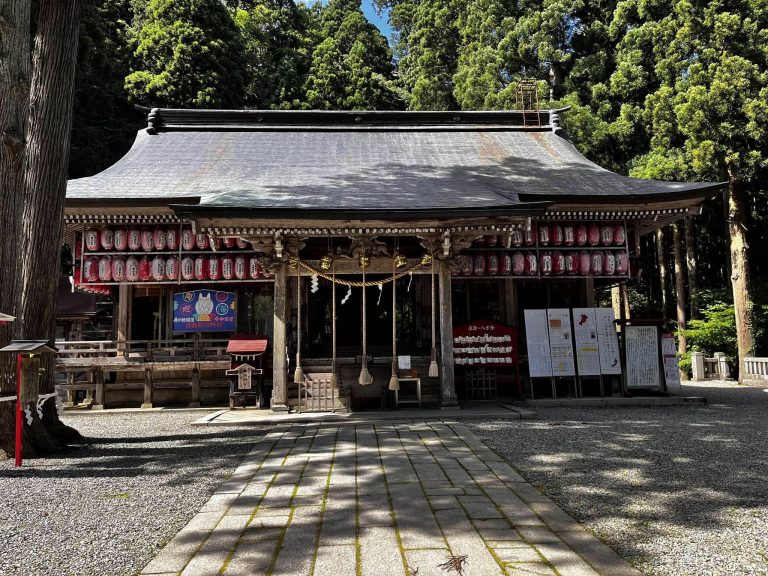
Part of the site is occupied by Ōtoriiyama Shrine, a Shinto shrine built in 1679–1680.