Honryū-ji Temple: Head Temple of the Hokke-shu Shinmon-ryu School


Site at a Glance
- Rating
- 4
- Popularity
- Very Low
- Country
- Japan
- Primary era
- Early Modern
- External website
- Open
- Eras represented
- Early Modern
- Civilizations
- Tokugawa
- Site type
- Religious
- Remains
- Temple
On this page10 sections
History
Honryū-ji Temple is a Buddhist temple in Kyoto, Japan, and the head temple of the Hokke-shu Shinmon-ryu school, a branch of the Lotus Sutra-centered Hokke tradition. Its principal image is the Sanbo-son, representing the Buddha, Buddhist teaching, and Buddhist community. The temple is also associated with a pilgrimage circuit of 21 Hokke temples in central Kyoto.
Foundation and Early Development
Temple tradition places Honryū-ji’s foundation in 1488, when its founder, a disciple of Nichigu of Myohon-ji, left that temple after a doctrinal dispute over the interpretation of the Lotus Sutra. One tradition states that he established Honryū-ji at Shijō-Ōmiya. Another places the first foundation at Rokkaku-Nishinoin, where it began as a hermitage before moving to Shijō-Bōjō in 1489.
With support from Emperor Go-Kashiwabara and others, the temple prospered. In 1536, the Tenbun Hokke Rebellion, a conflict linked to the suppression and displacement of Hokke Buddhist temples in Kyoto, destroyed Honryū-ji’s buildings. The institution then took refuge in Sakai.
Return to Kyoto and Rebuilding
In 1542, Emperor Go-Nara issued an imperial edict allowing the Hokke sect to return to Kyoto. Honryū-ji came back that spring and was rebuilt at its present site, which had previously been occupied by the residence of a provincial governor from Wakasa. Another tradition states that the temple was first re-established at Ichijō-Horikawa and moved to the present location in 1584 on the orders of Toyotomi Hideyoshi, the military ruler who helped unify Japan.
A major fire followed the burning of the Kyoto Imperial Palace in 1653 and destroyed several temple buildings, although the principal image survived. The main hall was rebuilt in 1657 by the master carpenter Sakanoue Sakuzaiemon Yoshisada. The founder’s hall is thought to date from approximately the same period.
Fires and Cultural Status
Further fires in the Nishijin district caused partial damage in 1730 and 1788. During the Tenmei Fire of 1788, the surrounding district was reduced to a burned expanse, while the main hall, founder’s hall, and treasure storehouse escaped the flames. This survival gave Honryū-ji the alternative name “the Unburned Temple.” The main hall, founder’s hall, and the Buddhist doctrinal work Hokke Genron, which concerns the Lotus Sutra, are listed as important cultural properties.
Remains
Principal Temple Buildings
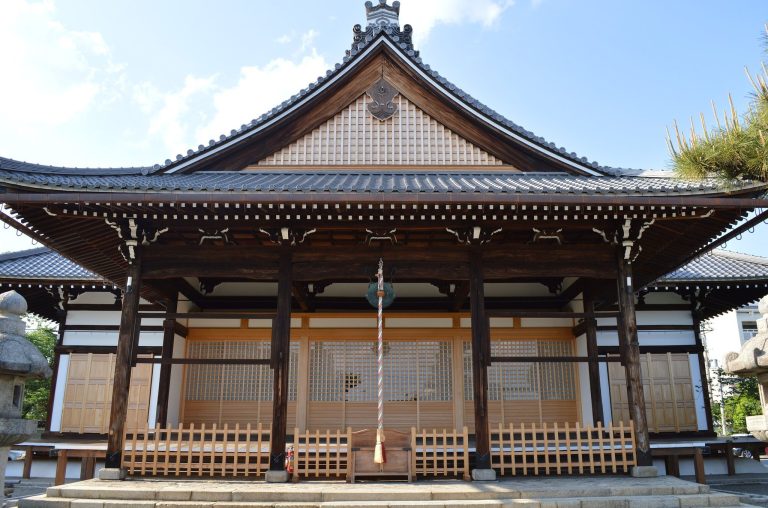
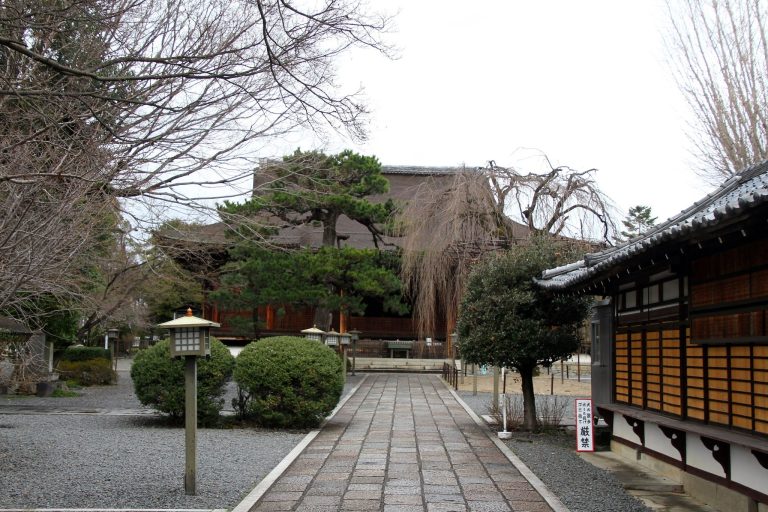
Main Hall
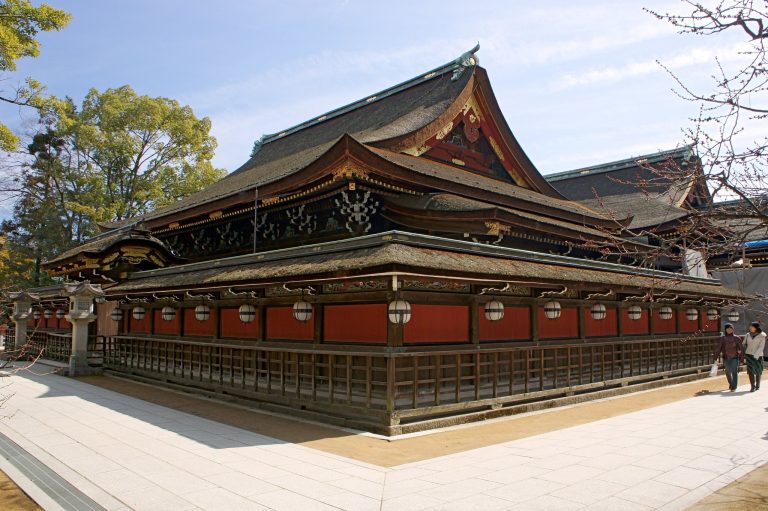
The main hall is one of Honryū-ji’s principal surviving buildings. It was reconstructed in 1657 and is attributed to the master carpenter Sakanoue Sakuzaiemon Yoshisada. The building survived the 1788 Tenmei Fire and remains an important cultural property.
Founder’s Hall
The founder’s hall was built at approximately the same time as the main hall. It also survived the Tenmei Fire of 1788 and is preserved as an important cultural property. Its date and survival connect the building with the early modern rebuilding phase that shaped the temple’s present form.
Treasure Storehouse
The treasure storehouse survived the 1788 fire alongside the main hall and founder’s hall. Its survival forms part of the physical basis for Honryū-ji’s name, “the Unburned Temple.”
Principal Image and Doctrinal Work
The temple’s principal image is the Sanbo-son, a Buddhist representation of the Three Treasures. Honryū-ji also preserves Hokke Genron, a doctrinal work concerning the Lotus Sutra that is listed as an important cultural property.
Nearby sites