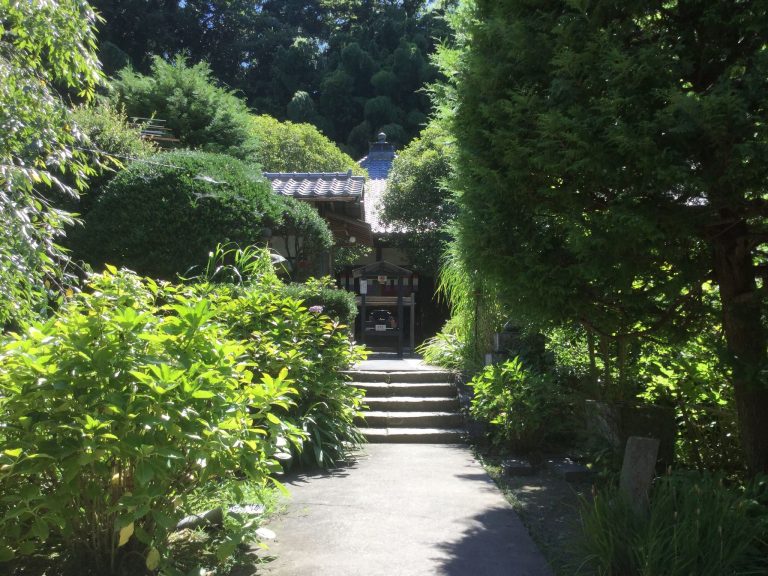
Jōraku-ji Temple: A Rinzai Buddhist Temple in Kamakura


Site at a Glance
- Rating
- 4.3
- Popularity
- Low
- Country
- Japan
- Primary era
- Medieval
- External website
- Open
- Eras represented
- Medieval
- Civilizations
- Kamakura shogunate
- Site type
- Religious
- Remains
- Monastery
On this page4 sections
History
Foundation and Early Religious Identity
Jōraku-ji Temple is a Buddhist temple in Kamakura, Japan, founded in 1237 by Hōjō Yasutoki. Yasutoki was a leading member of the Hōjō regency that governed the Kamakura shogunate, serving as its shikken, or regent. The temple’s founding monk was Taikō Gyōyū, and the institution was originally called Awafune Midō. It was established for memorial services for the mother of Yasutoki’s wife.
At its foundation, Jōraku-ji was traditionally associated with both Esoteric Buddhism, which emphasizes ritual and initiation, and Pure Land Buddhism, which centers on devotion to Amida, the Buddha of the Western Pure Land. Its Zen character gradually became stronger, and the temple later joined the Rinzai school, a major Zen tradition centered on disciplined practice and instruction from a teacher.
Rankei Dōryū and the Kenchō-ji Lineage
During the Kenchō period of Japan’s Kamakura era, the regent Hōjō Tokiyori invited Rankei Dōryū to Kamakura. Rankei was a Chinese Chan Buddhist monk who helped establish Chinese-style Zen practice in medieval Japan. He initially served as abbot of Jōraku-ji, where his teaching attracted many monks.
Kenchō-ji was subsequently founded, and its completion dedication ceremony took place in 1253. It became Kamakura’s principal Zen temple. Jōraku-ji nevertheless remained highly respected within the Kenchō-ji branch of the Rinzai tradition, receiving the designation “the foundation of Kenchō.” The temple belongs to that branch today. Its principal object of worship is an Amida triad, consisting of Amida Buddha accompanied by two attendant bodhisattvas, and its traditional mountain name is Zokusenzan.
Remains
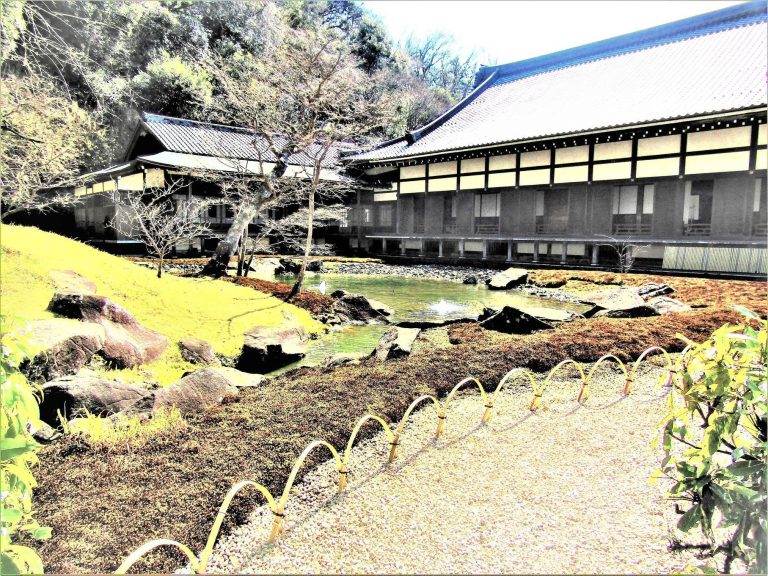
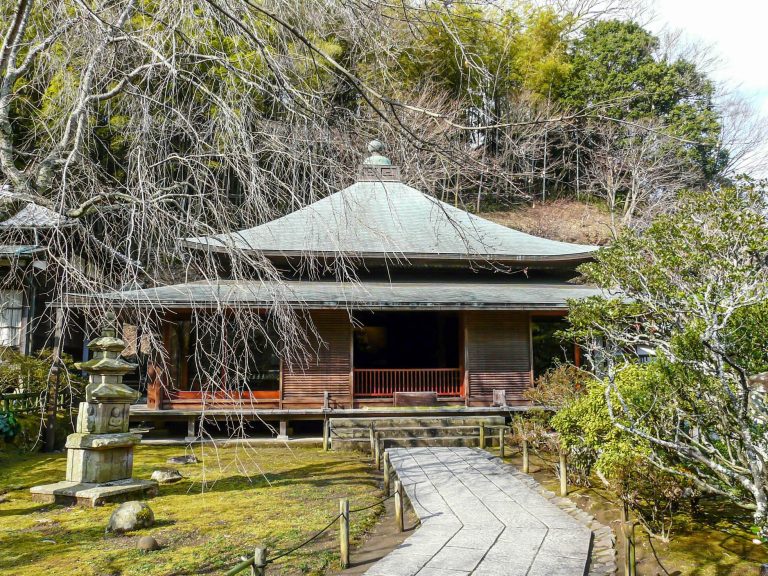
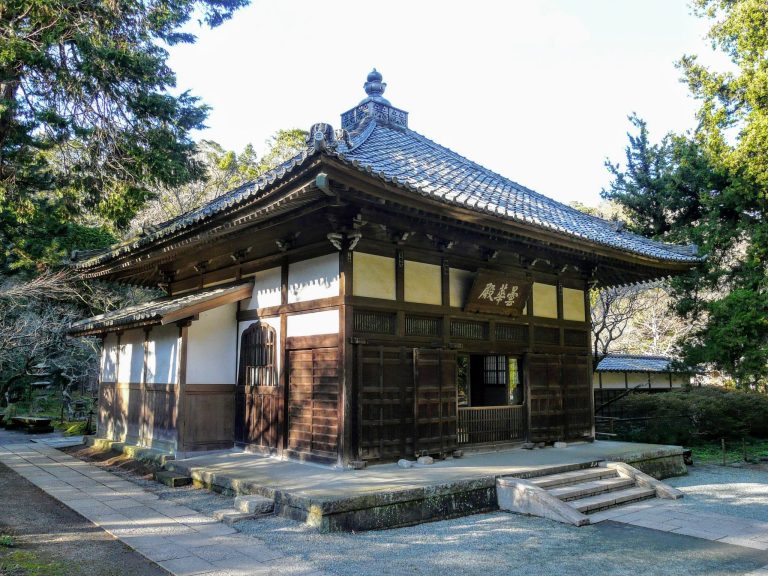
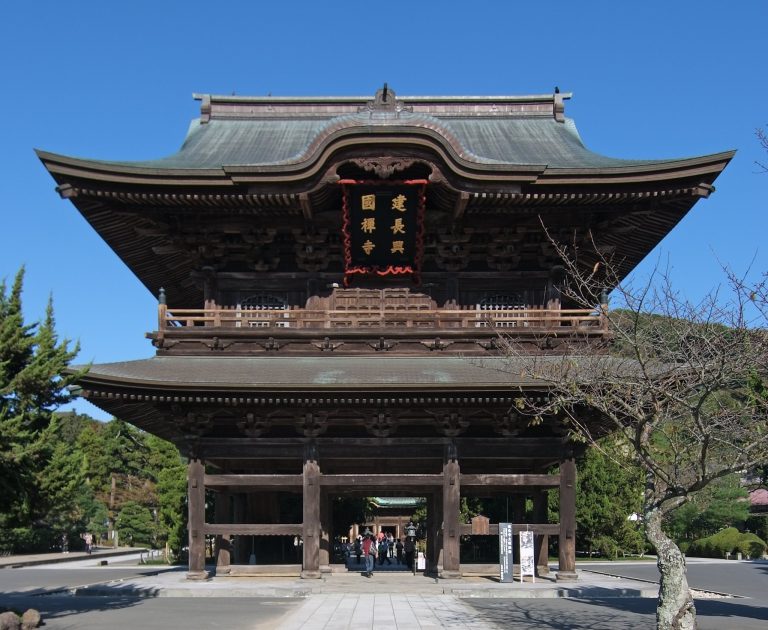
The surviving temple complex consists of a Buddha Hall, a Mountain Gate, and a Monju Hall. The Mountain Gate is the temple’s principal entrance, while Monju refers to the bodhisattva associated with wisdom. Together, these surviving buildings represent the principal architectural elements identified at Jōraku-ji Temple.
Nearby sites