Fumon-ji: A Tendai Buddhist Temple in Kakegawa


Site at a Glance
- Rating
- 3.9
- Popularity
- Very Low
- Country
- Japan
- Primary era
- Early Modern
- External website
- Open
- Eras represented
- Early Modern
- Civilizations
- Tokugawa
- Site type
- Religious
- Remains
- Monastery
On this page9 sections
History
Fumon-ji is a Japanese Tendai Buddhist temple in Kakegawa, Japan, traditionally founded in 704 on Senju Peak during the early eighth century. Temple tradition attributes its foundation to the monk Gyoki, acting under an imperial order from Emperor Monmu. Its formal name is Senjuzan Fumon-ji, with Senjuzan meaning the temple’s honorific mountain name.
Foundation and relocation
Fumon-ji belonged to the Hosso school, an earlier Japanese Buddhist tradition focused on consciousness and perception, for its first thirteen generations. Under its fourteenth-generation leader, it became a Tendai temple. Tendai is a major school of Mahayana Buddhism based on teachings associated with the Chinese Tiantai tradition.
In 1177, Taira no Shigemori moved Fumon-ji to its present site and rebuilt its halls. His prayers were directed toward the recovery of Emperor Takakura, maritime safety, and safe voyages. During this rebuilding, he installed a statue of Sho Kannon, the compassionate Buddhist bodhisattva Kannon in a particular sacred form, traditionally attributed to Saicho, the monk who established the Tendai tradition in Japan.
Destruction during the Warring States period
Fumon-ji was destroyed by fire during the conflicts of Japan’s Warring States period, an era of prolonged warfare among rival regional powers. All of the temple’s halls were lost, while most of its monks fled to other places. The temple was left without anyone remaining there.
Restoration and religious status
In 1574, a monk returned and summoned the temple’s religious community. Farmers and others also settled around the temple gate, and the halls were rebuilt by Osuga Yasutaka, the first lord of Yokosuka Castle. This work restored Fumon-ji to its former condition.
The Tokugawa family later granted Fumon-ji an assessed land yield of 37 koku, a historical Japanese measure of agricultural production, under a red-seal authorization. The grant made the temple a red-seal temple, meaning that its land or privileges were confirmed by a shogunal red-seal document. Fumon-ji also became the twelfth pilgrimage temple of the Enshu Thirty-Three Kannon Pilgrimage and supplementary site 5 in the Totomi Thirty-Three Kannon Pilgrimage. These are regional Buddhist circuits linking temples associated with devotion to Kannon.
Remains
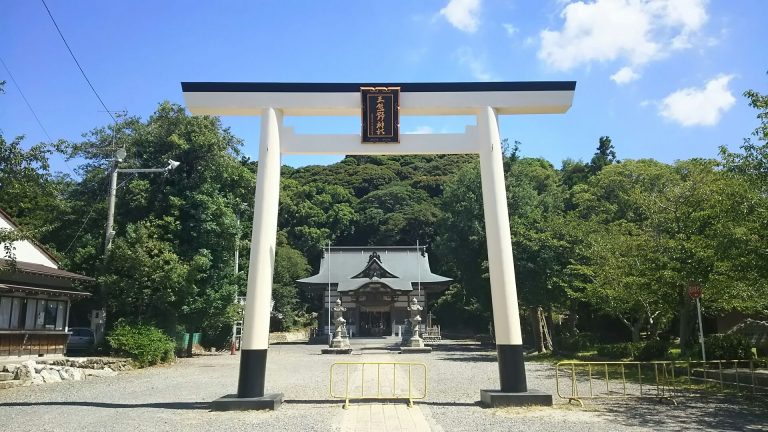
Fumon-ji’s temple complex includes halls rebuilt after the destruction of the Warring States period, together with the Kannon Hall and the adjacent Hachisho Shrine, which serves as the temple’s guardian shrine. The complex continues to express the temple’s Tendai Buddhist identity and its long association with the worship of Sho Kannon.
Temple buildings
Rebuilt halls
The temple halls were reconstructed after fire destroyed the earlier buildings during the Warring States period. Their rebuilding followed the return of a monk in 1574 and the restoration supported by Osuga Yasutaka. These halls form the principal architectural remains associated with the temple’s recovery after wartime destruction.
Kannon Hall
The Kannon Hall enshrines Fumon-ji’s principal image, Sho Kannon. The statue is traditionally attributed to Saicho and was placed at the temple during Taira no Shigemori’s relocation and rebuilding of 1177. Its presence connects the hall with the temple’s Tendai affiliation and its role in Kannon pilgrimage.
Hachisho Shrine
Hachisho Shrine stands beside Fumon-ji as the temple’s guardian shrine. Its position next to the Buddhist complex reflects the religious arrangement associated with the temple’s historical site.