Mirijanda Mausoleum: An Islamic Burial Monument in Uzbekistan


Site at a Glance
- Rating
- 4.6
- Popularity
- Very Low
- Country
- Uzbekistan
- Primary era
- Medieval
- Eras represented
- Classical, Medieval
- Civilizations
- Unclassified
- Site type
- Religious
- Remains
- Tomb
On this page7 sections
History
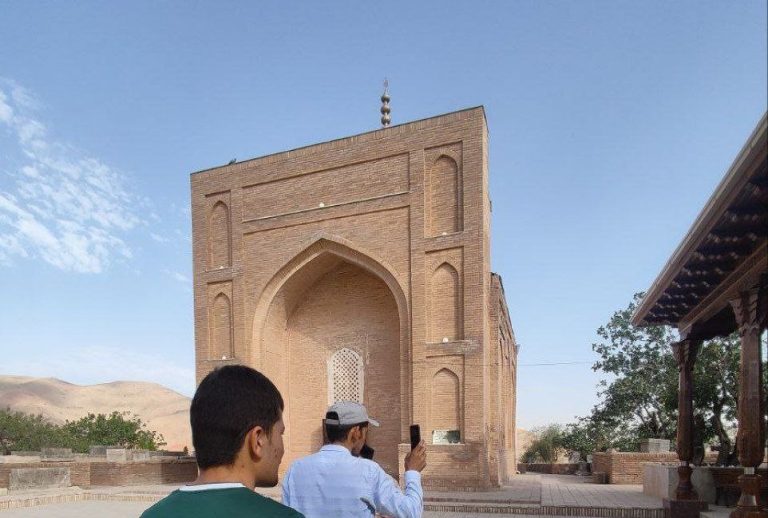
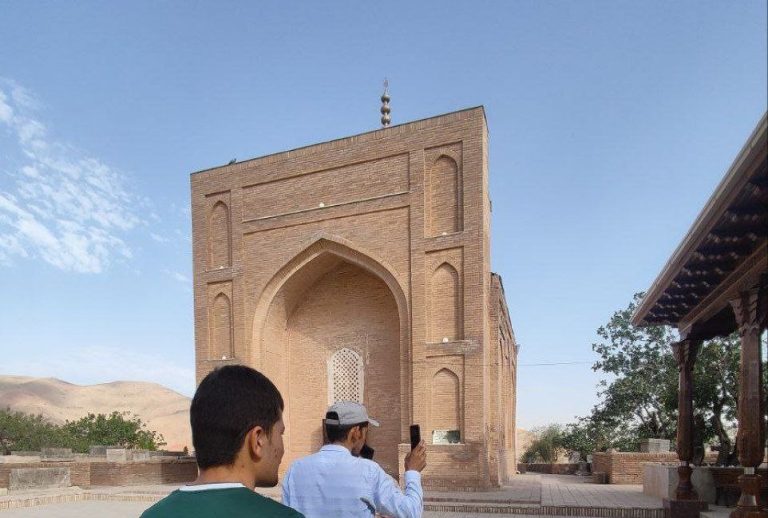
Mirijanda Mausoleum, also known as Miri Janda Ota Mausoleum, is an Islamic mausoleum in Uzbekistan’s Mardtepa village, in Guzar District. The building is dated to the fifth–sixth centuries and is traditionally associated with Shahobuddin Suhravardiy, a Sufi scholar linked to a burial place for him and his closest relatives.
Shahobuddin Suhravardiy and the Janda tradition
Shahobuddin Suhravardiy was born in Suhravard in the Jabal region of northeastern Iran. He lived for many years in Baghdad before travelling to Guzar, where he died. His spiritual mentor was Abulqodir Giyloniy, a prominent Sufi teacher. In Baghdad, Suhravardiy studied Quranic interpretation, hadith, and Shafi’i law, one of the four major Sunni schools of jurisprudence, under the influence of his uncle Abu al-Najib Suhravardiy.
The name “Janda” is associated with the garment Suhravardiy wore during diplomatic journeys. His son, Abdulloh ibn Shahobuddin Suhravardiy, was the father of Sheikh Zayniddin, whose grave is in Tashkent’s Kokcha quarter. The mausoleum’s traditional associations therefore extend across several generations of the Suhravardiy family.
Historical associations and protection
Sharafuddin Ali Yazdi, a Persian historian and author of Zafarnama, wrote that Amir Tarag’ay was devoted to Shahobuddin Suhravardiy and to the sheikh Shamsiddin Kulol, who was close to him. Amir Tarag’ay, a fourteenth-century Central Asian nobleman and the father of Timur, frequently visited Suhravardiy’s mausoleum.
The mausoleum became state property under the operational management of the Kashkadarya regional department of cultural heritage. On October 4, 2019, it was entered into Uzbekistan’s national register of immovable material cultural heritage and placed under state protection.
Remains
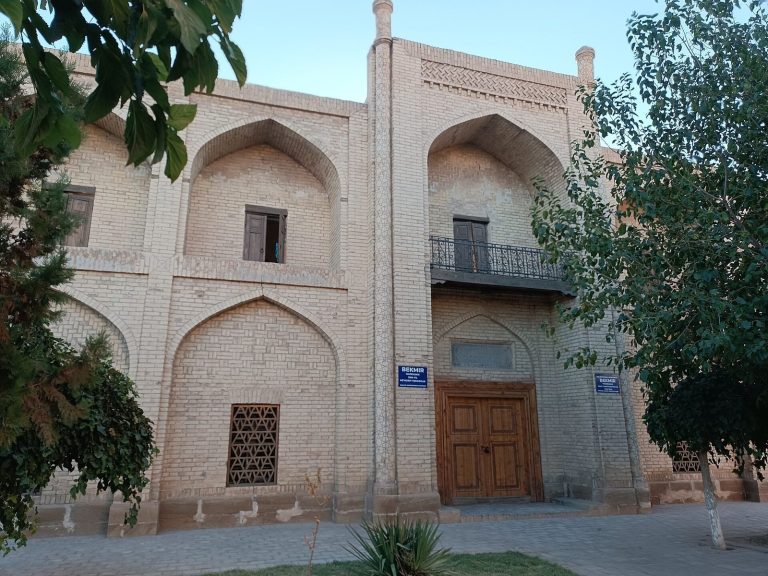
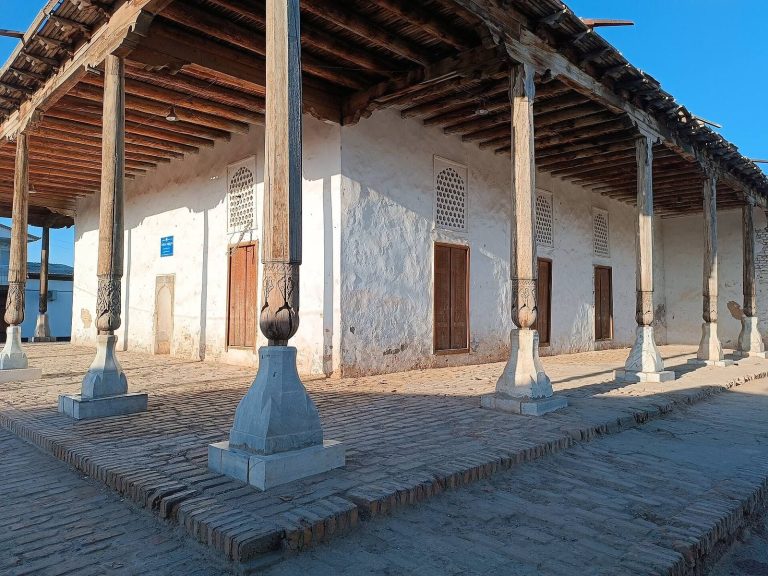
The surviving site comprises the mausoleum in Mardtepa village and the Mir Janda congregational mosque beside it. Historical topographical descriptions place the associated Guzar prayer ground or mosque on the left bank of the Guzardarya, 300–400 metres southwest of the fortress. The fortress’s Old Garden Gate stood opposite the mosque, while the mausoleum is described as northeast of it. A separate description places the cemetery of Amir Jond, or Amir Janda, northeast of the prayer ground.
Religious buildings
Mirijanda Mausoleum
The Mirijanda Mausoleum is a monumental Islamic structure associated with the tomb of Shahobuddin Suhravardiy and his closest relatives. The building is dated to the fifth–sixth centuries, while its traditional religious identity connects it with the later Sufi scholar who came to Guzar and died there.
Mir Janda Congregational Mosque
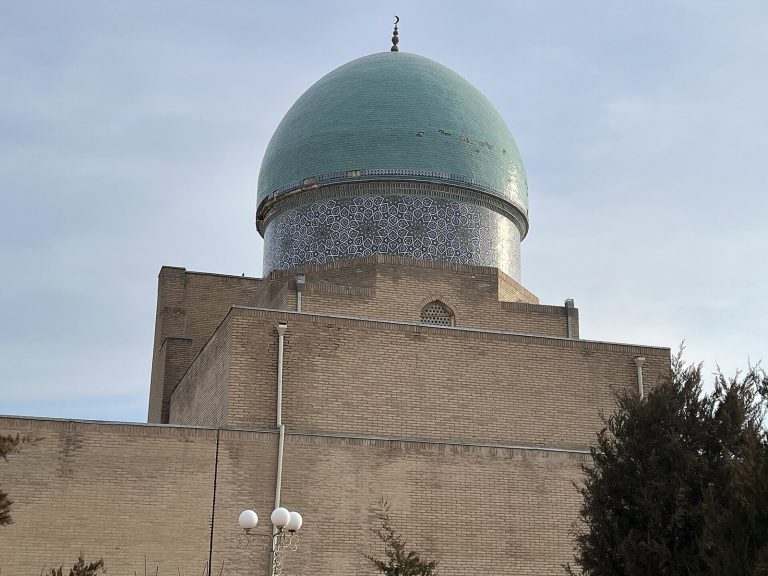
The Mir Janda congregational mosque stands beside the mausoleum. Built during Uzbekistan’s independence period, it has a blue-green dome. The dome was restored in 2019, and the mosque underwent further renovation in 2022.