Panjob Mosque: A Twelver Shia Friday Mosque in Samarkand
Site at a Glance
- Rating
- 4.7
- Popularity
- Very Low
- Country
- Uzbekistan
- Primary era
- Modern
- Eras represented
- Modern
- Civilizations
- Unclassified
- Site type
- Religious
- Remains
- Mosque
On this page6 sections
History
Panjob Mosque is a nineteenth-century Twelver Shia Friday mosque in Samarkand, Uzbekistan, built in an Islamic architectural style with Persian elements. Twelver Shia Islam, also called the Isnaashari tradition, recognizes a succession of twelve divinely guided Imams. The mosque is one of the few Shia mosques in Uzbekistan and Central Asia and remains an active religious center in the historic Panjob district.
Construction and community
Khoja Abduraim, a local architect and merchant, initiated and financed the mosque’s construction and also served as its architect. Local residents and invited Iranian craftsmen carried out the work. The complex was associated with the Central Asian Iranian community, which mainly inhabits the Panjob district. The district’s name derives from Persian and Tajik terms meaning “five waters” or “five rivers.”
The wider religious complex included a separate Shia mosque with a tall minaret, as well as the Dovuti Panjob hammam, a teahouse, and a hauz, a traditional water reservoir or basin. Khoja Abduraim built the hammam after returning from a pilgrimage to Mashhad, Nishapur, Isfahan, Shiraz, Yazd, and Qom in Iran. He brought its drawing and plan from Mashhad.
Soviet period and restoration
Panjob Mosque continued its religious function until 1924. After the establishment of the Soviet Union, it was closed and assigned to various organizations. During the Soviet period, the mosque had the status of a madrasa, an institution for Islamic education that could also teach secular subjects. It formed part of the larger Shia complex and supported both religious and nonreligious instruction.
In the early 1990s, government efforts brought major restoration to the mosque and adjoining madrasa, following an initiative by the local Central Asian Iranian community. Iranian craftsmen participated in the work, and smaller restoration projects followed in later years. The mosque remains active, receiving worshippers and pilgrims. It hosts the annual Shia mourning observance of Ashura, which commemorates the death of Husayn ibn Ali at the Battle of Karbala in 680, and provides tarawih prayers, iftar, and suhur. The adjoining nineteenth-century madrasa is recognized as an architectural monument. A Shia cemetery and the community’s cultural center stand a short distance away.
Remains
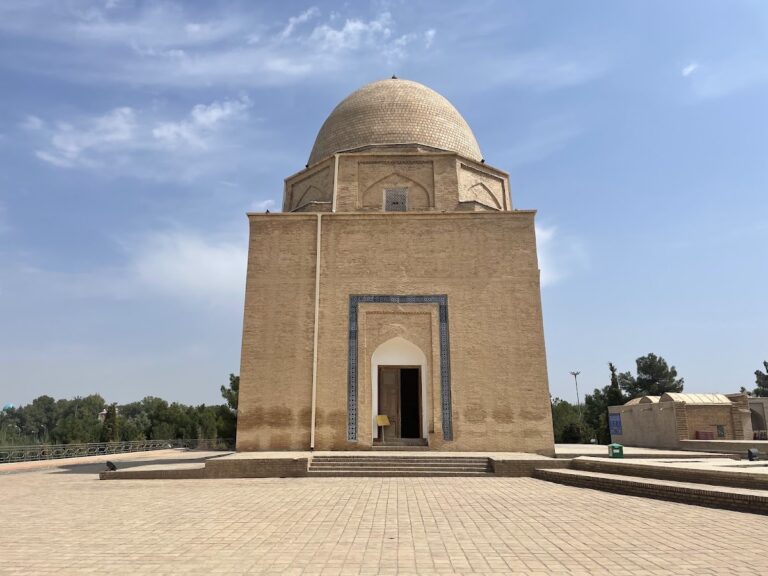
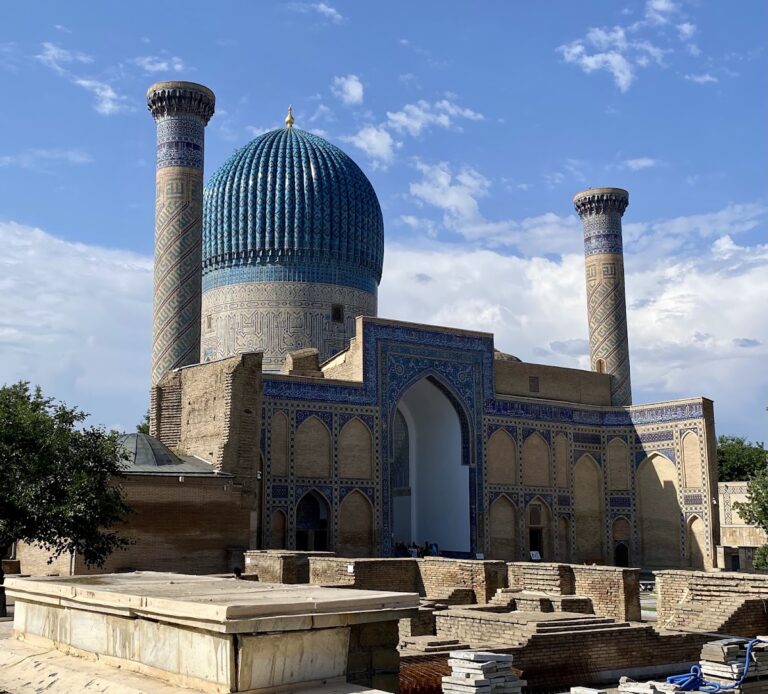
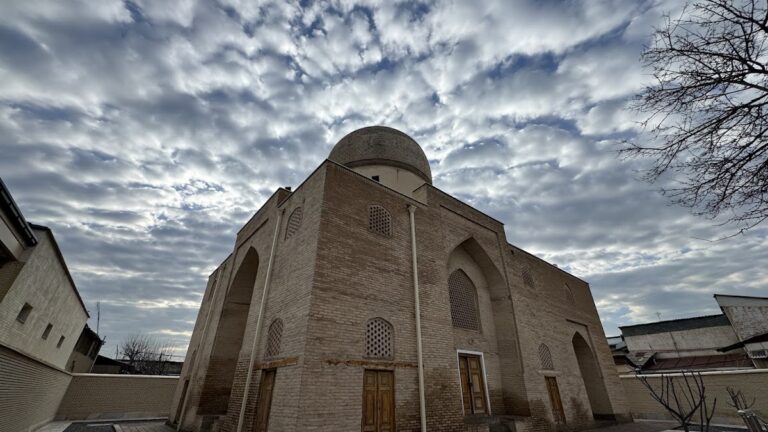
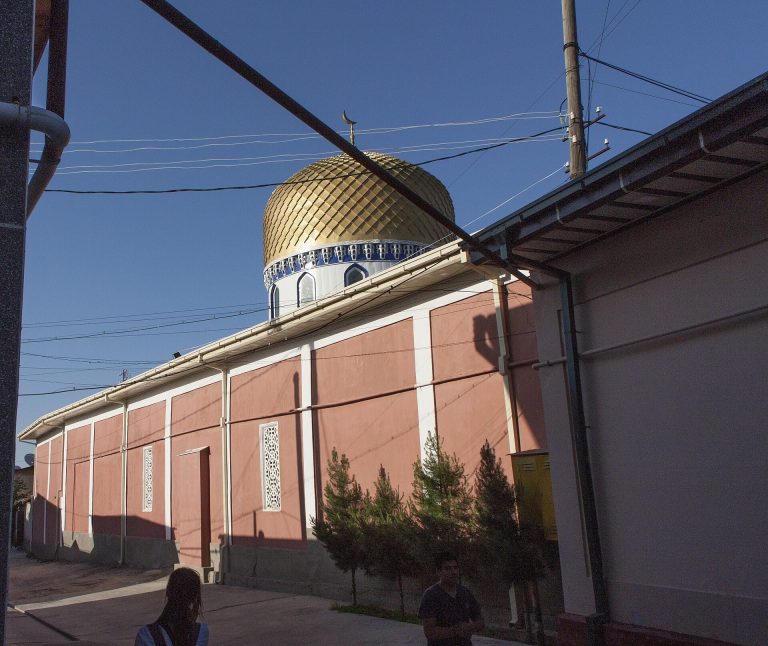
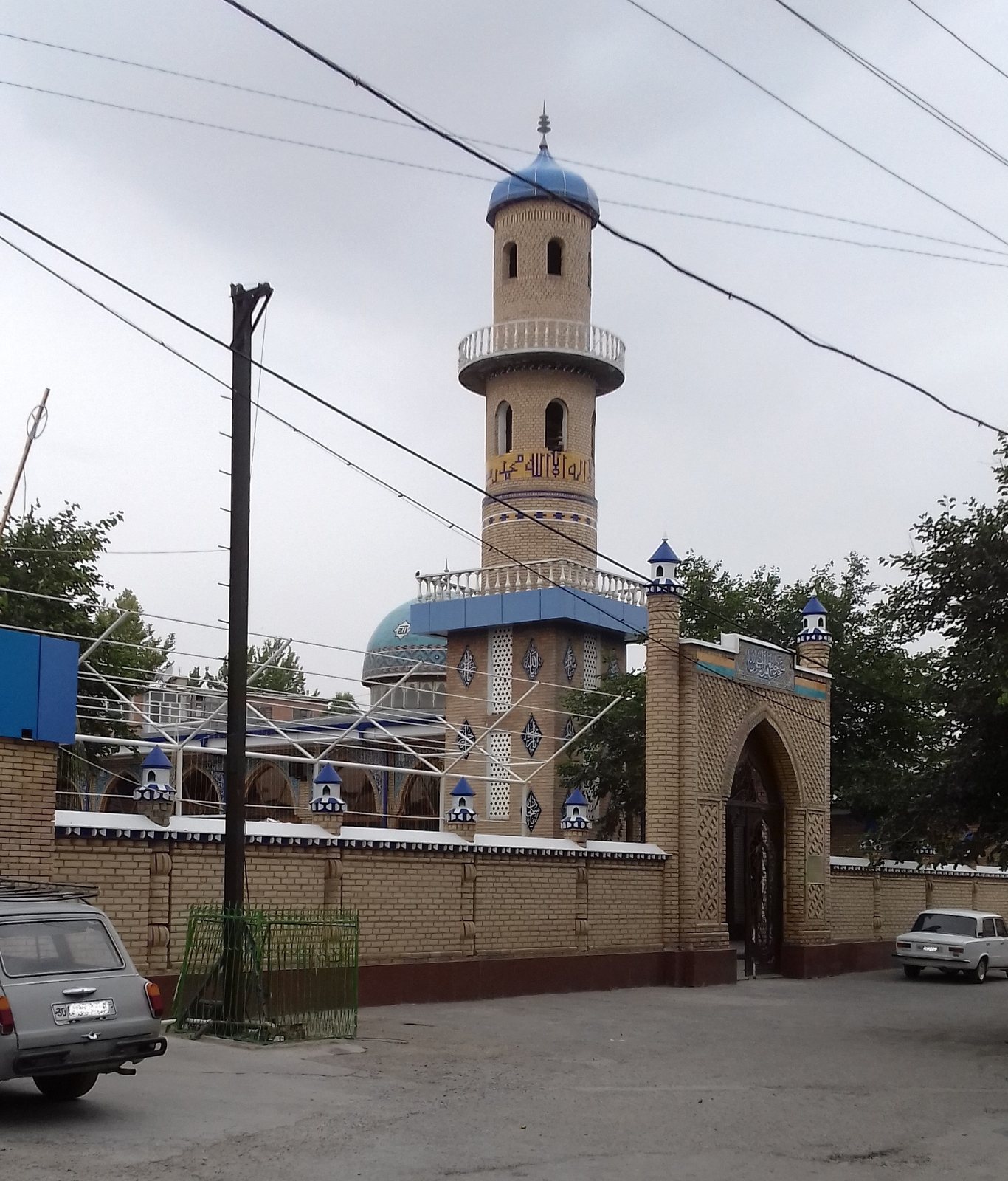
Panjob Mosque is organized as a Friday-mosque structure directly adjoining the former madrasa. Its surviving architectural form combines Islamic design with Persian elements and includes a single dome and one minaret. The relationship between the mosque and the adjoining educational building reflects the complex’s religious and instructional functions.
Panjob Mosque
The mosque’s principal features are its dome and minaret, which form the defining elements of the nineteenth-century building. Its Islamic architectural style incorporates Persian elements, while restoration in the early 1990s and later smaller interventions preserved and renewed the structure for continuing religious use.
Former madrasa and associated features
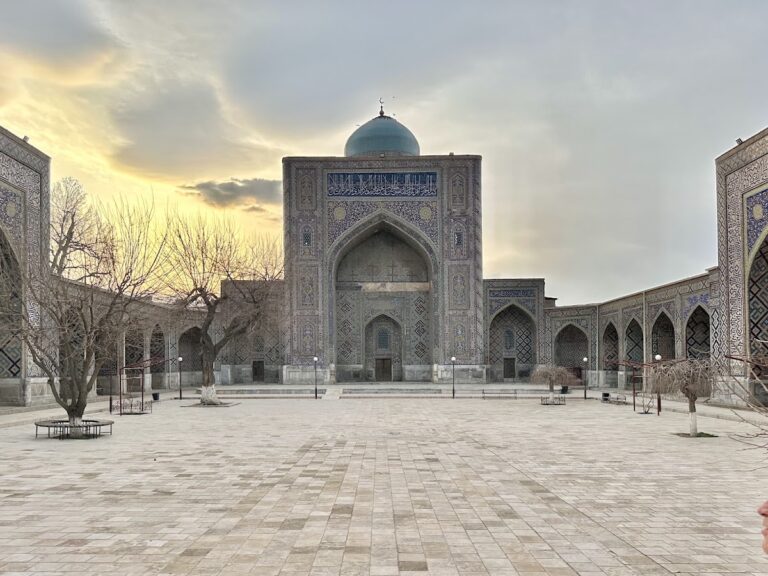
The adjoining madrasa has a courtyard and is no longer active as a school, but it is recognized as an architectural monument. Its courtyard contains a bronze monument to Ferdowsi, the major Persian epic poet best known as the author of the Shahnameh, or Persian Book of Kings. The statue is described as an exact copy of the Ferdowsi monument in Rome.
The former complex also contained a separate Shia mosque designed by Khoja Abduraim, together with the Dovuti Panjob hammam, a teahouse, and a hauz. The hammam’s design came from a plan brought from Mashhad, linking the building’s architectural conception with Khoja Abduraim’s pilgrimage through Iran. The Shia cemetery and the cultural center of the Central Asian Iranian community are situated farther from the mosque and madrasa.