Ancient Panjakent: A Sogdian City in Tajikistan
Site at a Glance
- Rating
- 4.1
- Popularity
- Very Low
- Country
- Tajikistan
- Primary era
- Medieval
- Eras represented
- Medieval
- Civilizations
- Sogdian
- Site type
- City
On this page9 sections
History
Ancient Panjakent is a Sogdian city in Tajikistan that flourished from the fifth to the eighth century, during the late antique and early medieval periods. Located 1.5 kilometres southwest of modern Panjakent, it was one of the eastern cities of Sogdiana, the Central Asian region centred on the Zeravshan and Kashka-Darya river valleys. The city is also described as having more than 1,500 years of history.
Sogdian urban society
Panjakent was subordinate to Samarkand for much of its history, although it later became a royal centre under Devashtich, a Sogdian ruler associated with the final period of independent Sogdian political power. Its growing authority enabled it to challenge Samarkand and seek its subordination. The inhabitants spoke Sogdian and developed a distinctive artistic culture that incorporated elements associated with major civilizations including Rome and India.
Religion and commerce connected the city to a wider world. Two large temples in the urban centre indicate the practice of Zoroastrianism, an ancient Iranian religious tradition concerned with Ahura Mazda and the opposition between truth and falsehood. Images of different deities also point to contact with people from several regions and to the presence of varied religious practices. The population cultivated gardens, raised animals, and probably participated in long-distance commerce. Merchants may have travelled along the Silk Road between China and Rome.
Conquest and surrender
Panjakent’s peaceful existence ended during the Arab conquest of Central Asia. After Samarkand fell, Qutayba ibn Muslim, an Arab commander who led the Umayyad conquest of much of Transoxiana in the early eighth century, sent an army against the city. Devashtich judged resistance futile, prayed for his people, and surrendered Panjakent. The suggestion that he converted to Islam late in life remains uncertain.
Archaeological investigation
Archaeological study began in 1947 under Alexander Yakubovsky, with Alexander Belenitsky initiating work at the site. Belenitsky took leadership of the Panjakent excavations in 1954, and investigation has continued since then. Only about half of the city has been examined. The site is widely known in scholarly circles as the “Pompeii of the East,” while its paintings and other monuments have helped illuminate earlier Tajik literature, folklore, customs, and traditions. Many excavated works are preserved in museums in Panjakent, Dushanbe, and the Hermitage in Saint Petersburg.
Remains
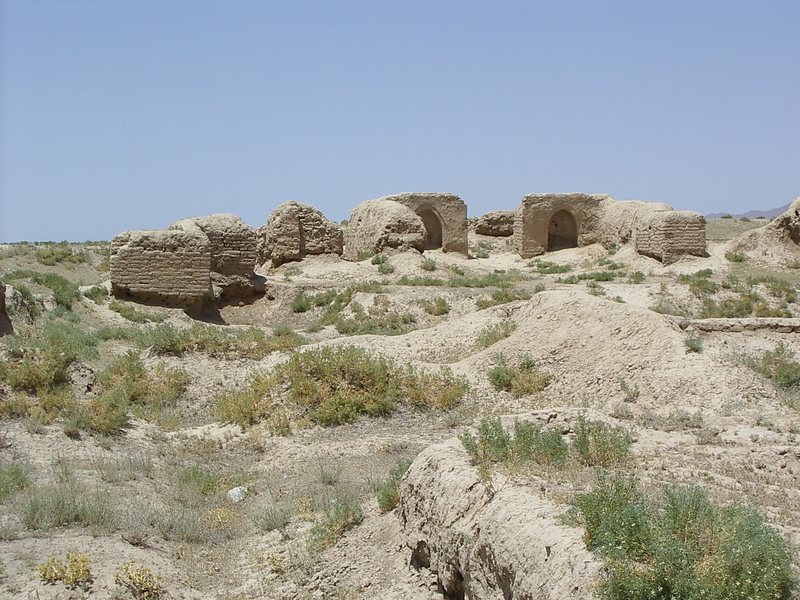
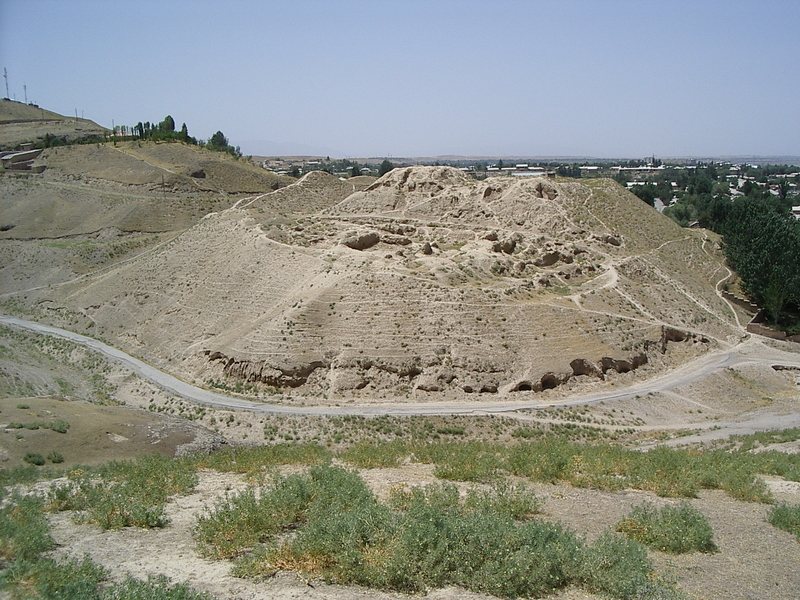
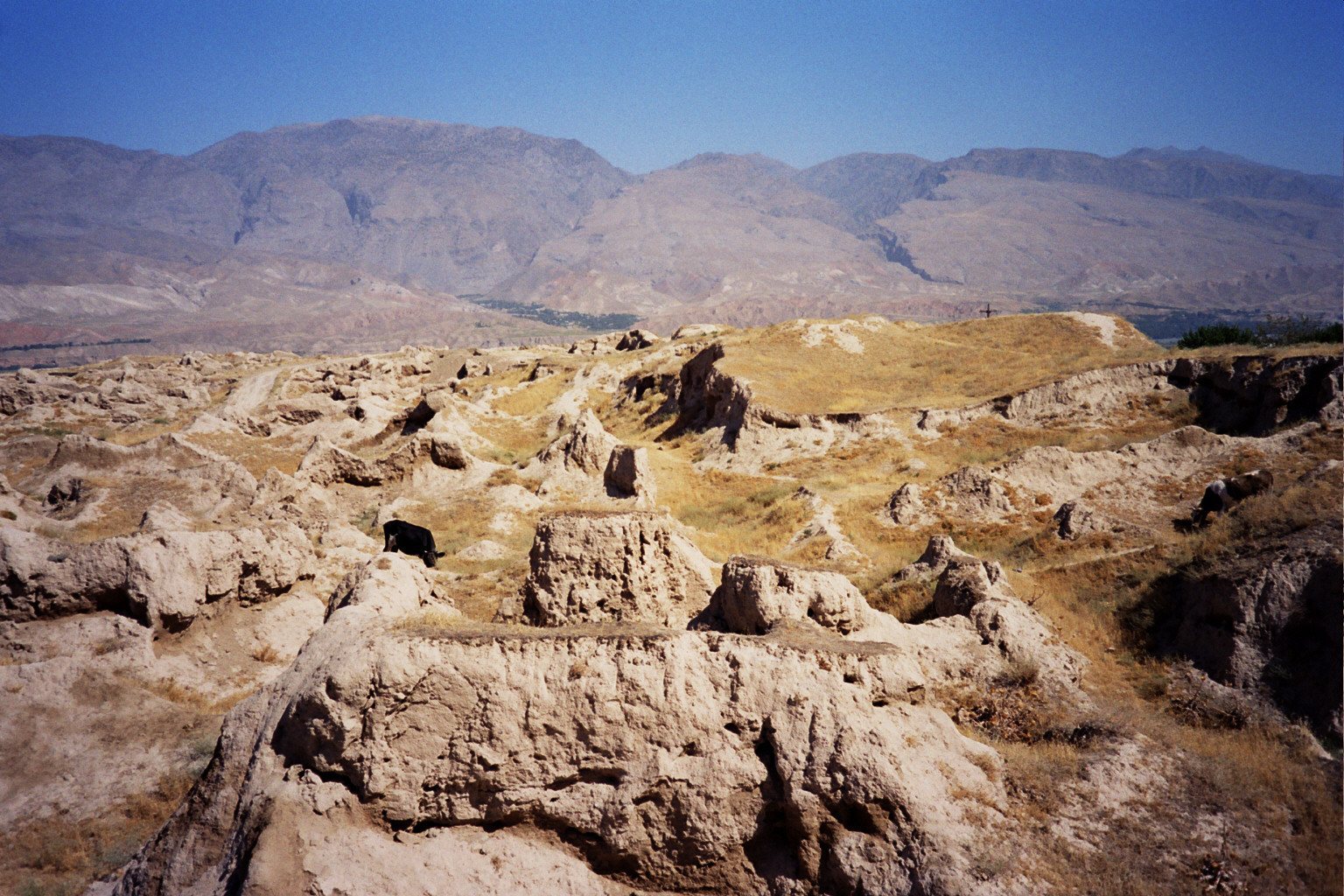
Ancient Panjakent is organized into three principal areas: a citadel, a shahristan, and a cemetery. The shahristan, or main urban area of a historic Central Asian city, covers approximately 13 hectares and has been almost completely excavated. The citadel, a fortified area associated with political or military authority, and the cemetery have been investigated only in part. The surviving remains include earthen buildings, streets, lanes, markets, craft areas, defensive walls, courtyards, water installations, and religious structures.
City layout and construction
Most buildings were made from unfired mud brick and pakhsa, in which damp earth or mud was compacted into solid wall sections. Residential, administrative, and religious structures emerge from the soil across the urban area. Excavations have traced a main street, ten narrow lanes, rows of craft shops, marketplaces, and defensive walls. Houses rose to two or three storeys, with thick walls and narrow passages between them. These arrangements could allow two-level storage spaces in which grain was kept.
Citadel and civic spaces
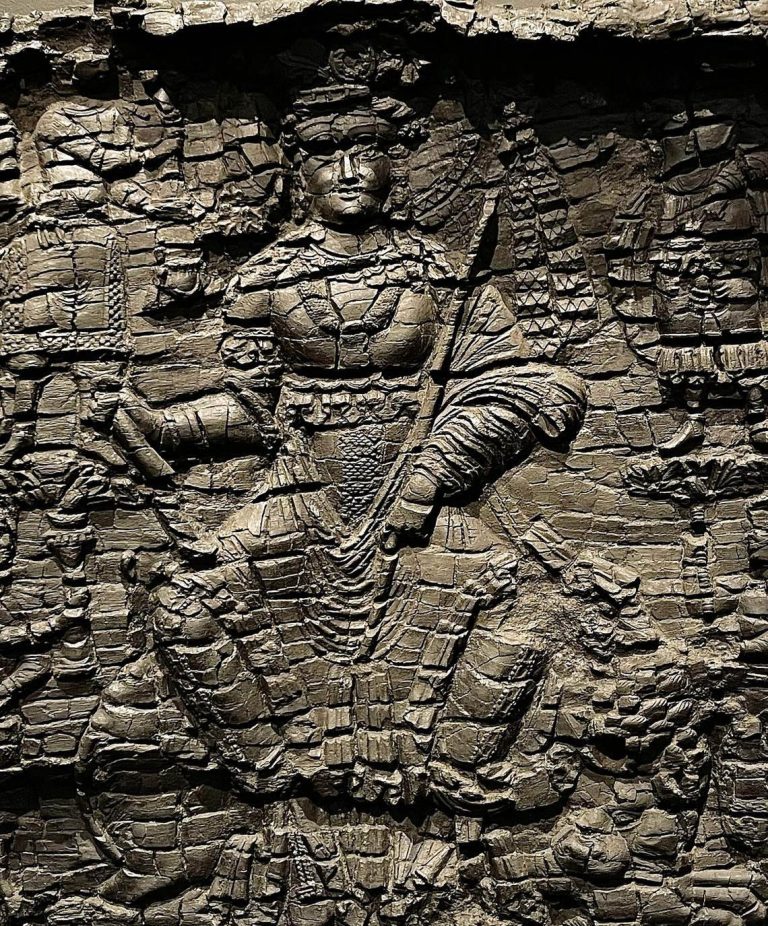
The ruler’s citadel and offices responsible for external oversight stood outside the main city. Devashtich entered the urban area by a dedicated route. Reception halls contained colourful ornament, carved wood, and wall paintings arranged to give them an appearance comparable to royal palaces. A wooden sculpture of a deity seated on a throne, together with painted scenes, carved decorative designs, and clay sculptures, provides further evidence of the city’s artistic traditions.
Temples and religious remains
Two temples with courtyards occupied the centre of the city. Their presence forms part of the evidence for Zoroastrian practice at Panjakent, while images of different deities reflect the variety of religious ideas represented among the city’s contacts and inhabitants. The temples stand among the excavated courtyards, streets, administrative buildings, and residential quarters that define the central urban remains.
Gardens and water installations
The built-up area was associated with two sacred trees, while gardens and orchards were maintained outside the city. Livestock was also raised beyond the urban quarters. Pipes point to a unified sewage system, and underground channels brought water across the elevated site toward the centre. Water was raised from specially constructed wells located in several parts of the city. These installations, along with the excavated streets and buildings, show how essential services were incorporated into the urban plan.