Köşkmedrese: An Eretna Khanqah and Madrasa in Kayseri


Site at a Glance
- Rating
- 4.8
- Popularity
- Very Low
- Country
- Turkey
- Primary era
- Medieval
- External website
- Open
- Eras represented
- Medieval
- Civilizations
- Eretnid
- Site type
- Religious
- Remains
- Sufi Lodge
On this page6 sections
History
Foundation under the Eretna Beyliği
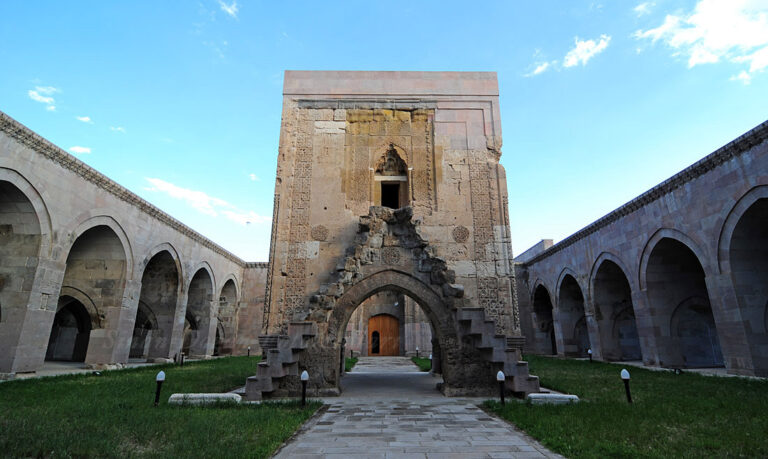
Köşkmedrese is a fourteenth-century khanqah and later madrasa in Kayseri, Türkiye, built during the rule of the Eretna Beyliği, a medieval Anatolian principality that governed parts of central and eastern Anatolia. Alaeddin Eretna commissioned the building in 1339 in memory of his wife, Suli Paşa Hatun, who died that year. Its original function was as a khanqah, a religious institution associated with Sufi communities.
The building’s commemorative inscription named Kaluyan as its architect and recorded the reason for its construction. Kaluyan is thought to have been of Armenian origin. The inscription is no longer extant, but its recorded contents preserve the building’s date, purpose, patron, and commemorative association.
Later religious use and restoration
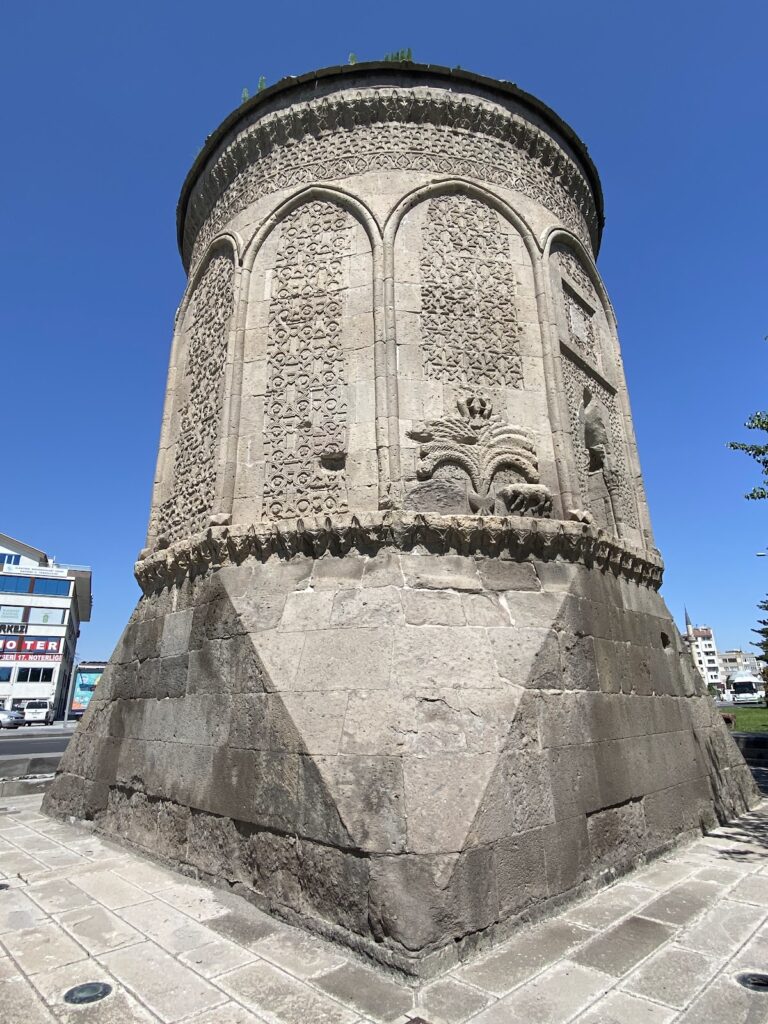
Köşkmedrese was later used as a madrasa, an institution for Islamic religious and scholarly education. It also became the burial place of Alaeddin Eretna, Suli Paşa Hatun, their son and successor Gıyâseddin Mehmed, and their grandson and later successor Alaeddin Ali.
After a prolonged period of disuse, the building was placed under protection because of its historical value. Melikgazi Municipality leased it from the General Directorate of Foundations and carried out its restoration. The restored building is used for cultural and social events during Ramadan.
Remains
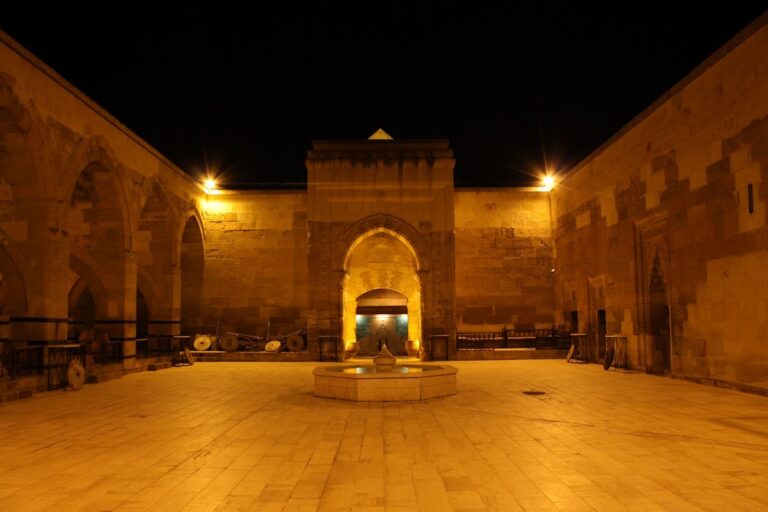
Köşkmedrese survives as a restored Islamic religious complex whose history is reflected in its two successive functions, first as a khanqah and later as a madrasa. Its commemorative role is also preserved through the burials of four members of the Eretna ruling family.
Religious institution
The building was constructed as a khanqah in 1339 and later adapted for use as a madrasa. Its architectural character belongs to Islamic architecture. The restoration followed the building’s long period of disuse and returned the structure to active cultural use.
Dynastic burials
Köşkmedrese contains the burials of Alaeddin Eretna and his wife, Suli Paşa Hatun, whose death prompted the building’s construction. Their descendants Gıyâseddin Mehmed and Alaeddin Ali were also buried there, giving the structure a continuing funerary connection with the Eretna succession.