Church of the Holy Spirit: A Medieval Roman Catholic Church in Split


Site at a Glance
- Rating
- 4.9
- Popularity
- Low
- Country
- Croatia
- Primary era
- Medieval
- External website
- Open
- Eras represented
- Medieval
- Civilizations
- Kingdom of Croatia
- Site type
- Religious
- Remains
- Church
On this page10 sections
History
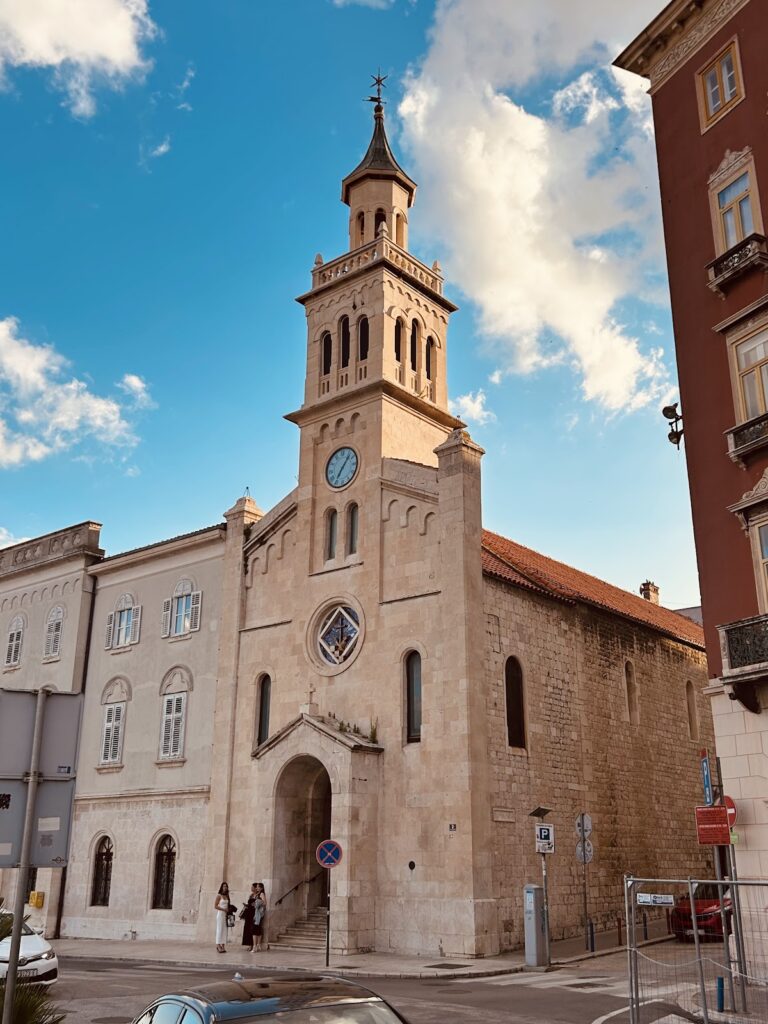
The Church of the Holy Spirit is a medieval Roman Catholic church in Split, Croatia, built in the eleventh century in the pre-Romanesque style. Dedicated to the Holy Spirit, the third person of the Christian Trinity, it stands northwest of Diocletian’s Palace in the northwestern part of the historic city centre. The church belongs to the Split–Makarska Archdiocese, a major Catholic jurisdiction headed by an archbishop.
Origins beyond Diocletian’s Palace
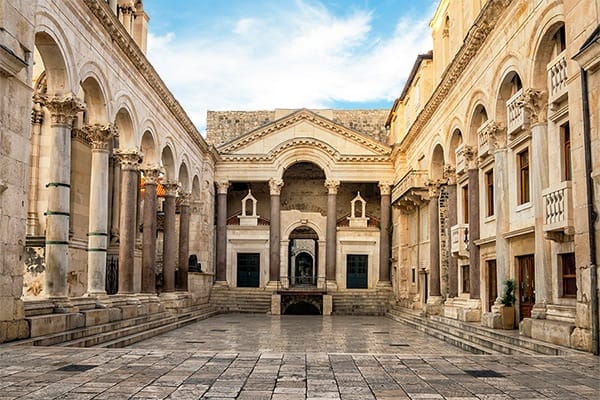
The eleventh-century church replaced an earlier single-nave building with a semicircular apse. At that time, Split’s settlement had not expanded beyond the late Roman imperial palace complex around which the historic centre developed. The church was probably a freestanding building beside routes running from the palace toward agricultural areas. It originally belonged to a larger building complex, traces of which remain associated with the church.
Urban growth and Gothic rebuilding
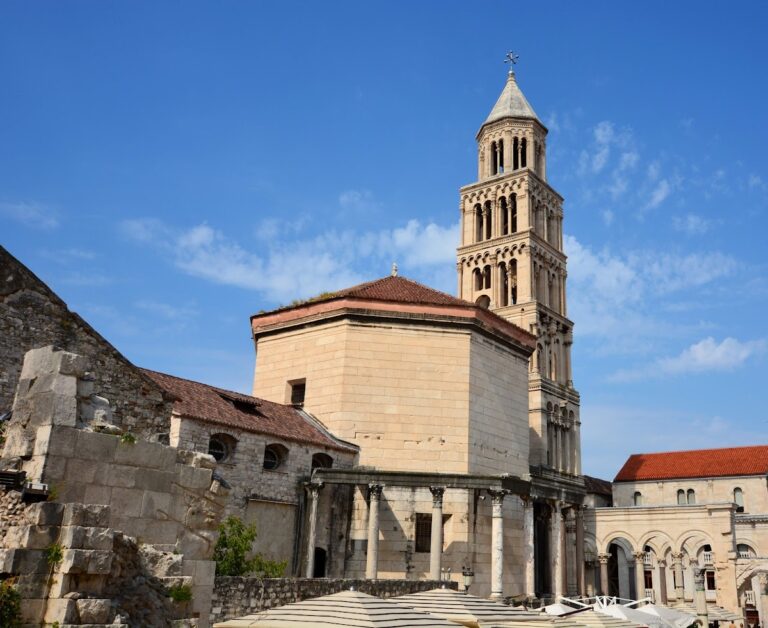
As Split expanded westward during the Middle Ages, urban development enclosed the church. By 1342, the city’s fortifications had incorporated the area, and the surrounding quarter took its name from the church. The building also served as the seat of one of the city’s most prominent religious brotherhoods.
A major enlargement followed in the fourteenth century during the early Gothic period. The nave was extended 1.75 metres eastward, a square apse was constructed, and the building was raised in height. This work formed part of the church’s numerous alterations over the centuries, especially during the Gothic period.
Modern religious and heritage status
On 7 October 2020, perpetual Eucharistic adoration was solemnly initiated at the church. This is the continuous devotional practice of displaying the consecrated host for prayer and worship. The inauguration was associated with a Mass celebrated at the nearby Cathedral of Saint Domnius by Marin Barišić, Archbishop of Split–Makarska. The church has been protected as a cultural monument since 2006 and is designated as an individual immovable cultural property and sacred architectural heritage under Z-4644.
Remains
Stone church layout
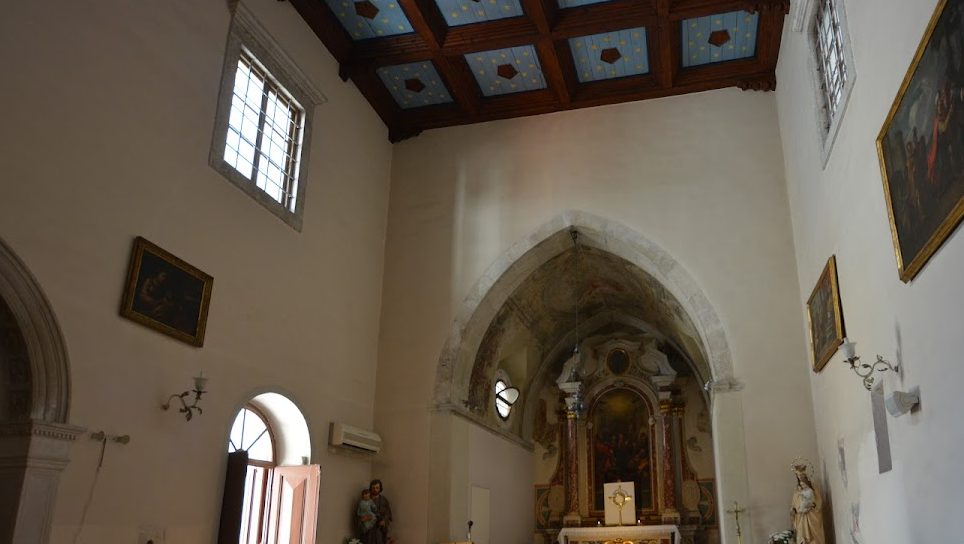
The Church of the Holy Spirit is a stone, single-nave building with an east-facing main altar. Its surviving fabric combines pre-Romanesque, Romanesque, Gothic, and Baroque elements, reflecting the successive architectural styles that shaped the building. The earlier church had a semicircular apse, while the fourteenth-century Gothic work added a square apse covered by a pointed vault. The nave, apse, and increased height preserve the principal results of that medieval enlargement.
Romanesque sculpture and Baroque furnishing
Christ reliefs
Two Romanesque reliefs depicting Jesus Christ survive within the church. One is set in the lunette above the courtyard portal, while the other is mounted on the western wall. Together they form part of the church’s Romanesque sculptural remains.
Tabernacle and tomb monument
The interior contains a gilded Baroque tabernacle by an unknown artist. It also preserves the tomb monument of Andrija Aleši, a Split artist who lived from 1425 to 1505 and commissioned the monument himself.
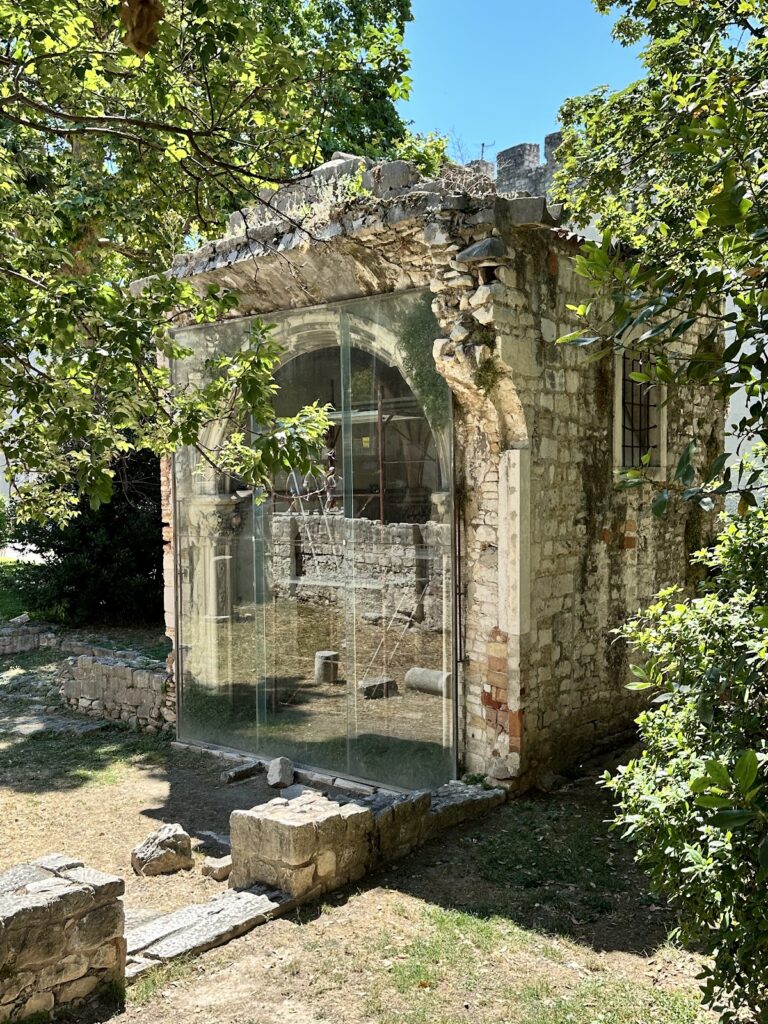
Associated building complex
Visible remains of the larger building complex to which the church originally belonged survive in association with the present structure. These traces place the single-nave church within a broader architectural setting rather than as an isolated building, while the stone construction and layered architectural elements preserve evidence of its long development.