Donji Brčeli Monastery: A Serbian Orthodox Monastery in Montenegro


Site at a Glance
- Rating
- 4.9
- Popularity
- Very Low
- Country
- Montenegro
- Primary era
- Medieval
- Eras represented
- Medieval
- Civilizations
- Unclassified
- Site type
- Religious
- Remains
- Monastery
On this page9 sections
History
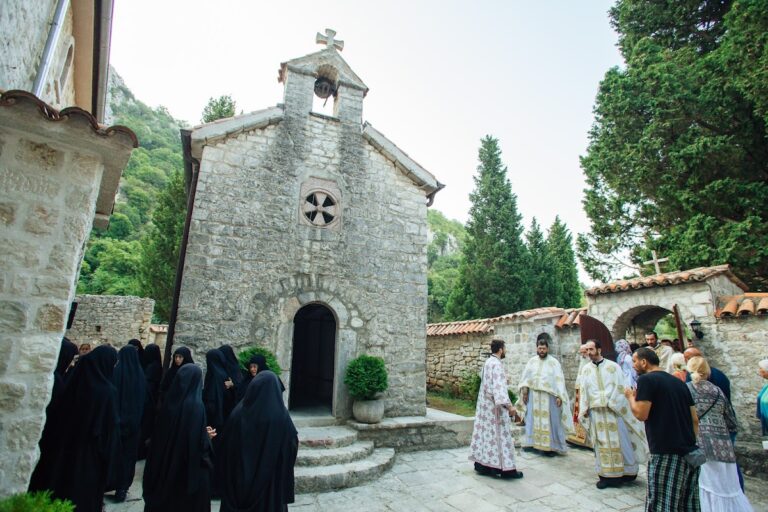
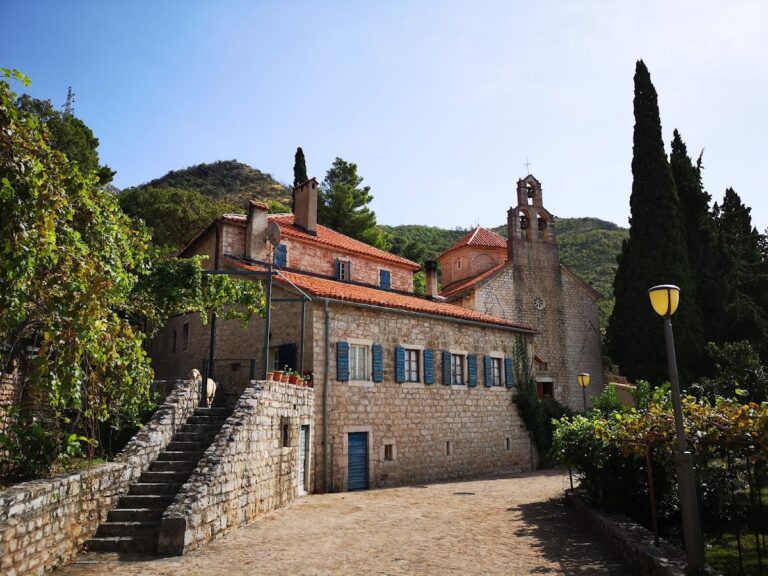
Donji Brčeli Monastery is a Serbian Orthodox male monastery in Montenegro, founded in the first decades of the fifteenth century by Jelena Balšić, also known as Jelena Lazarević. The daughter of Prince Lazar of Serbia and wife of the Zetan ruler Đurađ II Balšić, Jelena established the monastery church, which was completed before 1443 and dedicated to Saint Nicholas. The monastery belongs to the Serbian Orthodox Church, an Eastern Orthodox church whose worship follows the Byzantine rite, through the Metropolitanate of Montenegro and the Littoral.
Foundation and earlier connections
The village of Brčele had an earlier religious connection with the Monastery of Saint Nicholas on Vranjina Island. King Stefan Dečanski, who ruled from 1321 to 1331, had granted the village to that monastery. Donji Brčeli may therefore have been established as a filial institution of the Vranjina monastery, although this relationship is not certain.
A political and religious centre
Donji Brčeli became one of the political centres of the tribes of the Crmnica district. During the period when Cetinje and Montenegro formed part of the Scutari Sanjak, an Ottoman administrative district governed from Scutari, the Scutari bey protected monks from Brčeli and Cetinje against attacks by converts from Žabljak. The attacks targeted their fishponds at Karuč and Olač.
In 1714, after the Ottomans burned Bigovo Monastery in the Bay of Kotor, its hegumen, or monastic superior, and the monks found refuge at Brčeli. The monastery also remained connected with Montenegro’s ecclesiastical affairs in the nineteenth century. After Petar II Petrović-Njegoš arrived at Morača from the Principality of Serbia, he sent Bishop Nikifor of Užice to Brčeli.
Šćepan Mali and later reconstruction
Šćepan Mali, an adventurer who claimed to be the Russian emperor Peter III, ruled Montenegro from 1767 until his death in 1773. He spent his final years at Donji Brčeli, where he was killed in 1773 and buried in the monastery church of Saint Nicholas.
Prince Nikola I Petrović of Montenegro reconstructed the monastery in 1861. During wartime, the monks also used a cave near the summit of Mount Konj to conceal valuables, adding a defensive and protective aspect to the monastery’s history.
Remains
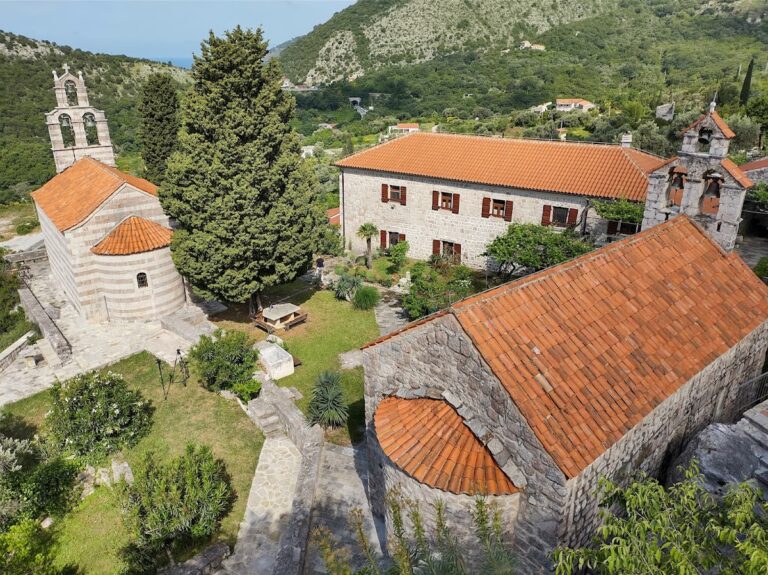
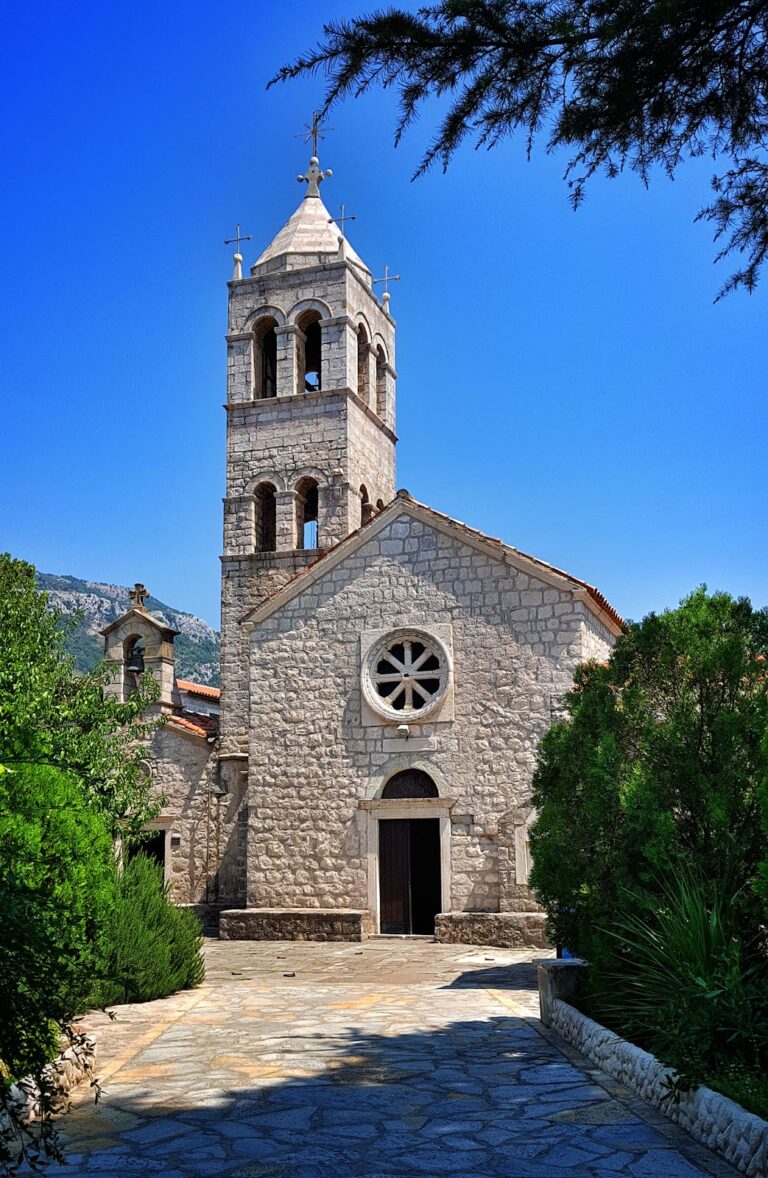
Donji Brčeli Monastery stands in the Crmnica district near the village of Virpazar. Its principal architectural feature is the church of Saint Nicholas. A separate underground room lies beneath the church floor, while a cave near the summit of Mount Konj is associated with the monastery’s wartime protection of valuables.
Church and underground space
Church of Saint Nicholas
The principal church is dedicated to Saint Nicholas and was completed before 1443. It is the central surviving structure of the monastery and contains the burial place of Šćepan Mali, who was killed at Donji Brčeli in 1773.
Room beneath the church
A room is located beneath the church floor. Its entrance was formerly positioned in the floor of the altar area. The room’s function remains uncertain, although it was probably used as a prison during Šćepan Mali’s rule.
Mount Konj cave
A cave near the summit of Mount Konj forms part of the monastery’s associated physical setting. During wartime, monks from Brčeli hid valuables there, using the concealed space to protect them.