Church of Agios Georgios in Anthedon: A Byzantine Church in Greece


Site at a Glance
- Rating
- 5
- Popularity
- Very Low
- Country
- Greece
- Primary era
- Medieval
- Eras represented
- Medieval, Early Modern, Modern
- Civilizations
- Byzantine, Greek, Ottoman
- Site type
- Religious
- Remains
- Church
On this page8 sections
History
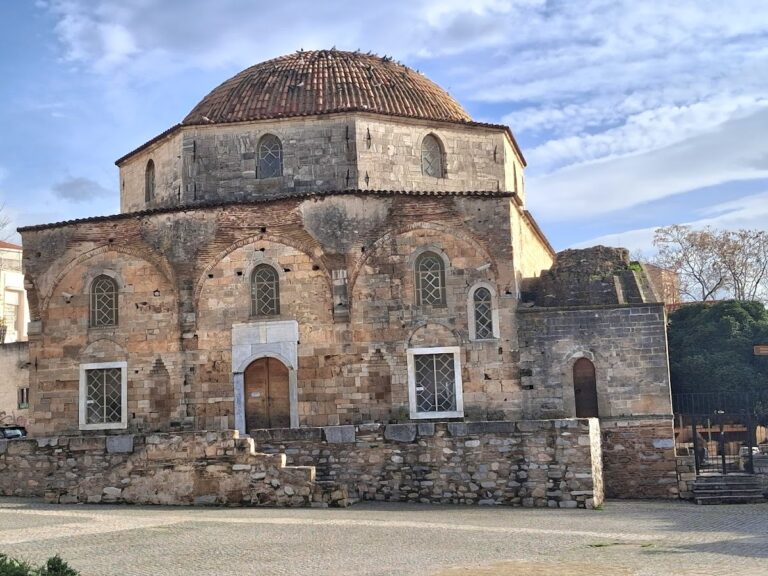
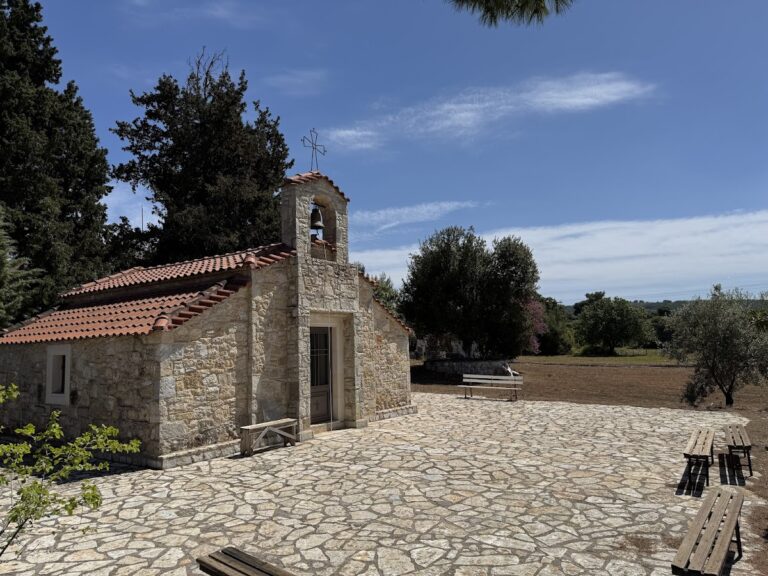
The Church of Agios Georgios in Anthedon is a Byzantine church in Lukisia, Greece, constructed in the early twelfth century. Byzantine architecture developed within the Eastern Roman Empire and its successor states, especially in the Christian churches of the medieval eastern Mediterranean. The church forms part of Lukisia and belongs to the ecclesiastical jurisdiction of the Holy Metropolis of Thebes and Livadeia.
Natural deterioration affected the building over time, while alterations made during the post-Byzantine period and in the 1930s changed parts of its form. From 2006 to 2009, restoration and conservation works sought to recover the church’s earlier appearance. The work strengthened the supports with additional stone, rebuilt damaged sections, repaired the roof, treated the dome extensively, and conserved the stone elements and wall paintings.
Remains
The church stands on the eastern side of Lukisia, at the foot of the surrounding slope. It is a small, single-room church organized on a tetraconch plan, meaning that four apsidal projections are arranged around a central space. Its compact design is marked by symmetry and an economical use of the available interior area.
Architectural Form
Central Plan and Dome
A dome rises above the centralized space. It has an octagonal form and belongs to the Athenian architectural type. The building’s supports, roof, and dome were among the elements addressed during the restoration carried out between 2006 and 2009. The restored structure preserves the church’s compact Byzantine arrangement.
Floor
Restoration revealed part of the original floor. It is formed from roughly cut stones joined with earth, providing evidence of the building’s simple internal construction.
Wall Paintings
Medieval Paintings
The interior retains wall paintings dating from the thirteenth to fourteenth centuries. They include a small-scale image of Saint George, the Christian martyr and military saint, together with fragmentary scenes of the Crucifixion and the Presentation of Christ. Separate figures of saints occupy the lower levels of the painted decoration.
Seventeenth-Century Figures
At the beginning of the seventeenth century, full-length paintings of Saint John the Baptist and Saint George the Trophy-Bearer were placed on opposite sides of the templon, the screen separating the sanctuary from the main body of an Eastern Christian church. The honorific Trophy-Bearer expresses Saint George’s victorious or triumphant status.