Karababa: An Ottoman Fortress Controlling the Euripus Strait

Site at a Glance
- Rating
- 4.5
- Popularity
- Medium
- Country
- Greece
- Primary era
- Early Modern
- Eras represented
- Classical, Early Modern, Modern
- Civilizations
- Ancient Greek, Greek, Ottoman
- Site type
- Military
- Remains
- Fort
On this page11 sections
History
Karababa is a fortress in Greece on the mainland coast opposite Chalcis, built by the Ottoman authorities in 1684 in a design considered more European than Ottoman. Located on the hill of Fourka, it guarded the Euripus Strait, Chalcis, and broad parts of the northern and southern Euboean Gulf.
The ancient hill of Kanithos
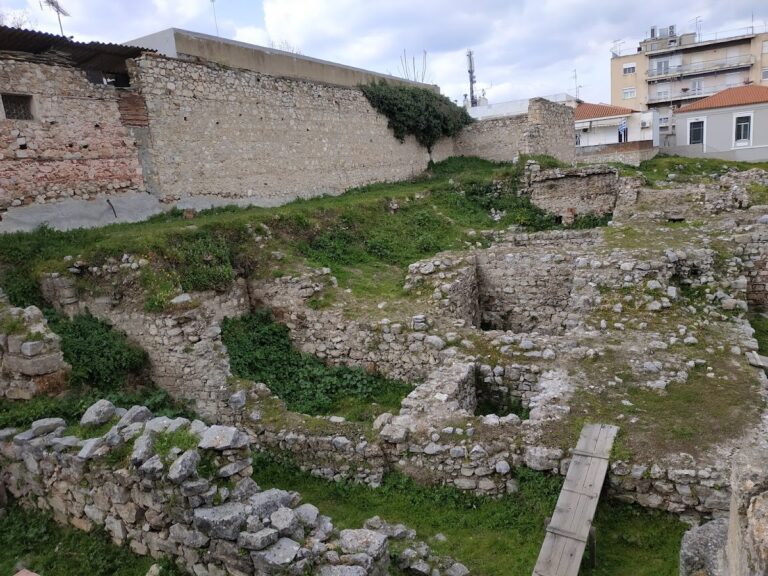
In antiquity, the hill was occupied by the city of Kanithos. Traces of buildings and tombs survive from that settlement, which had a theater, gymnasium, and stadium. The hill was probably fortified during the Roman period, although the present fortress belongs to a much later phase.
Ottoman construction and Venetian attack
The Ottoman government built Karababa in 1684 to protect Chalcis from Venetian attack. Venice was then a major Mediterranean power and a regional rival of the Ottoman Empire. Plans for the fortress were prepared by the Venetian architect Gerolimo Galopo, helping give the structure a character regarded as more European than Ottoman.
During construction, the hill was known as Fourka, a name meaning “gallows,” because condemned people were executed there. In 1688, the Venetian commander and statesman Francesco Morosini besieged Karababa but failed to capture it. The fortress also resisted attempted captures during the Greek Revolution, the nineteenth-century war through which Greece broke away from Ottoman rule. It remained under Ottoman control until it passed to the Greek state in 1833.
Military use and restoration
Karababa continued to contain military installations after the Ottoman period. During the Second World War, Italian forces used the fortress as an observation post and installed machine guns and anti-aircraft guns. Restoration took place between 1985 and 2000, preserving the fortress and adapting part of its western tower for an exhibition devoted to material from the Chalcis area.
Remains
Enclosure and defensive works
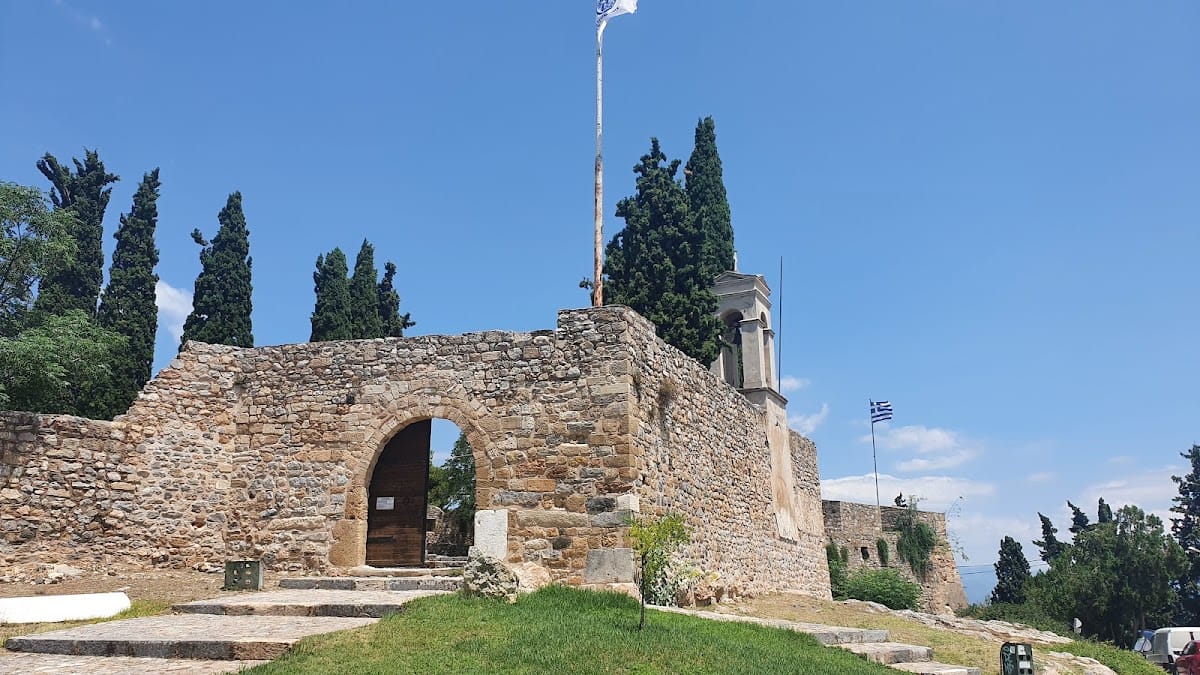
Karababa occupies the summit of the hill in an elongated enclosure aligned from east to west. The fortress measures up to 240 metres in length and 54 metres in width. Its defenses include three bastions, projecting fortified platforms from which defenders could protect the walls and fire along approaches, together with a large tower at the western end and an additional rampart along the northern wall.
Eastern bastion
The eastern bastion faces Chalcis and is hexagonal, making it the most complex of the three. Two Russian cannons dating from the nineteenth century remain on its battlements. The eastern bastion also stands near the fortress bell tower, which once held the alarm bell.
Walls and gate
The walls are built vertically and rise to about 6 metres. Battlements and narrow rifle loopholes, openings through which firearms could be used, survive along the defenses. The northern side includes a rampart, while the southern fortifications are lighter because the natural terrain offered easier defense. The southeastern side contains the sole gate, with military-purpose buildings positioned nearby.
Western tower and interior
Western tower
The western part of the enclosure contains a large seven-sided tower entered through a narrow opening. Its outer walls are 3.5 metres thick. An underground level held a cistern, an underground reservoir for storing water for the fortress.
Church and exhibition space
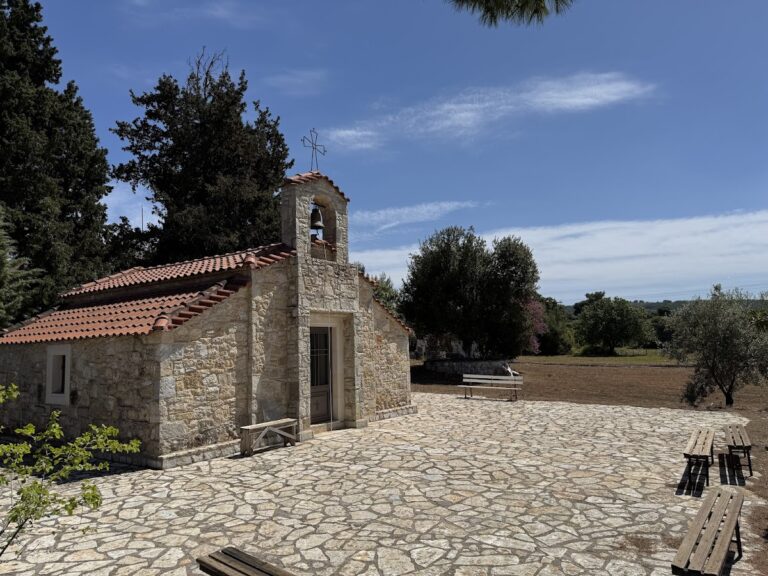
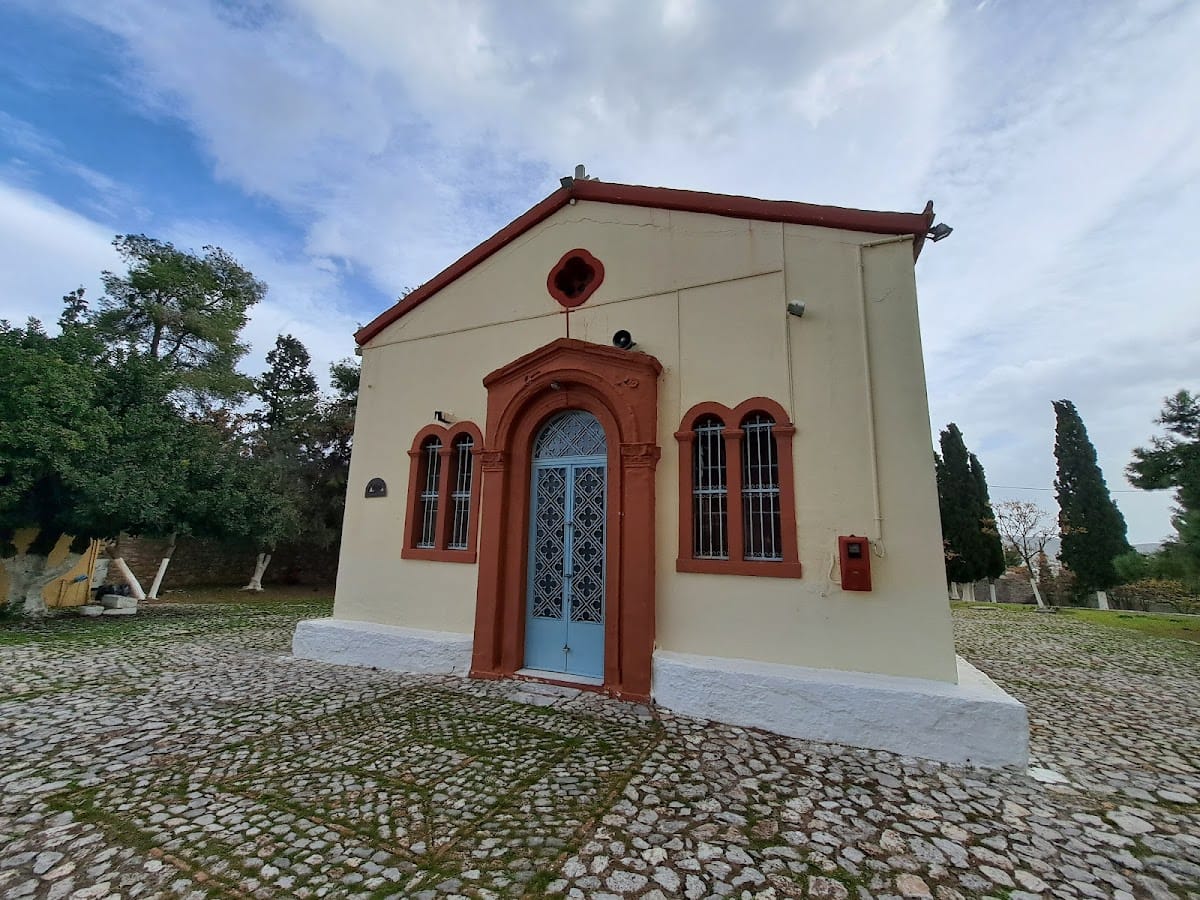
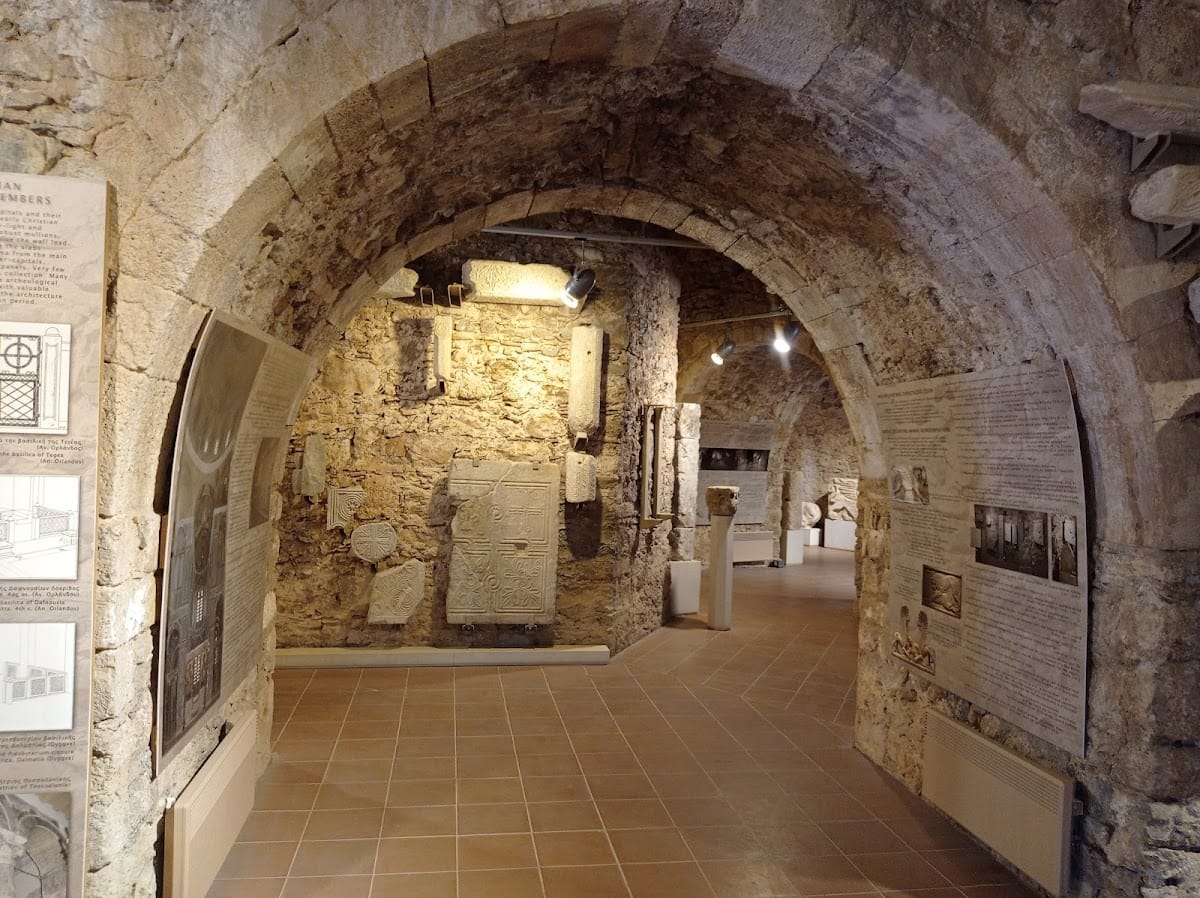
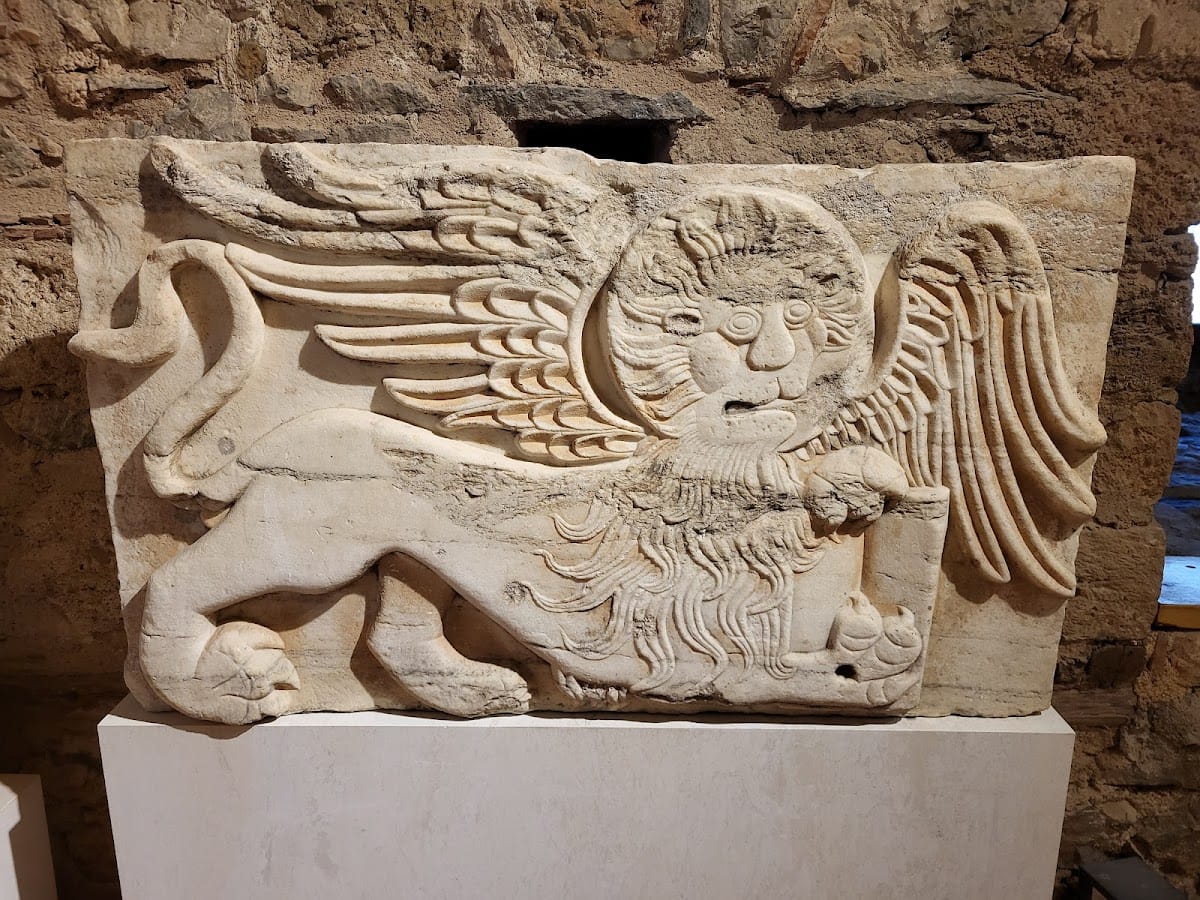
The Church of the Prophet Elijah, constructed in 1895, survives inside the enclosure. The interior passage of the western tower has been converted into an exhibition space displaying sculptures and other material from the Chalcis area. The collection includes reliefs and architectural elements dating from the Early Christian period, when Christianity developed within the Roman world and the centuries immediately after it, as well as from the Byzantine, Venetian, and Ottoman periods.
Nearby sites