Kesik Minare: A Roman Temple, Byzantine Church, and Ottoman Mosque in Antalya

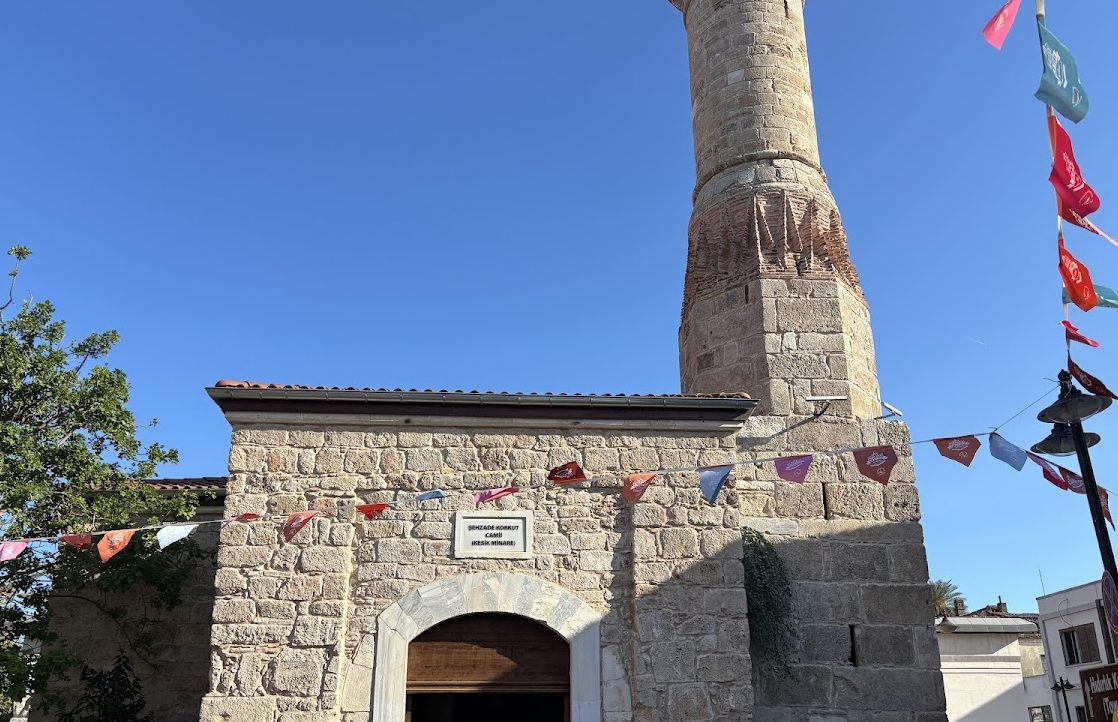

Site at a Glance
- Rating
- 4.7
- Popularity
- Low
- Country
- Turkey
- Primary era
- Medieval
- Eras represented
- Medieval
- Civilizations
- Byzantine
- Site type
- Religious
- Remains
- Mosque
On this page8 sections
History
Kesik Minare is a historic religious complex in Antalya, Türkiye, whose surviving minaret and mosque ruins preserve a sequence of Roman, Byzantine, Seljuk, and Ottoman phases. The earliest structure was a classical-style pagan temple built during Roman rule in the 2nd century AD. The name Kesik Minare, meaning “Broken Minaret” or “Truncated Minaret,” now refers both to the minaret and to the ruins of the former mosque, also known as Korkut Mosque.
Roman Temple and Byzantine Church
During the 7th century, the Roman temple was demolished and rebuilt as a Christian church dedicated to the Virgin Mary. The Byzantine Empire, the eastern Roman Empire centered on Constantinople, continued Roman architectural traditions while developing Christian institutions across the eastern Mediterranean. The new church incorporated stone blocks and architectural capitals, the upper parts of columns or pilasters that support the structure above them, from the earlier temple.
The church suffered serious damage during Arab-Byzantine warfare in the 7th century and was restored in the 9th century. Its conversion from a pagan Roman temple to a Christian church and its later rebuilding reflect the changing religious and political circumstances of Antalya.
Seljuk and Ottoman Transformations
After the Seljuk conquest of Antalya in the 13th century, the church was converted into a mosque and a minaret was added. The Seljuks of Rum were a medieval Turkic dynasty that ruled much of Anatolia, including Antalya during this period.
Peter I, the 14th-century king of Cyprus, captured Antalya in 1361, and the mosque was rededicated as a Christian church. The city was later reconquered by the Turks and became part of the Ottoman Empire from 1423. During the tenure of Şehzade Korkut, an Ottoman prince and son of Sultan Bayezid II, the building was rebuilt as a mosque and became known as Korkut Mosque. The minaret formed part of the Islamic complex during this phase.
Fire and Modern Restoration
A fire in 1896 destroyed the mosque’s main building and the wooden upper part of the minaret. The mosque was not rebuilt, while the damaged minaret acquired the name Kesik Minare. Preparatory restoration work began in 1975 but did not result in a completed restoration. A new campaign began in 2018, and the structure was formally reopened as a mosque on 5 March 2021, receiving worshippers for the first time in approximately 125 years.
Remains
The complex stands in Kaleici, Antalya’s historic old town, and consists primarily of the surviving minaret and the ruins of the former mosque. The mosque area retains fragments of earlier buildings, beginning with the Roman temple of the 2nd century AD. Reused stone blocks and architectural capitals connect the later Byzantine church physically with the temple that preceded it.
Surviving Religious Complex
Minaret
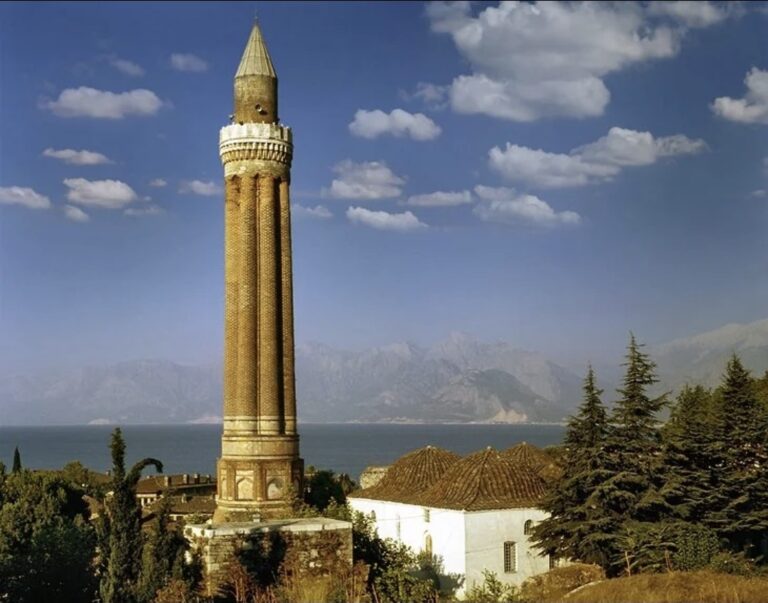
The minaret is the best-preserved part of Kesik Minare and stands on Kaleici Hesapci Street. Its wooden upper section was destroyed in the 1896 fire, leaving the tower damaged and giving the complex its modern name. Restoration in 2019 reconstructed the upper cone and roof and restored balcony elements that had been missing for 123 years.
Former Mosque Ruins
The ruins of the former mosque occupy the same complex as the minaret in Kaleici. They incorporate fragments of the structures that preceded the mosque, including remains associated with the Roman temple and the Byzantine church dedicated to the Virgin Mary. The surviving fabric therefore brings together elements from the site’s successive religious buildings, while the mosque’s main building remains destroyed after the 1896 fire.