Al-Otrush Mosque: A Mamluk Mosque in Aleppo


Site at a Glance
- Rating
- 4.9
- Popularity
- Very Low
- Country
- Syria
- Primary era
- Medieval
- Eras represented
- Medieval
- Civilizations
- Mamluk
- Site type
- Religious
- Remains
- Mosque
On this page7 sections
History
Al-Otrush Mosque, also known as the Demirdash Mosque, is a Sunni mosque in Aleppo, Syria, built during the Mamluk period. Construction began in 1393 under Aqbogha al-Otrush, the Mamluk ruler of Aleppo, and the mosque stands in the al-A’jam district in the southern part of the Ancient City, near the Citadel of Aleppo and the Al-Sultaniyah Madrasa.
Mamluk Construction
Aqbogha died in 1398 before the mosque was complete. His successor, Demirdash al-Nasiri, brought the work to completion in 1408. Aqbogha was buried in the mosque, linking the building directly with the ruler who had initiated its construction.
Restoration and Wartime Damage
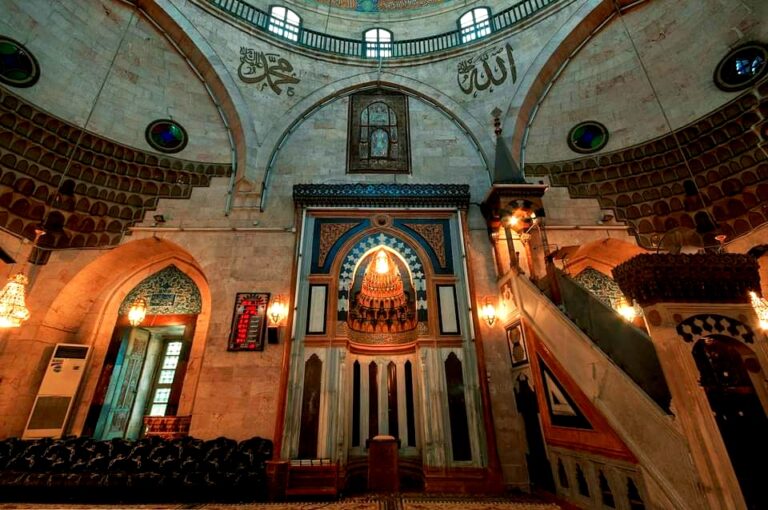
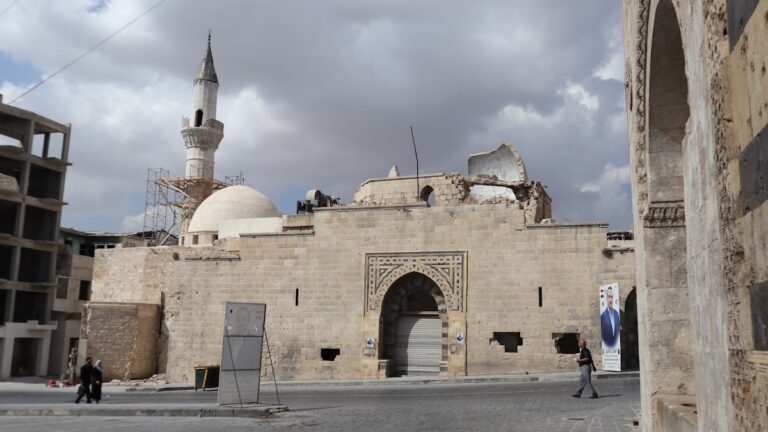
The mosque underwent restoration in 1922 during the French Mandate. Fighting in the district in August 2014 caused severe damage. The minaret was seriously damaged, the dome was placed at risk of collapse, and fire destroyed part of the interior, including a prayer niche and a marble minbar, the pulpit used for sermons.
Al-Otrush Mosque lies within the Ancient City of Aleppo, which UNESCO inscribed as a World Heritage Site in 1986. The Ancient City, including the Citadel of Aleppo and Al-Madina Souq, was placed on the List of World Heritage in Danger from 2013 until 2020.
Remains
Plan and Ornament
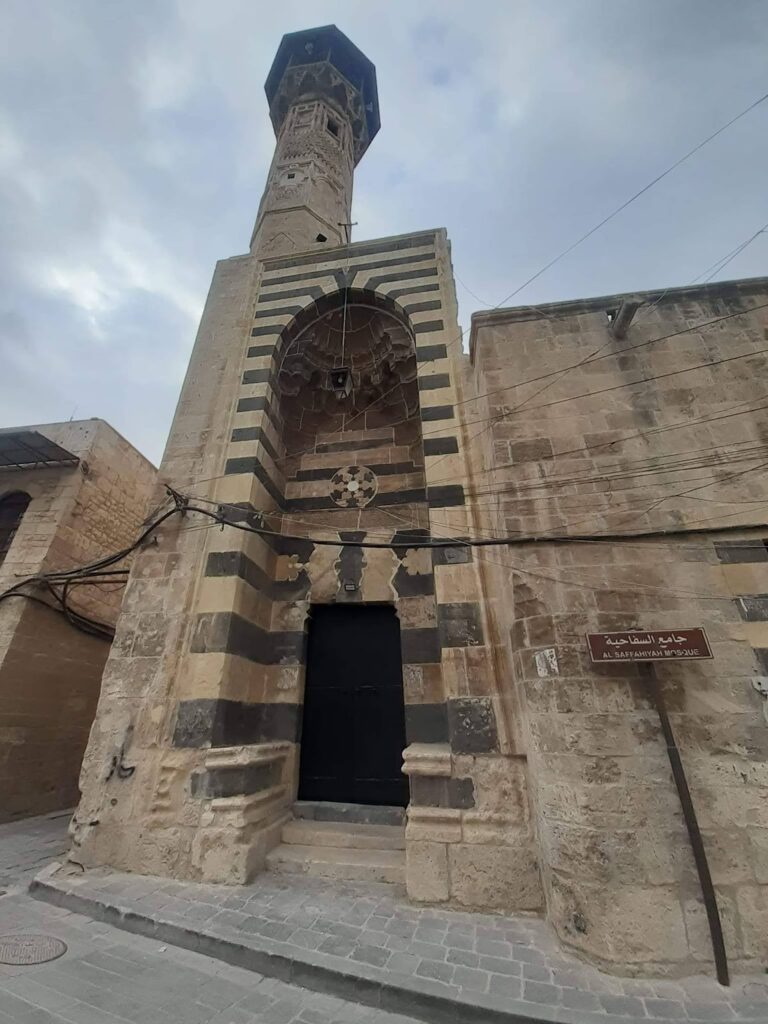
The mosque has a rectangular plan and is built primarily of stone. Its surviving architectural composition includes a single dome and a single minaret, while the decorated façade and entrance display traditional eastern ornamental motifs and Islamic muqarnas. Muqarnas are three-dimensional architectural elements made from small niche-like or stepped units, used here to enrich the entrance and other transitions.
Main Mosque
The main building’s stone construction, rectangular arrangement, and dome express the characteristic architectural vocabulary of Mamluk religious architecture. The interior included a prayer niche and a marble minbar, both affected by the fire of 2014.
Minaret
The minaret rises to the left of the principal entrance and has an octagonal plan. An inscription in naskh script, a rounded style of Arabic writing, identifies its builder as Aqbogha al-Zahiri, described in the text as “the needy before God,” and includes a prayer asking God to forgive him. The minaret suffered serious damage during the fighting in August 2014.