Khidir Mosque: A Shirvanshah-Era Mosque in Baku


Site at a Glance
- Rating
- 5
- Popularity
- Very Low
- Country
- Azerbaijan
- Primary era
- Medieval
- Eras represented
- Medieval
- Civilizations
- Shirvanshah
- Site type
- Religious
- Remains
- Mosque
On this page6 sections
History
Foundation and Religious Use
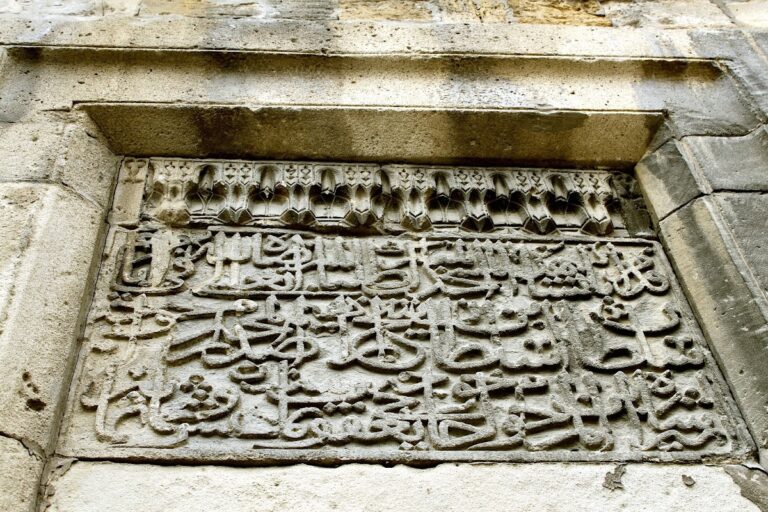
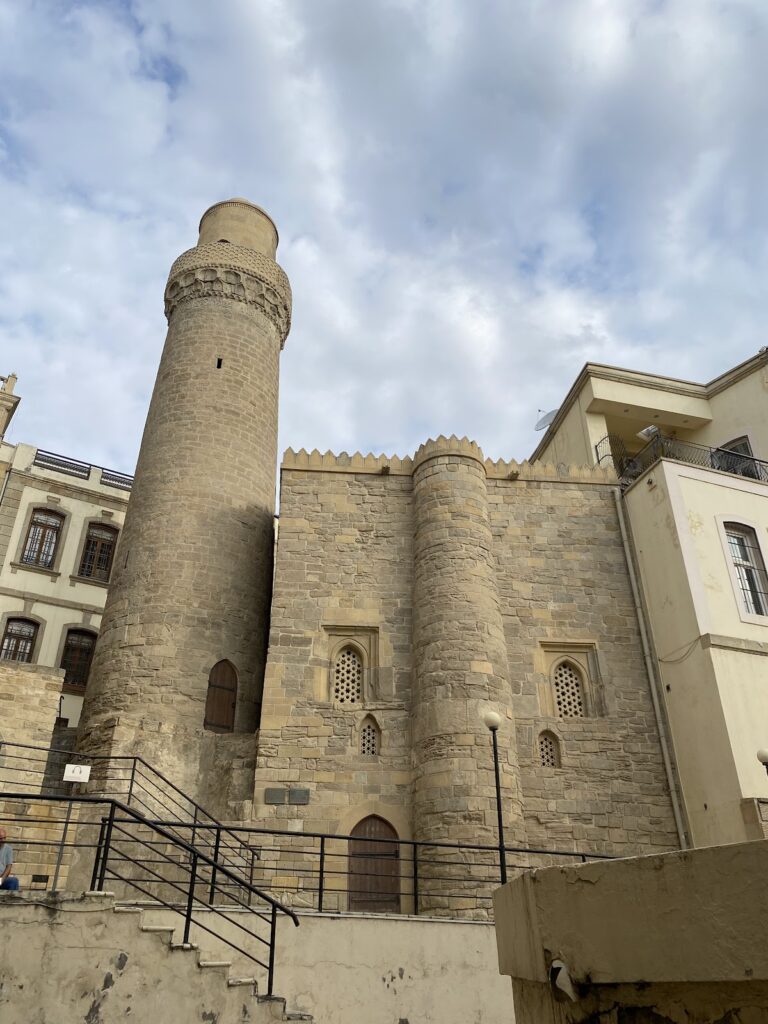
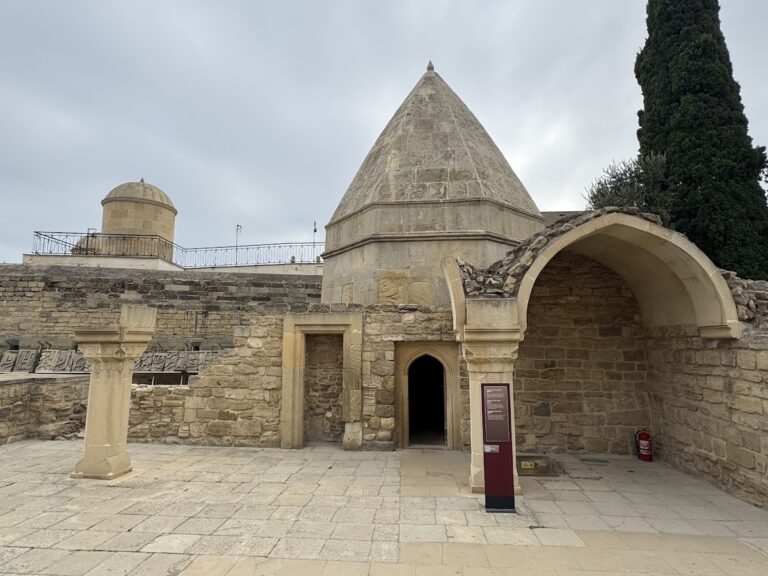
Khidir Mosque is a 1301 Islamic mosque in Baku, Azerbaijan, associated with the Shirvanshahs and built in the regional Shirvan-Absheron architectural tradition. The Shirvanshahs, the ruling dynasty of Shirvan, supported major religious and civic buildings in Baku and the surrounding region. The mosque was constructed over an earlier Zoroastrian fire temple, a sanctuary connected with the sacred use of fire in the ancient Iranian religion of Zoroastrianism.
Located on Muslim Magomayev Street in Baku’s Old City, the mosque served as a place of worship from 1301 until 1928. From 1928 to 1991, the building was used for non-religious purposes. It is now abandoned as a mosque, although restoration has preserved the structure.
Excavation and Heritage Protection
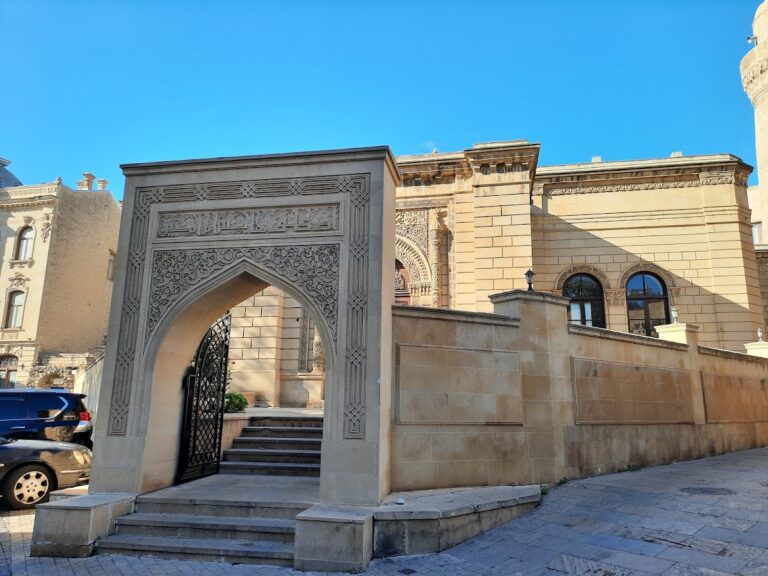
Archaeological excavations took place in 1988 on the lower level beneath the stone dome. Restoration followed, including work on the portal. On August 2, 2001, the Cabinet of Ministers of Azerbaijan registered Khidir Mosque as a national architectural monument. The building also lies within the UNESCO World Heritage property known as the Walled City of Baku with the Shirvanshah’s Palace and Maiden Tower, which was inscribed in 2000 under criterion (iv). The site is associated with the State Administration of the Icherisheher Protected Area.
Remains
Structure and Setting
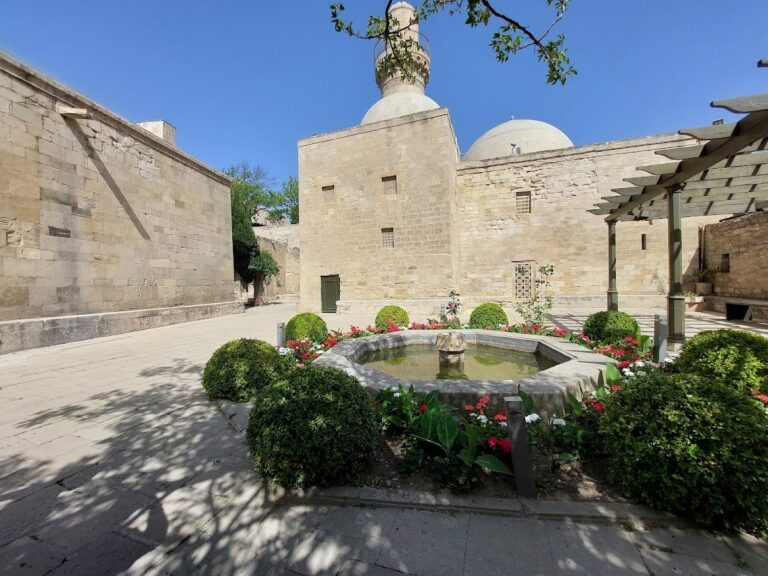
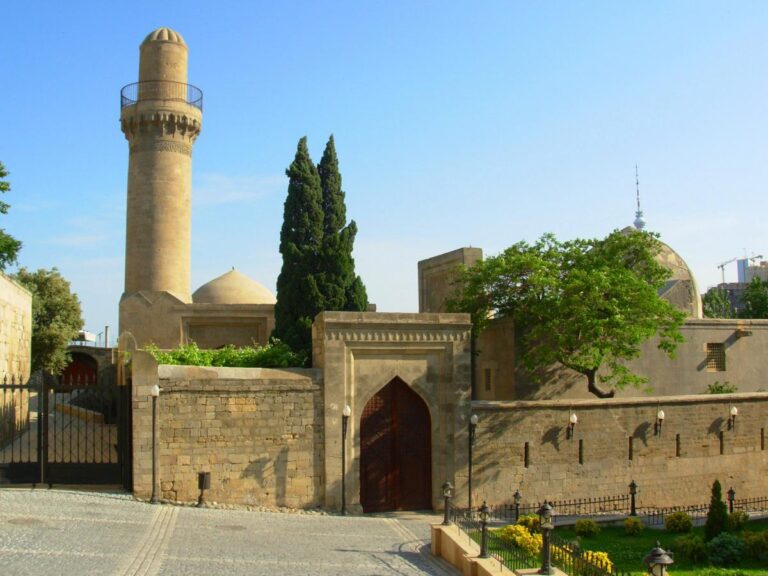
Khidir Mosque is a stone building with a single dome. Its position on a street formed by stairs influenced both its placement and its architectural design. A low stone crown, or upper edging, runs around the building’s perimeter and reflects the restrained monumental forms associated with the Shirvan-Absheron architectural school of eastern Azerbaijan.
Interior and Openings
Inside, proportional divisions and other compositional devices organize the space. Vividly carved stone elements contribute to the interior, while the artistically decorated mihrab, the feature that indicates the direction of prayer toward Mecca, gives the prayer hall its distinctive appearance. Straight, profiled windows are set into the south façade, adding a defined rhythm to the exterior wall.