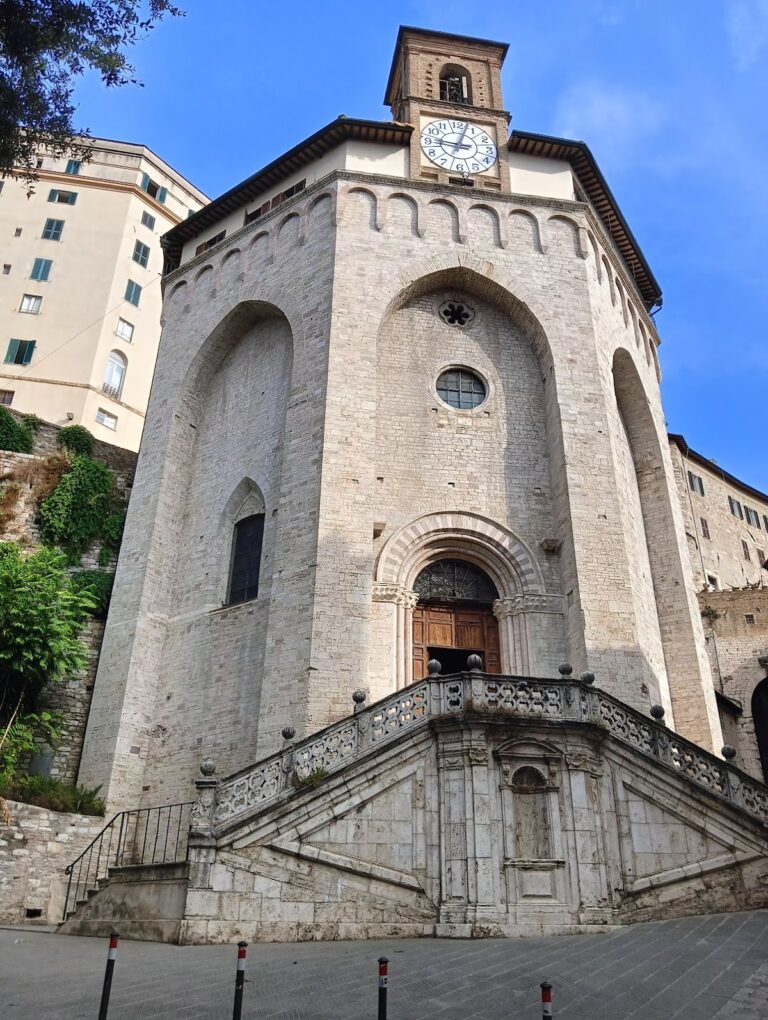
Oratorio della Confraternita di Sant’Antonio Abate: A Catholic Oratory in Perugia


Site at a Glance
- Rating
- 4.6
- Popularity
- Very Low
- Country
- Italy
- Primary era
- Early Modern
- Eras represented
- Early Modern
- Civilizations
- Papal States
- Site type
- Religious
- Remains
- Chapel
On this page10 sections
History
The Oratorio della Confraternita di Sant’Antonio Abate is a sixteenth-century Catholic oratory in Perugia, Italy, dedicated to Saint Anthony the Abbot and belonging to the city’s archdiocese. Its consecration is assigned to the same century. The building served as the headquarters of one of Perugia’s earliest lay confraternities, an institution rooted in the religious, charitable, and cultural tradition of the Disciplinata, lay religious groups shaped by penitential practices, devotional gatherings, charity, and public ceremonies.
Origins and charitable work
The Confraternity of Saint Anthony the Abbot is documented from 1337, although its origins are considered to reach back to the thirteenth century. It emerged from the movement associated with Raniero Fasani, who founded the disciplined tradition in 1260. For approximately seven centuries, until the twentieth century, the oratory remained the confraternity’s headquarters in Borgo Sant’Antonio, a densely populated popular district at the edge of the city.
The confraternity also operated a hospital for pilgrims, poor people, and others in need. Donations supported the institution, reflecting the medieval understanding of medical care as both a public service and a religious responsibility. The hospital was suppressed in the seventeenth century by order of the Olivetans, a Benedictine monastic congregation, at the nearby church of Sant’Antonio Abate. That church had originally belonged to the Antonines, the Hospitaller Order of Saint Anthony the Hermit, which cared for the sick, particularly those affected by illnesses associated with Saint Anthony’s fire. The hospital’s assets later passed to Perugia’s united Hospital of Santa Maria della Misericordia.
Renovation and later confraternal activity
After the hospital closed, the confraternity continued its social and cultural work into the nineteenth century. For more than 700 years, it assisted beggars, pilgrims, and peasants who had moved into the city, relying on bequests and donations. A substantial inheritance received in 1680 supplied new resources for the renovation of the oratory and for commissioning its eighteenth-century frescoes by Francesco Appiani and Nicola Giuli. Further restoration followed in 1735.
New statutes adopted in 1845 created a confederation among confraternities of the disciplined tradition in the Porta Sole district. The associated groups took part together in religious processions. One of the confraternity’s last recorded activities took place on 22 August 1919, when it transported the ancient image of the Redeemer from the church of Monteluce to Perugia Cathedral.
Dissolution and recovery
In 1904 the confraternity’s assets were transferred to the Congregation of Charity. Its immovable property was sold in 1916 because rental income could not meet restoration costs. Falling income reduced the confraternity’s activities and membership, and the institution was subsequently dissolved.
After the confraternity ceased to use the building, the oratory became a carpentry workshop and remained closed to the public for more than thirty years. Restoration led to its reopening in 2018. The building is now owned by the Diocesan Institute for the Support of the Clergy and leased to the Borgo Sant’Antonio Porta Pesa social-promotion association, which undertook its recovery as a communal center for the district.
Remains
Plan and interior structure
The oratory is a small rectangular building without an apse. Its interior is covered by barrel vaults interrupted by lunettes, curved openings or recesses set into the vaulting. This compact arrangement defines the surviving architectural shell of the former confraternal headquarters.
Fresco decoration
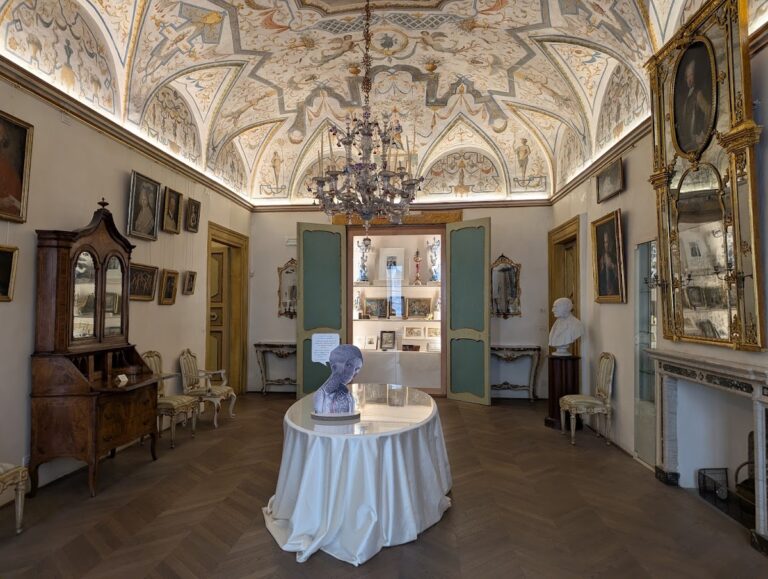
The eighteenth-century painted interior combines naturalistic ornament by Nicola Giuli with figural scenes by Francesco Appiani. An 1784 description characterized the decoration as varied and shaped by the prevailing taste of an earlier period. It specifically noted Giuli’s ornament and Appiani’s figures, while criticizing the lack of harmony among the colors. At the rear of the oratory is a frescoed Crucifix of uncertain authorship, which was already mentioned in a guide to Perugia written in 1683.
Sacristy feature
Former stone fireplace
The small sacristy formerly contained a sixteenth-century fireplace carved from pietra serena, a fine-grained gray sandstone widely used for architectural carving in Italy. The fireplace bore the confraternity’s coat of arms, but it has since been lost and is no longer in the sacristy.
Processional banner
The confraternity’s processional banner, painted on canvas, dates from 1512 and is signed by Sinibaldo Ibi. Kept in the storage collection of the Galleria Nazionale dell’Umbria, it shows Saint Anthony the Abbot with two faithful wearing the confraternity’s black capes. The capes were marked with a tau cross, a T-shaped cross traditionally associated with Saint Anthony and with the Hospitaller Order of Saint Anthony. The same emblem appears in the banner’s confraternal imagery.
The banner’s symbolism also reflects traditions surrounding the saint’s healing associations. Saint Anthony is conventionally shown with a pig and the tau, imagery linked to the use of pig lard in ointments for ergotism and herpes zoster, historically called Saint Anthony’s fire. Pigs donated to the monks for food were allowed to graze on communal land and marked with the tau, which the monks also wore sewn onto their mantles.