Basílica Paleocristã de Mértola: An Early Christian Basilica and Necropolis in Portugal
Site at a Glance
- Rating
- 4.6
- Popularity
- Very Low
- Country
- Portugal
- Primary era
- Medieval
- External website
- Open
- Eras represented
- Classical, Medieval
- Civilizations
- Roman, Visigothic
- Site type
- Religious
- Remains
- Basilica
On this page7 sections
History
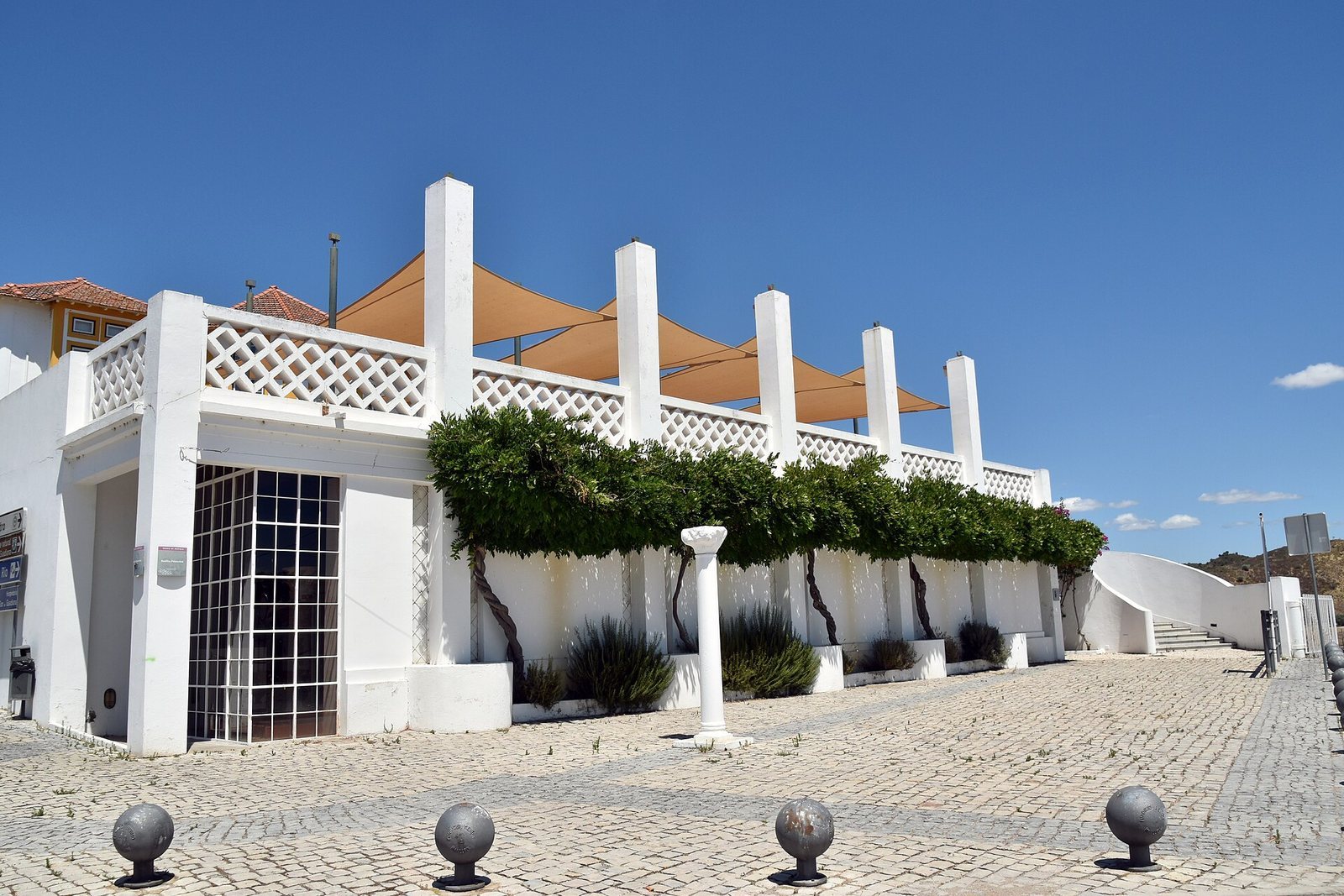
The Basílica Paleocristã de Mértola is a museum complex in Portugal preserving the remains of an early Christian basilica and necropolis dating probably from the fifth to the eighth centuries AD. It belongs to the formative period of Christianity, when Christian communities established places of worship in the late Roman and early post-Roman worlds. The site reflects the development of Mértola’s first Christian sanctuaries.
Early Christian use and later burials
Rossio do Carmo, where the basilica stands, lay outside Mértola’s urban centre in the past. The complex served both as a place of Christian worship and as a burial ground. Most of the graves are Christian, while some later burials show Islamic religious practices, indicating that the area continued to be used after the basilica’s early Christian phase.
Archaeological investigation and museum
The remains were first investigated in the late nineteenth century by Estácio da Veiga, a Portuguese archaeologist. More extensive study took place during the 1980s and 1990s through the Mértola Archaeological Field. The museum associated with the site opened in 1993, presenting the basilica, necropolis, and finds that illuminate the Christian community living in Mértola during this period.
Remains
The basilica
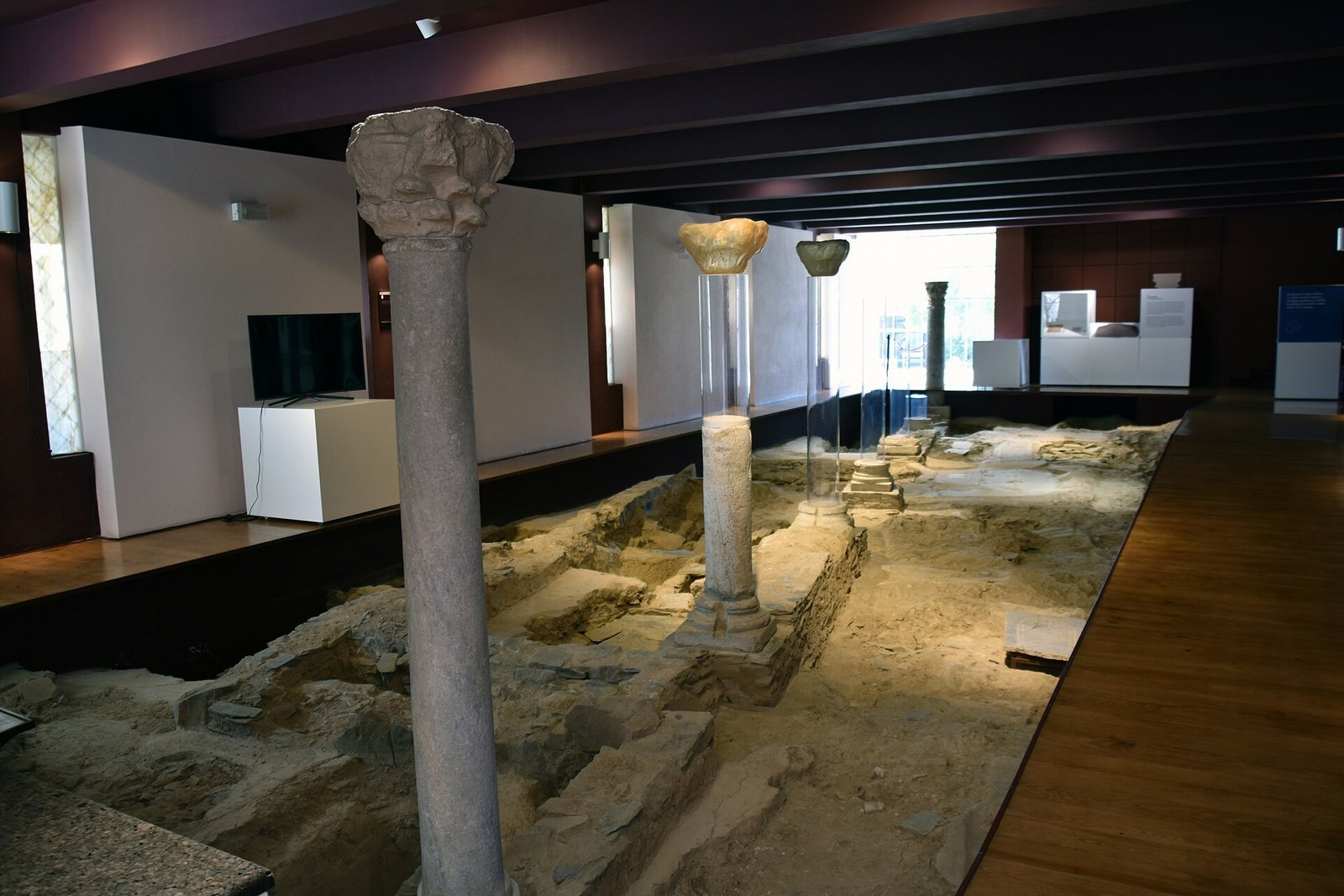
The basilica formed a hall about 33 metres long and 18 metres wide, with three longitudinal aisles separated by columns arranged in seven bays, or structural sections between successive supports. It had two apses, the rounded or polygonal ends used in church architecture, and its principal entrance was on the north side. The building had three roof sections and two sloping roof planes, a configuration comparable to African temples of the period.
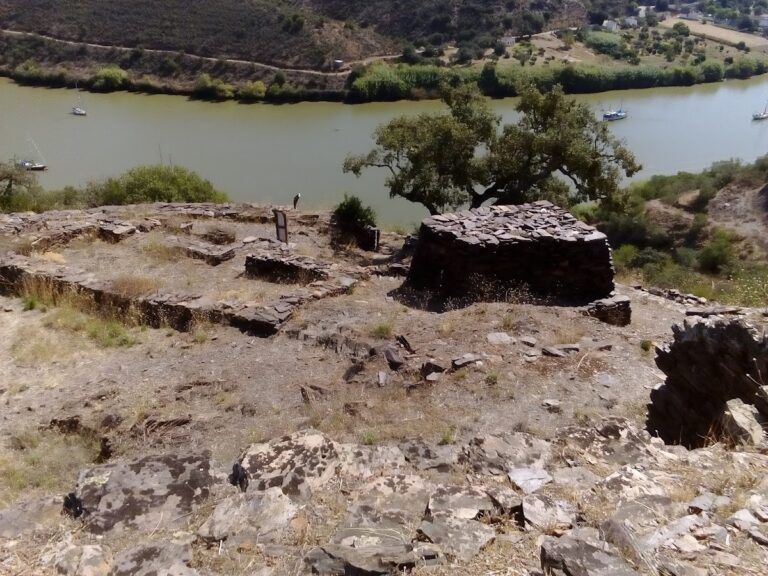
Surviving architectural elements include fragments of columns, capitals, and mosaics. Together with the plan of the building, these remains show the form of the early Christian structure and its organization around the aisles, apses, and entrance.
The necropolis
Dozens of graves cut into the rock were found inside and outside the basilica. Some remained sealed, with their stone covering slabs still in their original positions. In the Christian burials, bodies were laid on their backs with their heads facing west. In graves associated with Islamic rites, bodies were placed on their right sides, with their heads oriented southwest and their faces turned east.
Several inscribed funerary slabs were recovered. One especially notable slab carries writing in the Southwest Script, an ancient writing system used in the southwestern Iberian Peninsula, and was later reused as a grave cover. The inscriptions provide evidence for the Christian community connected with Mértola during the basilica’s period of use.
Associated finds and the wider burial area
Objects associated with the site include a buckle, earrings, and ceramic pieces. Oral records of skeletal remains encountered during construction of the health centre at Rossio do Carmo may indicate that the necropolis extended into that area.