Saint Hyacinth Church in Słupsk: A Dominican, Evangelical, and Catholic Church


Site at a Glance
- Rating
- 4.5
- Popularity
- Low
- Country
- Poland
- Primary era
- Medieval
- External website
- Open
- Eras represented
- Medieval, Early Modern
- Civilizations
- Duchy of Pomerania, Holy Roman Empire, Swedish
- Site type
- Religious
- Remains
- Church
On this page10 sections
History
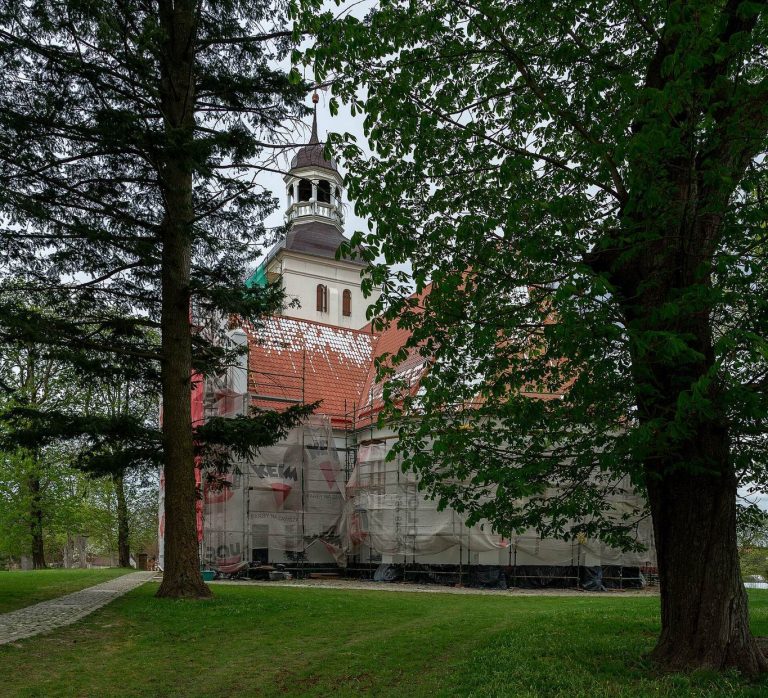
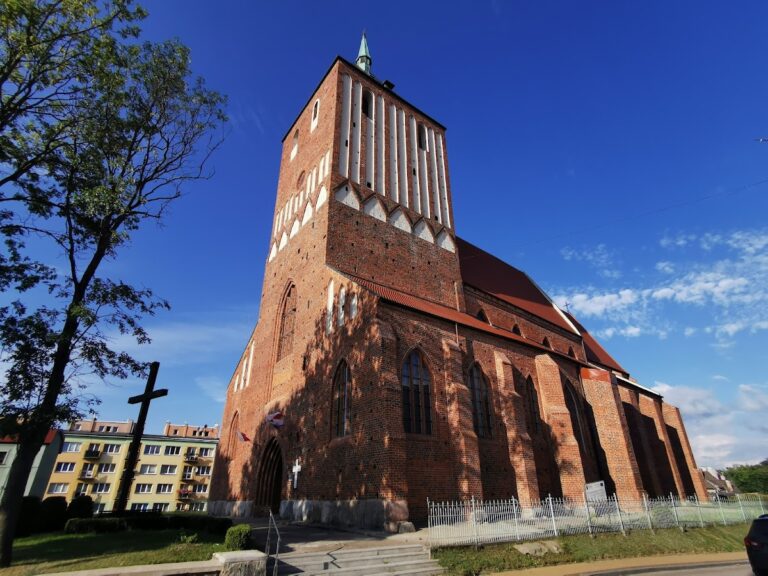
Saint Hyacinth Church in Słupsk is a brick Gothic hall church in Poland, originally built as the church of a Dominican monastery founded in 1278. Parts of its fabric date from the thirteenth century, while the building in its present form was erected in the fifteenth century. The Dominicans were a Catholic order known for preaching, theological study, and urban convents. The church stands beside the ducal castle and later became an important Evangelical and Catholic place of worship.
From Dominican monastery to confiscated church
The church served the Dominican monastery from the late thirteenth century. Its medieval structure was reshaped in the fifteenth century, when the building acquired the form that largely defines its historical fabric. A major change came during the Reformation-era confiscation of monasteries in 1534. Ambrosius Vormann, a rentmaster responsible for administering revenues and rents, took possession of the monastery and church and destroyed their furnishings.
The Baroque transformation
At the beginning of the seventeenth century, Duchess Erdmute, the wife of Duke Johann Friedrich, sponsored a Baroque transformation of the interior. The church was divided into two parts, and a slender western tower with a copper-covered Baroque hood was added or completed. The restored building was consecrated on 24 June 1602 by Jakob Faber, the Pomeranian general superintendent.
From 1602 the church functioned as an Evangelical castle and parish church. It was formerly known as the St. John Castle Church. Its main altar, pulpit, and other interior furnishings belonged to the new Baroque arrangement, while the altar retable was dated to 1602. The Lutheran congregation worshipped there until 1685, when a Reformed minister was also appointed. The two ministers alternated services.
Parish changes and the postwar Catholic period
From 1702, the formerly independent parish of Kublitz, together with Ulrichsfelde and Veddin, belonged to the church district as a filial congregation. A filial congregation was a dependent community attached to a larger parish. Before 1945, the two congregations belonged to the Stolp-Stadt church district in the Pomeranian ecclesiastical province of the Church of the Old Prussian Union. In 1940, the Lutheran parish had about 7,500 members, including 5,000 in Stolp and 2,500 in affiliated villages. The Reformed congregation had about 3,400 members. Patronage was first royal and later exercised by the city authorities.
The church survived the Second World War largely intact. After the war, the Roman Catholic Church in Poland took over the formerly Evangelical building. It was dedicated to Saint Hyacinth of Poland on 2 February 1946 and has since served the Polish Dominican Order. Saint Hyacinth was a thirteenth-century Polish Dominican friar and missionary who became one of the order’s principal Polish saints.
An independent Catholic parish was established at the church on 24 June 1981. It belongs to the Słupsk-East deanery of the Diocese of Koszalin-Kołobrzeg in the Archdiocese of Szczecin-Kamień and is dedicated to Saint Hyacinth. The church was entered on Poland’s register of monuments as A-152 on 10 August 1958.
The restoration of the organ was substantially advanced by Joachim Schwarz, an Evangelical pastor, organist, and composer born in present-day Słupsk, formerly Stolp-in-Pommern. The instrument’s exceptional character has also made the church a venue for annual organ festivals.
Remains
The surviving building is a brick Gothic hall church with a western tower, positioned in the immediate vicinity of the ducal castle. Its hall form creates a unified interior because the main aisles are approximately equal in height. The medieval structure is enclosed by a richly furnished Baroque interior, whose principal elements include the main altar, pulpit, organ, and funerary monuments associated with the Pomeranian ducal family.
Baroque furnishings and memorials
Main altar
The main altar was funded by Duchess Erdmute and forms part of the early seventeenth-century transformation. Its retable dates from 1602. The principal altar painting represents the Crucifixion of Christ, with Duke Johann Friedrich and Duchess Erdmute shown kneeling beneath the cross.
Pulpit
The pulpit was probably funded by Duchess Erdmute at the beginning of the seventeenth century. It combines sculpture, woodcarving, and painting in a structure composed of a body, support, sounding board, and single-flight stairway with a solid balustrade. The body displays paintings of the four Evangelists and the Baptism of Christ in the Jordan. Faux-marble columns, cartouches, scrollwork, cabochons, diamonds, and pilasters enrich its ornament.
The pulpit’s sounding board, the canopy above the preacher that helps project the voice, is crowned with carved pinnacles and scrollwork. Semicircular niches contain inscriptions, Christograms, and lily symbols. A Christogram is a symbolic monogram representing Christ. The underside bears a painted Dove of the Holy Spirit, a Christian representation associated with the account of Christ’s baptism. A fully sculpted figure of Moses supports the pulpit. The stair front contains three shallow diamond-shaped niches with paintings of Saint Paul, Saint Peter, and Saint James the Greater. The pulpit has undergone extensive restoration.
Organ
The richly decorated Baroque organ prospect has largely retained its original appearance. Dating from 1657, it is described as the oldest surviving organ prospect in Hinterpommern. The present organ is a 2002 reconstruction by Józef Mollin of the historical instrument associated with Paul Fischer and Michael Berigel. It has 33 stops, three manuals, and a pedal.
Funerary monuments
Surviving funerary monuments include the epitaphs of Anna von Croÿ, the mother of Ernst Bogislaw von Croÿ, and of Ernst Bogislaw himself. An epitaph is a commemorative monument or inscription for a deceased person, while a tomb monument is a memorial associated with burial. Ernst Bogislaw, Bishop of Kammin and a nephew of the last Pomeranian duke, funded the organ, Anna’s epitaph, and his own tomb monument.
The Baroque memorials to Anna and Ernst Bogislaw von Croÿ are noted for their high artistic quality and rank among the few surviving epitaphs of members of the Pomeranian ducal family. Hans Michael Gockheller, a sculptor from Gdańsk, made Ernst Bogislaw’s tomb monument between 1680 and 1682. It depicts the deceased kneeling.