Church of the Assumption in Wierzbna: A Romanesque and Baroque Parish Church
Site at a Glance
- Rating
- 4.4
- Popularity
- Very Low
- Country
- Poland
- Primary era
- Medieval
- External website
- Open
- Eras represented
- Medieval, Early Modern
- Civilizations
- Habsburg, Holy Roman Empire
- Site type
- Religious
- Remains
- Church
On this page14 sections
History
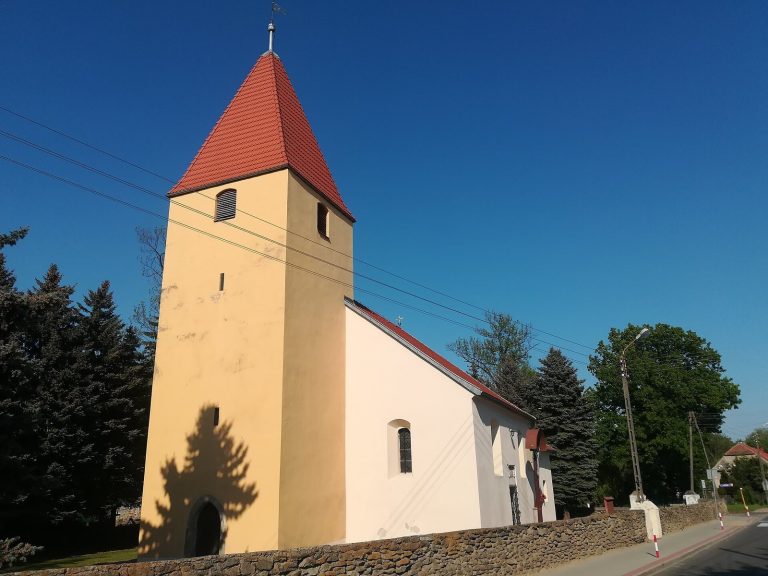
The Church of the Assumption of the Blessed Virgin Mary is a historic Roman Catholic parish church in Wierzbna, Poland. Its original building was erected probably between 1230 and 1250 in the Romanesque style and was first mentioned in 1283. The church now belongs to the Świdnica-East deanery, an administrative subdivision grouping several parishes within the Diocese of Świdnica.
Medieval Foundation and Cistercian Ownership
The church became the property of the Cistercians of Kamieniec Ząbkowicki in 1357. The Cistercians were a Catholic monastic order following the Rule of Saint Benedict, with monasteries that administered churches and estates across Central Europe. In 1585, responsibility passed to the Cistercians of Krzeszów, who retained the church until the Prussian authorities dissolved the order in 1810.
Baroque Enlargement
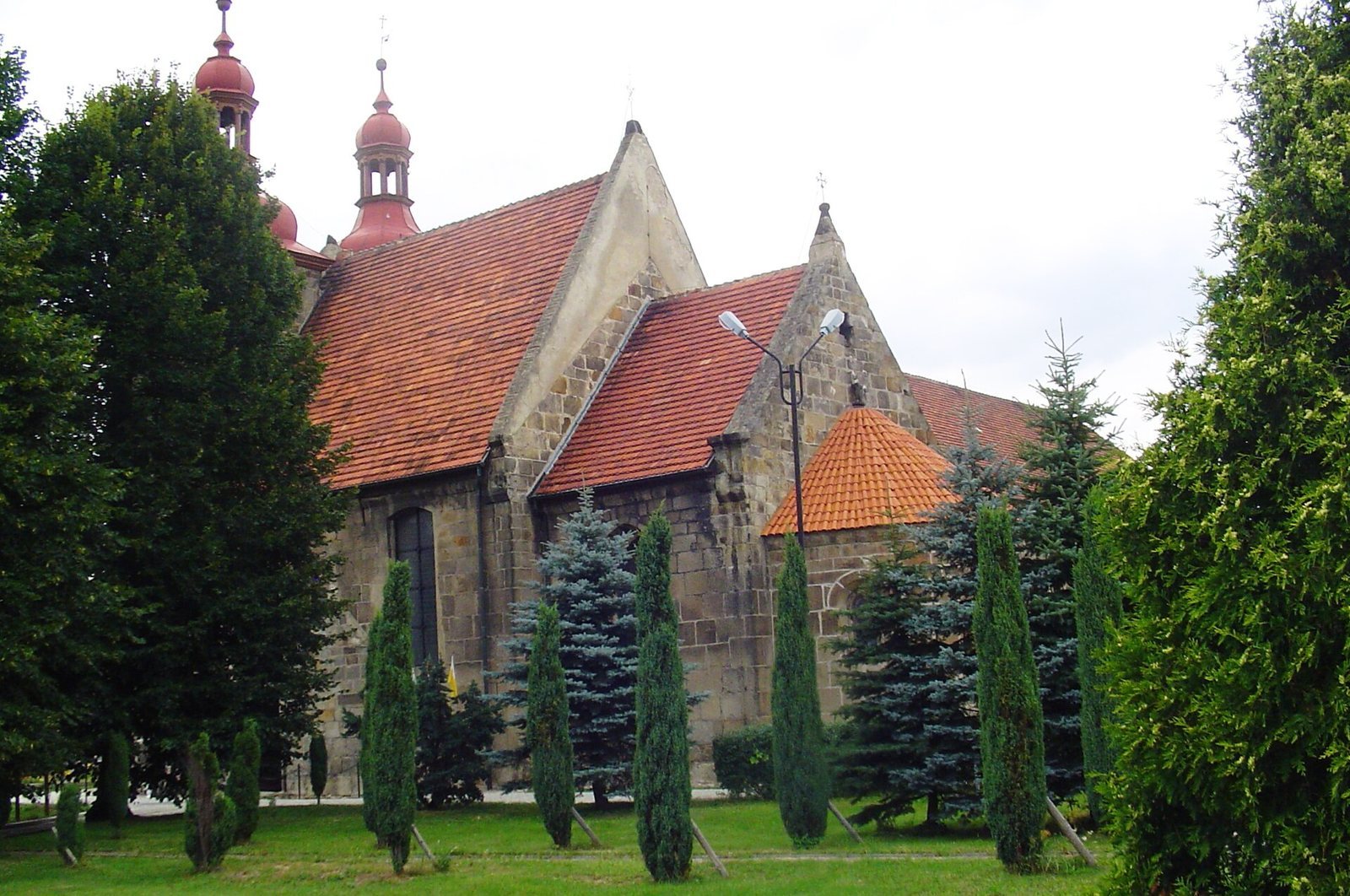
Between 1729 and 1730, the Krzeszów Cistercians added a new nave on the north side of the medieval church. This Baroque extension enlarged the building while using a comparatively simple architectural form. The original Romanesque church then served as a chapel and organ gallery for the larger complex.
Rediscovery and Protection
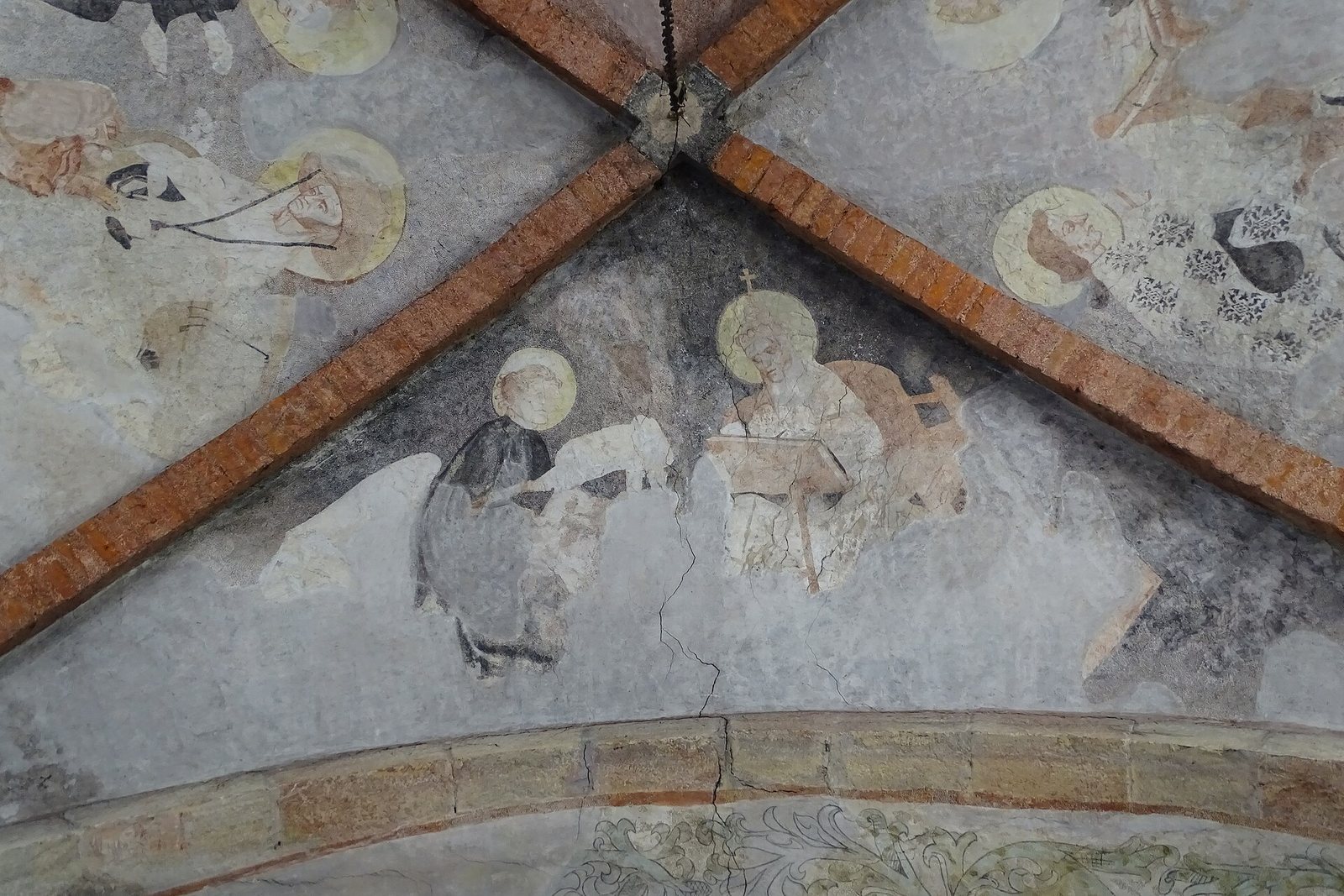
Plaster concealing earlier wall decoration was removed between 1960 and 1962, revealing paintings from several periods. The surviving decoration includes late Romanesque work from the second half of the thirteenth century, fifteenth-century Gothic scenes of the Last Judgment, and late Gothic paintings from the first half of the sixteenth century. Restoration was completed in 1969.
The church entered the register of historic monuments on 24 January 1964 under number A/1772/1045. Its Baroque furnishings include objects transferred from the church in Krzeszów, among them a painting by Michael Willmann, the seventeenth-century painter associated with Baroque art in Silesia. The church is also included in the Michael Willmann Sacred Baroque Art Trail.
Remains
The surviving complex joins a single-nave Romanesque church, built from granite blocks, with a later Baroque nave on its north side. The medieval building retains two western towers, while the later extension has a plain appearance rather than the elaborate decoration often associated with Baroque architecture.
Church Buildings
Romanesque Church and Towers
The Romanesque church forms the medieval core of the complex. Granite blocks make up its walls, and two towers adjoin the building on the west. Their Romanesque biforia, paired openings divided by a central support, survive beneath Baroque onion-shaped domes. The former church is now used as a chapel and organ gallery.
Baroque Nave
The nave added between 1729 and 1730 stands on the north side of the Romanesque building. Its simple form provides the later architectural volume of the church, while the medieval structure remains incorporated into the building as a chapel and organ gallery.
Wall Paintings and Frescoes
The chapel and organ gallery preserve layers of painted decoration from the late Romanesque, Gothic, and late Gothic periods. These polychrome paintings, meaning decoration using several colors, include frescoes and scenes of the Last Judgment. Frescoes are wall paintings made on plaster, traditionally while the plaster is still wet. The paintings were uncovered in the twentieth century and restored by 1969.
Memorials and Roadside Monuments
Exterior Epitaphs
Stone epitaph slabs are mounted on the church’s exterior wall. One commemorates Leonard, also identified as Isaiah, von Rohn, who died in 1571. He was the son of the knight Hans Dietrich von Rohn of Bagieniec, and the slab bears the paternal Rohn coat of arms together with the maternal Schindel and Sommerfeld arms. Another slab commemorates Helena von Hubrig, the wife of Kasper von Schindel, and their child.
Interior Epitaph
The Chapel of the Holy Sepulchre contains the stone epitaph slab of Joachim Friedrich von Zedlitz, who died in 1713.
Saint John of Nepuk Statue
In front of the church, at a fork in the roads, stands a historic stone statue of Saint John of Nepuk. Its pedestal carries a Latin inscription and a chronostich, an inscription whose selected letters encode a date as Roman numerals. The chronostich is dated 1701.
Penitential Cross
A stone penitential cross stands in the village beside the road to Gołaszyce.