Lutheran Church in Richiș, Sibiu: A Fortified Gothic Church in Romania
Site at a Glance
- Rating
- 4.6
- Popularity
- Very Low
- Country
- Romania
- Primary era
- Medieval
- Eras represented
- Medieval, Early Modern
- Civilizations
- Habsburg, Hungarian
- Site type
- Religious
- Remains
- Fortified Church
On this page9 sections
History
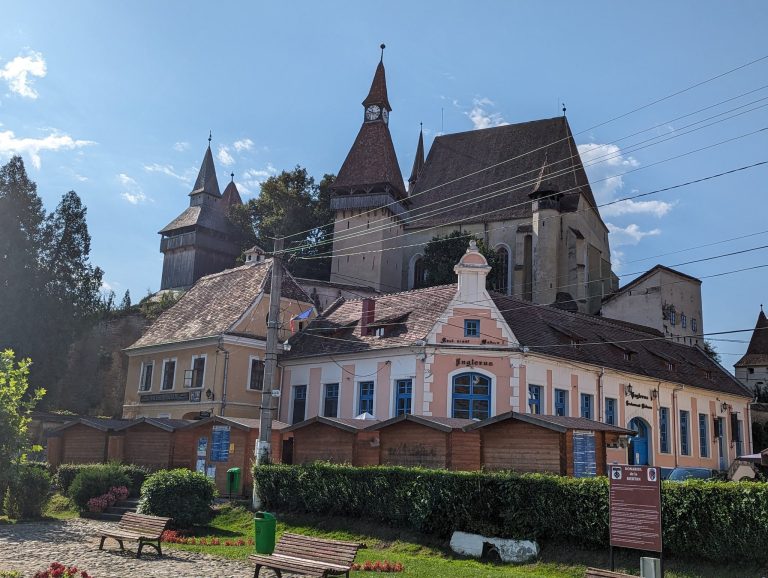
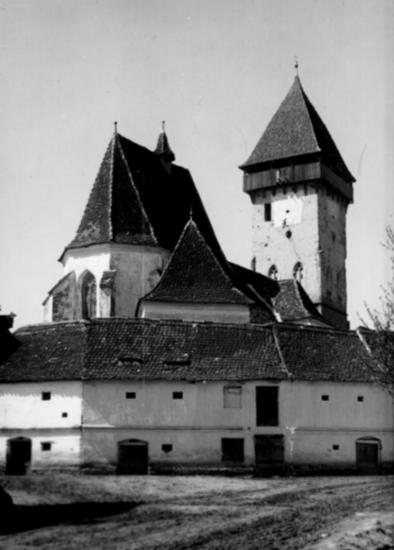
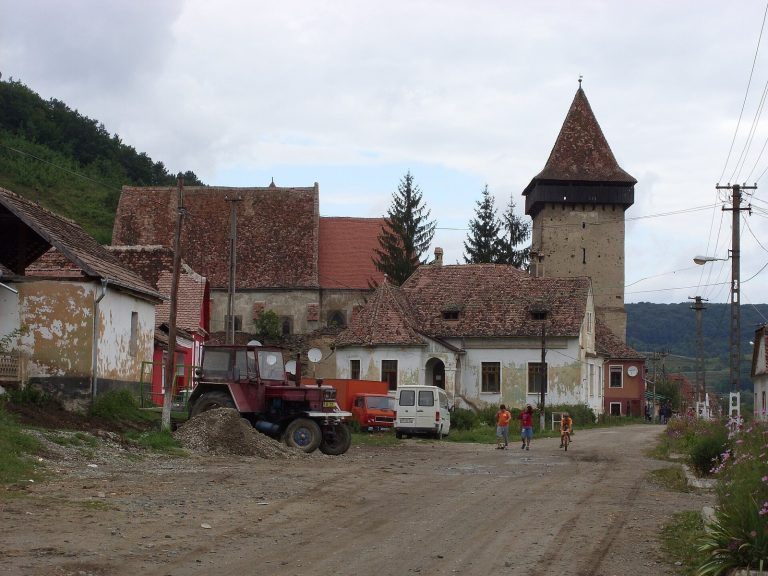
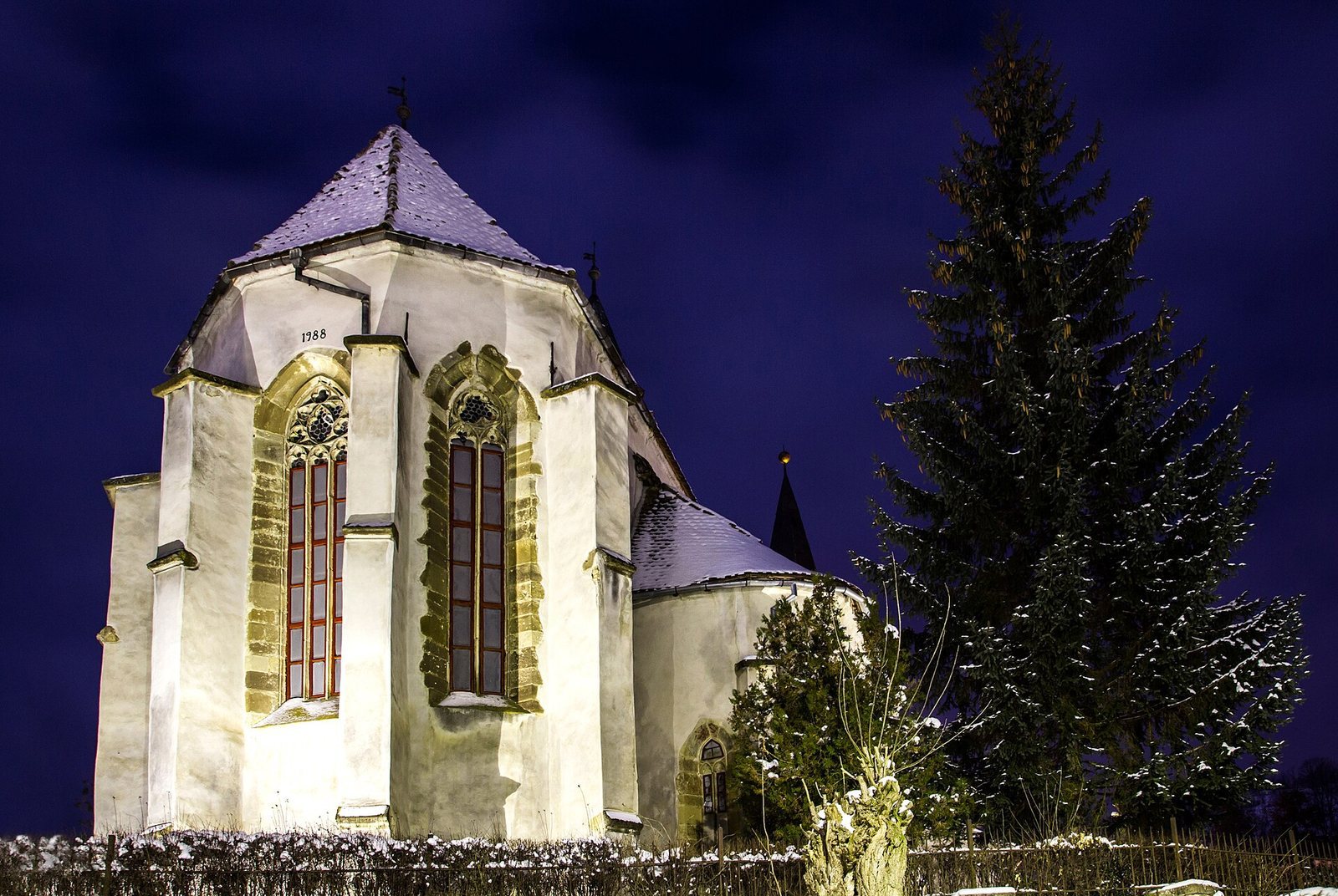
The Lutheran church in Richiș, Sibiu, Romania, is a fortified Gothic church built during the second half of the fourteenth century. It stands in a village that was predominantly Saxon for most of its history. Today, the church belongs to the Evangelical Church of the Augsburg Confession in Romania, the Lutheran tradition associated with the Augsburg Confession, a foundational statement of Lutheran belief presented in 1530. It falls within the Mediaș ecclesiastical district and is associated with the Biertan parish.
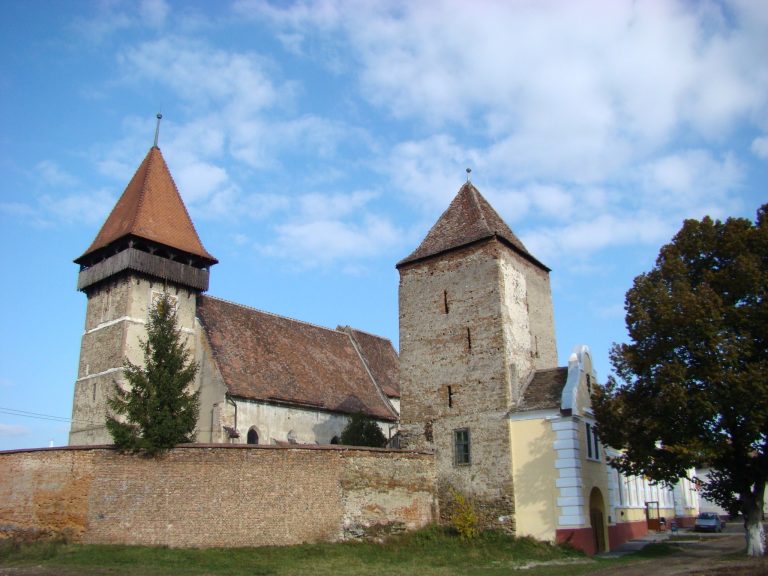
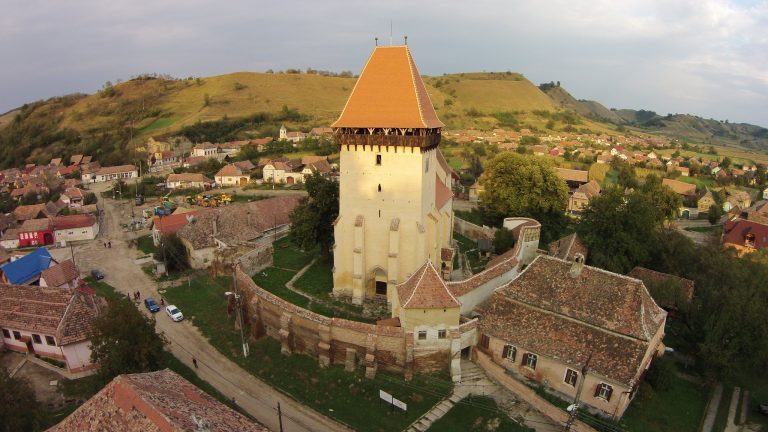
The historic monument complex includes the Evangelical church, whose building history extends from the second half of the fourteenth century to the sixteenth century. It also includes a fragment of the fortified enclosure with its tower and gate tower, constructed between 1500 and 1525, as well as the Evangelical parsonage, dating from the sixteenth to the eighteenth century. The complex is listed under code SB-II-a-A-12522. The surviving fortifications represent part of the defensive system that once surrounded the church.
Remains
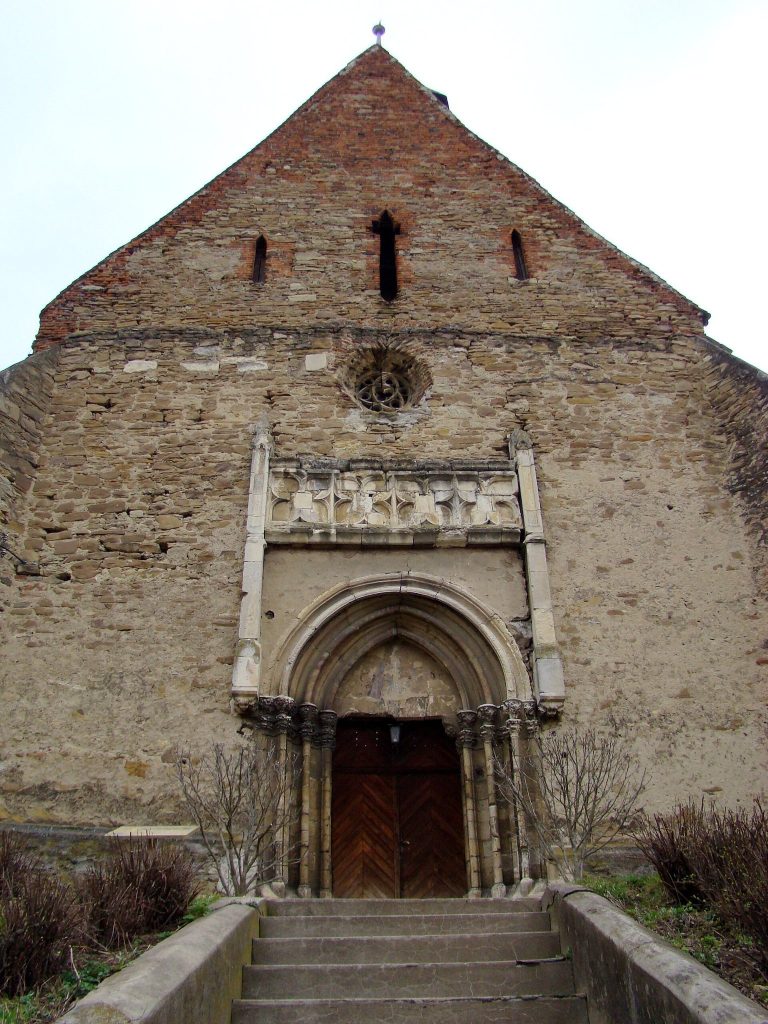
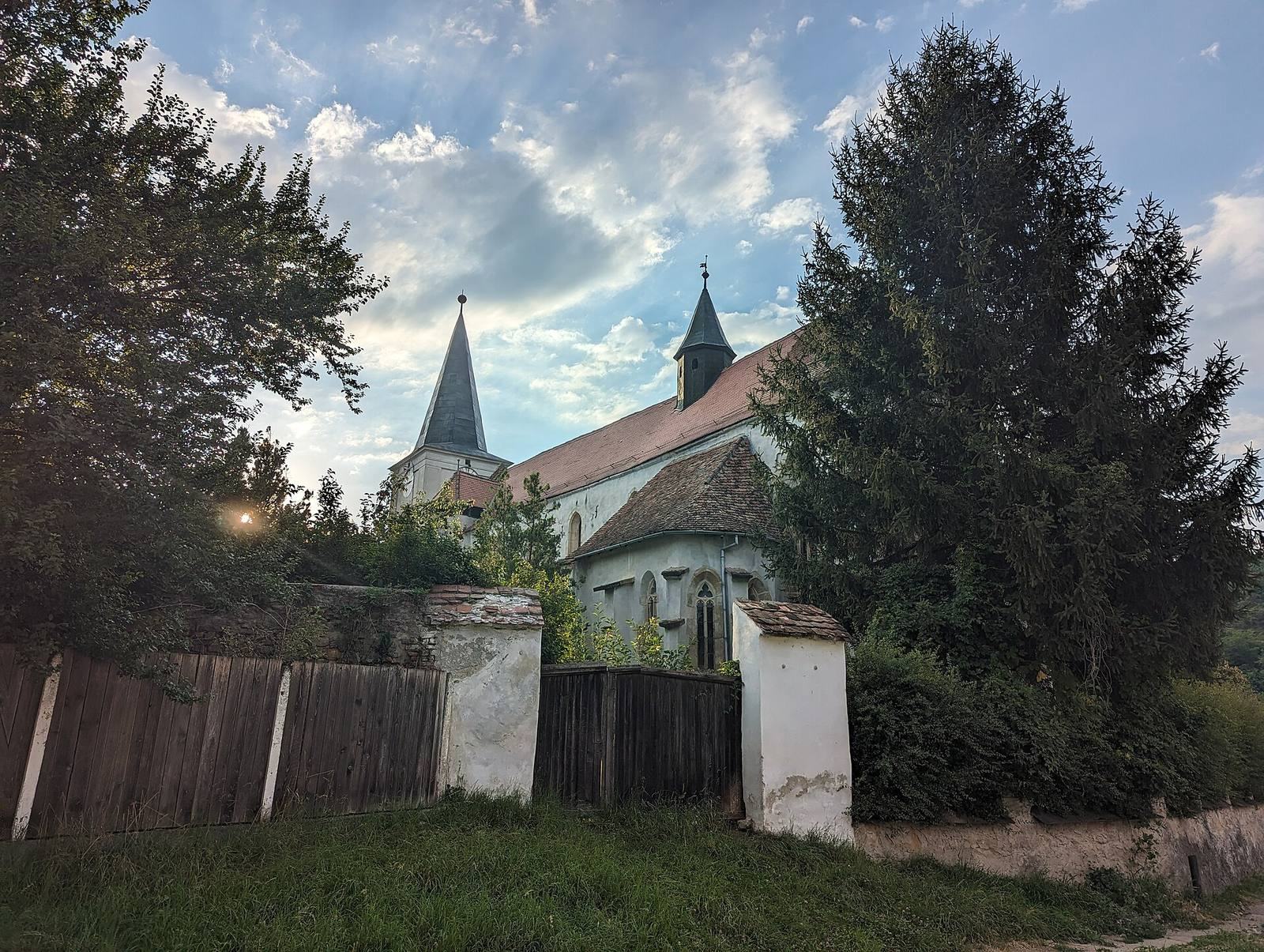
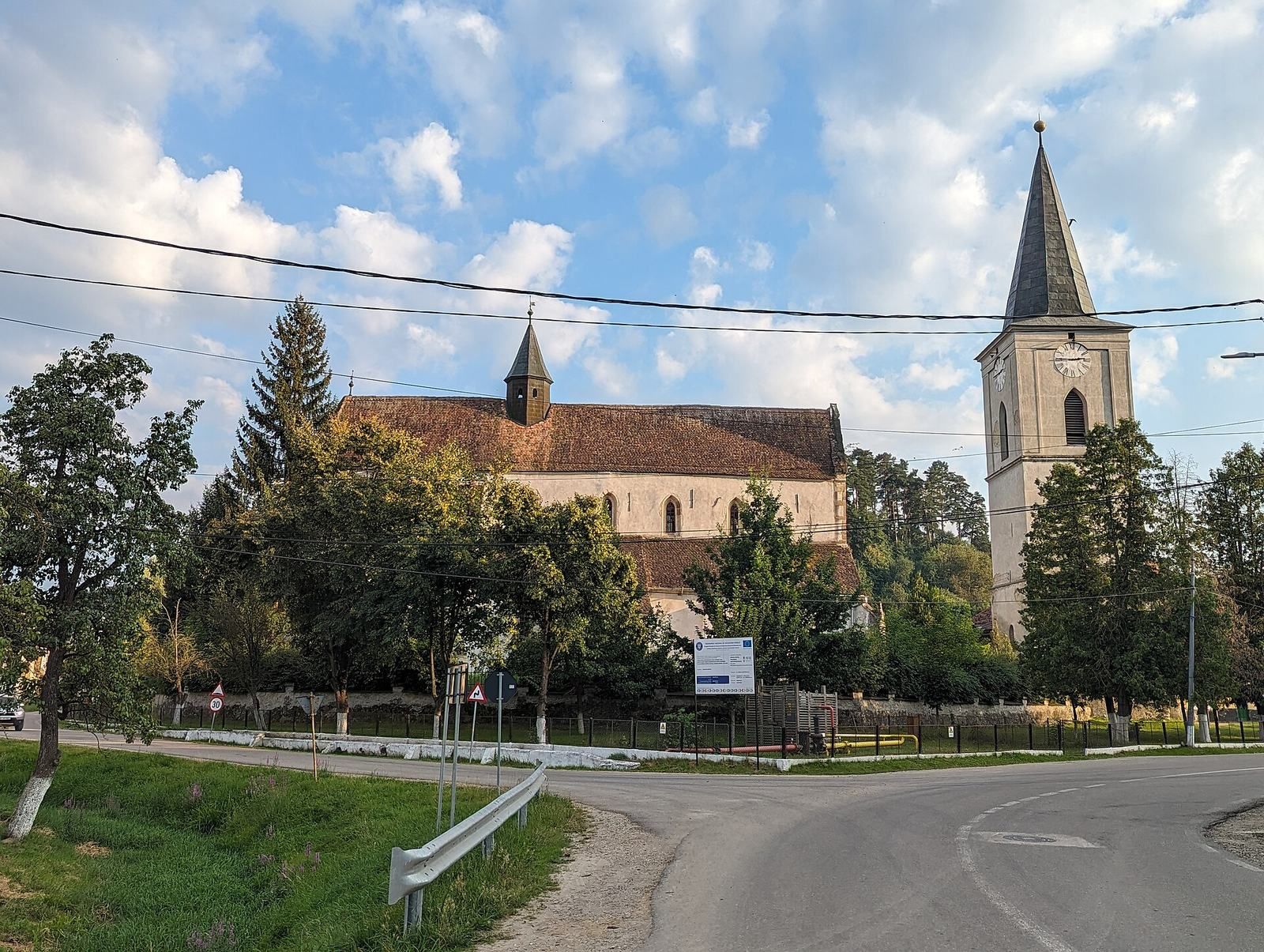
The surviving complex combines a Gothic basilica, a church arranged around a central nave with lower side aisles, and remnants of a fortified enclosure. The church has a polygonal choir, the area used by clergy and singers near the main altar, a sacristy on the north side for sacred objects and vestments, and an altar on the south side. Its western body has three aisles divided by massive octagonal pillars. The entrance passes beneath a tall gate tower that also functions as the bell tower, while the church itself has a small wooden roof turret.
Fortified entrance
Gate and bell tower
The western gate and bell tower retains traces of a portcullis, a vertically sliding grille used to secure a fortified entrance, and loopholes, narrow openings for observation or outward fire, across its first four levels. The tower is part of the surviving fragment of the fortified enclosure. Tradition holds that it once contained a clock.
Church interior
Altar
The altar has Baroque decoration and places the Crucifixion at its centre. Johann Folbarth, an artist from Sighișoara, made it in 1775. Above the main scene is a tall prelate, a senior Christian cleric, holding two crosses and shown with a severe expression.
Sacristy doorway
The wooden doorway to the sacristy is set within a pointed arch. It carries the year 1516 and has a complex locking mechanism. A carved stone flower occupies the apex of the arch.
Carved figures and pulpit
Numerous carved elements enrich the interior. Several grotesque faces are known in English as Green Man figures, a recurring European motif showing a human or human-like face associated with foliage. Figures also appear where the ceiling arches meet, while contorted forms at the bases of the lateral arches seem to bear the weight of the ceiling. The elaborately carved wooden pulpit has a crown showing a gentle-looking shepherd holding a lamb.
Organ and Grunneman figure
An organ stands in the rear gallery. This keyboard instrument produces sound by directing air through pipes and is commonly used to accompany worship. Made in 1788 by the organ builder Johann Prause, it is accompanied by a stone figure representing Grunneman, described as a figure from Celtic mythology, with an expression of pain.