San Sebastiano al Palatino: A Roman Catholic Titular Church in Rome
Site at a Glance
- Rating
- 4.8
- Popularity
- Very Low
- Country
- Italy
- Primary era
- Early Modern
- External website
- Open
- Eras represented
- Classical, Medieval, Early Modern
- Civilizations
- Papal States, Roman
- Site type
- Religious
- Remains
- Church
On this page8 sections
History
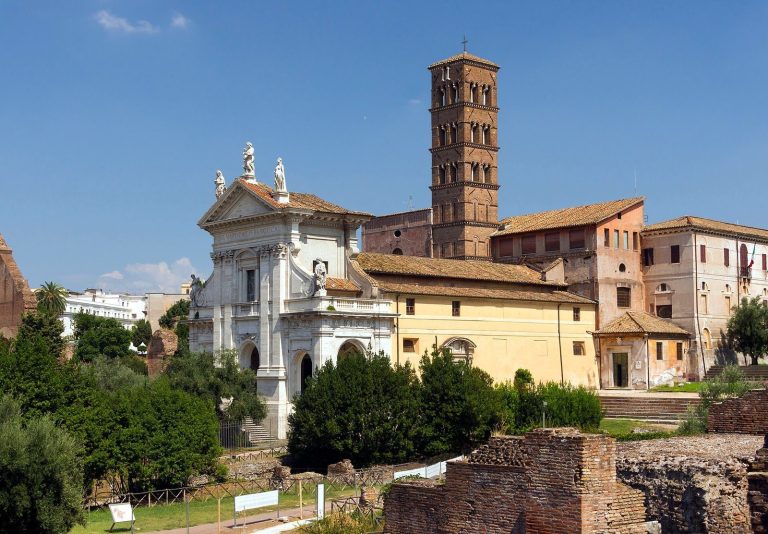
San Sebastiano al Palatino is a Roman Catholic titular church in Rome, Italy, dedicated to Saint Sebastian and rebuilt in the Baroque period from 1624. It stands near the Roman Forum in the Campitelli district and serves as the rectoral church of the parish of Santa Maria in Portico in Campitelli. Tradition identifies the site with Saint Sebastian’s first, unsuccessful martyrdom by arrows. Saint Sebastian was a Christian martyr associated with the persecution of Christians under the emperor Diocletian in the late third century. His traditional story describes him surviving an arrow attack before being beaten to death.
Early Church and Monastic History
The foundation date of the church is unknown. The earliest known reference belongs to the late eighth century, while the first church building on the site dates from the tenth century, or possibly earlier. During the tenth century, a church and monastery replaced an earlier pagan temple. An inscription connected with the church dedicates it to the Virgin Mary, Saint Sebastian, and Saint Zoticus, and identifies Peter, a physician, as the founder of the monastery.
The church was formerly called Santa Maria in Pallara. The name referred to the Palladium, the legendary protective image of Athena believed in Roman tradition to have been brought from Troy to Rome and kept in a pagan temple. In 1061, Pope Alexander II transferred the monastery to the Benedictines of Monte Cassino, a historic Benedictine monastery whose abbot received it. By 1352, the church and monastery had passed to the Olivetans, another Catholic monastic tradition.
The Election of Gelasius II
San Sebastiano al Palatino was the setting for the clandestine but canonically valid election of Pope Gelasius II on 24 January 1118. The election took place during a conflict between the papacy and the imperial party, because intervention by the emperor Henry V was feared. Immediately afterward, Cencius Frangipani, an imperial supporter, broke down the church door, mistreated the newly elected pope, and held him in chains until the following day. A memorial plaque inside the church recalls these events.
Decline and Barberini Rebuilding
By the fifteenth century, the church and monastery had become ruinous. The Capranica family acquired the property and operated a vineyard there. The present church emerged from a rebuilding sponsored by the Barberini family and begun in 1624 under Pope Urban VIII. Taddeo Barberini, the pope’s nephew, sponsored the work, while Luigi Arrigucci served as architect. Much of the earlier structure was incorporated into the new building.
Several restoration campaigns followed. Tenth-century frescoes that were due to be covered were copied by Antonio Eclissi in 1630, and new Baroque frescoes by Bernardino Gagliardi were completed in 1633. The Barberini family sponsored a further restoration in 1851, followed by interventions in 1963 and 2000. The work of 2000 brought the apse frescoes back into view. The church remained under the care of the Franciscans of nearby San Bonaventura al Palatino until the end of the nineteenth century. In 2016, it became a monastic church of the Monastic Communities of Jerusalem.
Names, Offices, and Ecclesiastical Status
The church is also known as San Sebastiano alla Polveria. This name derives from a nearby gunpowder store used by French troops during the Napoleonic period. The building was also the seat of a bailiff of the Sovereign Military Order of Malta, identified as Prince Urbano Barberini.
On 5 March 1973, San Sebastiano al Palatino became the cardinal titular church Sancti Sebastiani in Monte Palatino. A titular church is assigned in Rome to a cardinal as an ecclesiastical title, and this one was established for a cardinal-deacon. Ferdinando Giuseppe Antonelli held the title from 1973 to 1983 and then held it pro hac vice, meaning in a different cardinalial rank on an exceptional basis, as a cardinal-priest from 1983 to 1993. Yves Congar held it from 1994 to 1995, Dino Monduzzi from 1998 to 2006, John Patrick Foley from 2007 to 2011, and Edwin Frederick O’Brien from 2012. O’Brien took possession of the church on 25 October 2012 and held it pro hac vice as a cardinal-priest from 4 March 2022.
Remains
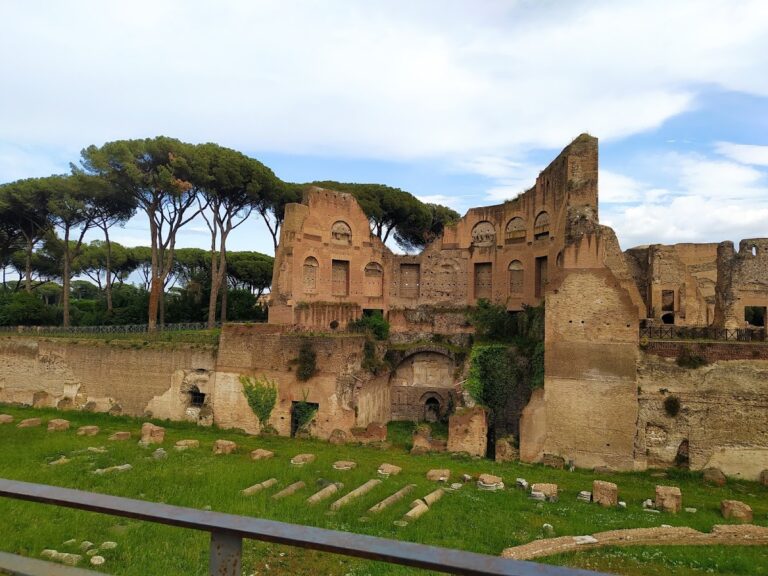
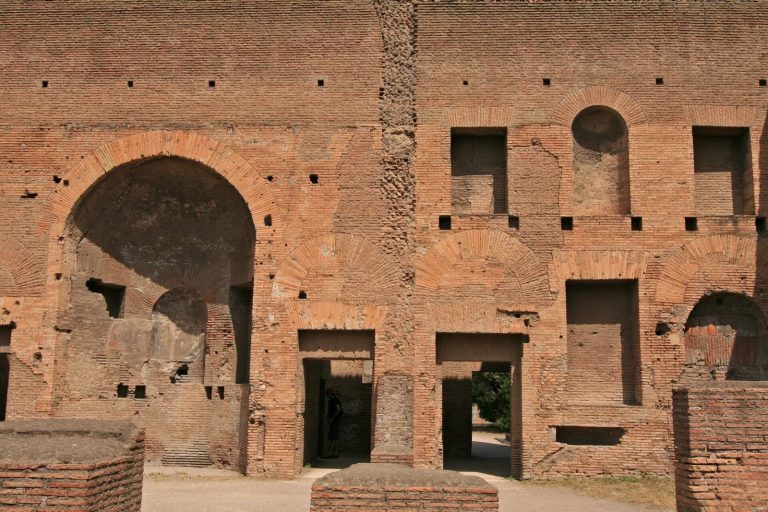
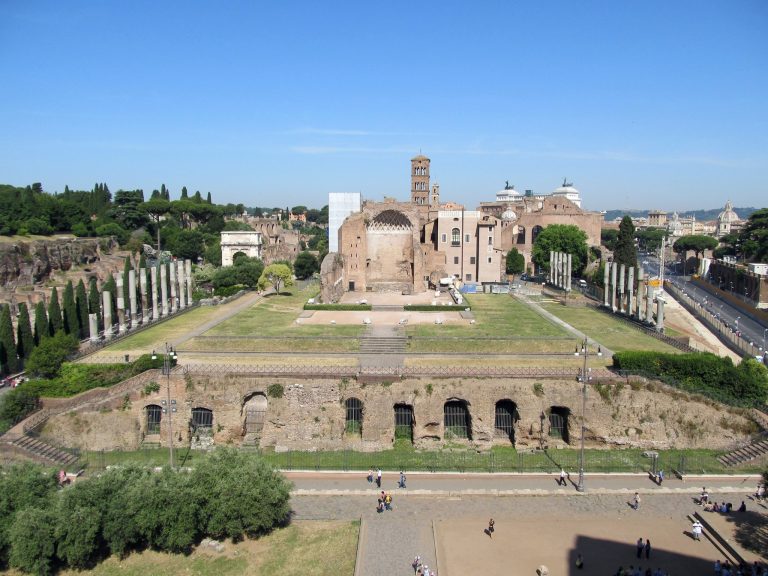
San Sebastiano al Palatino occupies the northeastern corner of the Palatine Hill, near the Roman Forum, on a rectangular terrace measuring approximately 110 by 150 metres. Its brick substructure dates from the reign of Domitian, the last emperor of the Flavian dynasty. Excavations at the beginning of the twentieth century exposed the concrete foundations of a peripteral temple, meaning a temple surrounded by a colonnade, measuring about 60 metres long and 40 metres wide. The remains may belong either to the otherwise unidentified Temple of Divus Augustus, dedicated in the first century CE and rebuilt by Domitian after a fire, or to a third-century temple erected by the emperor Elagabalus. Parts of the church stand over these remains, while other archaeological traces of the earlier structure were excavated around it.
Church and Monastery
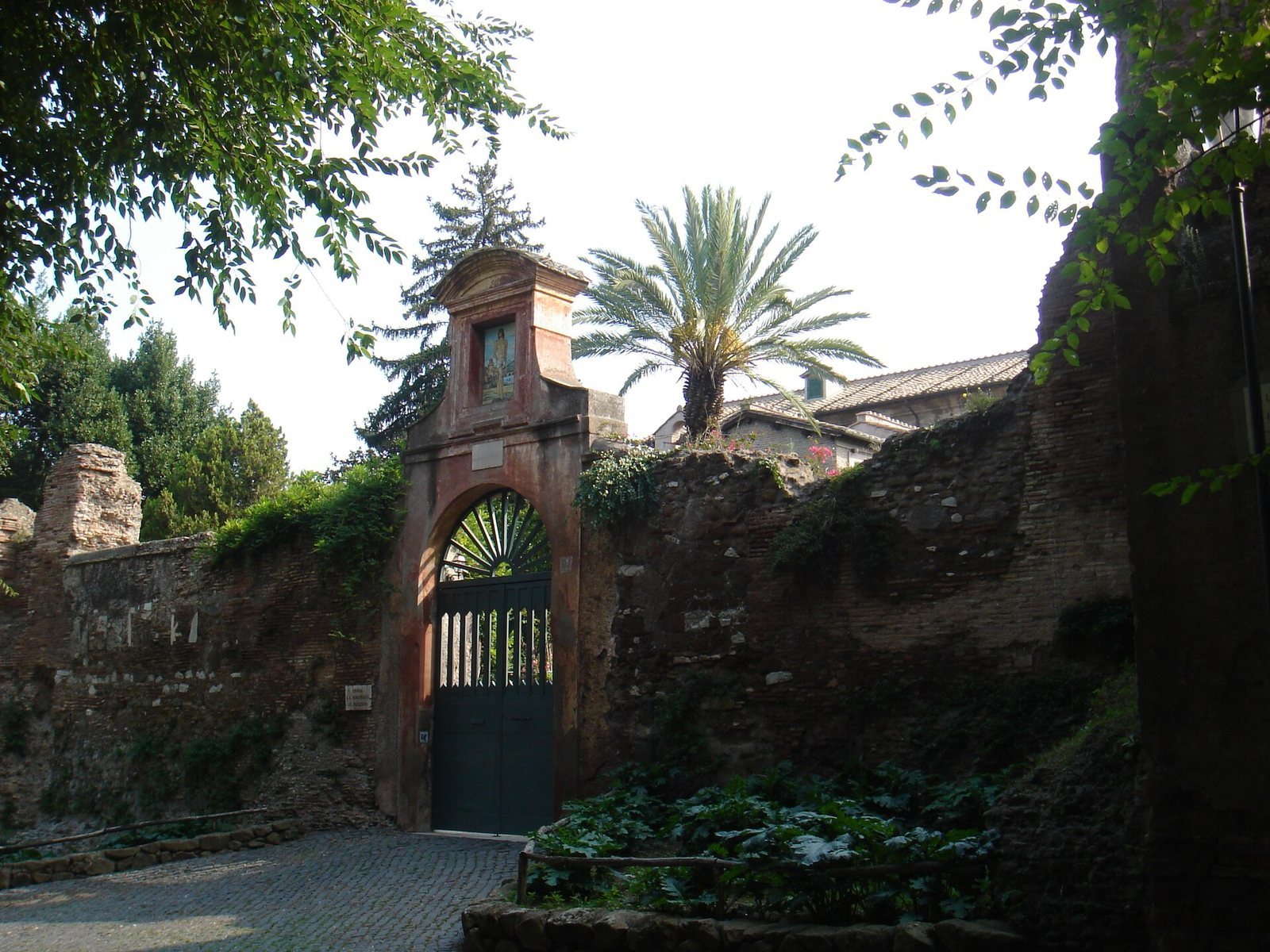
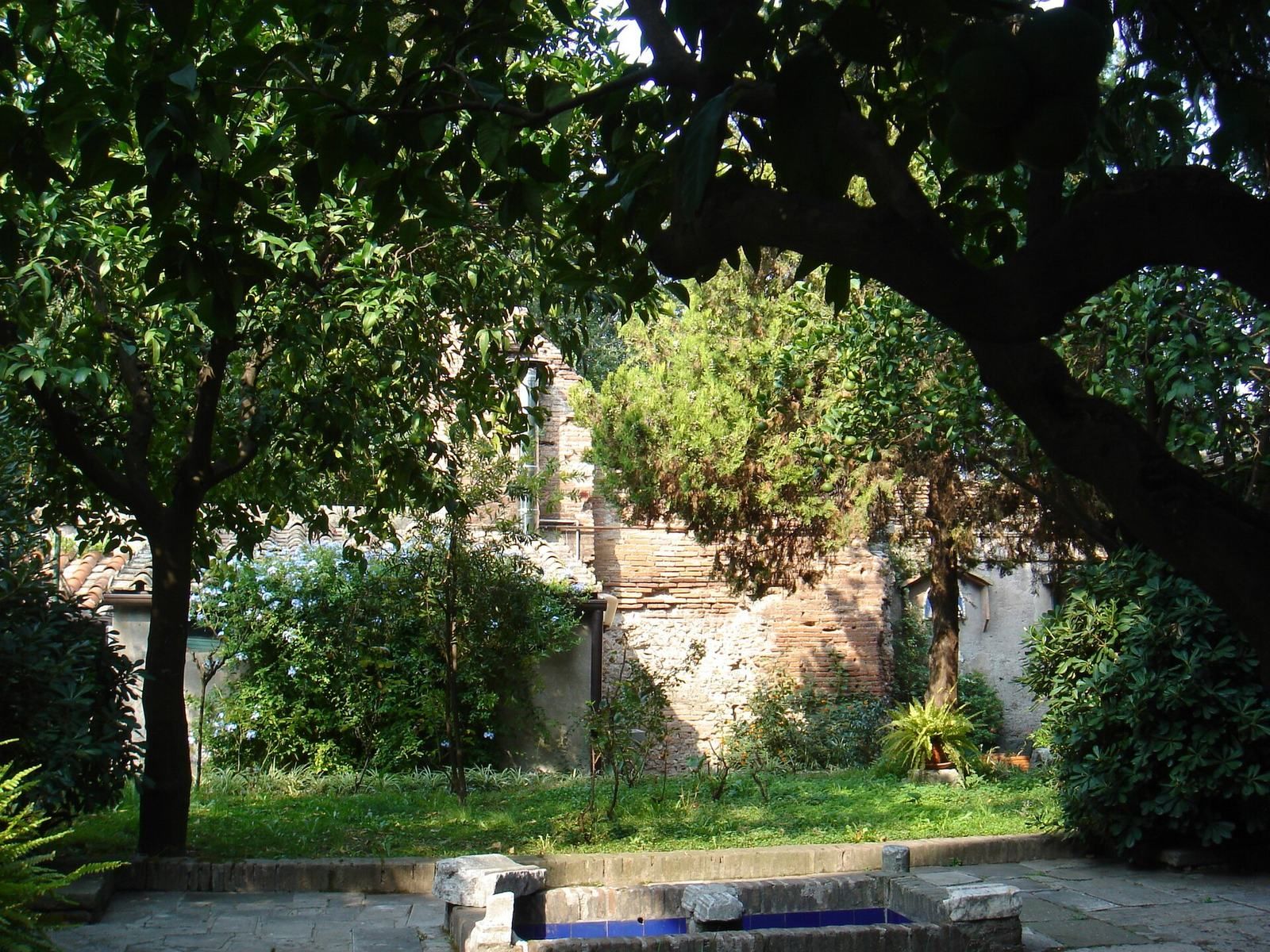
The church is a small, single-nave brick building covered by a barrel vault. A small apse, the semicircular termination of the church, forms the end of the presbytery, and a very small dome rises over the choir, where it can be seen from inside. Each side wall of the nave has three windows, while the presbytery has one window on each side. A small monastery stands on the church’s left side and incorporates elements dating from the twelfth century.
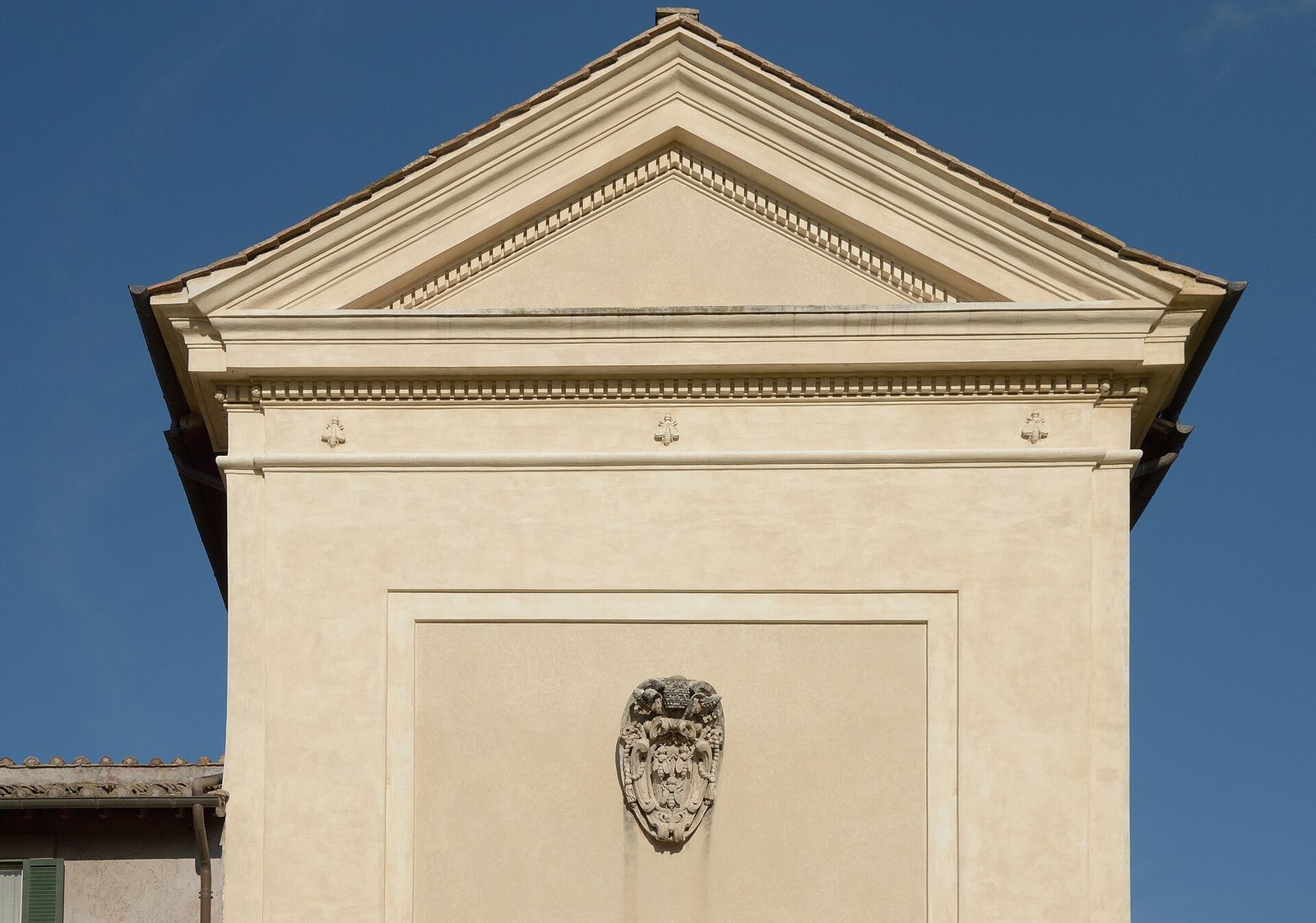
The plain facade is organized around a large recessed panel enclosing the single entrance. Two pilasters flank the doorway and support a pediment, above which appears the Barberini coat of arms. A triangular pediment crowns the facade. The portal, architrave, and pilasters carry representations of the Barberini heraldic bee. Inside, the austere character of the building continues, with preserved frescoes from the tenth-century predecessor behind the altar and Baroque frescoes in the dome.
Frescoes, Altar, and Memorials
The apse preserves both tenth-century and Baroque decoration. Its surviving paintings are arranged in two registers. The upper register shows Christ with four saints, including Saint Sebastian on the left, while the lower register presents the Virgin Mary with angels and female saints. The lowest part of the apse was altered and repainted with busts of Saint Sebastian, Saint Benedict, and Saint Zoticus. In the lunette above the altar, Saint Irene cares for Saint Sebastian. The conch, or domed vault of the apse, depicts God the Father with angels, while the pendentives, curved triangular surfaces supporting the dome, contain allegorical figures of Faith, Charity, Fortitude, and Repentance.
The altar has two red-marble Corinthian columns supporting a pediment. Instead of an altar painting, tenth-century apse frescoes are visible behind it. On the left side of the nave is Andrea Camassei’s Martyrdom of Saint Sebastian, dated 1633. An altar painting on the same subject, showing eight figures, was also commissioned during the Baroque rebuilding. Two memorial plaques remain inside the church. One recalls the election and imprisonment of Gelasius II, while the other records the renovation ordered by Urban VIII.