Corpus Domini Monastery: A Franciscan Poor Clare Convent in Ferrara


Site at a Glance
- Rating
- 4.6
- Popularity
- Low
- Country
- Italy
- Primary era
- Medieval
- External website
- Open
- Eras represented
- Medieval, Early Modern
- Civilizations
- Duchy of Ferrara, Papal States
- Site type
- Religious
- Remains
- Monastery
On this page12 sections
History
Corpus Domini Monastery is a Franciscan Poor Clare convent in Ferrara, Italy, founded in 1406 and associated with Italian Gothic architecture. It began as a house for penitent women before becoming an enclosed convent under the Rule of Saint Clare, and later developed into an important religious complex connected with the Este ducal family.
Foundation and Franciscan reform
Construction began in 1407, after Sister Bernardina Sedazzari acquired the Praisolo area. The first works were completed in 1419. The monastery then expanded through donations and popular devotion, with additional buildings added during the second half of the fifteenth century.
Verde Pio of Carpi and her sister Taddea Pio secured the establishment of enclosure according to the Rule of Saint Clare. In 1431, Corpus Domini became an Observant Poor Clare convent. The Poor Clares are a Franciscan order of women founded by Saint Clare of Assisi, while the term Observant describes a reform movement that called for stricter adherence to the order’s rule.
Caterina Vegri and the Este connection
Caterina Vegri entered Corpus Domini in 1426 and became a nun there in 1432. She served as mistress of novices and taught approximately 100 women who were preparing to become nuns. She remained in Ferrara until 1456, when she left with several fellow nuns to establish a new monastery in Bologna. Also known as Saint Catherine of Bologna, she was a Franciscan nun, artist, and religious teacher who later became Bologna’s patron saint.
Caterina Vegri is traditionally associated with images of the Christ Child that once decorated the convent walls. Those paintings were lost or destroyed in a fire in 1667. The complex was subsequently rebuilt on a smaller scale and redecorated in the late-Baroque period.
The monastery also grew through its relationship with Giovanni Romei, a banker connected with the Este court. He donated his nearby palace, Casa Romei, to the religious complex, which consequently reached the size of an entire city quarter. Corpus Domini became the traditional principal burial place in Ferrara for members of the Este ducal house, the ruling dynasty whose members governed the city and held the title of duke.
Burial place and continuing religious life
Recorded burials include Leonello d’Este, Maria d’Aragona, Eleonora d’Aragona, Niccolò III d’Este, Ricciarda of Saluzzo, Ercole I d’Este, Sigismondo I d’Este, Alfonso I d’Este, Giulio d’Este, Ferrante d’Este, Ercole II d’Este, Eleonora d’Este, Lucrezia d’Este, Lucrezia Borgia, Lucrezia de’ Medici, and Alfonso II d’Este. Eleonora d’Este, identified as a daughter of Alfonso I, and Lucrezia d’Este, identified as a daughter of Ercole II, were also buried there, as were Camilla Faà di Bruno and Cesare d’Aragona.
One of the monastery’s abbesses was Eleonora d’Este, the daughter of Lucrezia Borgia. She is recognized as one of the earliest writers of polyphonic choral music for women, a form of music in which several independent vocal parts are performed together. The monastery remains an active Catholic community of Franciscan Poor Clare nuns within the Archdiocese of Ferrara-Comacchio. Its dedication is to Corpus Domini, the Christian feast commemorating the Eucharist.
Remains
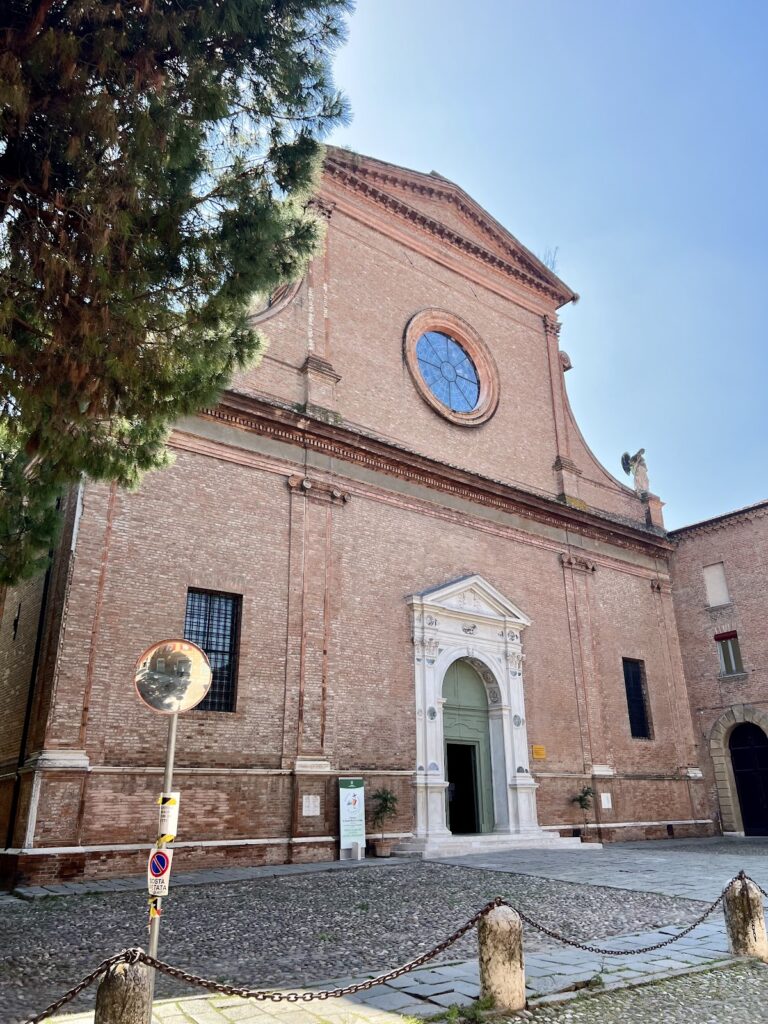
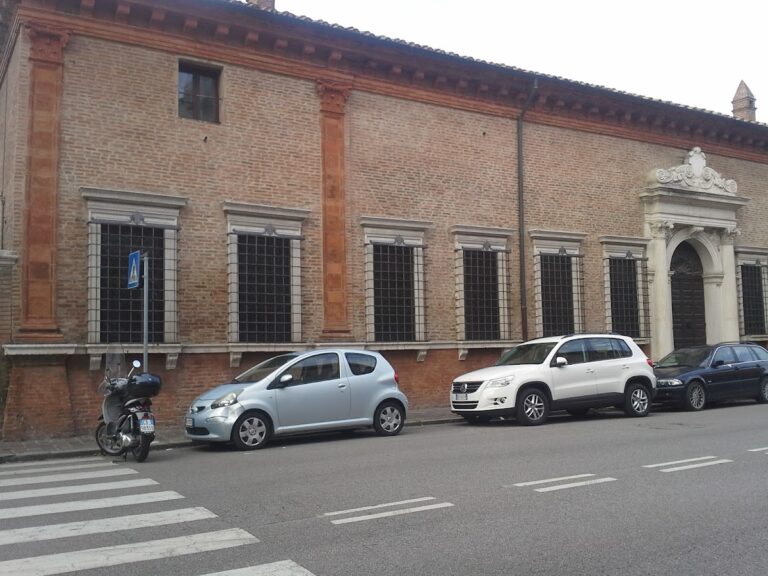
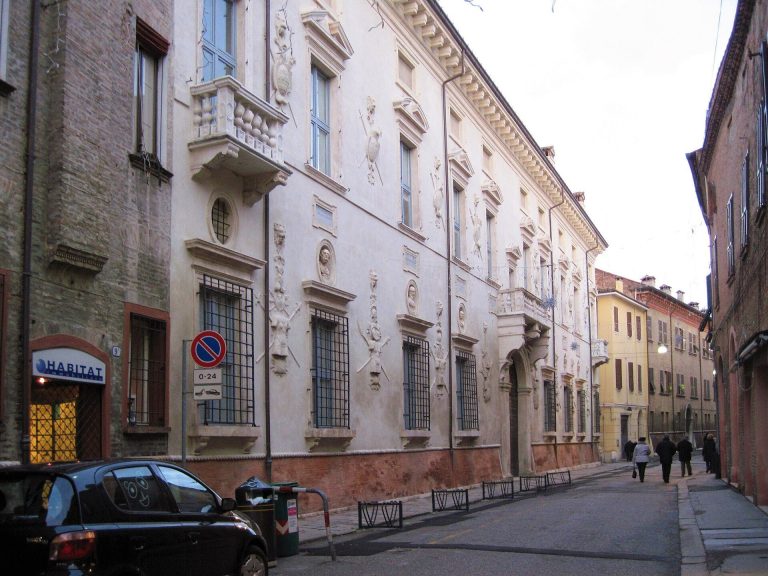
The historic complex occupied an extensive area between Via Praisolo, Via Campofranco, Via Pergolato, and Via Savonarola. Its original nucleus grew as new buildings were added, while the surviving monastery reflects the reduced reconstruction carried out after the fire of 1667. The present monastery is at 4 Via Pergolato, and the church has a portal on Via Campofranco.
Church interior
High altar
The high altar carries Communion of the Apostles, a painting by Giambettino Cignaroli dated 1768. The work belongs to the late-Baroque redecoration of the public church after the earlier complex was rebuilt.
Nave ceiling
The nave ceiling contains the fresco Glory of Saint Catherine Vegri, painted by Giuseppe Antonio Ghedini between 1770 and 1773. It preserves the church’s connection with Caterina Vegri within the later decorative scheme.
Este tombs
The church contains tombs associated with members of the Este family. Among them is a tombstone for Alfonso I, Lucrezia Borgia, and some of their children, forming part of the burial remains linked to Ferrara’s ducal house.
Monastic complex
Casa Romei
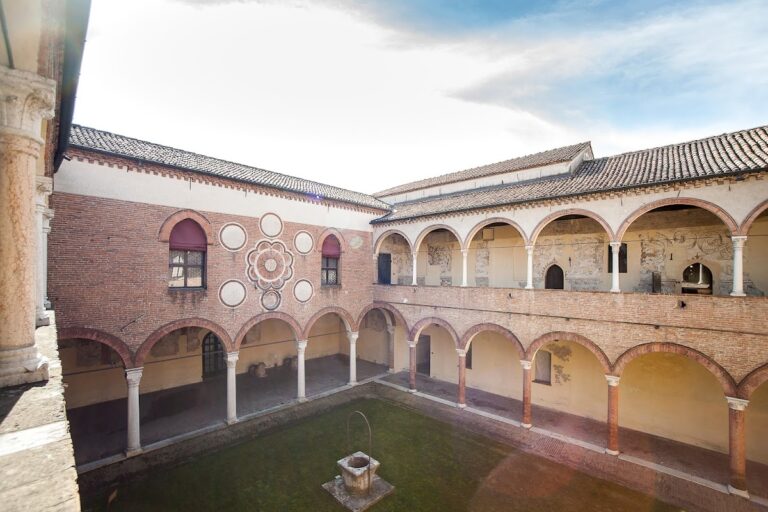
Casa Romei, a palace that once stood a short distance from the monastery, entered the religious complex through Giovanni Romei’s donation. Its incorporation illustrates how the monastery’s original nucleus expanded into a much larger group of buildings.
Rebuilt convent
The convent walls once carried images of the Christ Child traditionally associated with Caterina Vegri. The 1667 fire destroyed or caused the loss of these paintings, and the subsequent rebuilding reduced the scale of the complex while the church received its late-Baroque decoration.