Casa Romei: A Renaissance Palace and Museum in Ferrara


Site at a Glance
- Rating
- 4.5
- Popularity
- Low
- Country
- Italy
- Primary era
- Medieval
- External website
- Open
- Eras represented
- Medieval, Early Modern
- Civilizations
- Duchy of Ferrara, Papal States
- Site type
- Domestic
- Remains
- Elite Residence
On this page22 sections
History
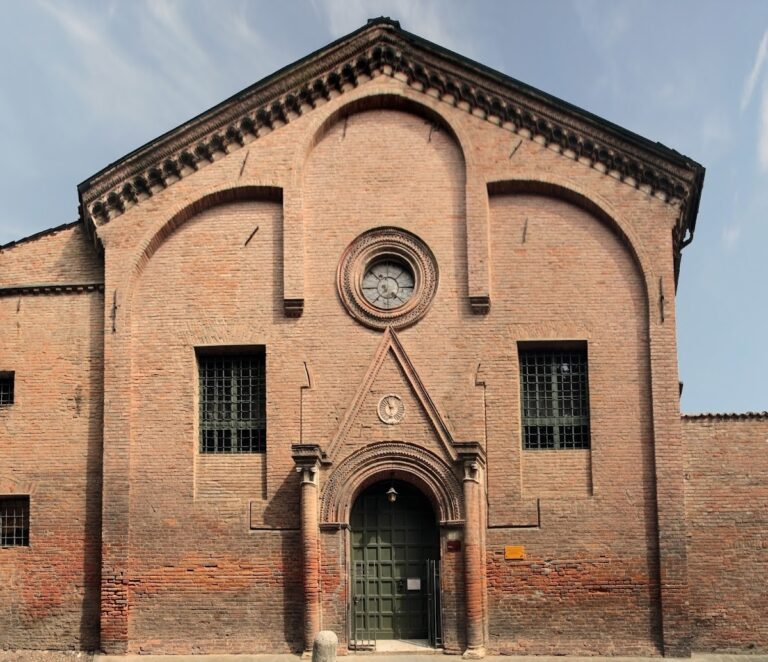
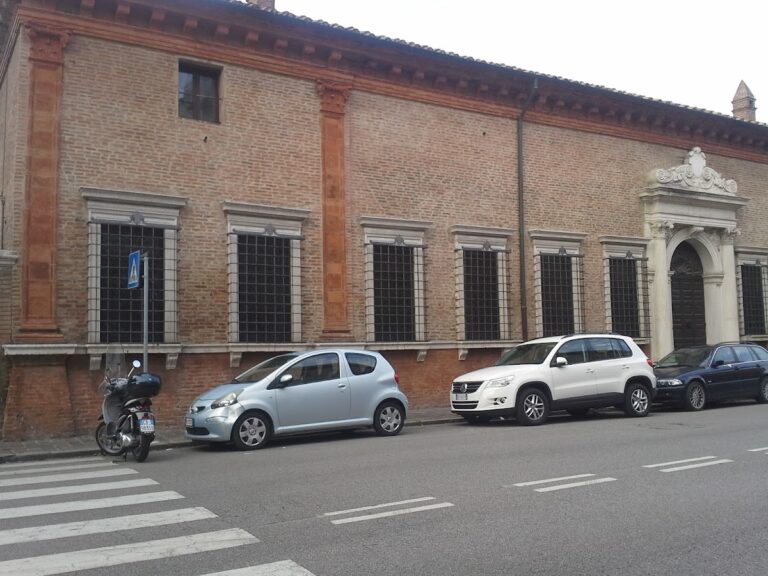
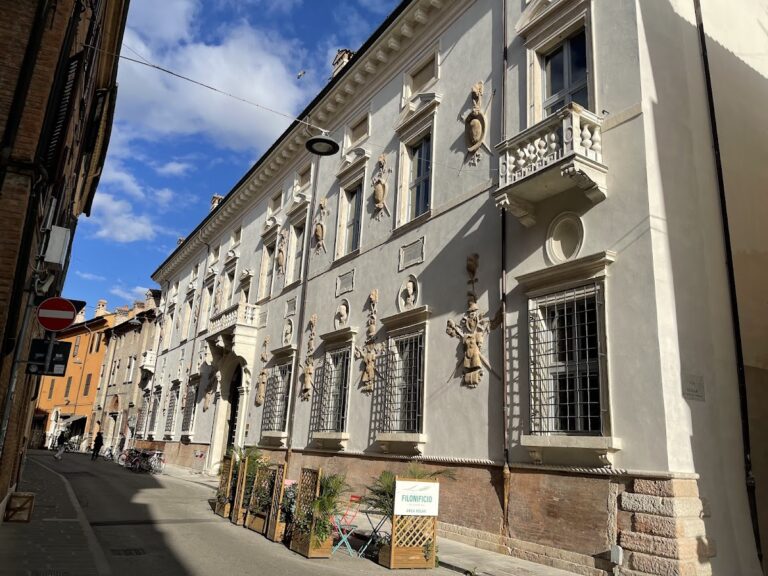
Casa Romei is a palace in Ferrara, Italy, commissioned by the merchant Giovanni Romei and built around the middle of the fifteenth century. Its combination of medieval and Renaissance elements reflects the architectural development of Ferrara during the period. The palace was enlarged and richly embellished for Romei’s second marriage to Polissena d’Este shortly before 1468, linking the residence to the Este family, Ferrara’s ruling dynasty during the Renaissance.
From private residence to monastery complex
Giovanni Romei died in 1483, after which the property passed to the nuns of the adjacent Corpus Domini monastery. They incorporated the palace into the wider monastic complex, changing the institutional setting in which the residence was used and preserved.
During the second half of the sixteenth century, Cardinal Ippolito II d’Este ordered further alterations. Ippolito, a member of the Este dynasty, enlarged the upper residential floor and commissioned new vaulted ceilings decorated with frescoes and grotesques, ornamental designs combining foliage, figures, animals, and imaginative forms. The decoration is attributed to the workshop of the Filippi family.
State acquisition and museum use
The state acquired Casa Romei in 1898. In the early 1950s, it became a museum and began receiving detached frescoes, statues, and stone works from churches, convents, and palaces in Ferrara, including buildings that had been deconsecrated or demolished. The collections include works associated with Donatello, Francesco del Cossa, Gregorio di Lorenzo, Sebastiano Filippi, known as Bastianino, and Alfonso Lombardi.
Since December 2014, the palace has been managed by the Emilia-Romagna museum administration, reorganized as the Regional Museums Directorate in December 2019. It functions as the Museo di Casa Romei. The principal hall also accommodates concerts and academic lectures connected with the Girolamo Frescobaldi Conservatory of Ferrara. The courtyard, floral decoration, Hall of the Sibyls and Prophets, and studiolo, a small private study or cabinet, form an artistic ensemble described as unique in Ferrara.
Remains
Casa Romei survives as a two-storey palace in which a late-Gothic ceremonial courtyard, Gothic ground-floor rooms, and Renaissance residential interiors remain connected within one building. Its rooms preserve painted decoration, carved and painted woodwork, stone sculpture, architectural fragments, graffiti, and an archaeological structure beneath the present floor.
Courtyard and ground-floor interiors
Ceremonial courtyard
The monumental courtyard has a late-Gothic character and contains a large terracotta monogram of Christ. Its design belongs to the older architectural layer of the palace and provides the principal open space around which the building’s interiors are organized.
Hall of the Sibyls and Prophets
The ground-floor rooms are decorated in the Gothic style. In the Hall of the Sibyls and Prophets, prophetesses hold scrolls bearing prophetic texts against a green, hedge-like background. A notable fireplace forms another important element of the room.
Upper-floor rooms
Loggia
The upper-floor loggia preserves late-Gothic frescoes featuring Giovanni Romei’s emblem, a rampant dog. The emblem alternates with fluttering ribbons bearing Gothic letters whose meaning remains undeciphered. The walls also retain apparently old graffiti, including a line taken from the opening of Giovanni Boccaccio’s Ninfale fiesolano. Further probable ancient graffiti on the parapets include drawings and diagrams for two forms of alquerque, a historical board-game tradition.
Representative rooms
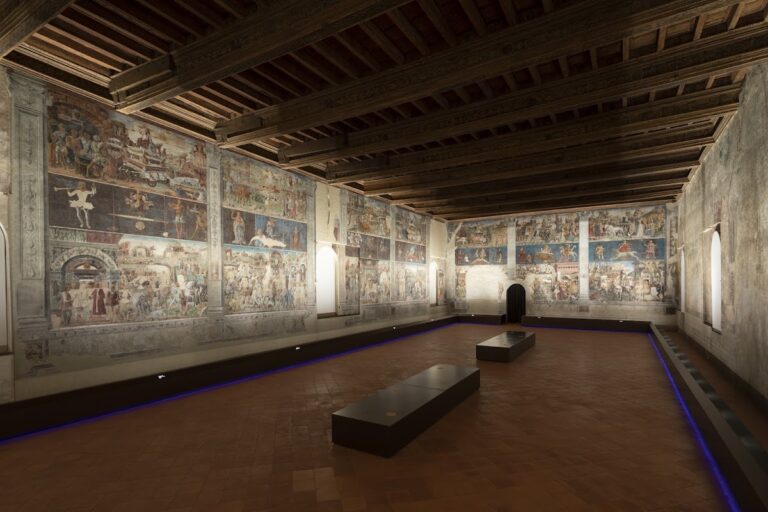
The representative rooms include small, simply furnished chambers between the loggia and the main upper-floor apartments, two larger rooms, and the ceremonial hall. The Hall of Tobias and the Angel, Hall of David and Goliath, Hall of the Little Monkey, and ceremonial hall have ceilings decorated with grotesques and frescoed panels by Sebastiano Filippi. Fragments of fourteenth- and fifteenth-century frescoes from Ferrara churches are also preserved in these rooms.
The upper residential floor contains sixteenth-century rooms with antique furniture. The ceremonial hall repeatedly displays the white eagle associated with Cardinal Ippolito II d’Este, whose alterations gave this part of the palace much of its later appearance.
Studiolo
The studiolo, traditionally identified as Giovanni Romei’s study, is a small intimate room with a wooden coffered ceiling. It contains eight complete and four half coffers decorated with refined woodcuts on green-ground paper. The intersections of the beams may originally have carried gilded studs. Each coffer contains four female heads surrounded by leaf-shaped forms arranged around a central rosette. The ceiling’s quality and style have led to a possible attribution of its design to Francesco del Cossa.
Lapidarium and archaeological remains
Stone collection
The ground-floor lapidarium, a display of stone works such as sculptures, reliefs, plaques, and funerary monuments, contains statues, bas-reliefs, medieval and Renaissance marble works, terracotta works, commemorative plaques, and funerary stones. Among them is a sixteenth-century marble tabernacle front from San Cristoforo alla Certosa, attributed to Alfonso Lombardi. Its Renaissance ornament includes candelabra, heads, an emblem of the Holy Spirit, and the Mystic Lamb.
Thermal pool
The lapidarium’s second room contains a partly plastered brick structure beneath the present floor. Archaeological excavations in the first half of the 1990s revealed it as a small thermal pool with an entry step and a seat running around its perimeter. A nearby fireplace supplied the system that heated its water. It is described as the only and oldest surviving structure of its type in Ferrara.
Napoleon Bonaparte
The museum displays the surviving fragment of a statue of Napoleon Bonaparte, showing Napoleon I with a hand holding a globe. The Bolognese sculptor Giacomo De Maria made the statue, which was erected on a column in Piazza Ariostea in 1810. Austrian forces arriving on 14 May 1814 were followed by its removal from the square.
Saint Michael the Archangel
A statue of Saint Michael the Archangel by Andrea Ferreri was made between 1720 and 1735 for the Chapel of Saint Vincent in the demolished church of Sant’Andrea. The sculpture is preserved among the lapidarium’s works.
Saint Nicholas of Tolentino
The sixteenth-century marble statue of Saint Nicholas of Tolentino is generally attributed to Alfonso Lombardi. Originally installed in the saint’s chapel in the demolished church of Sant’Andrea, it was moved to the Palazzo dei Diamanti in 1867 and transferred to Casa Romei in 1952. The standing saint holds a crucifix in his right hand and a closed book in his left.
Madonna and Child sculptures
Grey-stone Madonna
A grey-stone Madonna and Child, generally dated to 1408, came from the portal of the former church of San Maurelio, also called the New Church, at Piazza Municipale, now Sala Estense. Removed in 1916, it first went to the Palazzo dei Diamanti and later to Casa Romei. Once attributed to the Venetian school, it has more recently been associated with Filippo da Venezia. The Madonna stands on an octagonal base, supports the Child with her left arm, and gathers a fold of her mantle with her right hand.
Terracotta Madonna
A fifteenth-century terracotta Madonna and Child was attributed by Gualtiero Medri in 1958 to Michele da Firenze. The sculpture originally stood on the false façade of a small church at Via Borso 42. The standing Madonna holds the Child within a circular garland.
Polychrome plaster relief
A polychrome plaster Madonna and Child, dated to the fifteenth century and possibly to around 1460, has more recently been attributed on technical and stylistic grounds to Donatello and his workshop. In the rectangular relief, the Madonna appears in profile and bends toward the Child, who is wrapped in the Mother’s blue mantle. The attribution also reflects the exceptional quality of the faces.
Portraits of ancient Romans
Two marble bas-reliefs portraying Marcus Agrippa and Antoninus Pius were made by the Florentine sculptor Gregorio di Lorenzo. A payment dated 12 October 1472 records his involvement. The profile busts came from the courtyard of the University and probably formed part of a series of twelve portraits of great Romans commissioned by Duke Ercole I d’Este in 1472 and 1473 for the Torre di Rigobello beside the ducal palace. Such portraits followed the Renaissance practice of representing ancient Roman figures in the manner of antique portraiture.
Nearby sites