Hanabila Mosque: An Early Ayyubid Mosque in Damascus

Site at a Glance
- Rating
- 4.8
- Popularity
- Very Low
- Country
- Syria
- Primary era
- Medieval
- Eras represented
- Medieval
- Civilizations
- Ayyubid
- Site type
- Religious
- Remains
- Mosque
On this page6 sections
History
Hanabila Mosque is an early Ayyubid mosque in Damascus, Syria, built in the Ayyubid period beginning in 1202. The Ayyubids were a medieval Muslim ruling dynasty founded by Saladin and dominant in Syria during the mosque’s construction. Located in the Al-Salihiyah district near Mount Qasioun, it is described as the first Ayyubid mosque in Damascus and as one of the city’s oldest mosques after the Umayyad Mosque.
Foundation under the Ayyubids
Construction began under the direction of Abu Umar Muhammad bin Qudama al-Muqaddasi, a Hanbali religious scholar who had migrated from Jerusalem. The mosque was in use by 1207–1208. Its construction received financial support from Muzaffar al-Din Abu Sa’id Gokburi, the emir of Erbil, who was also known as al-Malik al-Muzaffar. For this reason, the building is also called the Muzaffari Mosque.
Names and continued religious use
The mosque is also known as the Jabal Mosque, a name referring to its proximity to Mount Qasioun. Another traditional name, the Mosque of the Righteous, refers to Al-Salihiyah, a name associated with the phrase “dwelling of the righteous.” Its minaret was completed in 1209–1210, and the mosque remains an active place of worship.
Remains
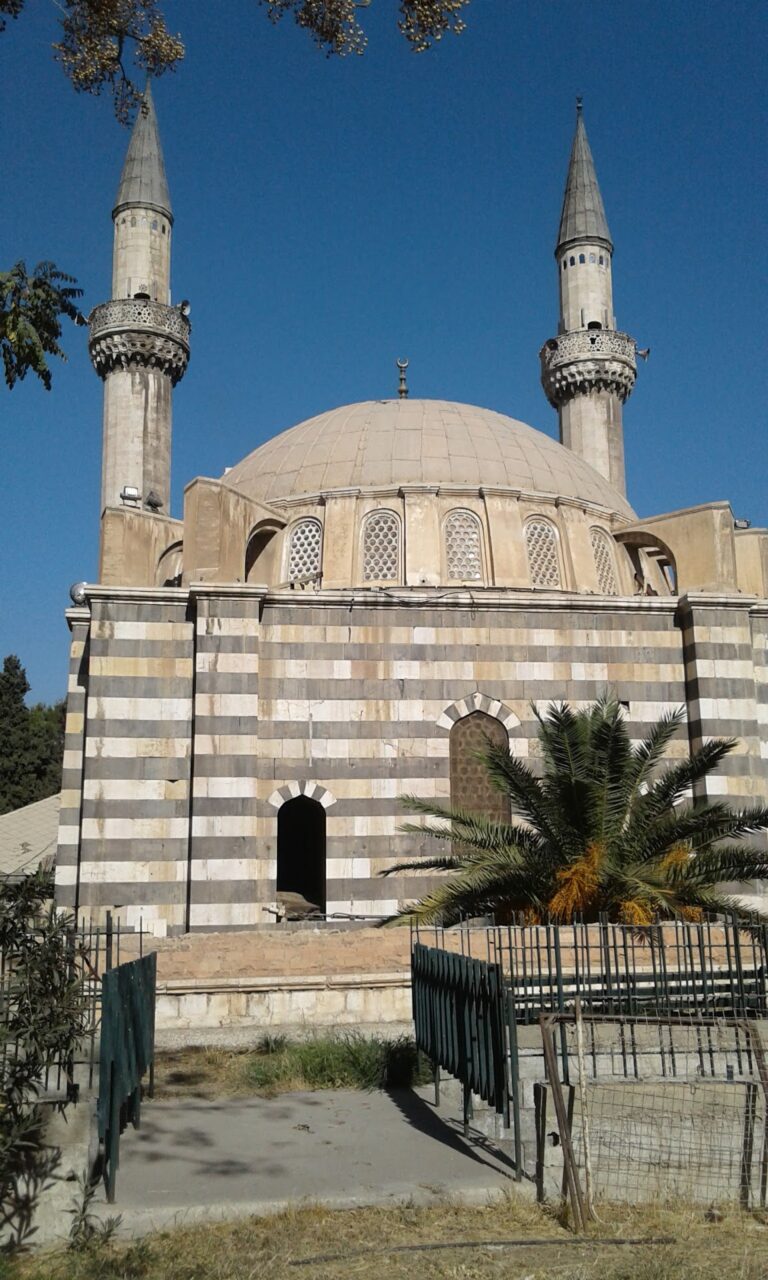
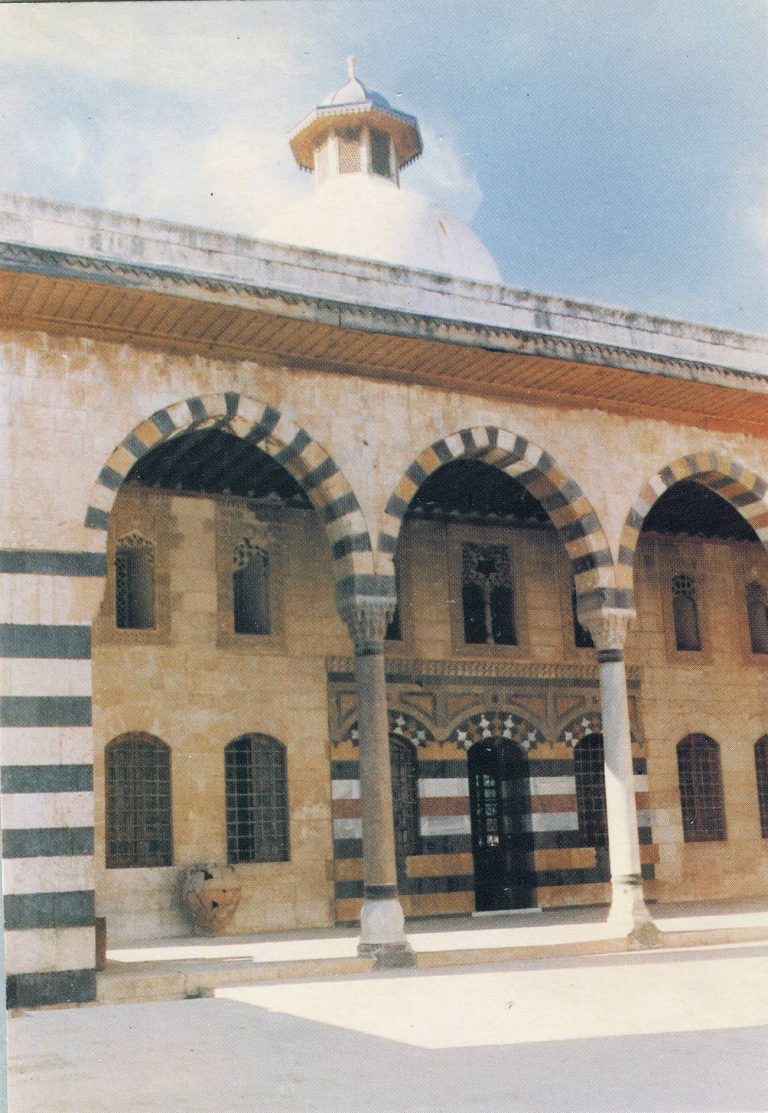
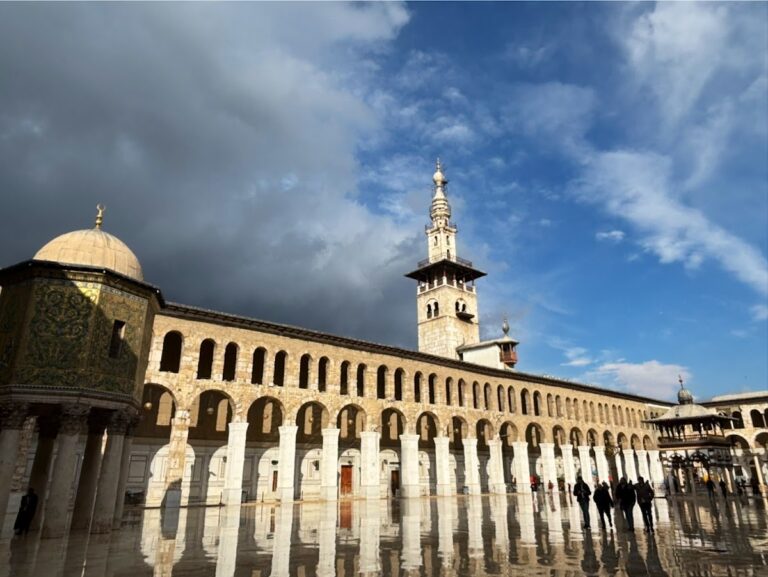
Hanabila Mosque follows an Ayyubid architectural style and is believed to be a miniature version of the Umayyad Mosque. Its layout includes a courtyard and a prayer hall, with stone, marble, tiles, and timber among its stated materials.
Courtyard and prayer hall
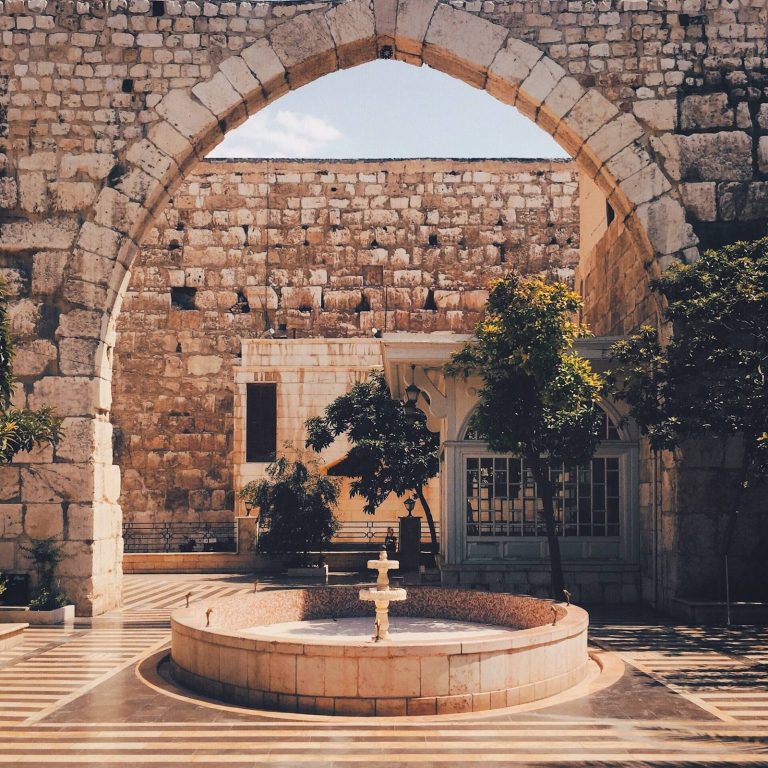
The courtyard contains a fountain and two iwans, which are covered halls opening onto a courtyard. Each iwan is supported by five old arches. The prayer hall includes a mihrab, a niche indicating the direction of Mecca.
Minaret
The mosque has one minaret, completed in 1209–1210. Its completion followed the mosque’s initial use and formed part of the building’s early Ayyubid development.