Husa Medin Pasha Mosque: An Ottoman Mosque in Štip, North Macedonia
Site at a Glance
- Rating
- 4.7
- Popularity
- Very Low
- Country
- North Macedonia
- Primary era
- Early Modern
- External website
- Open
- Eras represented
- Early Modern
- Civilizations
- Ottoman
- Site type
- Religious
- Remains
- Mosque
On this page9 sections
History
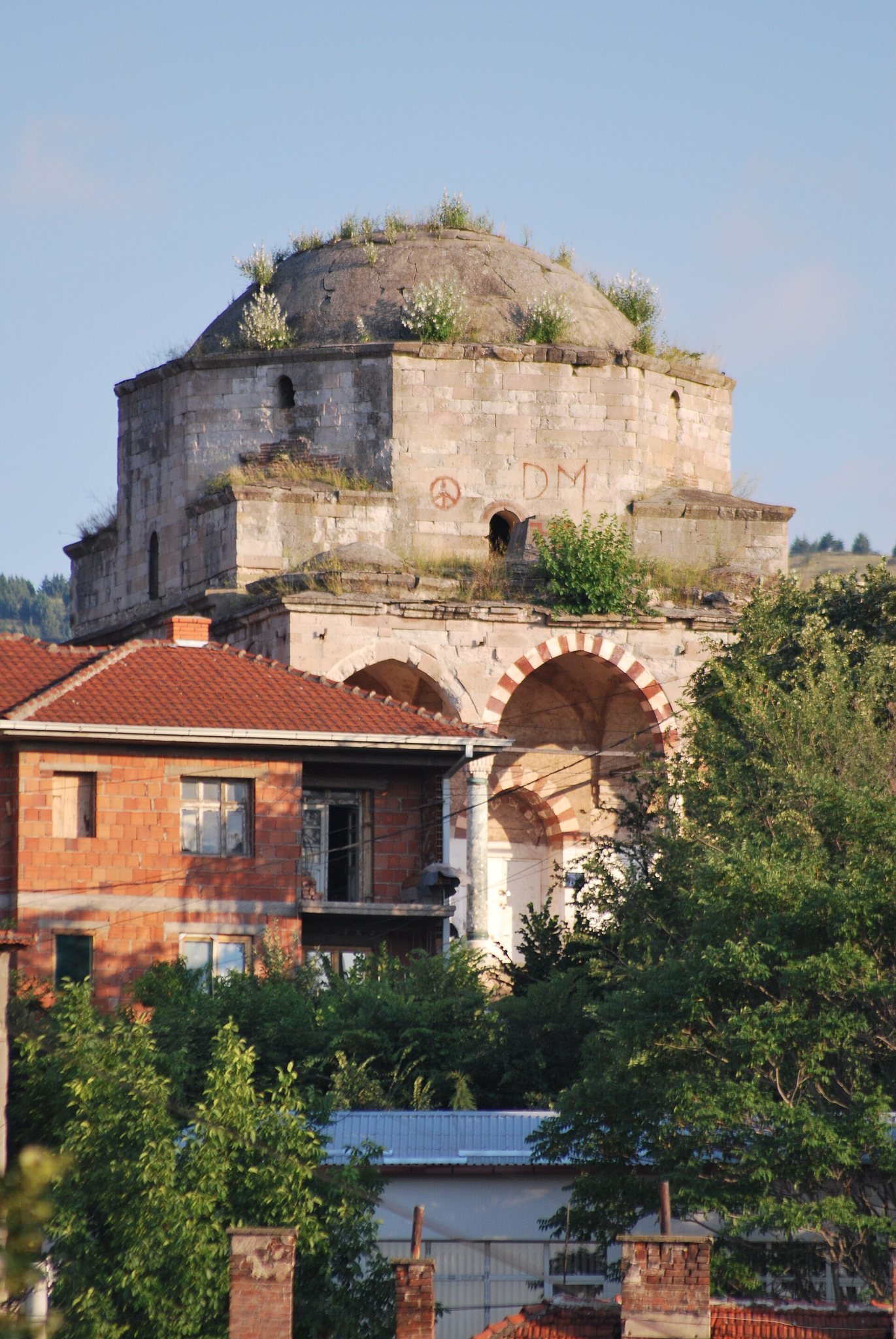
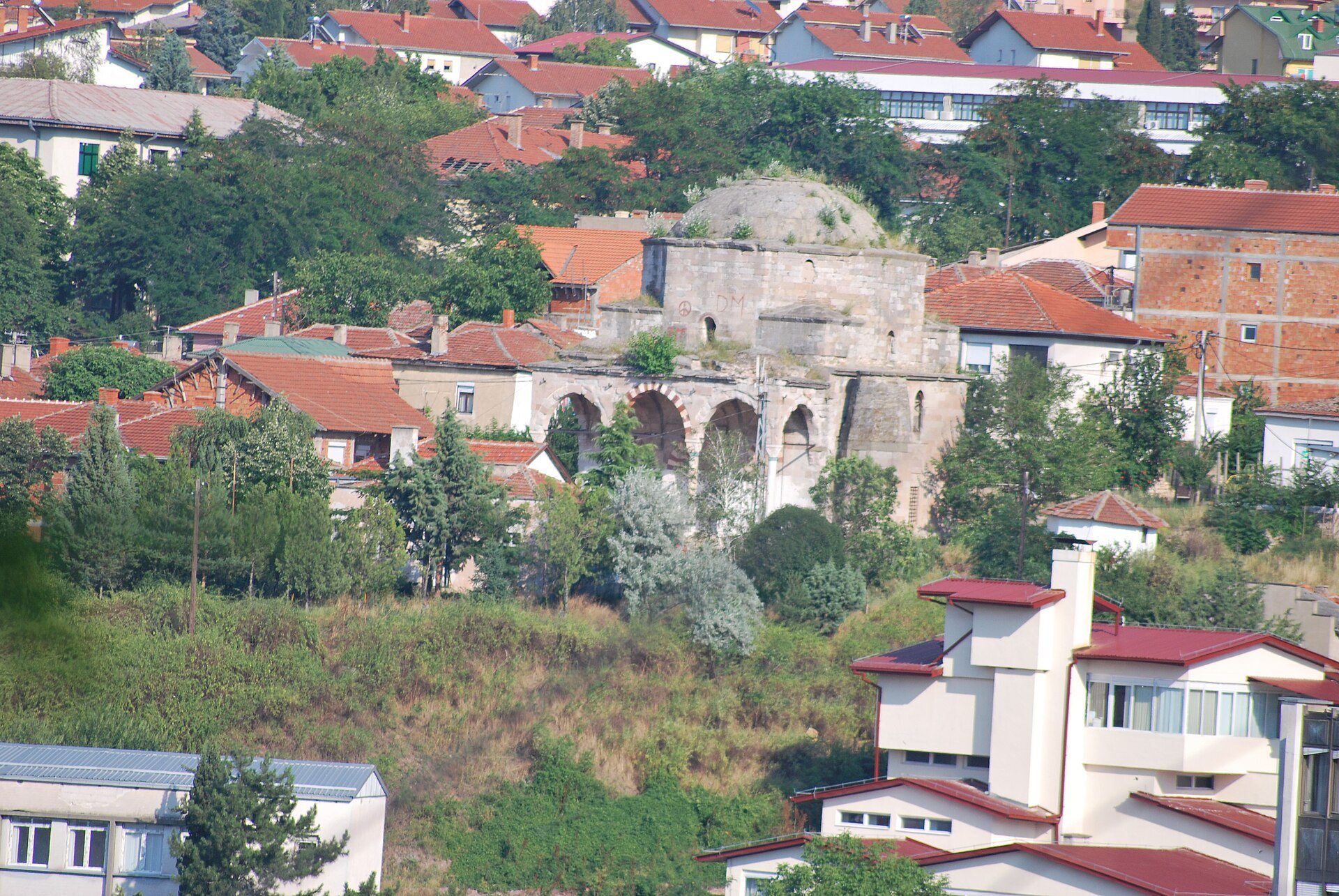
Husa Medin Pasha Mosque is an Ottoman Muslim mosque in Štip, North Macedonia, built during the sixteenth century and associated with Sunni Islam. It stands in the Saint Elijah area of the city’s southern quarter and is administered historically through the Stip Muftiate, a regional Islamic office responsible for religious affairs. The mosque is no longer active and is protected as a cultural monument.
Ottoman origins
The mosque appears in Ottoman registers in 1570, while a neighborhood established around it is recorded in 1573. Its precise construction date remains uncertain, although the building is generally assigned to the sixteenth century. It takes its name from Husa Medin Pasha, also known as Husameddin Pasha, a local Turkish dignitary. Local tradition attributes the construction to his financial donation, and his tomb is located beside the mosque.
A Christian tradition in Štip holds that the mosque was raised on the foundations of a church dedicated to Saint Elijah, possibly dating from the thirteenth or fourteenth century. The historian Kosta Balabanov rejected that interpretation. In 2006, Metropolitan Agatanghel of the Bregalnica Diocese renewed the claim that the building had been converted from a Saint Elijah church and had served the pasha alone rather than the Muslim population. The state nevertheless awarded the property to the Islamic Religious Community of North Macedonia.
Ottoman description and later use
Evliya Celebi, a seventeenth-century Ottoman traveler and writer, visited Štip in 1662. He counted 24 mosques in the city and described Husa Medin Pasha Mosque as finely constructed, with a stone minaret and a roof covered in lead.
Worship ended before the building was renovated in 1950 for use as a museum housing collections of the Stip Museum. Those collections were moved elsewhere in 1956, and the mosque subsequently remained abandoned. Its protected status preserves it as part of Štip’s Ottoman architectural heritage.
Remains
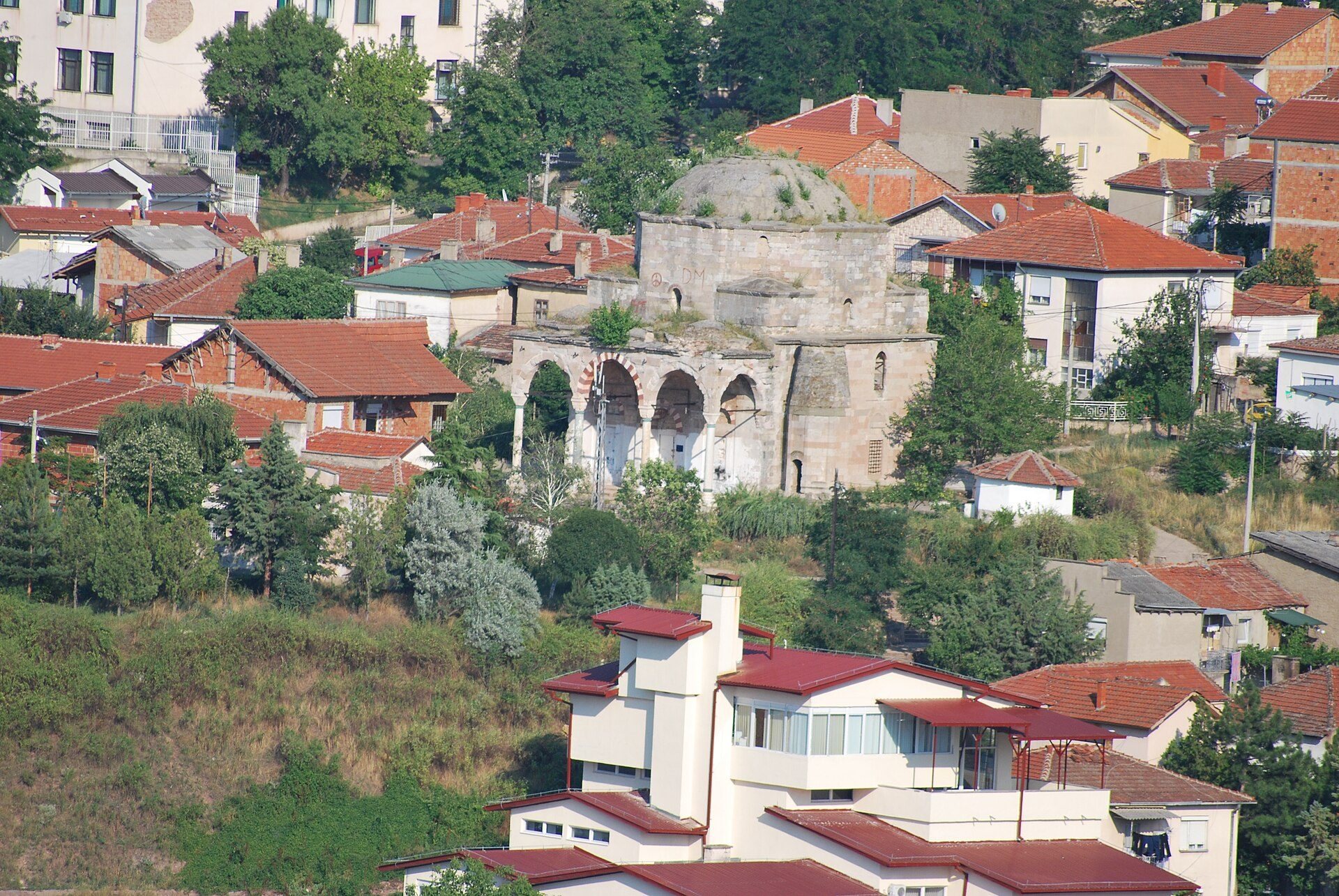
The mosque occupies a hill on the left bank of the Bregalnica River. It is a compact, single-room structure with a square plan measuring approximately 9.1 metres on each side. A hemispherical dome of brick and mortar rises above the room on a polygonal drum, while an open porch extends along the northern side.
Main mosque building
Prayer hall and dome
Three rows of arched windows made from dressed stone blocks illuminate the interior. On the southern side, the mihrab, the prayer niche indicating the direction of Mecca, occupies a shallow octagonal-vaulted recess within a small apse. Its form was known from the fourteenth century and reflects late Byzantine architectural influence. The former women’s prayer gallery, or mahfil, stood in the northern interior corner. Its stone stairway against the wall survives, while traces of the minbar, the raised pulpit for the Friday sermon, remain on the southern side.
Northern porch and entrance
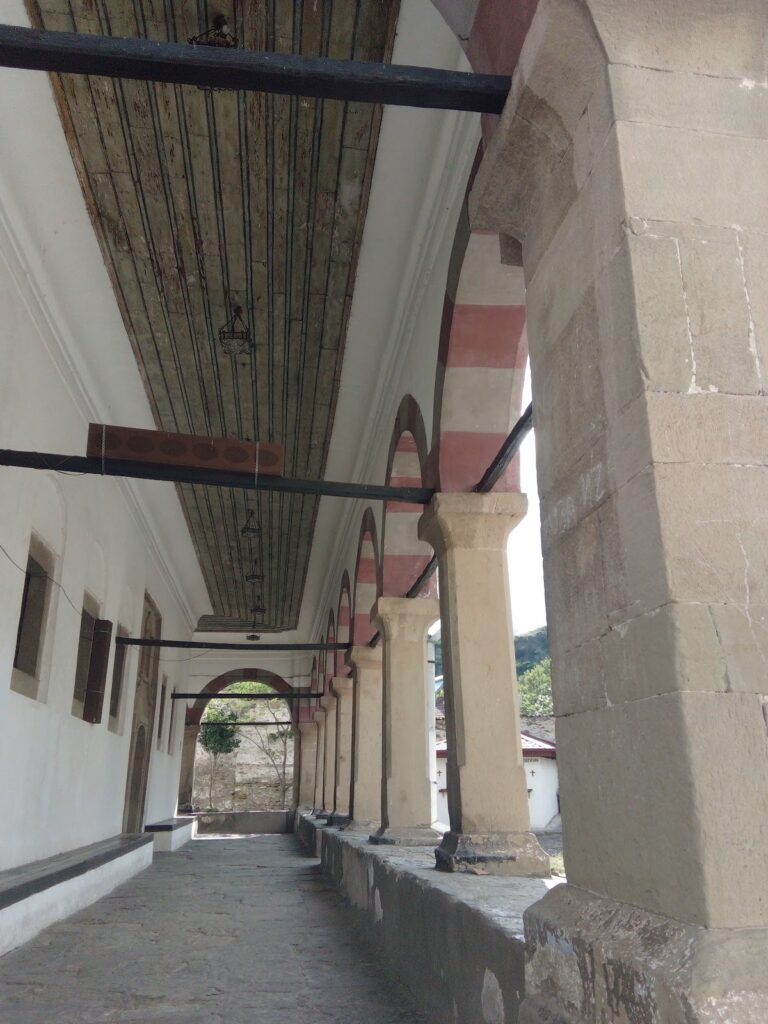
The northern porch has three small, low domes carried by four marble columns. The two interior columns are solid marble with decorated capitals. The exterior columns are white marble and have forms described as Turkish triangles. The dome arches use alternating red and white stone blocks, and similar color contrasts appear at the principal northern entrance and around the windows beside it. Other descriptions record green marble, red and black stone, and relief decoration in stalactite-like forms and triangular patterns on the capitals, arches, and window surrounds.
Minaret
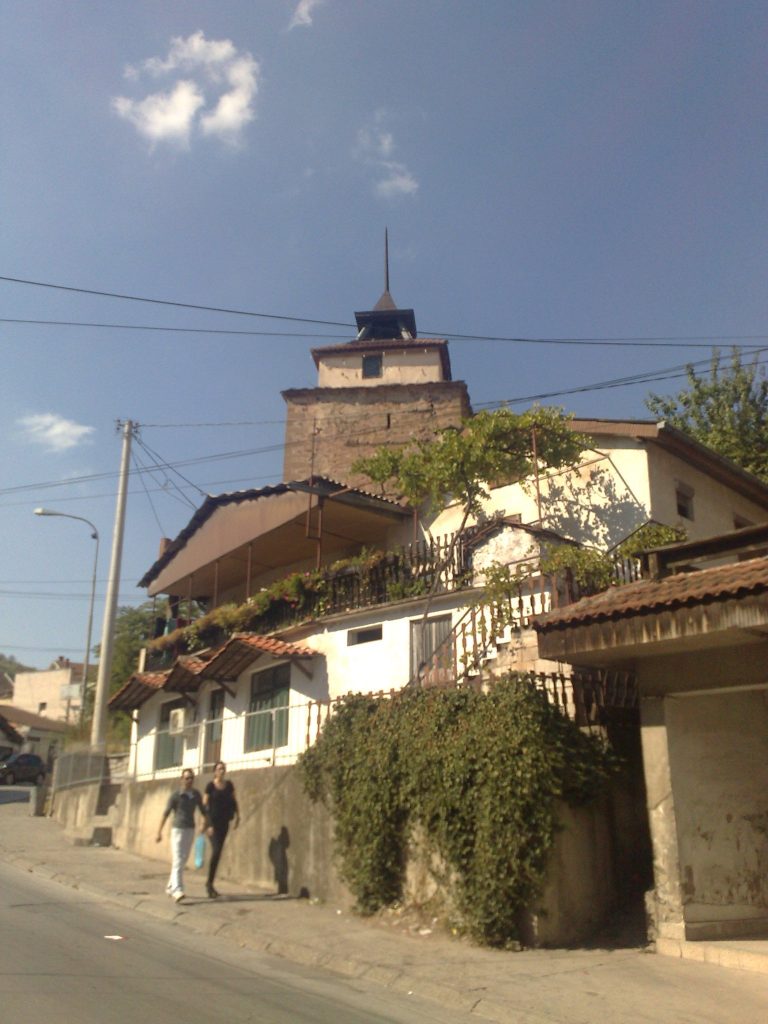
A rectangular minaret stands on the western side of the mosque. It is built from green sandstone obtained in the Štip area and contains stone steps. The structure appears unfinished, because it lacks both a projecting sherefe balcony and the conical cap traditionally placed above it.
Associated tombs
A turbe, an enclosed Islamic tomb or mausoleum, stands south of the mosque in its garden. It contains the remains of Sheikh Muhyudin Rumi Baba. The tomb’s position beside the mosque also preserves the association between the building and the religious figures connected with the site.