Atik Mosque, Bijeljina: An Ottoman Imperial Mosque in Bosnia and Herzegovina
Site at a Glance
- Rating
- 5
- Popularity
- Very Low
- Country
- Bosnia and Herzegovina
- Primary era
- Early Modern
- Eras represented
- Early Modern, Modern
- Civilizations
- Habsburg, Ottoman
- Site type
- Religious
- Remains
- Mosque
On this page6 sections
History
Atik Mosque, also known as the Imperial Mosque and Sultan Suleiman’s Mosque, is the oldest mosque in Bosnia and Herzegovina’s Bijeljina. The Ottoman Empire built it between 1520 and 1566, during the reign of Sultan Suleiman the Magnificent, and its name reflects its association with the Ottoman ruler. The Arabic word atik means “old.”
Ottoman foundation and eighteenth-century upheaval
Written records connect the mosque with Sultan Suleiman, which explains its alternative name, the Imperial Mosque. During the Austro-Turkish War of 1716–1718, Bijeljina had no fortress, so the town’s population used the mosque as a defensive stronghold. After Austrian forces occupied the town, the mosque and the adjacent hamam, a public bath, may have suffered severe damage.
From 1718 until the Treaty of Belgrade in 1739, the building was converted into a Catholic church. The treaty returned Bijeljina to the Ottoman Empire, after which the mosque’s religious use was restored. A wooden minaret was then built.
Alterations, destruction, and reconstruction
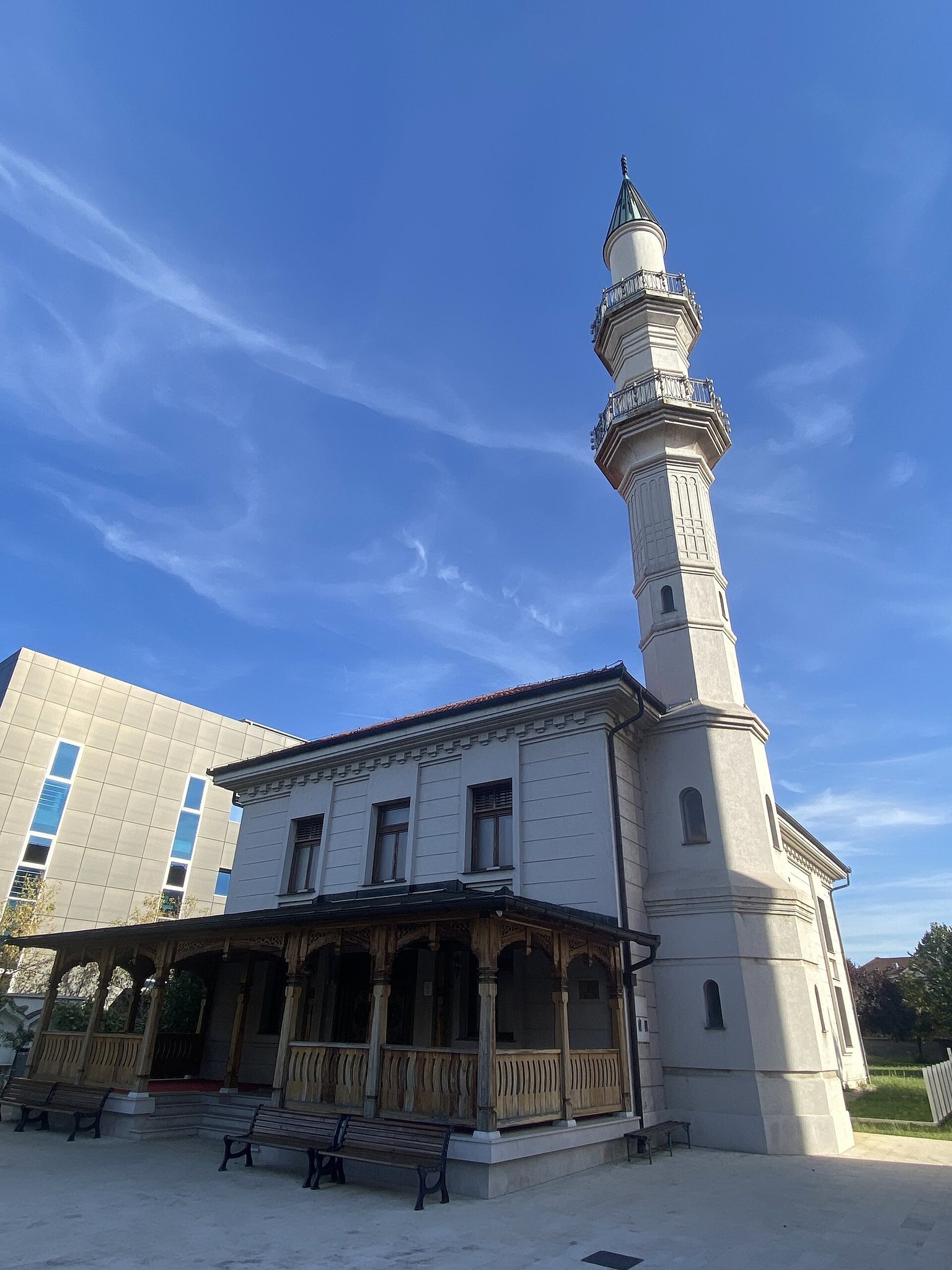
A new minaret was constructed in 1893, and an inscription at the entrance recorded that restoration. In 1912, the minaret was raised by another 10 metres and received a second sherifa, a gallery encircling the tower and traditionally used for the call to prayer. It consequently had two galleries.
An old Muslim cemetery stood beside the mosque until the Second World War. When the authorities prohibited further burials there, some grave markers were moved to Bijeljina’s outskirts while others sank into the ground. Leveling the mosque courtyard before the war buried or destroyed many inscribed markers, leaving only a small number on the southern side. After the war, new buildings spread across the wider cemetery area.
A turbe, or tomb mausoleum, associated with Binbaša Sadik-beg stood near the mosque in Bijeljina’s old bazaar. The Ottoman military rank of binbaša was roughly equivalent to a major. Both the turbe and the mosque were demolished on 13 March 1993, and all building material was removed from the mosque complex.
Reconstruction began in 2002, and the rebuilt mosque opened on 16 August 2014. On 13 December 2002, workers removing the old foundations for a modern concrete foundation encountered medieval inscribed tombstones. The Museum of Semberija responded with a 15-day protective archaeological excavation led by its director, Mirko Babić. The expert team included Mirko Babić, Enver Imamović, Aleksandar Ratković, Milan Đorđević, Lidija Fekeža, and Mirsad Sijarić. The excavation found no earlier church beneath the mosque foundations.
In 2003, the state Commission for the Preservation of National Monuments designated the mosque site and the remains of its architectural complex a National Monument of Bosnia and Herzegovina.
Remains
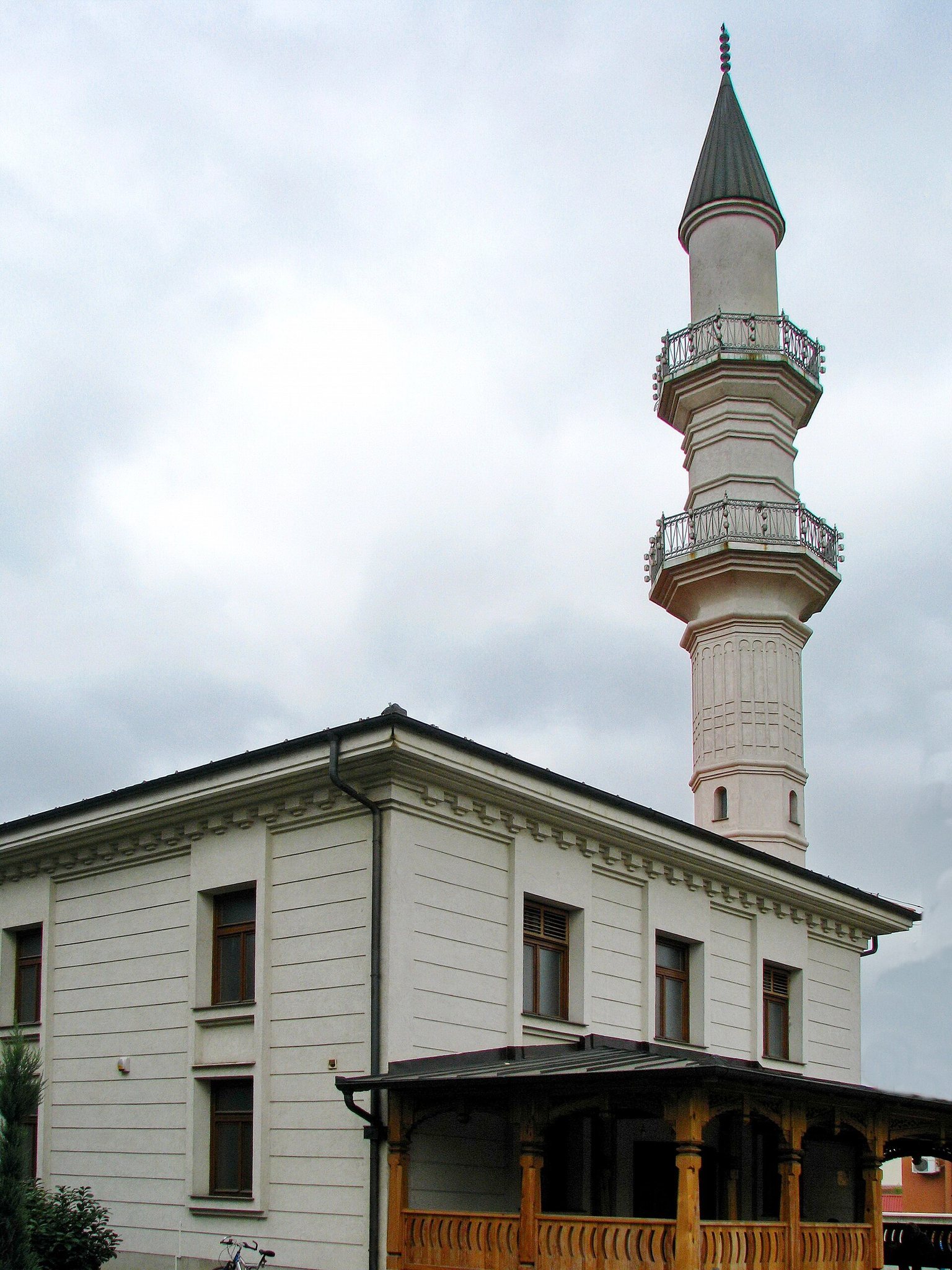
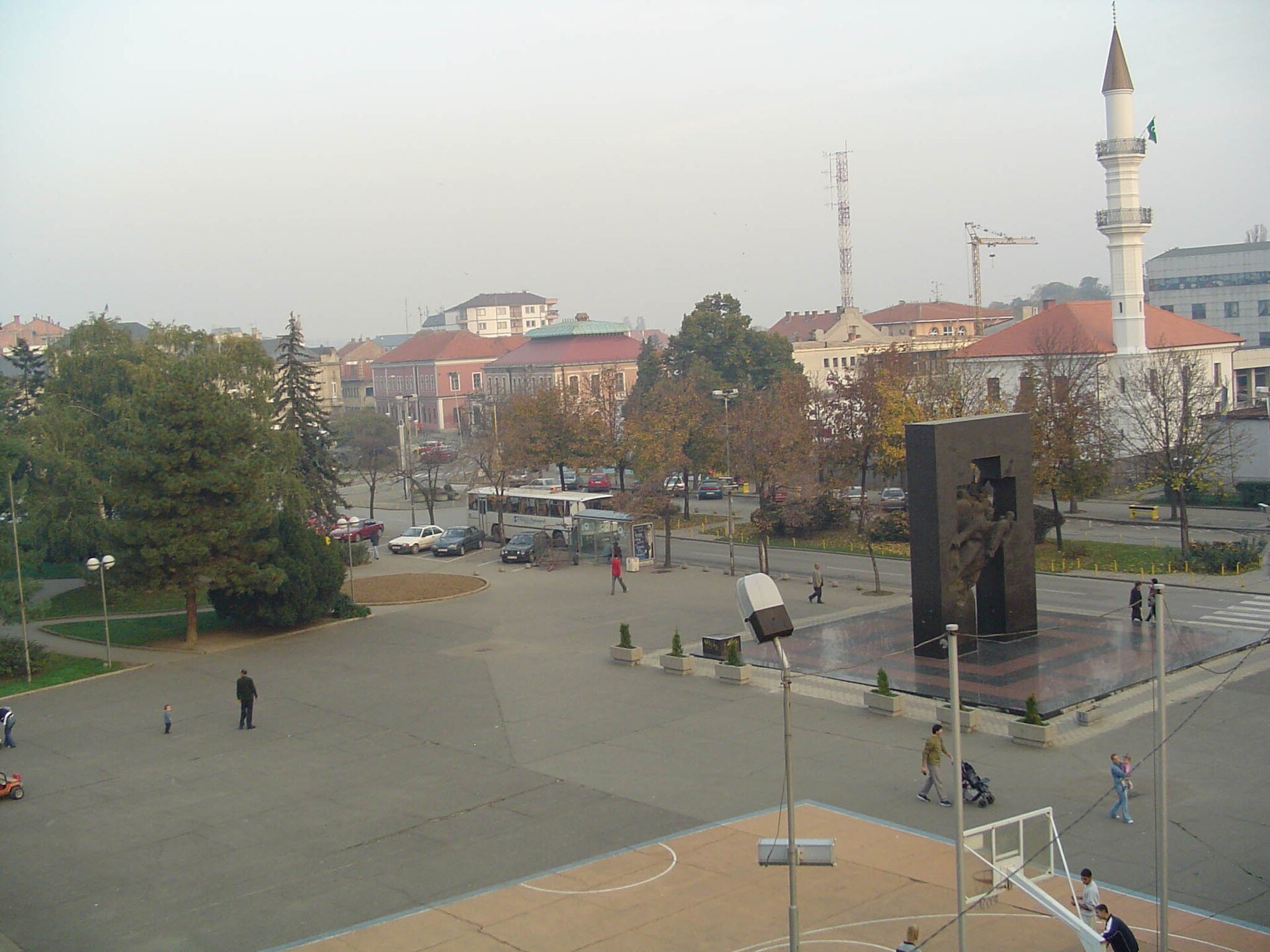
Atik Mosque is a single-room Ottoman building with a hipped roof and plastered façades. Its interior measures 11.5 by 21.5 metres, while the walls are 1 metre thick. The building rises 7.55 metres to the eaves and has two horizontal bands of window openings.
Mosque and minaret
The rebuilt complex includes the mosque’s mihrab, the prayer niche that marks the direction of Mecca, together with an outdoor ablution facility. Its minaret is constructed of solid brick and reaches 30.5 metres in height. Two sherifas encircle the tower, with the second gallery added in 1912.
Archaeological remains and former grounds
Archaeological work exposed remains of the foundations of the former mosque. Medieval inscribed tombstones were found in the foundation area, linking the archaeological deposits to the earlier use of the grounds. The former complex also included the adjacent Muslim cemetery and the nearby turbe of Binbaša Sadik-beg. Grave markers from the cemetery were buried, destroyed, relocated, or lost, with a small number surviving on the mosque’s southern side.