Sultan Selim Mosque (Knežina): An Ottoman Mosque in Bosnia and Herzegovina
Site at a Glance
- Rating
- 5
- Popularity
- Very Low
- Country
- Bosnia and Herzegovina
- Primary era
- Early Modern
- Eras represented
- Early Modern
- Civilizations
- Ottoman
- Site type
- Religious
- Remains
- Mosque
On this page9 sections
History
Sultan Selim Mosque (Knežina) is a sixteenth-century Ottoman mosque in Bosnia and Herzegovina, near Sokolac. Its foundation is associated either with Selim I, who ruled from 1512 to 1520, or with Selim II, who ruled from 1566 to 1574. The building began as a church and was converted into a mosque after the Ottoman conquest, placing it within the region’s transition to Ottoman rule.
Conversion and Ottoman use
The former church bell tower was reduced to about two metres above ground level, and its surviving base was incorporated into the mosque’s minaret. The mosque was also known as the Imperial Mosque. Its first imam came from Anatolia with the Ottoman army, and his descendants later carried the surname Imamović.
The mosque underwent restoration in 1788 and again in 1906. The wall levhas, calligraphic Islamic panels displaying religious texts or formulas, probably belong to the 1788 restoration. These interventions helped preserve the building’s religious and artistic character into the modern period.
Protection, destruction, and rebuilding
State protection began in 1951, when the mosque was declared a cultural monument. It entered the register of immovable cultural monuments in 1962 and was later classified as a Category II monument in the Spatial Plan of the Republic of Bosnia and Herzegovina to 2002. In 2004, the site and remains of the historic Selimiya building were declared a national monument of Bosnia and Herzegovina.
The mosque was destroyed during the 1992–1995 war in Bosnia and Herzegovina. Serbian forces mined it in the summer of 1992, after which its stone remains were transported about five kilometres from the original site. Following the return of surviving Bosniak residents to Knežina, Muslim religious life was renewed in 2003. From 2004, recovered fragments were incorporated into a reconstruction that reused the original stone and followed the form of the former building. The restored mosque was ceremonially reopened on 4 September 2011.
Remains
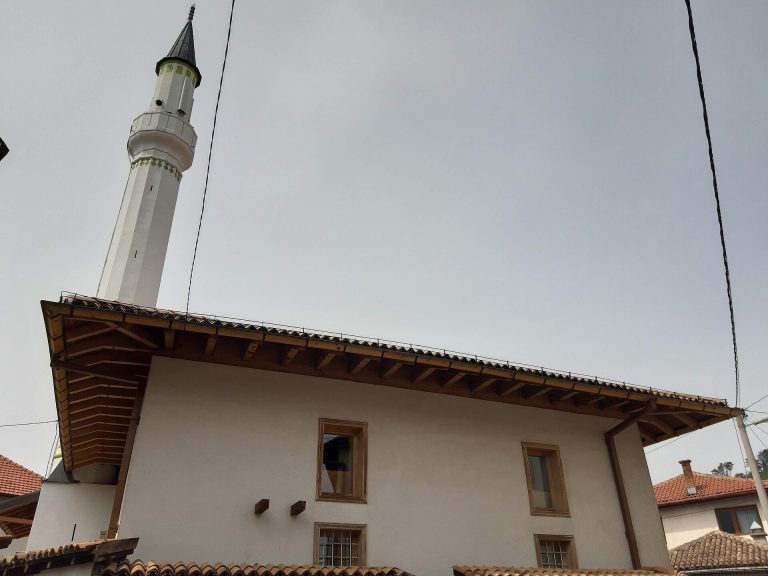
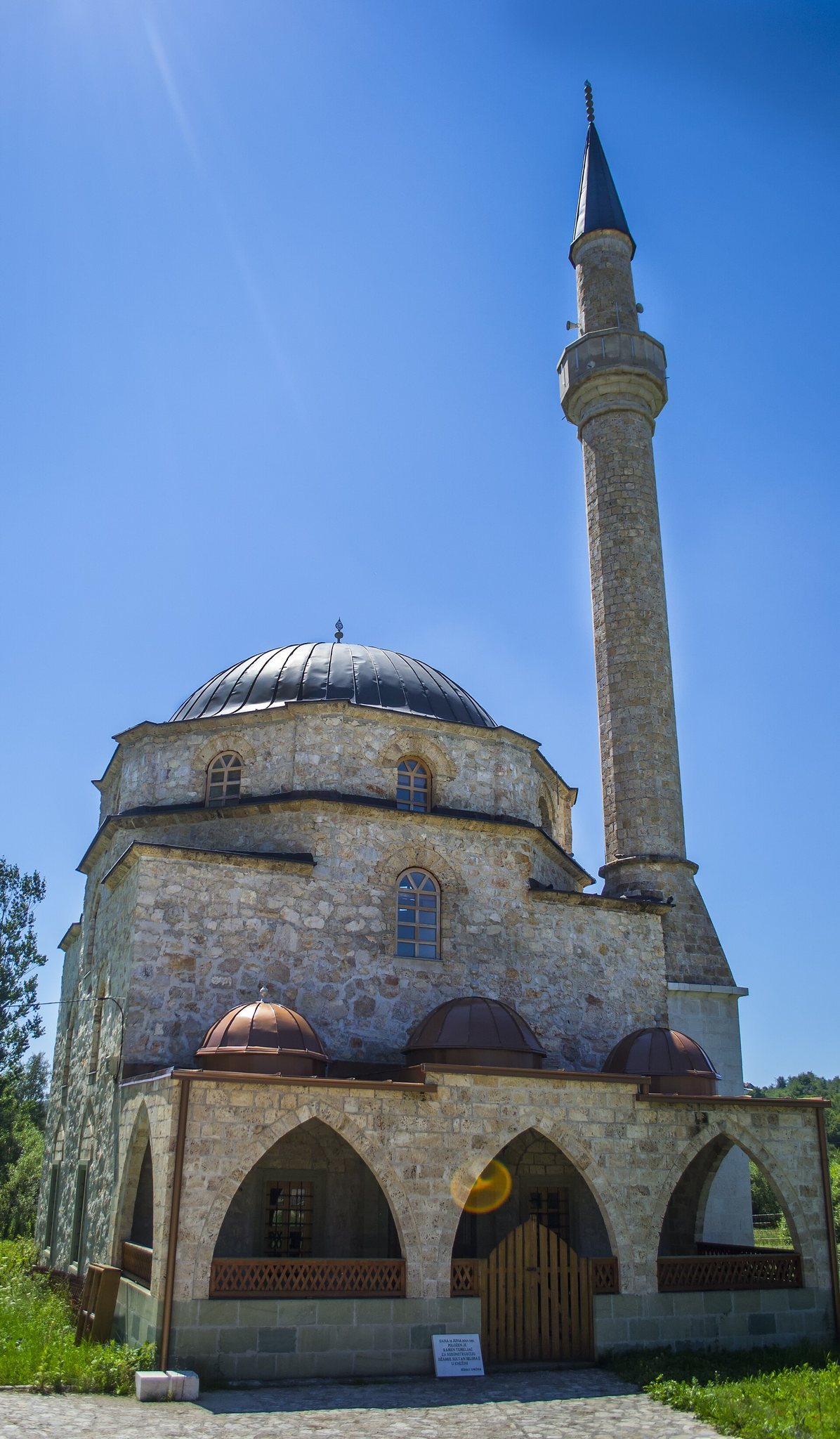
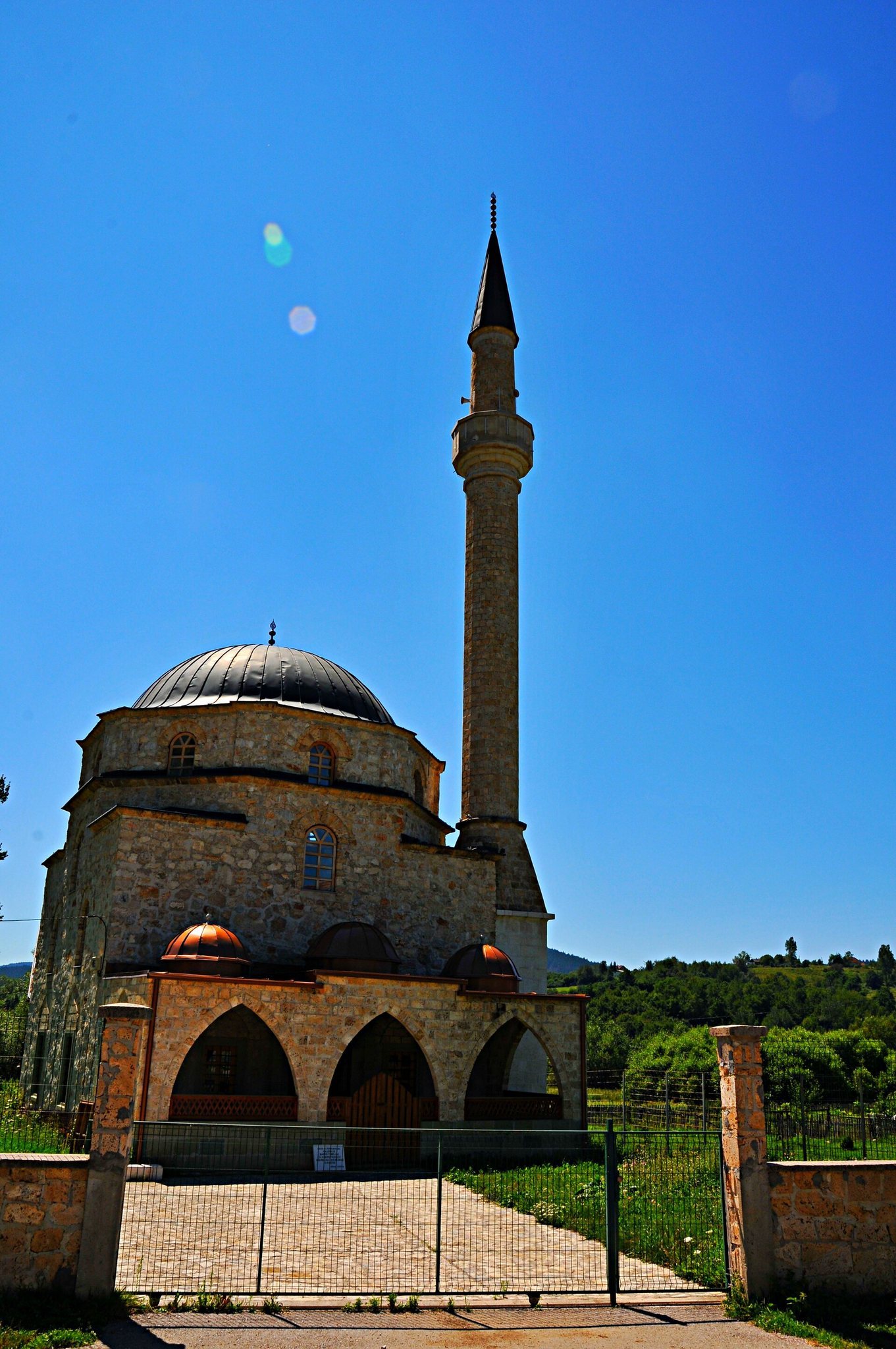
The reconstructed mosque follows the former building’s shape and is made from recovered original stone. Its massive dressed-stone walls are between 105 and 111 centimetres thick. The surviving arrangement combines the body of the former church with features associated with its later use as a mosque, including a single minaret set against the right exterior wall.
Minaret and exterior masonry
The adapted bell-tower base
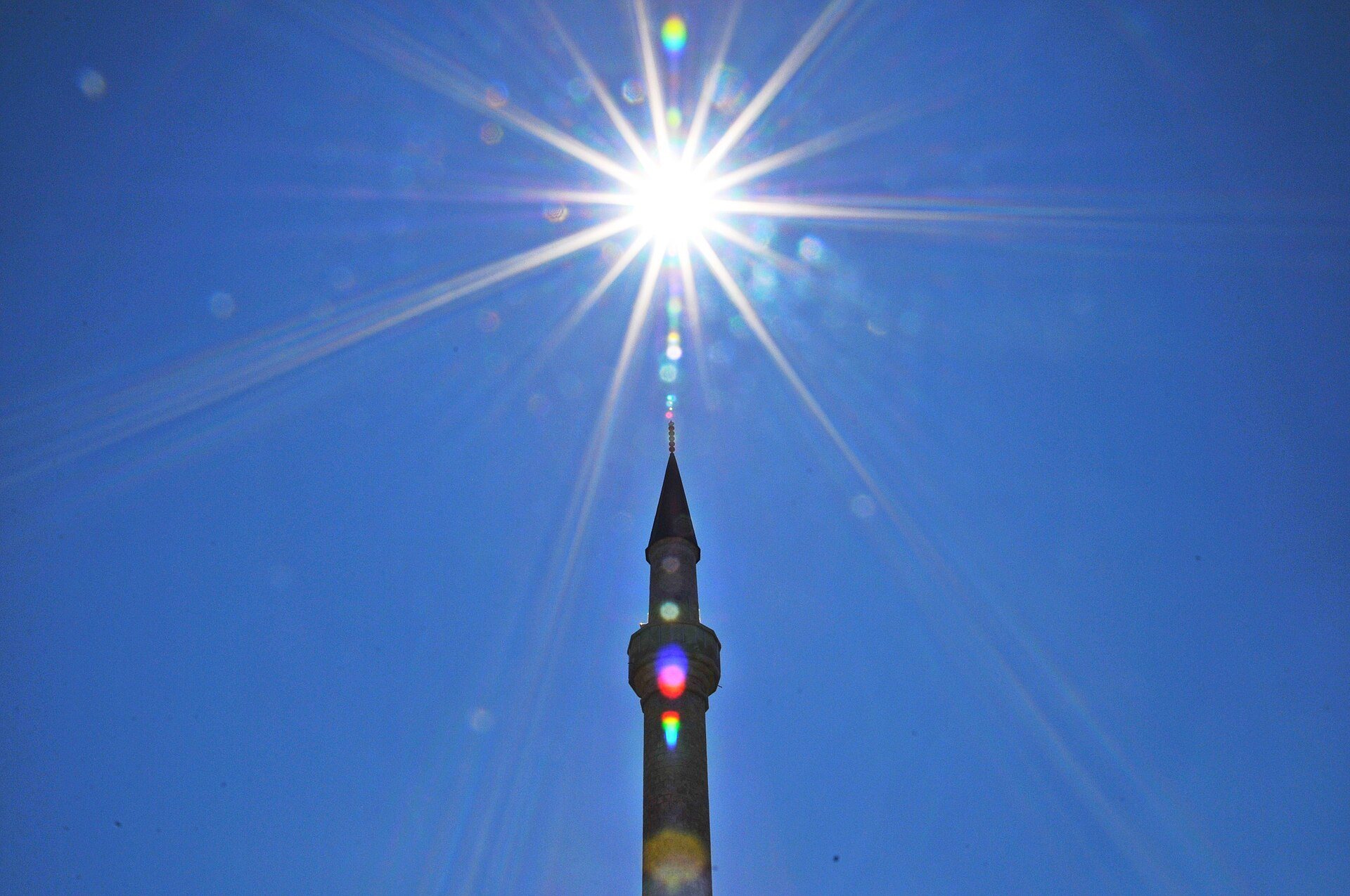
The minaret is approximately 20 metres high and octagonal. It rises from the rectangular base of the former church bell tower, which survived the conversion after the upper part of the tower was demolished. Access begins inside the mosque, where a gallery about two metres above ground level leads to the minaret entrance. This internal arrangement is described as unique among mosques.
Interior and religious furnishings
Windows, dome, and calligraphic panels
Twenty-six windows illuminate the interior in four horizontal bands, and wrought-iron grilles protect the openings. A five-hundred-year-old alem, a religious finial placed at the top of a mosque dome or minaret, was preserved and installed on the restored dome.
The interior retained its original decorations and wall levhas. The historical collection included eight movable panels from the eighteenth and nineteenth centuries, written in ink on parchment. Some were embellished with coloured ornament and liquid gold. Approximately twenty wall panels were made in fresco technique and probably date from the restoration of 1788.
Library and furnishings
The mosque’s library contained several dozen manuscript works dating from the seventeenth to the nineteenth centuries. They were written in a South Slavic language, Arabic, Turkish, and Persian. A large pendulum wall clock, more than 150 years old, was used to measure prayer times.
The furnishings also included 50 kilims and 30 prayer rugs. Together with the manuscripts, clock, calligraphic panels, and preserved finial, these objects formed part of the mosque’s historical interior collection.