Privina Glava Monastery: A Serbian Orthodox Monastic Complex in Serbia


Site at a Glance
- Rating
- 4.9
- Popularity
- Low
- Country
- Serbia
- Primary era
- Early Modern
- Eras represented
- Medieval, Early Modern, Modern
- Civilizations
- Habsburg, Serbian
- Site type
- Religious
- Remains
- Monastery
On this page10 sections
History
Privina Glava monastery is a Serbian Orthodox monastery in Serbia, near Šid, in the western part of Fruška Gora. It is traditionally associated with a 12th-century foundation, while the present main church was built in the 18th century. The westernmost of Fruška Gora’s 16 monasteries, it belongs to the Eparchy of Srem and is dedicated to the Holy Archangels Michael and Gabriel. The monastery is also protected as a Serbian cultural monument of exceptional importance.
Medieval traditions and early records
According to tradition, a nobleman named Privi founded the monastery in the 12th century after becoming a hermit. He is said to have gathered priests exiled from Moravia and built an early church and monastic cells east of a spring. That area is now the monastery cemetery. The church was established near the source of a stream called Priva, while the nearby settlement of Privina Glava developed as a former monastic estate.
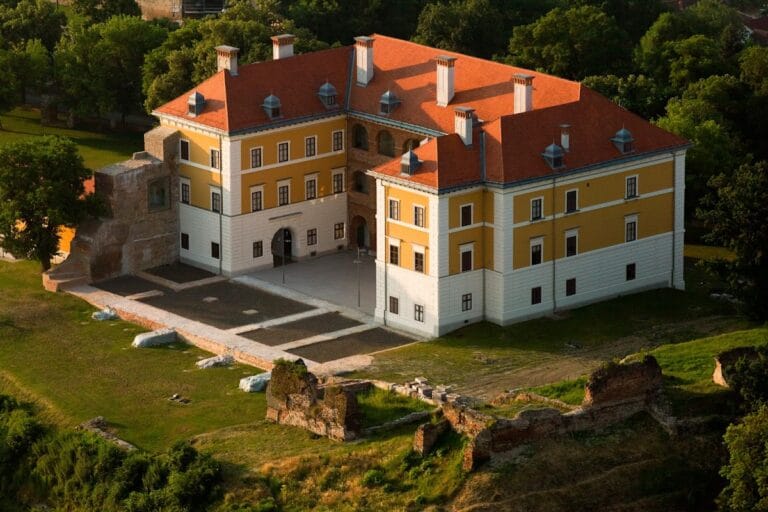
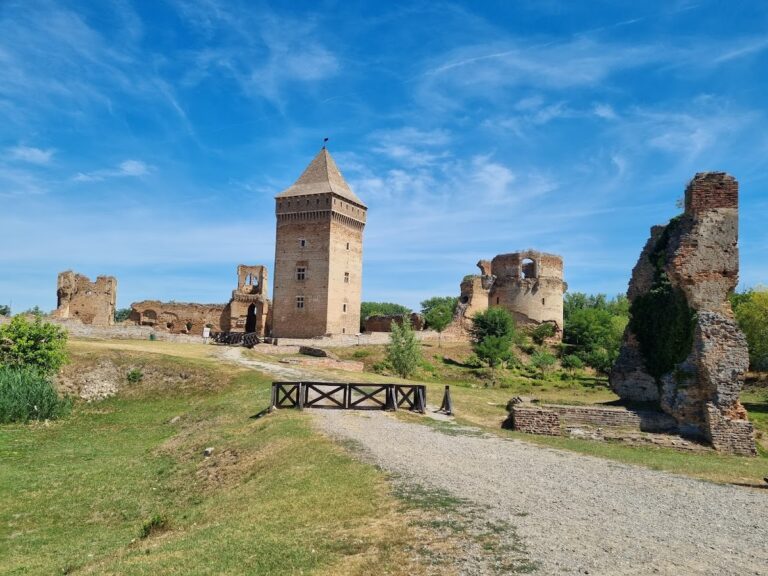
The monastery was probably restored in 1496 by Despot Jovan Branković, a late-medieval Serbian ruler, and Bishop Maksim Branković. Turkish records instead connect its foundation or restoration with the middle of the 16th century. Its first written mention appears in a Turkish register from 1566 and 1567, where the monastery is named Pribiglava. Jovan Branković maintained his seat at nearby Berkasovo, a fortified town on Despotovac Hill.
Privina Glava entered the written history of Serbian religious culture again in the 17th century through the Munich Psalter, a 14th-century illuminated book of biblical Psalms and liturgical material. The manuscript preserves a tradition that monks from Privina Glava founded Kovilj Monastery on land belonging to their community.
Ottoman and Habsburg-era upheavals
The monastery was deserted during the disturbances connected with the Ottoman-Austrian wars, particularly after it was damaged in 1688. Monks returned after the Treaty of Karlowitz in 1699, which ended the war between the Ottoman Empire and the Habsburg monarchy. By 1702, the monastery held 200 yokes of arable land, meadows, and pasture, together with 582 yokes of woodland. A yoke was a traditional regional measure of agricultural land.
Privina Glava also took part in the organization of the Serbian Orthodox Church. Abbot Sava represented the monastery at a Serbian church-national assembly in 1718, and Abbot Petronije held the same role in 1731.
The eighteenth-century rebuilding
Construction of a new church began in 1741 over the foundations of a smaller earlier building. During the excavation of the foundations, workers found a stone with an engraved text that was interpreted as referring to the restoration of 1496. The new church was completed in 1753. Its first ktetor, or principal founder and patron, was Simeon Vuković of Šarengrad, who contributed 1,000 florins and was later buried in the church crypt. Metropolitan Pavle Nenadović consecrated the completed church on 18 June 1760.
Simeon Vuković’s son Jovan built the church belfry in 1771. Marinka, the widow of Jovan Monasterlić, the military commander of Morović, paid for the large bell. The monastery continued to support Serbian literary and religious culture in the 19th century. It commissioned copies of the Serbian Chronicle in 1824 under Abbot Danil Jovanović, with several members of the monastic community named as subscribers. Abbot Serafim Mirosavljević was recorded at Privina Glava in 1834.
War, looting, and restoration
Violence also affected the monastery in the 20th century. In 1931, the dismissed forest guard Ješa Popović of Šid returned to Privina Glava seeking revenge. Accompanied by his father-in-law Danilo, he attacked the monastery, and Danilo slashed the face and stabbed Abbot Metodije Subotić.
In 1941, the Ustaše, a Croatian fascist and ultranationalist movement that ruled the Independent State of Croatia during the Second World War, expelled the monks and looted the complex. The church and its iconostasis survived physically, but the interior contents were removed and the tables were burned. The monastic residence was also stripped of its contents, and the library was burned by Vlatko Hranilović, head of the Ustaše youth home established at the monastery.
A substantial part of the monastery’s valuables was taken to the Zagreb Museum in 1941 and returned to the Serbian Orthodox Church after the Second World War. Some of these objects remain at Privina Glava, while others are held at the Museum of the Serbian Orthodox Church in Belgrade. Repairs to the church took place from 1954 to 1956. A broader reconstruction began in 1987 and brought the complex back toward its earlier condition, while later work added new buildings and gave particular attention to the conservation of the iconostasis.
Gavrilo Marić served as abbot from 2002 to 2017. The monastery is currently described as a women’s monastery. Additional churches were added to the complex in the early 21st century, extending its religious buildings beyond the historic main church.
Remains
Main church and belfry
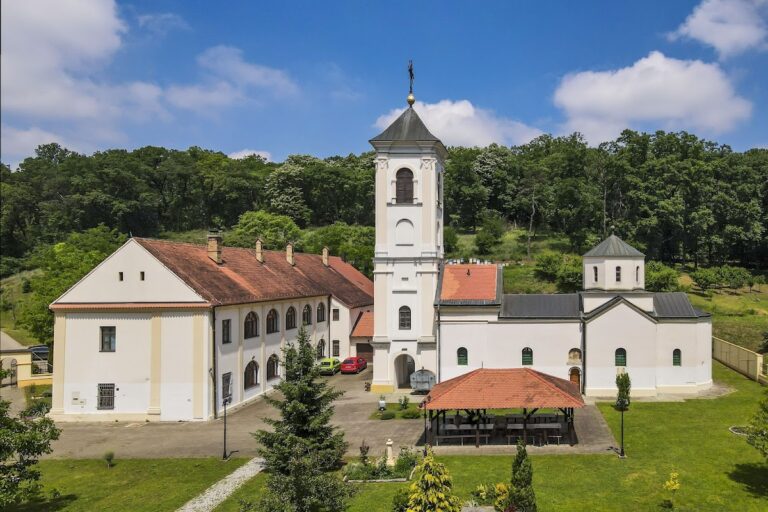
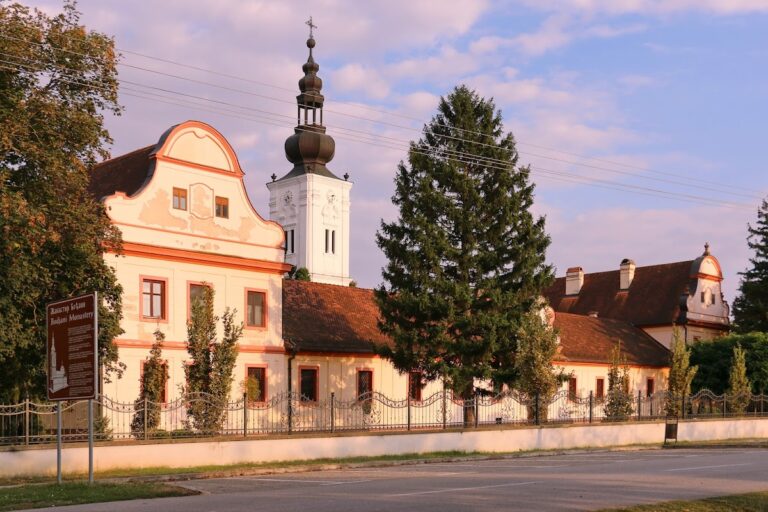
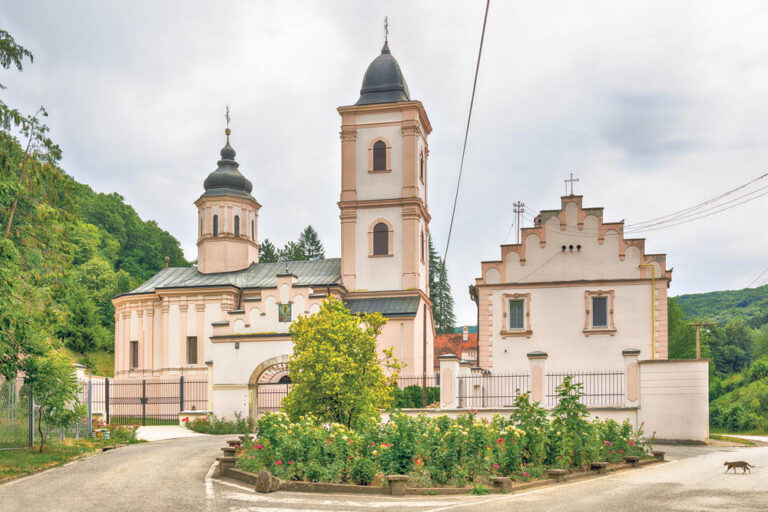
The principal church has a three-conch plan, with three projecting semicircular or polygonal apses, and a dome carried by free-standing piers. Its narthex, an entrance hall at the western end, was built in the middle of the 18th century over the foundations of the earlier church. Its design imitates the church of Novo Hopovo Monastery. A Baroque bell tower, built in the highly ornamented European style of the period, was added to the western face of the narthex at the end of the 18th century. The belfry erected by Jovan Vuković in 1771 forms part of this architectural history.
Monastic residences
Two-storey monastic residences stand along the southern and eastern sides of the main church. The residence survived the 1941 occupation as a structure, although its contents were removed. Reconstruction and later building work have restored parts of the complex toward its earlier condition while adding new structures.
Later churches
The Church of the Protection of the Mother of God dates from the early 2000s. The Church of Saint George stands on the northwestern side of the complex and dates from 2006. On the hill above the monastery is the Church of the Exaltation of the Honourable and Life-Giving Cross, built in 2010.
Paintings and interior features
Kuzman Kolarić painted the iconostasis, the icons on the piers before the altar, the throne icons, and the church wall paintings between 1786 and 1791. The iconostasis survived the wartime looting and later received particular conservation attention. The monastery refectory, a communal dining hall, formerly contained portraits and paintings of Metropolitan Stefan Stratimirović, Patriarch Jovan Rajić, Šakabenta, German Anđelić as a deacon, and Abbot Teofan Kosovac. It also held Aksentije Marodić’s paintings The Victory of Good over Evil, made in 1880, and Archangel Michael.
Nearby sites