Saint Bartholomew Church in Jełowa: A Roman Catholic Parish Church in Poland
Site at a Glance
- Rating
- 4.5
- Popularity
- Very Low
- Country
- Poland
- Primary era
- Modern
- External website
- Open
- Eras represented
- Early Modern, Modern
- Civilizations
- German, Kingdom of Prussia
- Site type
- Religious
- Remains
- Church
On this page7 sections
History
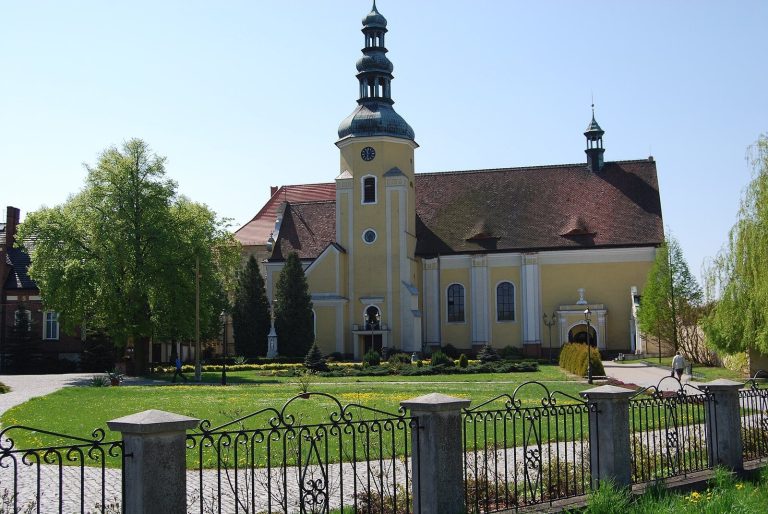
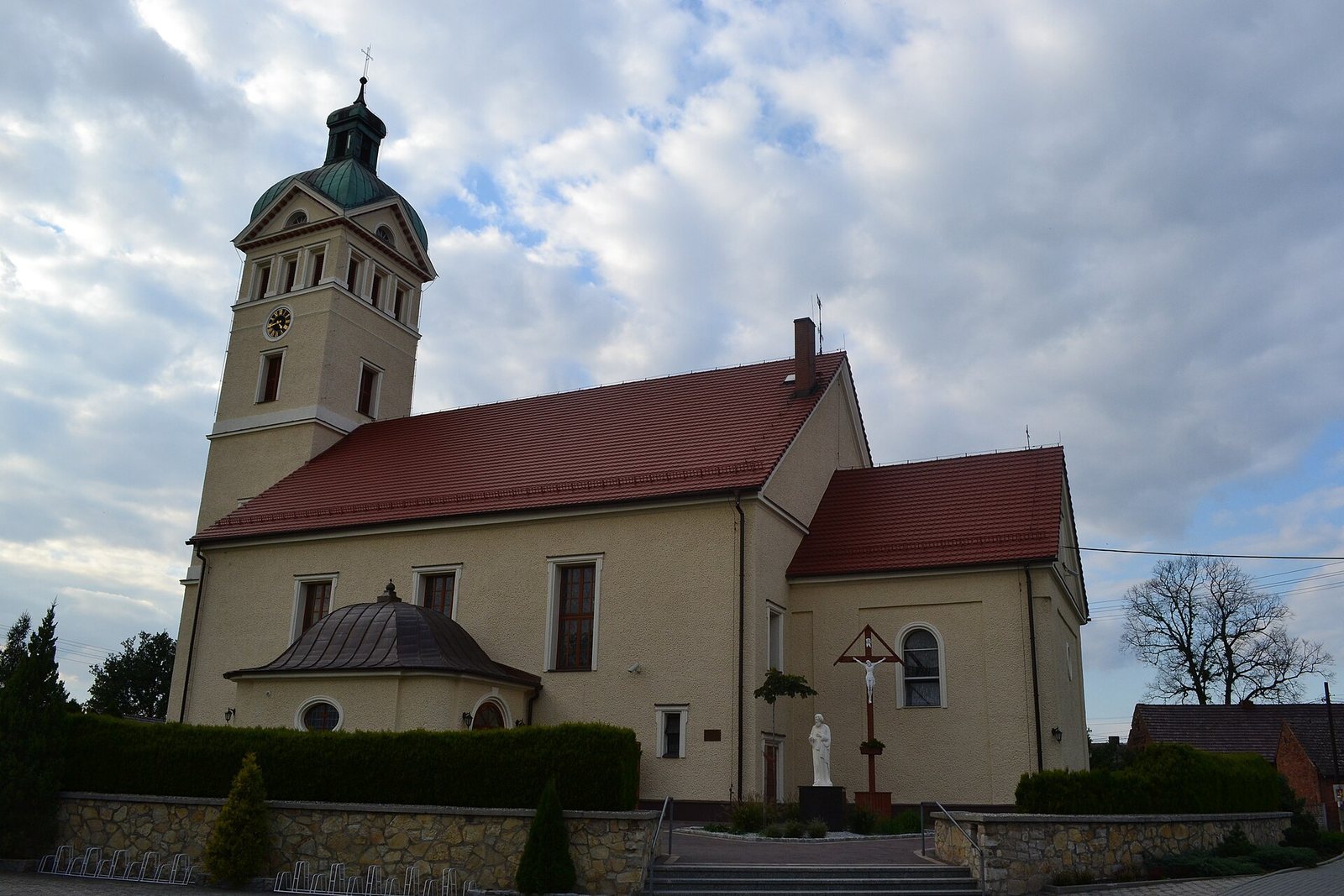
Saint Bartholomew Church in Jełowa is a Roman Catholic parish church in Jełowa, Poland, dedicated to Saint Bartholomew, one of the Twelve Apostles in Christian tradition. The parish church was first mentioned in 1399, and its feast is celebrated on 24 August. It belongs to the Parish of Saint Bartholomew the Apostle in Jełowa, within the Zagwiździe deanery of the Diocese of Opole. A deanery is an administrative grouping of parishes within a diocese, the territorial jurisdiction of the Catholic Church overseen by a bishop.
The wooden church and the present building
The earlier church was destroyed by fire in 1633. In 1645, the parish priest Wincenty Galda built a new wooden church. Between 1749 and 1765, parish priest Józef Matuszczyk added a presbytery, the part of a church reserved primarily for the clergy and the main altar.
The presbytery survived when the approximately 200-year-old wooden church was dismantled between 1842 and 1844. During the tenure of parish priest Wincenz Onderka, the wooden structure was replaced with the present masonry building, while the earlier presbytery was retained as part of it. Paintings showing the Crucifixion and Saints Bartholomew and Matthew were created around 1867.
Twentieth-century rebuilding and fire
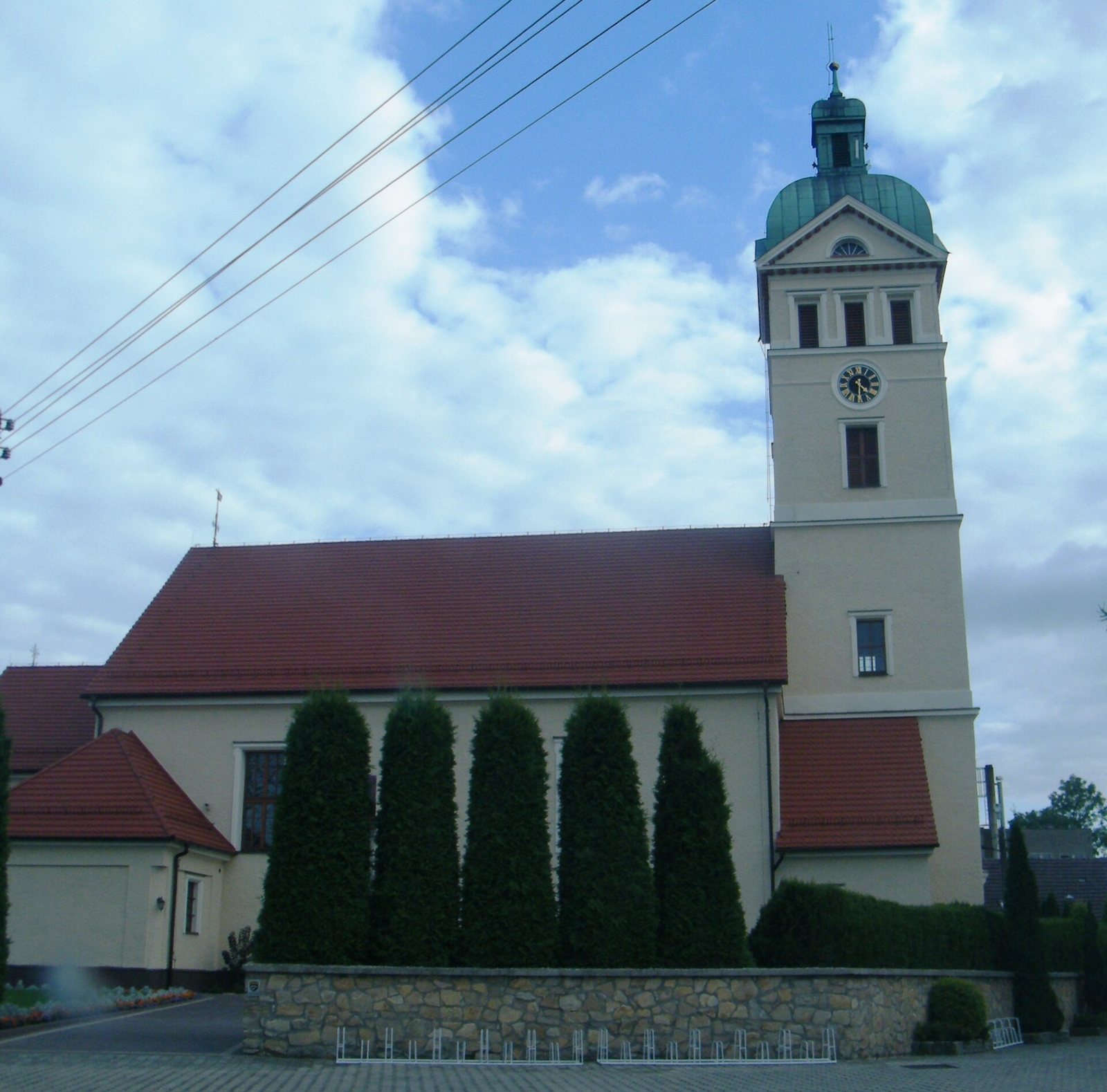
A new tower was built in 1910, when the church was also plastered and the interior beneath the organ was rebuilt. A new sacristy, an adjoining room used to prepare and store liturgical objects and vestments, was added in 1912.
After the Second World War, the damaged church and associated parish buildings were reconstructed. The work included the presbytery, the organist’s house, and the house of the Servant Sisters of the Blessed Virgin Mary, a Catholic women’s religious congregation. In 1981, a new choir gallery was built, and reconstruction and construction of a new section of an outbuilding began for catechetical and retreat purposes.
On 16 December 2010, an electrical short circuit caused a fire. Much of the roof truss above the main nave and part of the sacristy burned. The church was repaired and renewed over eight months, then reconsecrated on 24 August 2011 by Andrzej Czaja, Bishop of Opole. The church had already been entered in the register of monuments of Opole Voivodeship under number 632/59 on 13 October 1959.
Remains
Saint Bartholomew Church is a brick, single-nave building with one tower and one altar. Its present form combines the nineteenth-century masonry church with the presbytery added to the earlier wooden building between 1749 and 1765. Later changes, including the tower, sacristy, interior work, and post-fire restoration, remain part of the building’s architectural development.
Presbytery and altar
The surviving presbytery forms part of the present church and provides the setting for the wooden Gothic high altar. Gothic art and architecture use forms associated broadly with the European period from the twelfth to the sixteenth centuries. The altar was thoroughly renovated after the 2010 fire. Above the presbytery are paintings made around 1867, depicting the Crucifixion and Saints Bartholomew and Matthew.
Tower and sacristy
The tower was newly built in 1910, and four bells hang within it. One bell is historic, while the other three date from 1988. The present sacristy dates from 1912 and includes a portion affected by the 2010 fire.
Organ and restored interior
The organ was built in 1957 by Norsk Orgel- og Harmoniumfabrikk and brought from Norway in 2010 by the organ-building firm Kamerton. It has electro-pneumatic action, 28 stops, and three manuals with pedal. Stops are sets of pipes or equivalent registers that create different tones; the manuals are keyboards, and the pedal is played with the feet.
The restoration after the fire included replacement of part of the flooring and stained glass, renewal of the surviving ceiling, and installation of new pews. The organ and the wooden high altar also underwent comprehensive repairs.