Al-Sarai Mosque: A Historic Abbasid and Ottoman Mosque in Baghdad


Site at a Glance
- Rating
- 4.6
- Popularity
- Very Low
- Country
- Iraq
- Primary era
- Early Modern
- Eras represented
- Medieval, Early Modern, Modern
- Civilizations
- Abbasid, Ottoman
- Site type
- Religious
- Remains
- Mosque
On this page14 sections
History
Al-Sarai Mosque is a historic Sunni mosque and madrasa, an Islamic religious school, in Baghdad, Iraq. It was first laid out in 1193 under al-Nasir, the 34th Abbasid caliph, during the late medieval Islamic period when the Abbasid dynasty governed its caliphate from Baghdad. The mosque was established in the Souq al-Sultan locality near Bab al-Sultan, now called Bab al-Muazzam, and became an important religious institution in Rusafa.
Abbasid foundation and early development
The mosque’s early history was recorded by the Islamic historian Sibt ibn al-Jawzi. After al-Nasir died, his son and successor, al-Zahir, added a library and transferred Qur’ans to it. The building continued to hold an important religious role after the Mongol siege of Baghdad. Ibn al-Fuwati later recorded that he served as one of its imams.
Ottoman reconstruction
Following the Ottoman conquest of Baghdad, Sultan Suleiman the Magnificent reconstructed the mosque in 1533. Another rebuilding took place in 1683 under Ibrahim Pasha, the Ottoman Grand Vizier, who also rebuilt the nearby Syed Sultan Ali Mosque.
Between 1704 and 1723, Hassan Pasha, the Ottoman governor of Baghdad and founder of the Mamluk state of Iraq, reconstructed the mosque in the broad form associated with it today. It subsequently became known as the New Hassan Pasha Mosque in his honor. At that time, it stood opposite the Baghdadi government palace and was a well-known mosque of Rusafa. The building is also known as Hassan Pasha Mosque and Al-Nasr li-Din Allah Mosque.
The mosque during the Kingdom of Iraq
During the royal era of the Kingdom of Iraq, the mosque was called the King Ghazi Mosque or the King’s Mosque because Iraq’s kings prayed there. Under King Faisal I, it served as the principal center for Friday prayers. Friday prayer is the main communal Muslim service held on Fridays. The king led the prayers in traditional Arab clothing and then met and spoke with worshippers.
After the Kingdom of Iraq became independent, minor alterations and reconstructions included closing a door that opened onto the rear alley and ending the mosque’s teaching department. The mosque remains active near al-Qushla, the historic Ottoman administrative and military complex in Baghdad. In 2024, it was renewed and preserved as part of work on historic buildings in Zuqaq al-Sarai.
Remains
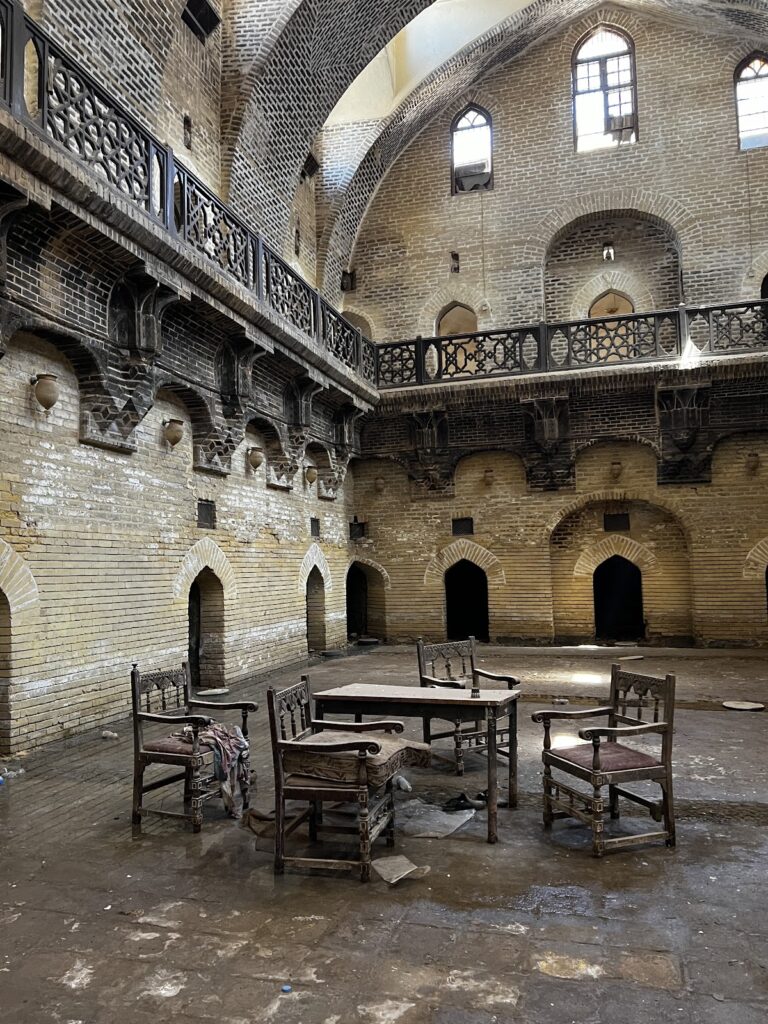
Al-Sarai Mosque occupies approximately 2,500 to 3,000 square metres and can accommodate 300 worshippers. It stands opposite Dar Diwani al-Hakumiyya, the government administrative house associated with al-Qushla. The surviving complex combines congregational prayer areas with a courtyard, a madrasa, service rooms, and spaces connected with the daily operation of the mosque.
Prayer spaces and domes
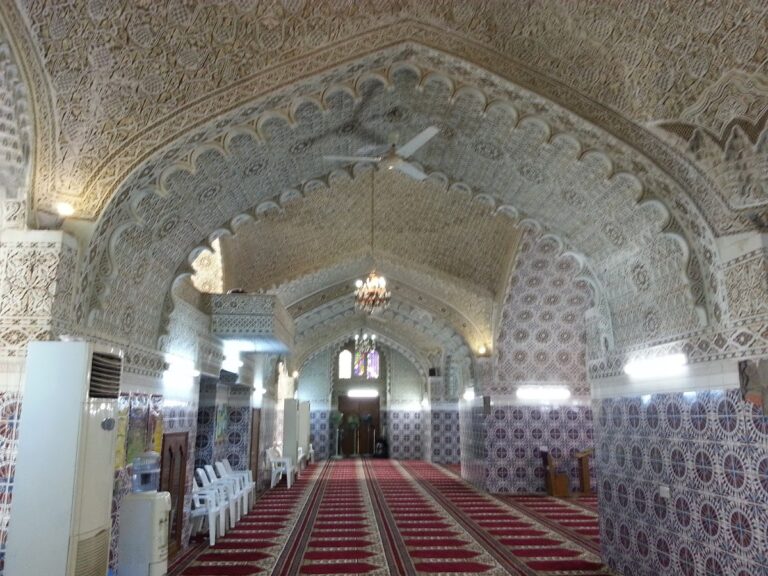
Winter prayer hall
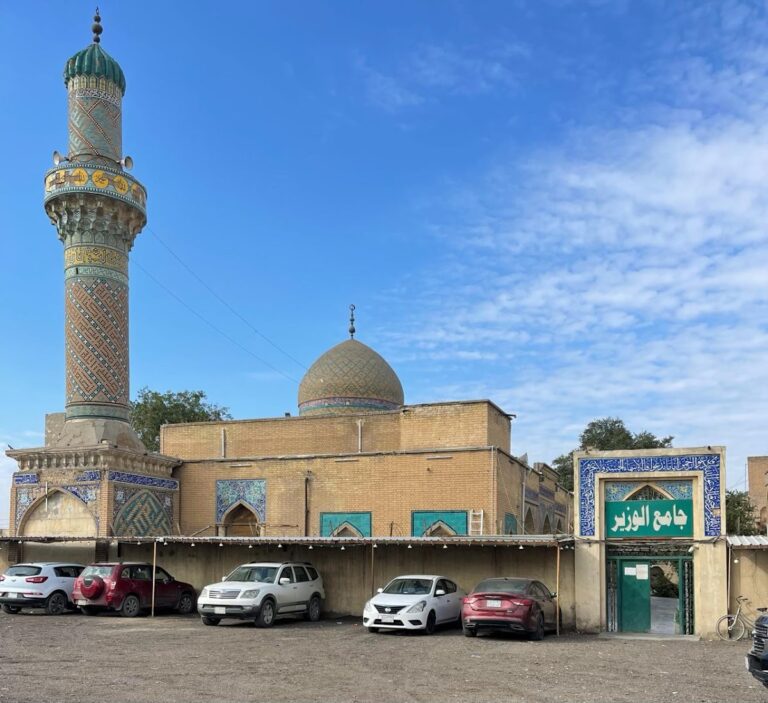
The broad winter prayer hall is roofed by ten slender domes made of plaster and brick. Four central pillars support the roof, and the pillars are described as plain, without decoration or inscriptions. Hassan Pasha’s expansion added ten domes, four central pillars, and a tall minaret faced with colored Kashani tiles, a glazed and often vividly colored ceramic finish used in Islamic architecture. The mosque has eleven domes overall.
Courtyard and summer prayer space
The courtyard contains a summer prayer space, while the mosque also includes a separate winter prayer space. These designated areas, known as prayer spaces or musalla, distinguish the arrangements used for worship in the warmer and colder seasons.
Institutional and service spaces
Madrasa and timekeeping room
The complex contains a madrasa with one teacher and a room used for timekeeping. The educational space formed part of the mosque’s religious function, while the timekeeping room supported the organization of daily prayers.
Servants’ rooms
Several rooms were provided for the mosque’s servants. Together with the madrasa and timekeeping room, these spaces show that the building accommodated functions beyond the congregational hall.
Gates and congregational access
Prayer-space entrances
Five gates lead into the congregational prayer space, where Friday prayers, Eid prayers, and the other obligatory prayers are held. Eid prayers are communal services marking the two major Islamic festivals.
King Ghazi I Gate
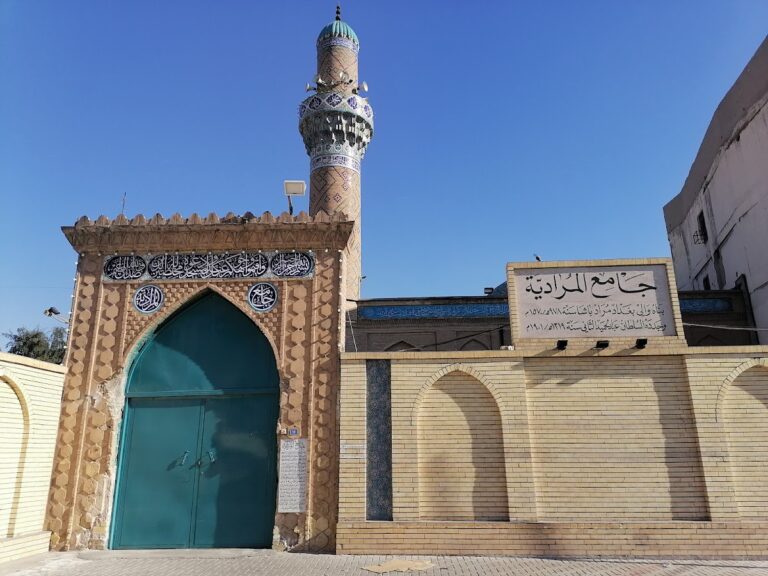
One entrance installed during the reconstruction carried out in the period of King Ghazi I was known as the King Ghazi I Gate. Another doorway led toward the alley behind the mosque before it was later closed. These alterations remain part of the building’s modern historical development.
Nearby sites