Ahmad ibn Hanbal Mosque: An Ottoman Mosque and Mausoleum in Baghdad
Site at a Glance
- Rating
- 4.1
- Popularity
- Very Low
- Country
- Iraq
- Primary era
- Early Modern
- Eras represented
- Early Modern
- Civilizations
- Ottoman
- Site type
- Religious
- Remains
- Mosque
On this page5 sections
History
The Ahmad ibn Hanbal Mosque is a Sunni mosque and mausoleum in Baghdad, Iraq, built during the Ottoman period and associated with Ahmad ibn Hanbal, the early Muslim scholar who founded the Hanbali school of Islamic jurisprudence. The building stands in the Rusafa district and is also known as the Arif Agha Mosque.
Ahmad ibn Hanbal and the Earlier Burial Place
Ahmad ibn Hanbal died in 855 at the age of 77 and was first buried in the Bab al-Harb cemetery, a historic Baghdad burial ground associated with Muslim scholars and ascetics. His grave was later described as unmarked, since its marker had disappeared over time. The nineteenth-century historian and scholar al-Bandaniji stated that the cemetery itself had not survived.
According to Ibn Battuta, repeated efforts were made to construct a mausoleum over Ahmad ibn Hanbal’s grave, but local opponents demolished the structures after they were built. Tradition later held that the scholar’s remains were transferred to the Arif Agha Mosque after the Bab al-Harb cemetery was flooded by the Tigris in 1937. Modern historians have questioned this account because no evidence of the transfer has been found.
The Ottoman Mosque and Later History
The present mosque probably had been completed before 1937. Its mausoleum was established in one of the building’s rooms and reconstructed in 1998. The building later became known as the Imam Ahmad ibn Hanbal Mosque and continued as an active place of prayer and pilgrimage.
The mosque deteriorated over time, and its last renovation before its current condition took place in 2010. Local residents declined to restore the domed mausoleum because of a Hanbali prohibition on domed mausoleums. Visits also declined further during the COVID-19 pandemic in 2021.
Remains
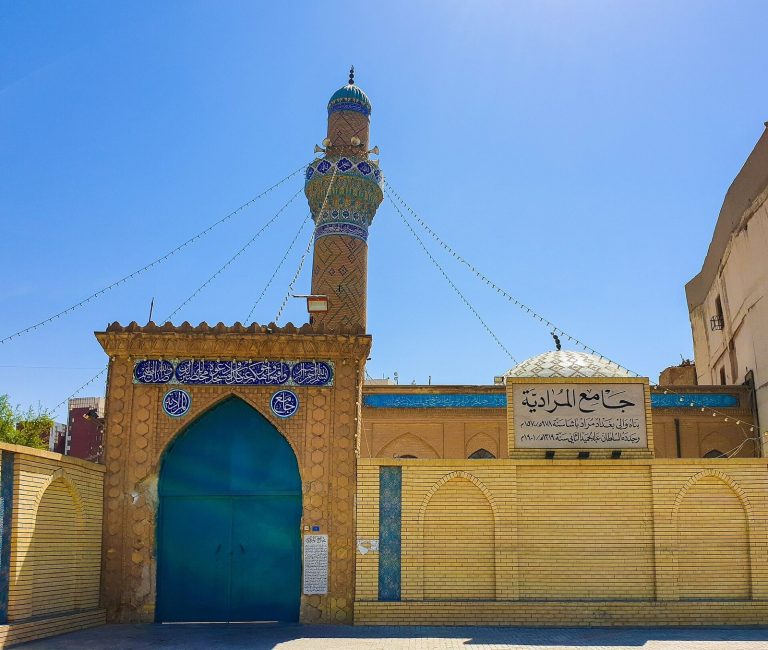
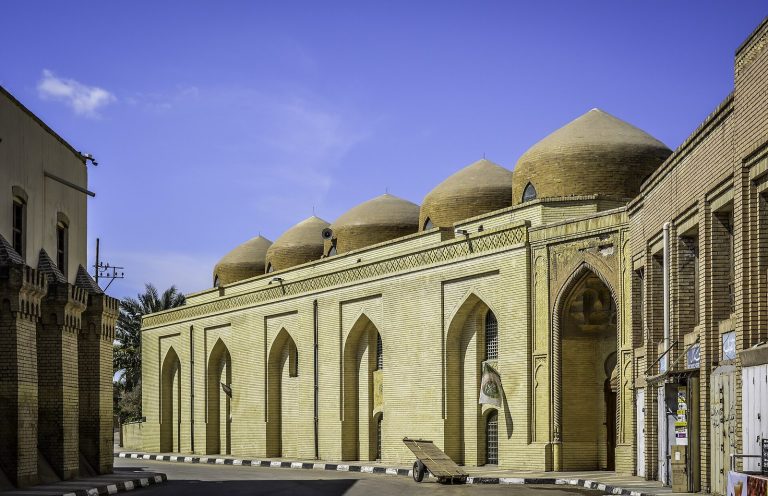
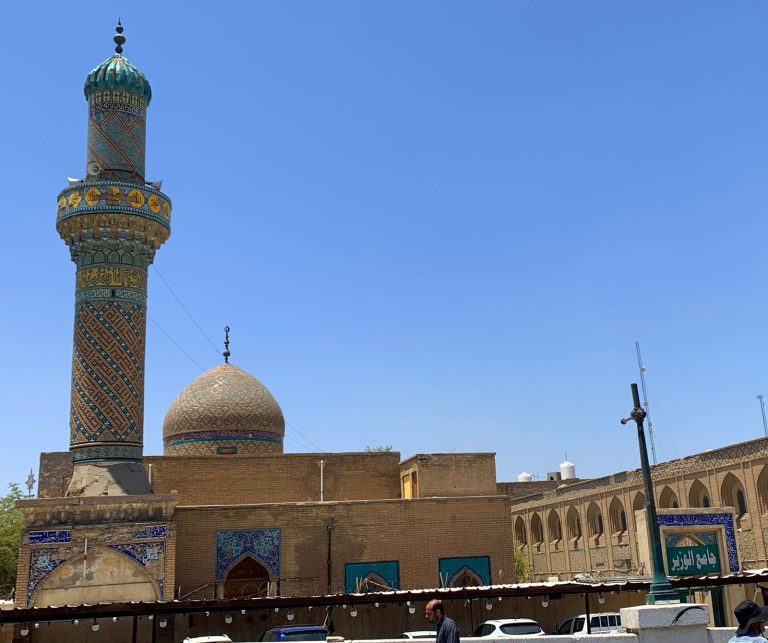
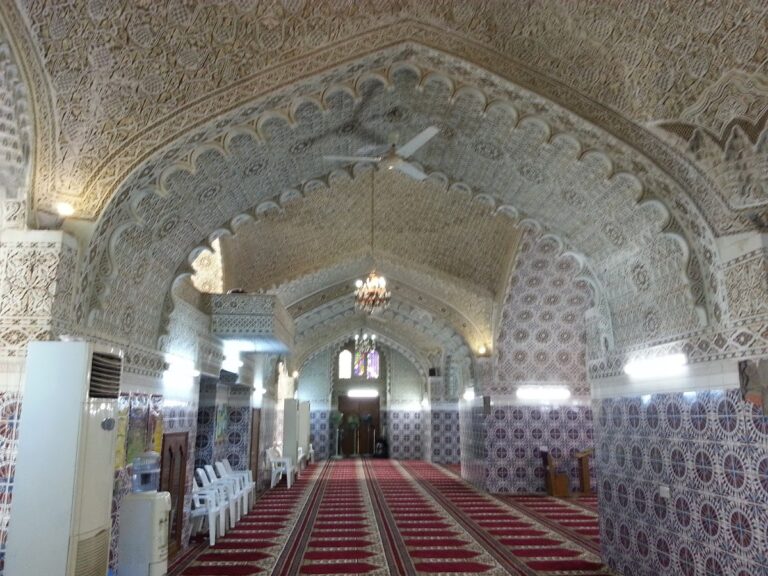
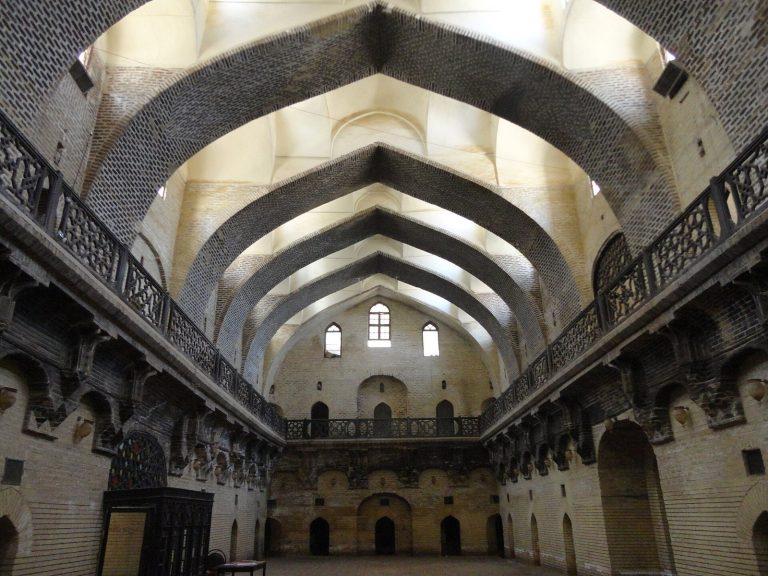
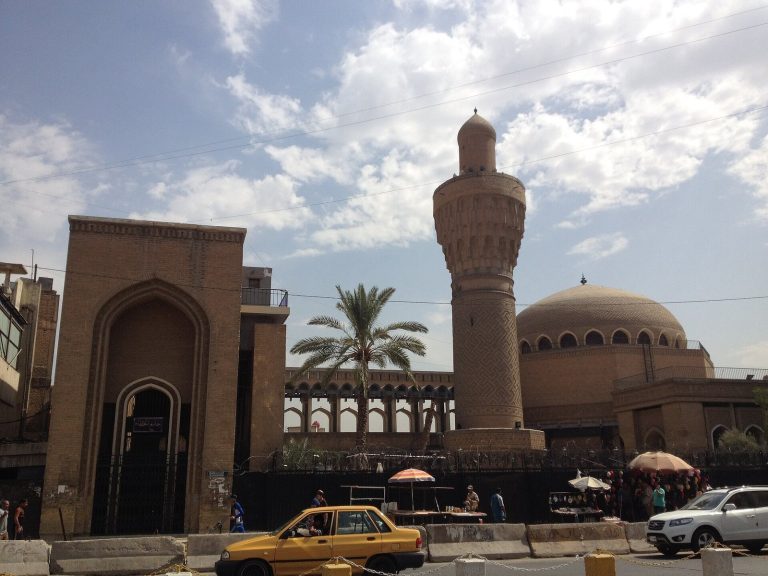
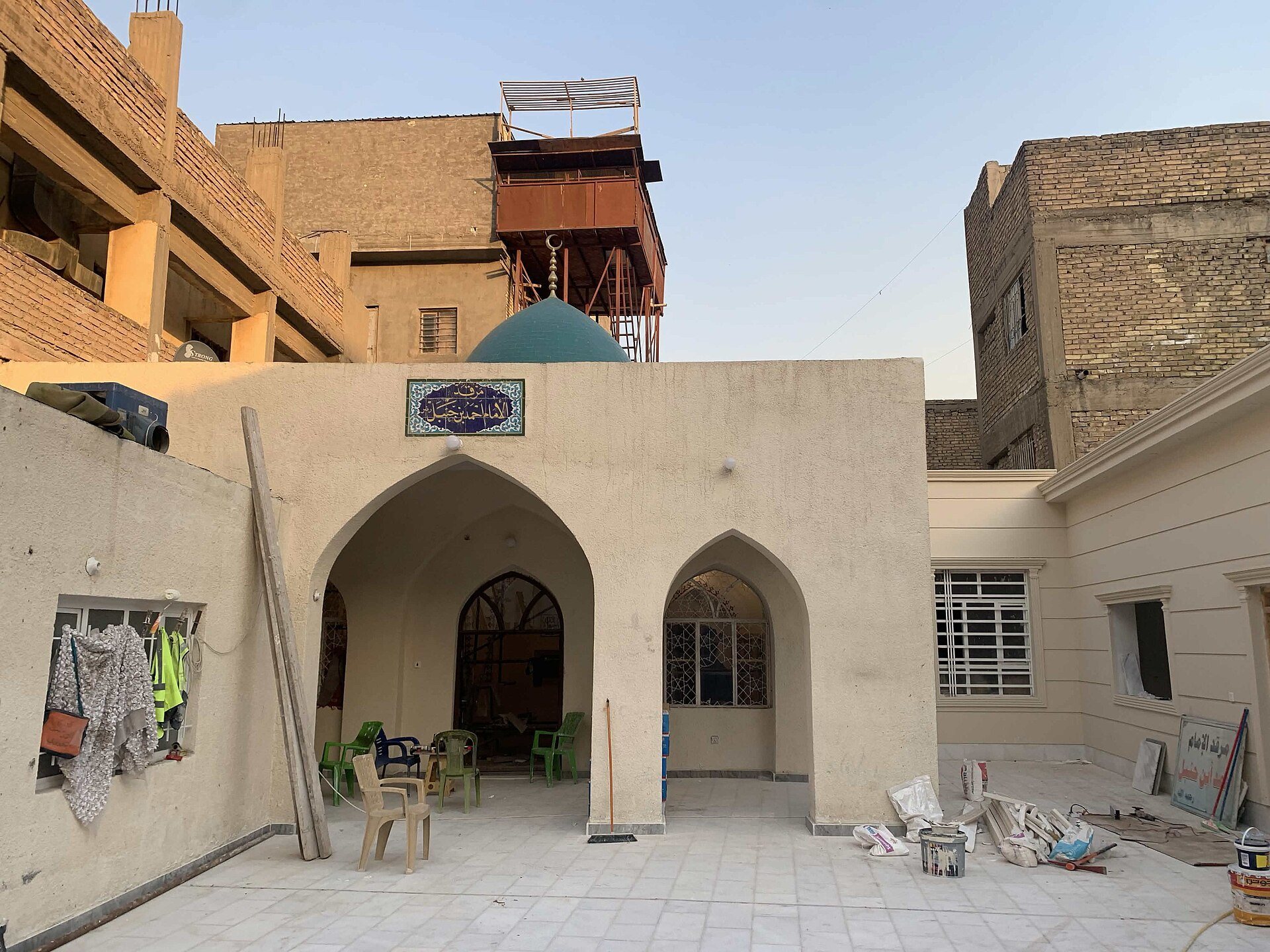
The mosque is a small Ottoman or Iraqi-Ottoman building of approximately 300 square metres. Constructed of brick, it consists of a prayer hall, a small courtyard, and a mausoleum room, with interior space for about 30 worshippers or visitors. A single small dome and one minaret complete the principal exterior elements, while the notably narrow entrance provides access to the building.
Prayer Hall and Mausoleum
The mausoleum room lies behind the qibla wall, the wall oriented toward Mecca and faced during Islamic prayer, in the principal interior room. Ahmad ibn Hanbal’s grave is marked by a marble tombstone covered with layers of cloth and silk donated over time by pilgrims. The room forms the physical focus of the mosque’s association with the scholar, while the prayer hall and courtyard make up the remainder of the compact building.