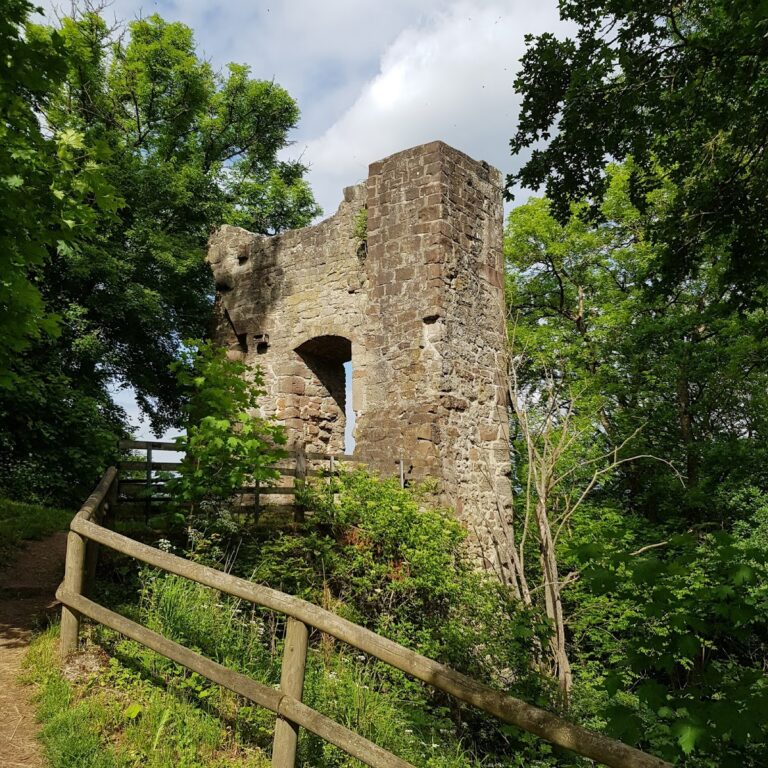
Hasungen Abbey: A Medieval Benedictine Monastery in Germany


Site at a Glance
- Rating
- 4.7
- Popularity
- Very Low
- Country
- Germany
- Primary era
- Medieval
- External website
- Open
- Eras represented
- Medieval
- Civilizations
- Holy Roman Empire
- Site type
- Religious
- Remains
- Monastery
On this page11 sections
History
Hasungen Abbey was a Benedictine monastery in Germany, founded on the Burghasunger Berg near present-day Zierenberg in Hesse in 1074 by Siegfried I, Archbishop of Mainz. It began as a collegiate institution, a religious foundation whose clergy served a church collectively without necessarily belonging to a monastic order, and became a Benedictine monastery in 1080 or 1081. The community followed the Hirsau Observance, a reform movement that promoted stricter discipline and greater independence from secular control, and also embraced the wider Cluniac Reform. The abbey grew around an older religious tradition connected with the preacher Heimerad and became a medieval pilgrimage center.
Heimerad and the early religious foundation
Heimerad was a wandering preacher born around 970 in Meßkirch. After travelling through Memleben, Kirchberg, and Kirchditmold, he settled on the Hasunger Berg. There he cared for a small chapel dedicated to Saint Michael and became known beyond the region for reputed miracles. Heimerad died on 28 June 1019, and in 1021 Archbishop Aribo of Mainz commissioned a chapel over his grave. The grave attracted pilgrims and formed the spiritual focus of the later abbey. Heimerad and Siegfried I were both buried at Hasungen.
Monastic reform and early leadership
Lambert of Hersfeld became the first abbot. A historian and chronicler summoned from Hirsau, he led the monastery until his death in 1081, when Gieselbert succeeded him. In 1085, Archbishop Wezilo forced Gieselbert to resign and installed an abbot loyal to the emperor together with a monastic community from Hesse. This change placed the abbey within the political and ecclesiastical tensions that shaped control of religious institutions in the medieval empire.
Property, jurisdiction, and political change
In 1113, Werner IV, count of the Hessengau, consolidated the judicial rights of Hasungen, Breitenau, and Kaufungen, as well as those of the St. Peter’s Foundation in Fritzlar. A bailiff, or Vogt, was a secular official who protected a religious institution and exercised specified legal or administrative rights on its behalf. Hasungen later acquired property in many surrounding settlements, but these holdings led to disputes with the town of Zierenberg over property claims.
After Werner IV died, his possessions and rights in the Hessengau, a medieval district in central Germany, passed first to the Giso family and later to the Ludowingers. The death of Henry Raspe in 1247 triggered a dispute over the succession to Thuringia. In 1263, the Peace of Langsdorf assigned the disputed Mainz fief connected with the abbey’s bailiwick to the Hessian landgrave. A landgrave was a high-ranking territorial ruler in the Holy Roman Empire, broadly comparable to a prince.
Destruction, rebuilding, and late medieval reform
Citizens of Zierenberg burned the monastery in 1330, but its buildings had been rebuilt by 1336. During the fourteenth century, Hasungen was responsible for the town school at Wolfhagen. One of its pupils was Tilemann Elhen of Wolfhagen, who later wrote the Limburg Chronicle.
The monastery underwent another reform in 1494 and joined the Bursfeld Congregation in 1505. This federation of Benedictine monasteries sought to restore discipline and common observance. In 1525, reports of unrest during the German Peasants’ War, a series of rural and urban uprisings across parts of the German lands, reached Hasungen from nearby villages.
Dissolution and later destruction
Landgrave Philipp I introduced the Reformation in Hesse, and the abbey was dissolved in 1527. The monks received compensation, but the monastic buildings subsequently declined and suffered severe damage during the Thirty Years’ War. Landgrave Moritz of Hesse-Kassel later considered turning the surviving buildings into a castle and personally sketched a reconstruction plan, although the proposal was abandoned.
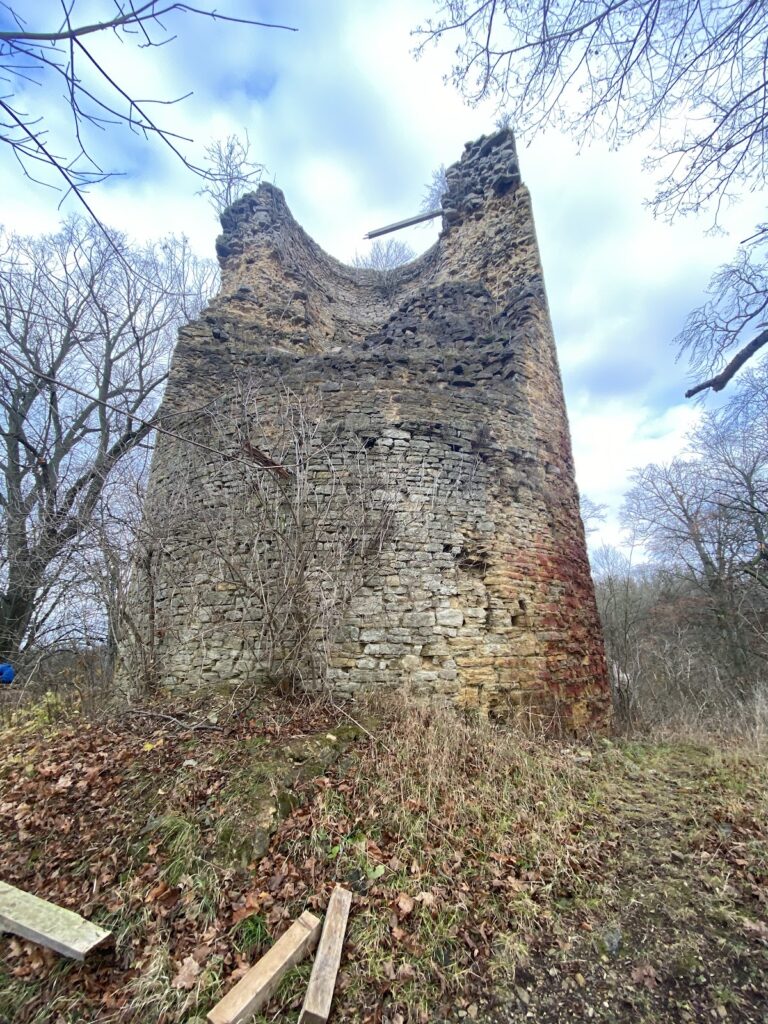
The abbey church was demolished between 1795 and 1800 during the construction of a new church. The remaining bell tower was split by lightning on 1 July 1876, partially collapsed in 1896, and finally fell in 1948. In 1839, a dedicatory inscription and a red-sandstone Gothic fragment from a tombstone dated 1320 were found on the Hasunger Berg. Both pieces were reused in the new Neoclassical church at Burghasungen.
Remains
Former abbey site
The former abbey occupied the plateau of the Burghasunger Berg, a basalt hill about 480 metres above sea level in the Habichtswald Nature Park, directly west of Burghasungen. The hill was formerly known as the Hasunger Berg. The early religious complex included a small Saint Michael’s Chapel and a hermitage associated with Heimerad. A later chapel stood over his grave from 1021, while the medieval monastery church and the other monastic buildings developed around this earlier religious setting.
Surviving architectural evidence
Only limited physical remains survive at the former monastery. Several piles of stones, fragments of the bell tower, and two commemorative plaques mark the site of the former complex. The tower survived separately after the abbey church was removed, but its remaining structure was progressively damaged before its final collapse in 1948.
Tombstone fragment and reused material
The tombstone fragment found in 1839 is made of red sandstone and has a Gothic form. Dated to 1320, it was taken from the former abbey area and incorporated into the new church at Burghasungen. This reuse makes the fragment an example of spolia, architectural or sculptural material transferred from an earlier building into a later one.
Hasungen Abbey Museum
Archaeological material from the former monastery is displayed in the Hasungen Abbey Museum in Burghasungen. Until 2012, the museum occupied the basement of the village community hall and had formerly operated as an outpost of the Wolfhager Land Regional Museum. A new building was constructed between 2009 and 2012. Its sacred-futuristic design resembles a church nave and provides a purpose-built setting for archaeological finds from the former abbey.