St. Petri (Fehmarn): A Medieval Parish Church in Landkirchen


Site at a Glance
- Rating
- 4.6
- Popularity
- Very Low
- Country
- Germany
- Primary era
- Medieval
- External website
- Open
- Eras represented
- Medieval, Early Modern, Modern
- Civilizations
- Danish
- Site type
- Religious
- Remains
- Church
On this page18 sections
History
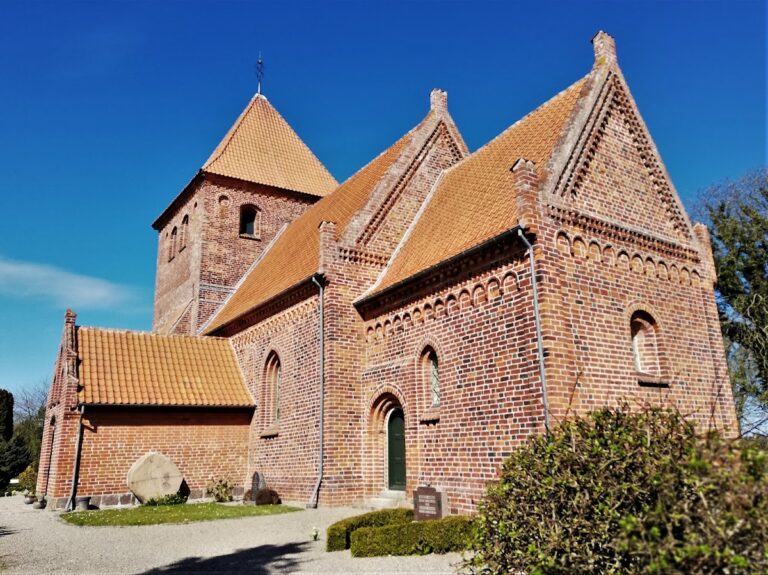
St. Petri (Fehmarn) is a medieval church in Germany, located in Landkirchen on the island of Fehmarn. Probably built around 1230 as a three-aisled brick church, it became the ecclesiastical center of the Middle Parish and a secular focal point at the meeting of Fehmarn’s north-south and east-west roads. Together with St. Nikolai in Burg, it is regarded as one of the island’s oldest churches.
Christian beginnings and the medieval parish
Before St. Petri and St. Nikolai were built, the only known Christian building on Fehmarn was the Peter-and-Paul Chapel in the Puttgarden area, first mentioned in 1198. The construction of St. Petri established a larger church for the Middle Parish and gave the surrounding settlement a central religious and civic role.
The church’s original choir was narrower than the nave. It was later widened to the full breadth of the nave, changing the proportions of the eastern part of the building while preserving the church’s medieval foundation.
The church as a civic repository
St. Petri also safeguarded the legal memory of Fehmarn. Its Landesblock, a communal chest used to secure important documents and legal valuables under shared control, held the territory’s important documents and seals until 1867. Three treasurers, representing the Western, Eastern, and Middle parishes, each possessed one of its three keys. The chest could therefore be opened only through their joint action.
Artistic and devotional changes
The church’s furnishings changed substantially during the Baroque period. Jacob Mackeprang donated the altar in 1715, Catharina Mackeprang gave the baptismal font in 1735, and the farmer Drews Wilder donated the pulpit in 1727. The altar was produced in a Lübeck workshop and replaced an earlier retable made around 1380 in the circle of Bertram of Minden.
A Gothic Marian chandelier from 1390 is the oldest artwork in the church. Local tradition connects its imagery of blood tears with Eric of Pomerania, a fifteenth-century Danish king and ruler of the wider Kalmar Union. According to the legend, Eric saw the Madonna weep during his conquest of Fehmarn and promised to end his violent actions.
The fifteenth-century Altar of the Holy Cross was probably associated with the Guild of the Holy Body. Its paintings relate to the discovery and exaltation of the True Cross. The work was painted over several times and had become almost unrecognizable before being completely overpainted in 1880. The present retable is therefore a reconstruction based on historical remains. Wall frescoes beside the main altar were uncovered in 1973, with parts dating from the fifteenth century. Their subject matter resembles that of the Holy Cross Retable, although their connection has not been confirmed. A niche interrupting the frescoes was made at the beginning of the sixteenth century.
Collections, memorials, and maritime offerings
A library chest from 1660 preserves German, English, Danish, and Dutch books from the seventeenth century. Provost Conrad Friedrich Stresow of Burg donated the collection to the church in his will before his death in 1788. The church also formerly housed the Landkirchen Retable, the Late Gothic work made around 1380 in the circle of Bertram of Minden. The congregation sold it in 1898 to the Thaulow Museum in Kiel, and since 1950 it has been displayed at the State Museum of Art and Cultural History in Gottorf Castle, Schleswig.
Six enclosed seating boxes were installed during the eighteenth century for wealthy local farmers, who commissioned them in the manner of manorial proprietors. Seven epitaphs commemorate members of the local community, including the Witte Epitaph of 1713, the Mackeprang family epitaph of 1696, and the Wolder Epitaph of 1650.
Two ship models preserve the church’s connection with Fehmarn’s maritime culture. The older model, made in 1617, is among the oldest datable ship models in Germany. The second represents the unarmed merchant ship Einigkeit and was made in 1841 by sailors from Lemkenhafen. In 1842, shortly before Candlemas on 2 February, sailors carried the 247-centimeter model in a ceremonial procession through the village to the church. The procession included the alderman, village jurors, shipmasters, sailors, and farmers.
The detached wooden bell tower was built in 1638 and completely restored in 2016. Its separate position remains one of the church’s defining historical features.
Remains
St. Petri is a three-aisled brick church with a small roof turret. A wooden bell tower stands several meters from the church rather than being incorporated into its main structure. The former narrow choir was enlarged to the width of the nave, giving the eastern end its present relationship to the body of the church.
Medieval and civic features
The Landesblock
The Landesblock is a thirteenth-century chest cut from a single oak tree. Iron bands reinforce its body, while three locks correspond to the shared control once exercised by the treasurers of Fehmarn’s three parishes. Its form and locking system express the chest’s legal and communal purpose.
The Marian chandelier
The Marian chandelier, also called a Marian crown, presents the Madonna and Child on both sides. Rays surround the paired image, creating a two-faced devotional object suspended within the church. Its Gothic date makes it an early surviving work among St. Petri’s furnishings.
The Holy Cross Retable and sacrament door
The reconstructed Altar of the Holy Cross stands in the choir to the left of the main altar. When closed, it measures 90 by 90 centimeters and contains eight paintings. The inner faces show Empress Helena discovering the True Cross. Helena was the mother of Constantine the Great and became, in Christian tradition, the discoverer of the Cross. The exterior faces depict its exaltation. The paintings were originally made in different sizes for another altar, and their associated inscriptions were probably reduced before the present reconstruction.
The outer side of the sacrament door, which closes a niche for Eucharistic vessels, carries a late-fourteenth-century painting of Christ on the Cross. Its elaborate treatment distinguishes it from comparable representations and probably places it in the same period as the paintings associated with the Holy Cross Retable.
Baroque furnishings
The pulpit
The 1727 pulpit has a staircase closed by a door. Fully sculpted figures of Virtues and putti decorate the pulpit basket and its panels. Vertical garlands of fruit and flowers frame these figures. Putti and angels hold inscription cartouches on the sounding board, whose gold, silver, and black coloring contributes to its ornate appearance.
The baptismal font
The 1735 baptismal font is made of stone in the form of a chalice. A wooden cover is topped by an angel holding a written tablet. Around the font stands an octagonal, richly carved enclosure. Its upper section has ornamental bandwork, while its lower section contains biblical scenes.
The main altarpiece
The 1715 Baroque altarpiece includes a predella, the lower section of a decorated altarpiece, with a painting of the Last Supper. A crucifix stands before it, and the crucifix dates from the late fourteenth century. Above, an aedicule, a small shrine-like framework organized with columns and a gable, contains a painting of the Crucified Christ with Mary Magdalene and the landscape of Golgotha behind them. G. F. Brusewindt created the painting. Sculpted Virtues flank the columns and stand on the entablature, which is crowned by a Salvator figure accompanied by putti.
Memorials and local identity
Epitaphs
The Witte Epitaph of 1713 places a painting of the Agony in the Garden within an acanthus frame populated by musical putti. An inscribed oval cartouche lies below, and a portrait of the donor appears in a gold-framed medallion. The 1696 Mackeprang family epitaph depicts the Entombment within an acanthus-volute frame, with Virtues in the side pilasters and angels incorporated into the design. The 1650 Wolder Epitaph presents the Resurrection in a High Baroque structure with elaborate scrollwork, a broken gable, and putti. The donor’s portrait occupies the small upper section.
Ship models and prayer stools
The 1617 ship model is more than one meter long, with its year carved on the stern. Its hull was carved from a hollowed piece of limewood and measures 111.5 centimeters in length; from the keel to the nock of the mainmast it reaches 115 centimeters. Painted and ornamented decoration covers the hull. After restoration in 1973, it was placed in a glass case for conservation.
The model of Einigkeit is a 247-centimeter wooden representation of a sail-less, unarmed merchant ship. It is displayed in the church alongside the older model. At the entrance, a special stand holds sixty-six wooden prayer stools from the seventeenth and eighteenth centuries. Their inscriptions, decorative marks, and occasional house marks connect them with local families. Fehmarn house marks were distinctive symbols used on boundary stones, buildings, church pews, and other property. More than 200 examples are known, including forms resembling Germanic runes and geometric figures.
Stained glass
Stained-glass windows installed in the southern aisle in 1974 by Klaus Bönnighausen depict the miraculous catch of fish associated with Peter and the Descent of the Holy Spirit. They add a modern layer of imagery to the church’s collection of medieval and early modern religious works.