Zwingenberg Castle: A Medieval Hilltop Fortress in Germany
Site at a Glance
- Rating
- 4.6
- Popularity
- Very Low
- Country
- Germany
- Primary era
- Medieval
- External website
- Open
- Eras represented
- Medieval
- Civilizations
- Holy Roman Empire
- Site type
- Military
- Remains
- Castle
On this page9 sections
History
Medieval origins and destruction
Zwingenberg Castle is a medieval castle in Germany, built probably in the thirteenth century on a hill above the Neckar. Its construction is associated with Wilhelm von Wimpfen, a ministerial of the Staufer dynasty, the medieval ruling house linked with emperors such as Frederick Barbarossa and Frederick II. Wilhelm was associated with the Lords of Kochendorf. His nephew used the name von Zwingenberg in 1257, while the castle itself first appears in written evidence in 1326.
The Zwingenbergs were regarded as robber knights and were expelled from the castle in 1363 by Count Palatine Ruprecht I, a Wittelsbach ruler of the Electoral Palatinate. The castle was then demolished on the emperor’s orders and in his name.
Rebuilding and changing lordship
In 1403, the Lords of Hirschhorn received the former Zwingenberg possessions as a fief and rebuilt the castle. After that family died out in 1632, ownership became the subject of an extensive legal dispute. Control passed among the Electorate of Mainz, a major ecclesiastical territory of the Holy Roman Empire, the Electorate of the Palatinate, and the later Grand Duchy of Baden.
The castle in the twentieth century
On 11 November 1918, during the November Revolution, Friedrich II, the last Grand Duke of Baden, fled from Karlsruhe to Zwingenberg Castle after armed men entered his palace. Anton Geiss, chairman of the revolutionary government, and the former state minister Heinrich von und zu Bodman followed him there. At the castle, Friedrich provisionally renounced his governmental authority pending a decision by a national assembly.
The castle is privately owned by Ludwig, Prince of Baden, born in 1937 and a descendant of Grand Duke Karl Friedrich of Baden. Since 1983, open-air Schlossfestspiele have taken place each August. The performances center on opera, particularly Der Freischütz, because the nearby Wolfschlucht is traditionally regarded as having inspired its composer, Carl Maria von Weber. Operettas, other operas, and musicals are also presented.
Remains
Hilltop setting and layout
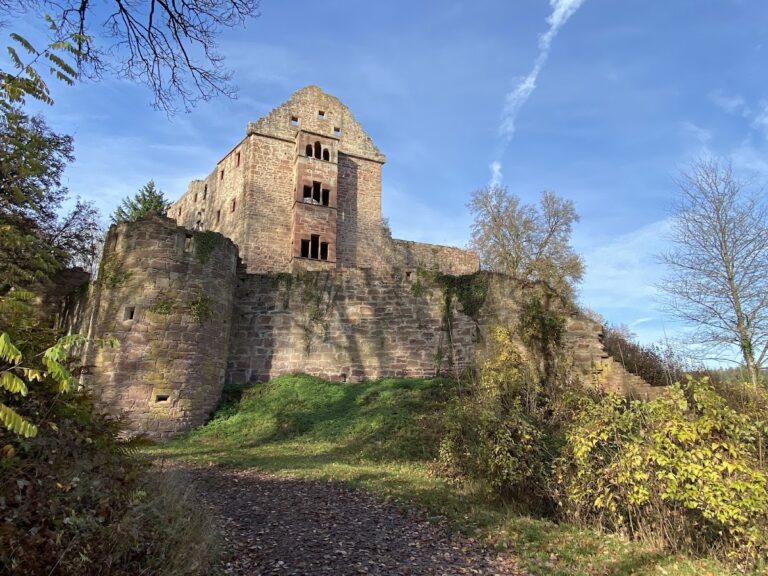
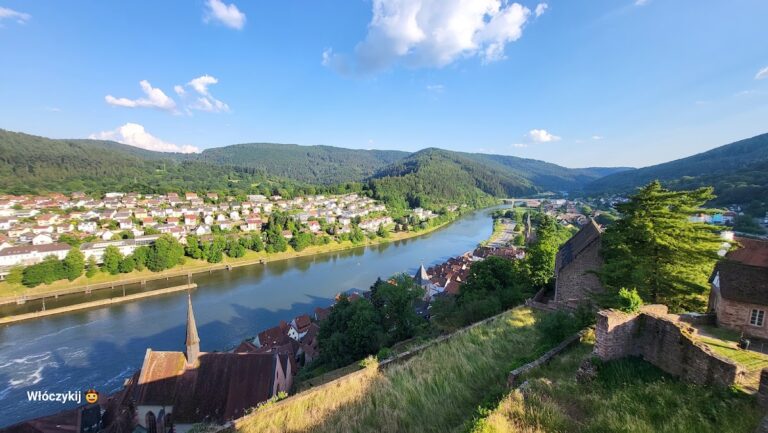
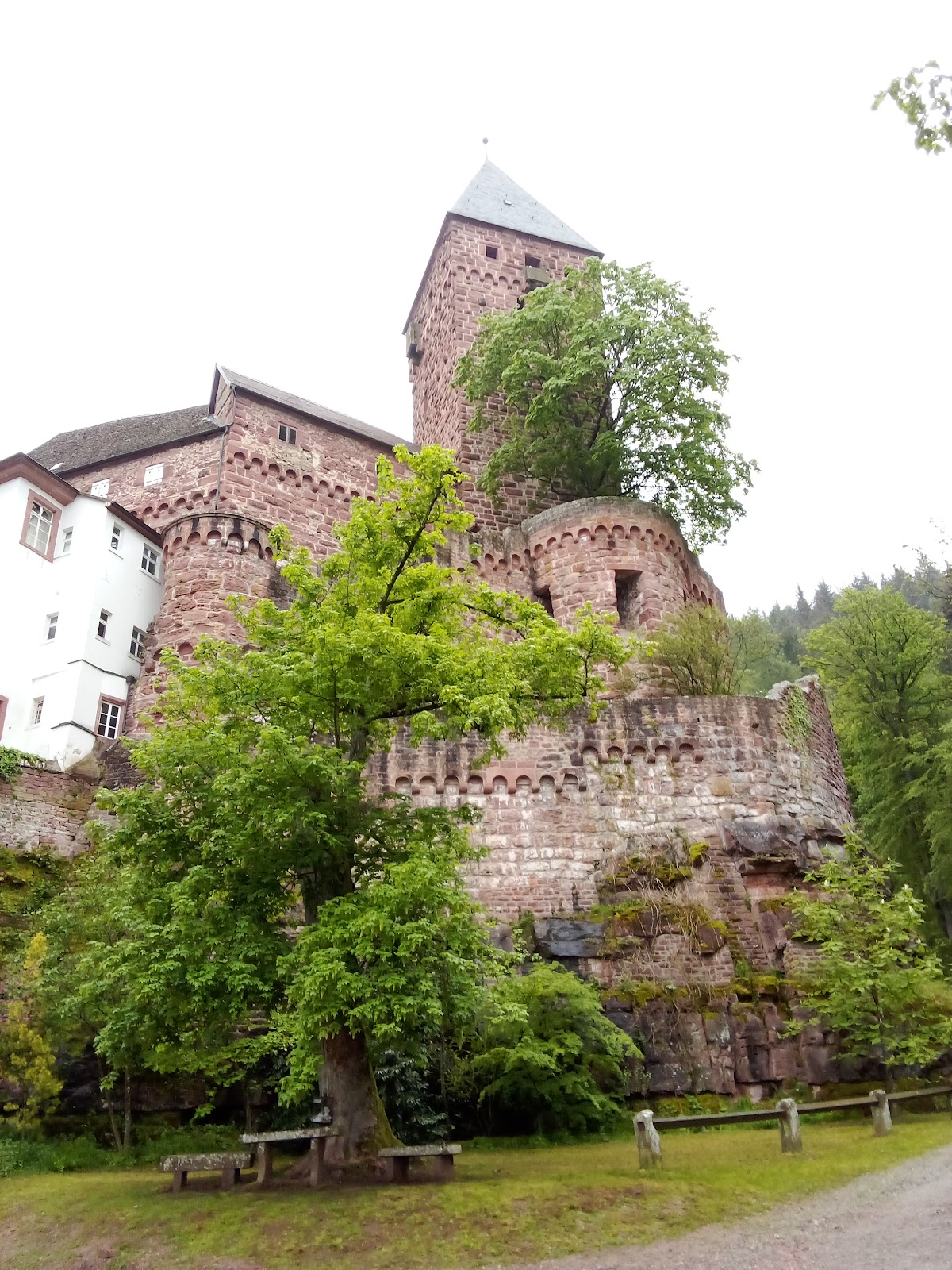
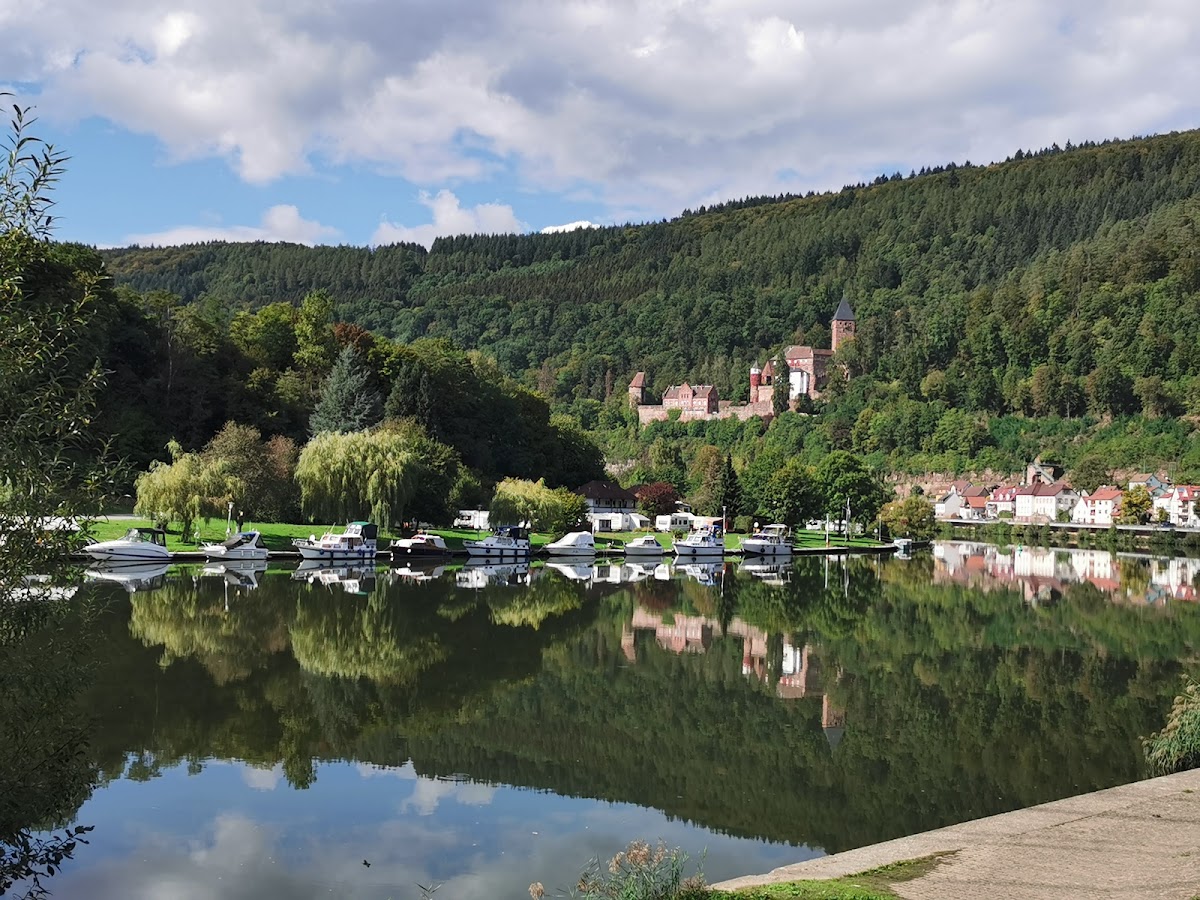
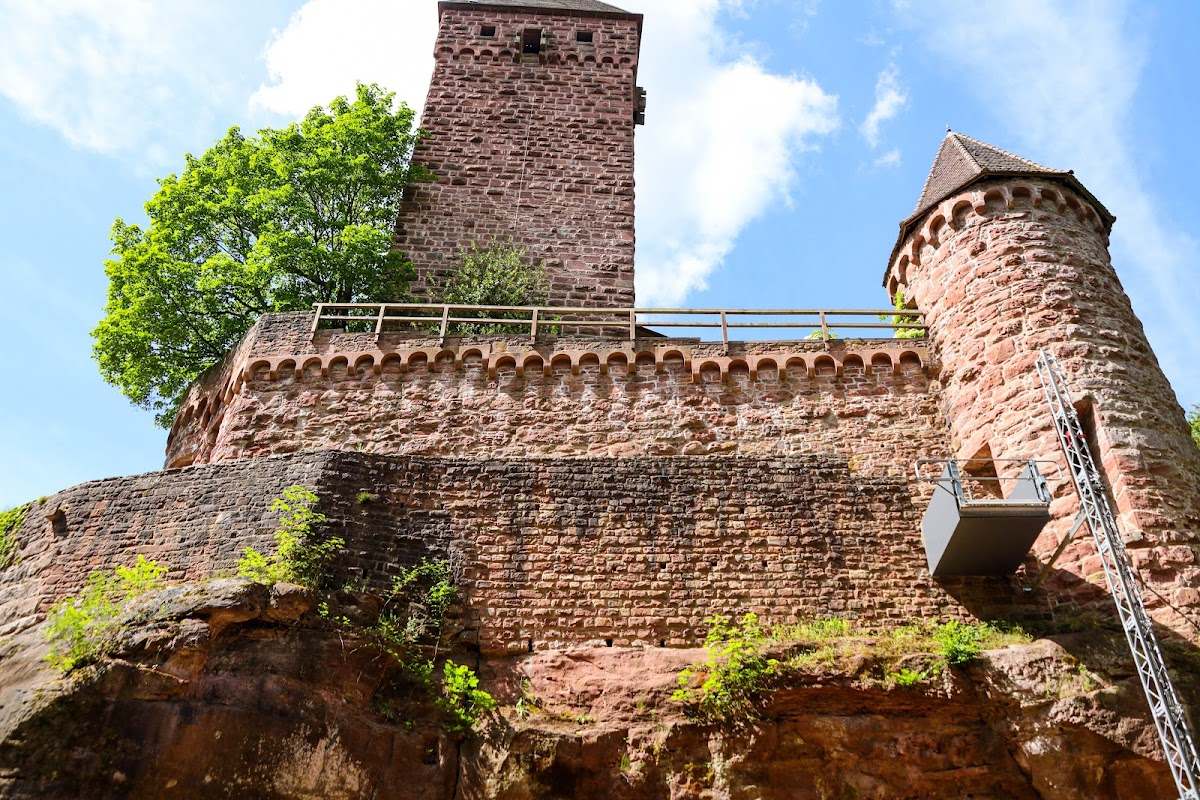
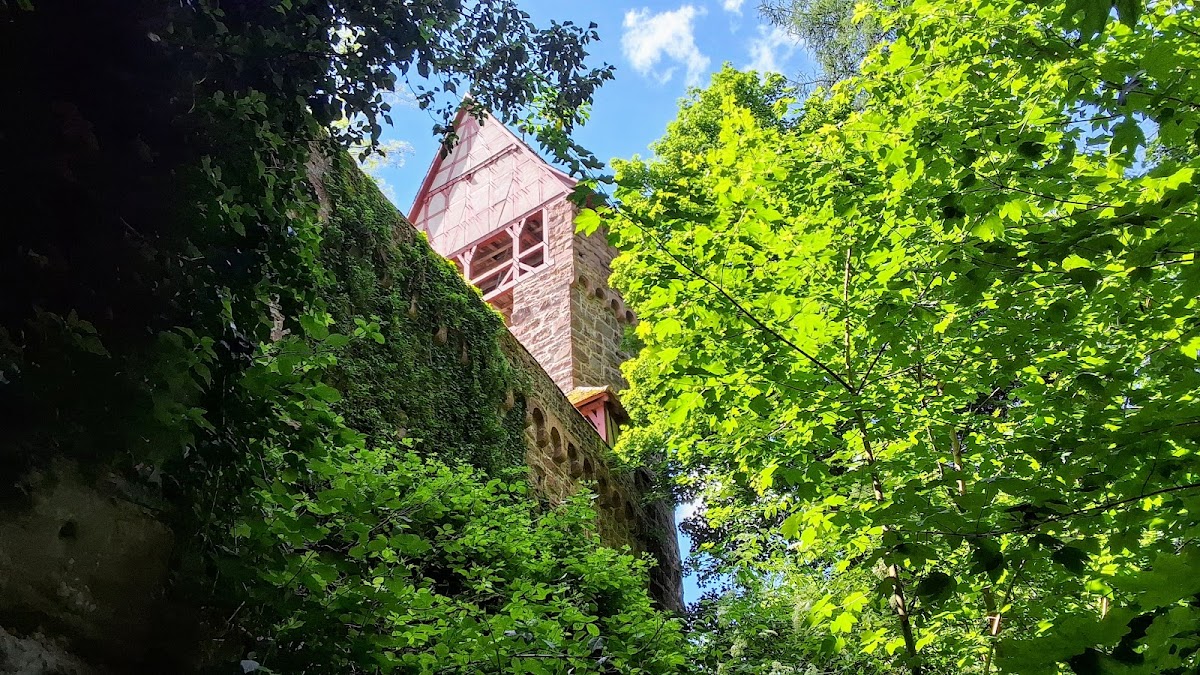
Zwingenberg Castle is a spur castle, a fortified site built on a projecting ridge and protected partly by steep slopes. It stands on the right bank of the Neckar, approximately 50 metres above the river, where the river passes through the Odenwald. The castle occupies the spur at the meeting point of the steep Wolfschlucht, or Wolf’s Gorge, and the Neckar valley. The ravine protects the site on the east. The castle lies at approximately 469 metres above sea level and is largely preserved.
Courtyard and related remains
Castle courtyard
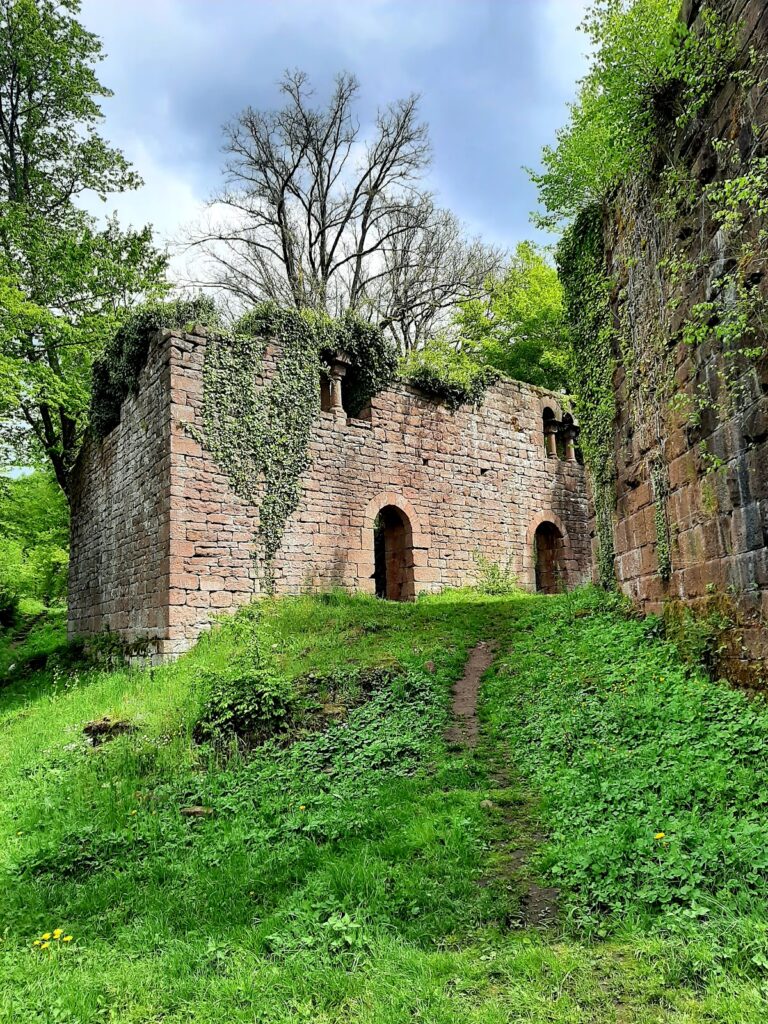
The large castle courtyard forms a central surviving space and serves as the venue for the Schlossfestspiele. It is described as having good acoustics and can accommodate approximately 800 people.
Fürstenstein Castle
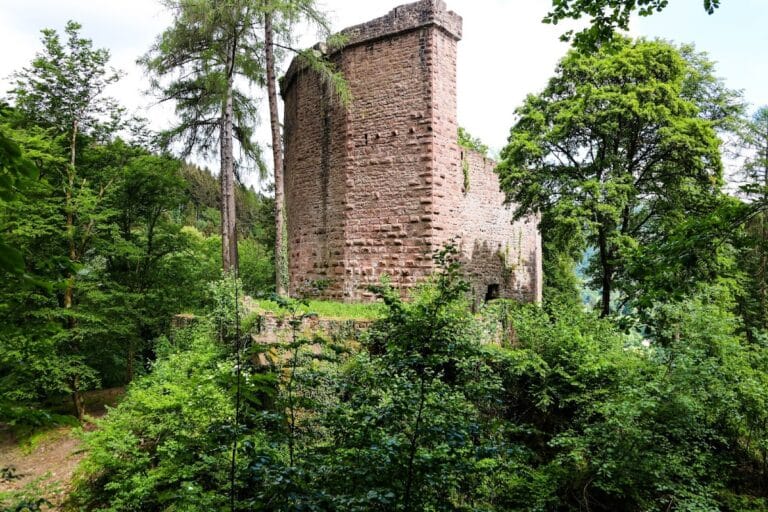
Remains of Fürstenstein Castle are located above Zwingenberg Castle, forming a separate archaeological feature within the immediate historic landscape.