Luknja Castle: A Medieval Castle in Slovenia
Site at a Glance
- Rating
- 4.2
- Popularity
- Very Low
- Country
- Slovenia
- Primary era
- Medieval
- Eras represented
- Medieval
- Civilizations
- Holy Roman Empire
- Site type
- Military
- Remains
- Castle
On this page6 sections
History
Luknja Castle is a thirteenth-century castle in Slovenia, near Novo Mesto, probably built by the Predjama knights, also known as the Luegger family. It first appears in written records in 1351 under the name “das Luegg.” The associated Luknja lordship, a territorial estate governed and administered by a lord or noble family, included the castle and its surrounding property.
Early Lords and Habsburg Control
After the death of Erasmus of Predjama in 1484, the castle passed to the Habsburgs, a major European ruling dynasty whose lands included parts of the Slovenian region. The Habsburgs held it until 1494, when Emperor Maximilian I granted the Luknja lordship to Frederick von Gallenberg.
Members of the von Gallenberg family remained owners during the sixteenth century. In 1545, the estate was inherited by the Gall von Gallenstein family through Bernardin Gall von Gallenstein. The succession later included Bernardin’s nephew Christoph, Christoph’s widow Helena, née von Wildenstein, and their son Franz. In 1582, Helena transferred the lordship to Franz.
Seventeenth-Century Succession
Before his death in 1614, Franz transferred the estate to other members of the family. The succession included Danijel, son of Janez Adam Gall of Šentjurska gora, and Danijel’s son Jurij Andrej. From 1618 to 1624, Vid Jakob von Egkh held the castle as a tenant.
Inheritance transferred the castle and lordship to the Counts Barbo Wachsenstein in 1624. They retained them until 1813. Janez Jurij Maksimilijan, Count Barbo of Moravče, inherited the lordship from his mother, Katarina, daughter of Maksimilijan Gall of Rožek. He gradually sold it to Franc Gašper Baron Brenner in 1646, 1647, and 1649.
Brenner later transferred the lordship to his daughter Kristina Marija, who was married to Maksimilijan Valerij Barbo of Rakovnik, the brother of Janez Jurij Maksimilijan. By the end of the seventeenth century, the castle and lordship belonged to the Herberstein family. In 1711, Marija Felicita, Countess Herberstein, sold them to Sigfrid Baltazar, Count Gallenberg.
Return to the Barbo Family and Later Owners
Count Jožef Viljem Barbo, the grandson of Maksimilijan Valerij, bought the Luknja estate back in 1738. He left it to his son Evgen, who inherited it in 1786. Evgen had no children and named Vincenc Baron Schweiger von Lerchenfeld as his heir. The will was executed in 1813.
Baron Schweiger sold the estate to Anton von Fichtenau in 1827. Anton’s son Avgust succeeded him in 1854 but died without descendants in 1860, after which the estate passed to Ida von Langer, née Fichtenau. Franc Anton Langer von Podgorski bought the castle in 1876 and sold it to Alojz Schiebl of Silesia in 1883.
In 1896, Schiebl’s wife Amalija exchanged the estate with Adolf, Count Thurn-Valsassina. The Thurn-Valsassina family owned it from 1896 to 1904. In December 1912, the castle was purchased by the People’s Loan Association in Ljubljana and subsequently by the Novo Mesto merchant Franc Seidl, who owned it until the Second World War.
Decline and Protection
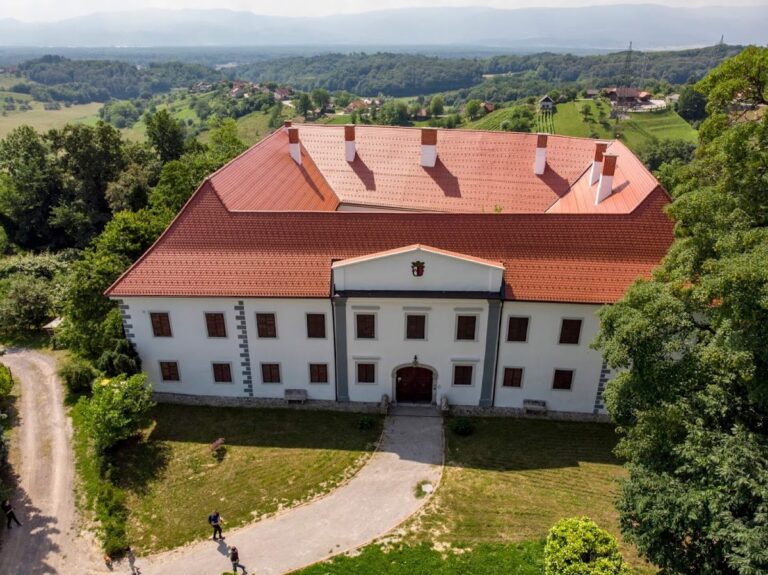
After the First World War, the owner removed the roof because of the roof tax. The roofless castle then deteriorated. The ruins were proclaimed a monument of local importance in 1992 under the official designation “Prečna – Ruins of Luknja Castle.”
Remains
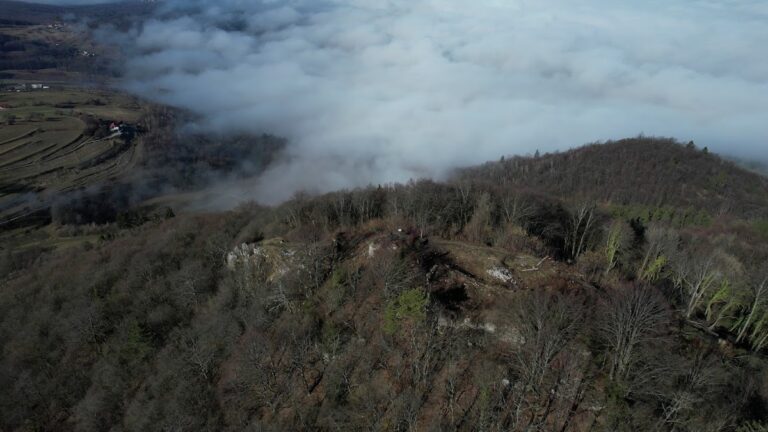
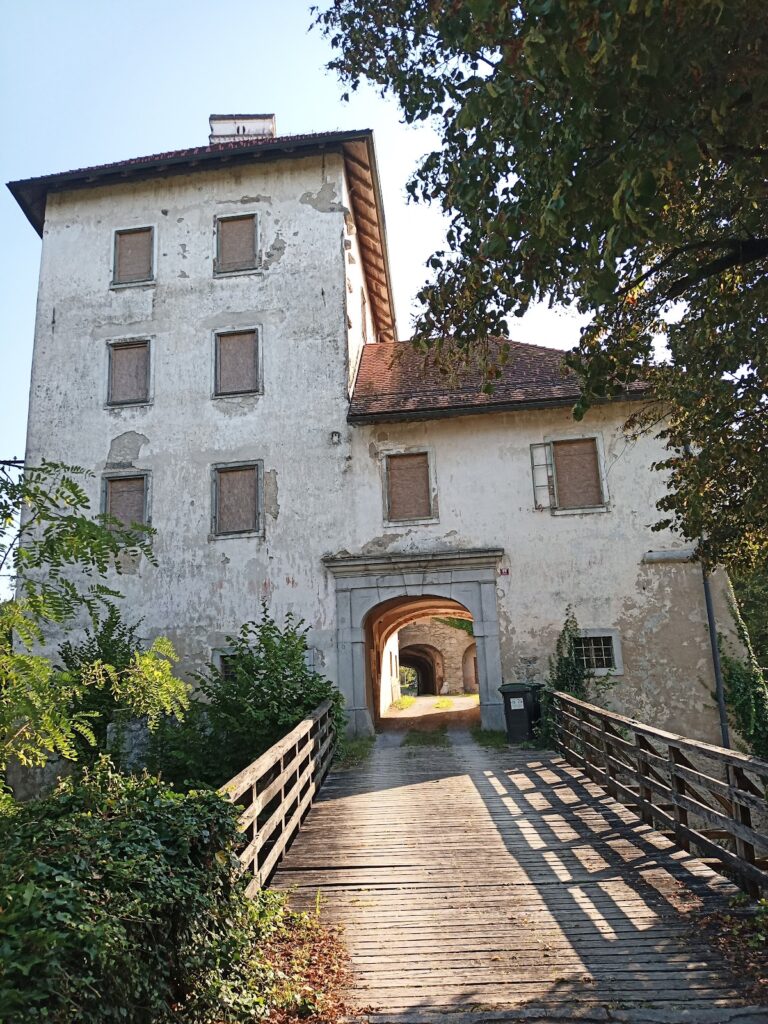
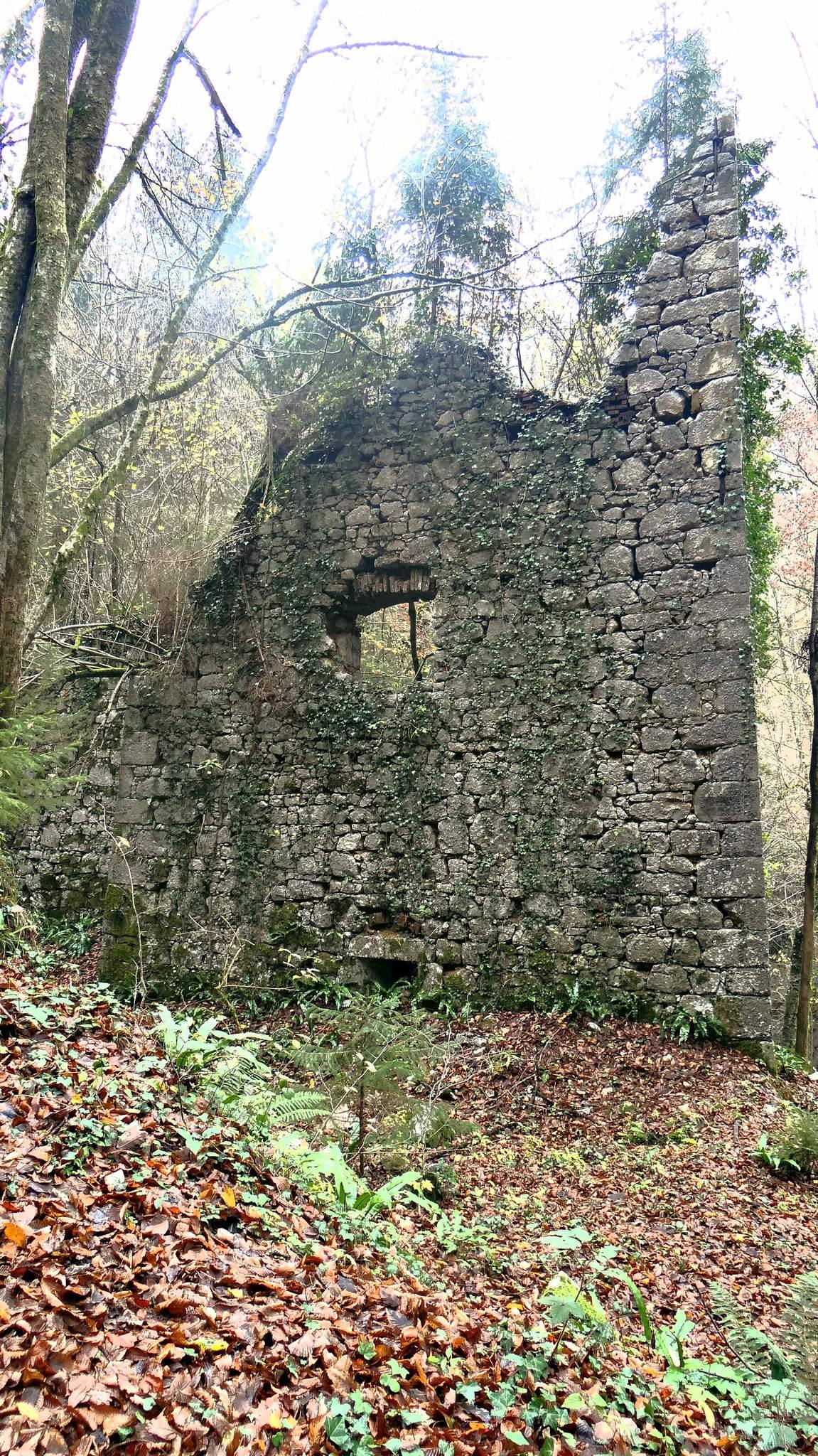
The ruins lie beneath the rock overhang of Lukenjska gora, above the source of the Prečna stream at Prečna near Novo Mesto. The surviving remains are relatively well preserved and show an original rectangular tower-like building. Partial remains of defensive towers also survive, preserving elements of the castle’s former fortified layout.
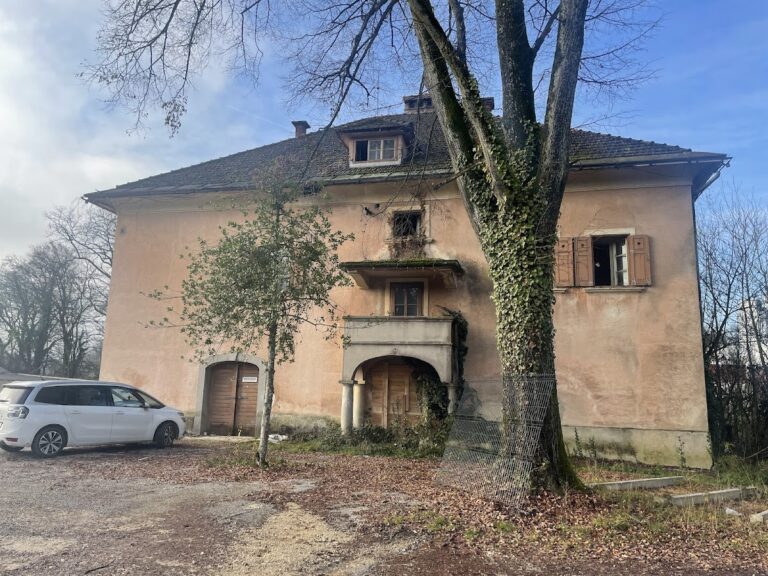
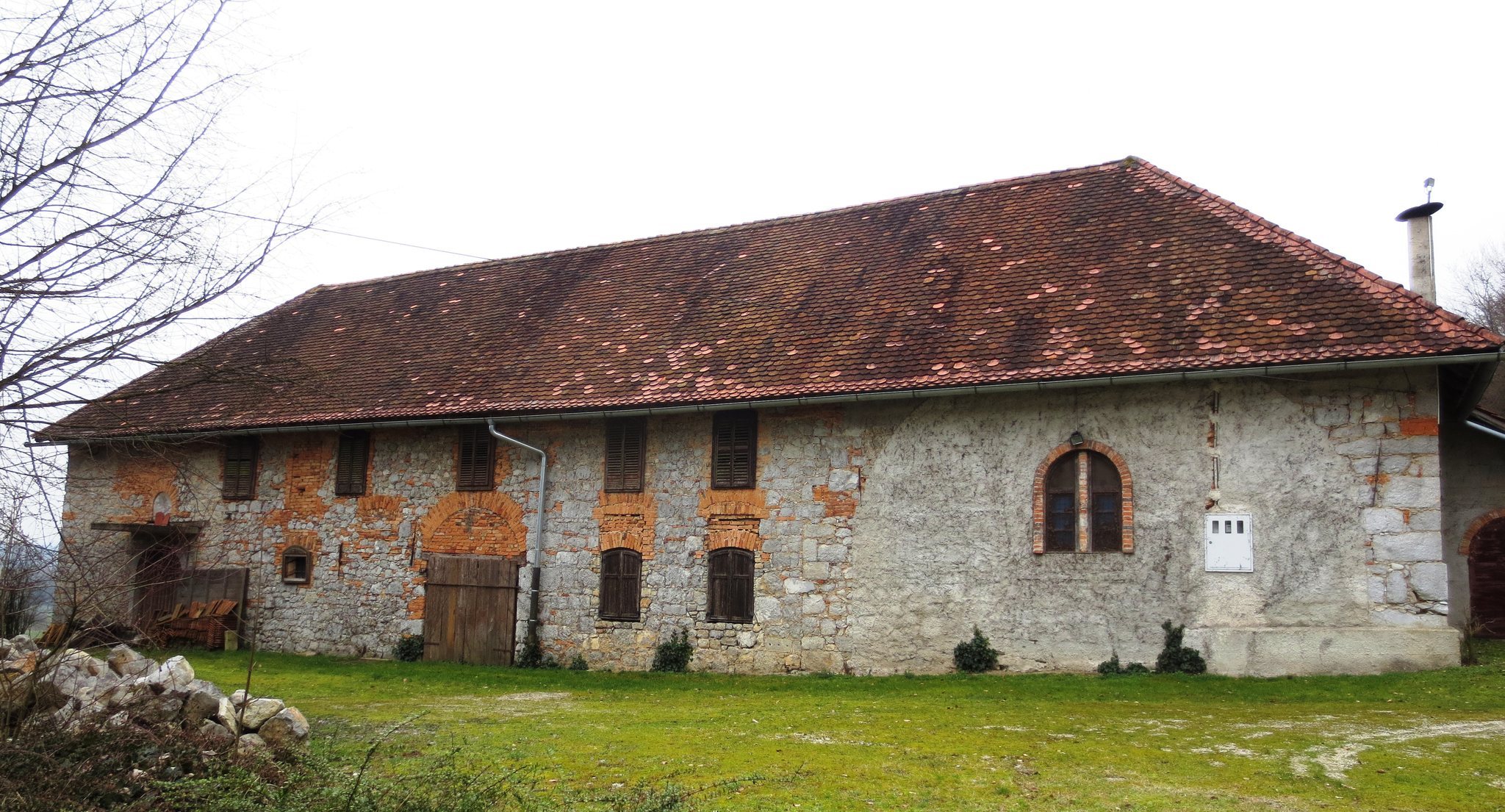
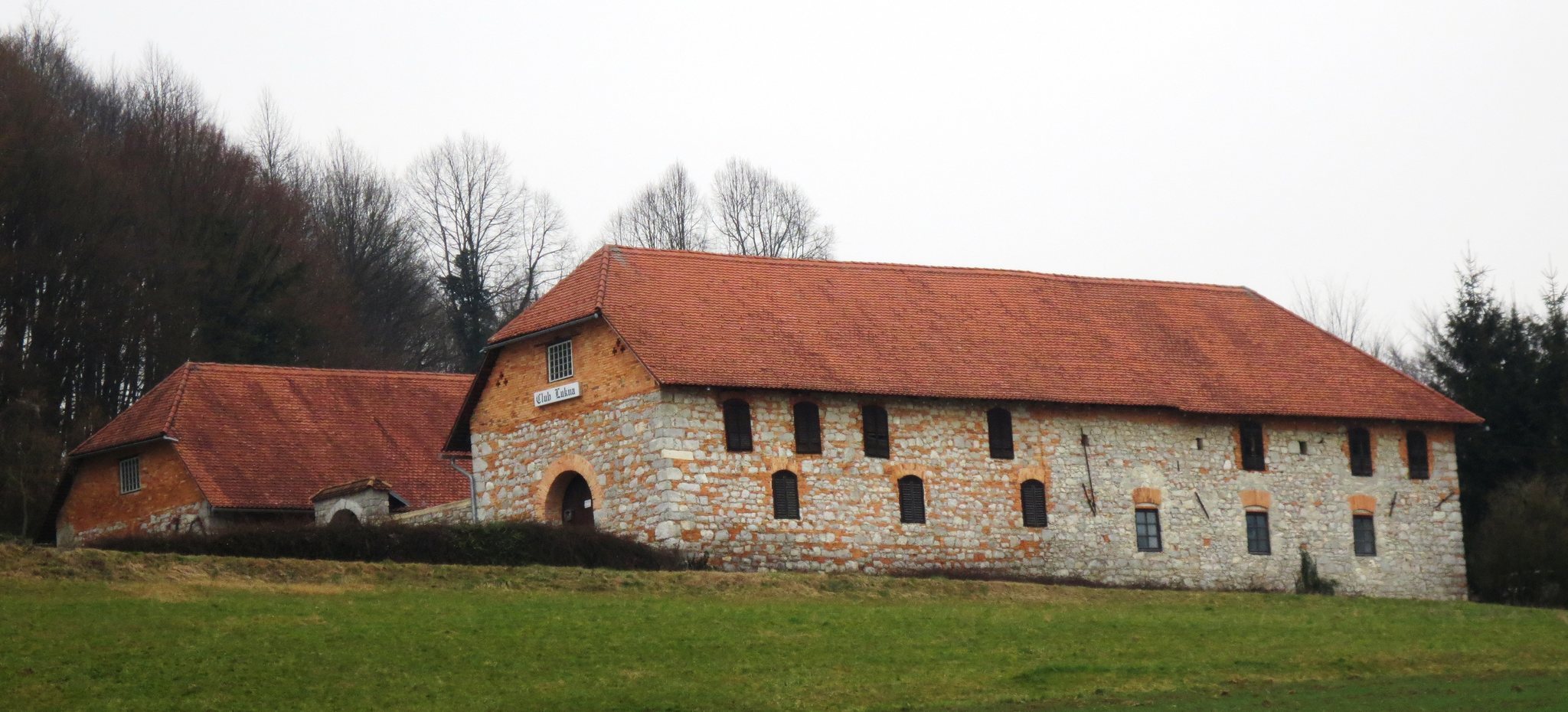
Nearby stands Marof, the preserved service farm belonging to Luknja Castle. Together with the castle ruins, it forms part of the surviving physical remains of the former estate.