Yoshigo Shell Mound: A Prehistoric Coastal Settlement in Japan
Site at a Glance
- Rating
- 4.1
- Popularity
- Low
- Country
- Japan
- Primary era
- Stone Age
- Eras represented
- Stone Age, Iron Age, Early Modern, Modern
- Civilizations
- Japanese, Jomon, Tokugawa, Yayoi
- Site type
- Settlement
On this page14 sections
History
Yoshigo Shell Mound is a prehistoric coastal settlement in Japan, dating from the later and final Jōmon period into the early Yayoi period. Its shell midden, an accumulation of discarded shells and other remains, is one of three major mounds on the Atsumi Peninsula. The site has particular importance in the study of Jōmon people.
Later land use
At the end of the Edo period, the Yasaki residence stood within the site. It was a retirement home for the 11th lord of Tahara Domain, a feudal territory, after he relinquished his official position. The area had reportedly been thickly wooded with pine before then. From the Meiji period onward, land around the mound was cleared and cultivated. The plateau was farmland by 1891, and fields of buckwheat, mulberry, and potatoes are described in early twentieth-century records.
Excavation and preservation
Archaeologist Kiyono Kenji of Kyoto Imperial University excavated the mound in October 1922 and March 1923. The discoveries included 302 human remains, bringing the site to wider attention and contributing substantially to research on Jōmon people.
After the Law for the Protection of Cultural Properties was promulgated in May 1950, the national government selected Yoshigo as its first archaeological site for excavation. In 1951, the Cultural Properties Protection Committee excavated the site, recovering 33 burials and materials important to Jōmon research. Yoshigo was designated a National Historic Site on December 26, 1951. Further investigations took place in 1983 and from 2001 through 2006. Between 1993 and 2000, the protected site and surrounding land were acquired for public ownership to support preservation and development. Yoshigo Shell Mound Remains Park and its museum opened in 2007, with the park established to preserve the site and encourage interest in local heritage.
Remains
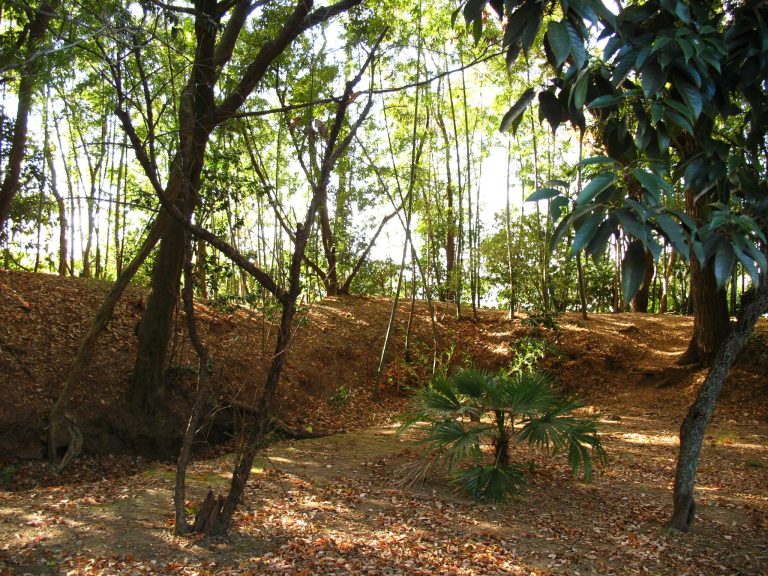
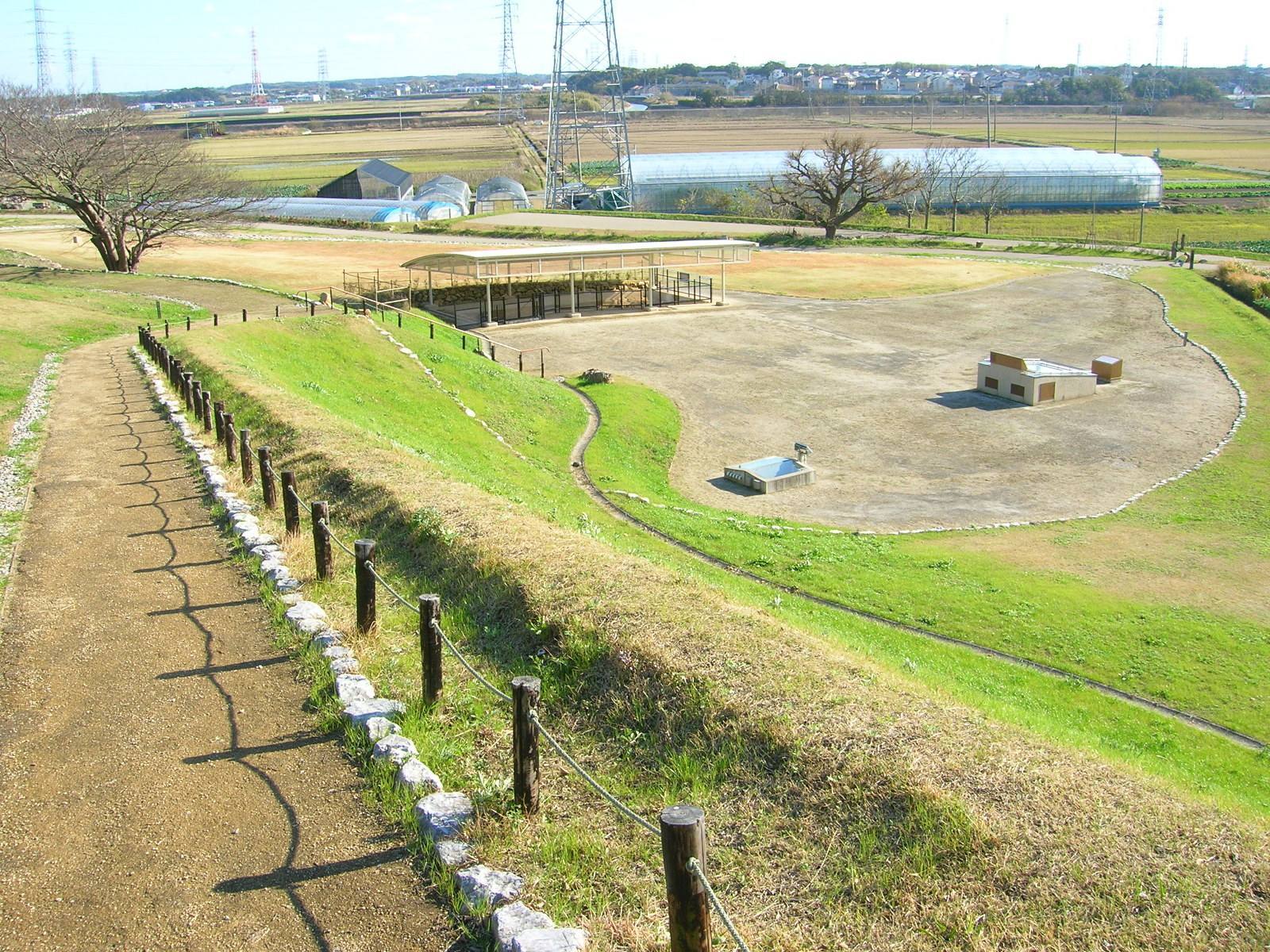
The mound occupies a gentle south-facing slope beside an estuary, facing Atsumi Bay. It lies in an alluvial area, land formed by water-deposited sediment, about six metres above present sea level. The protected area extends from the southern edge of the Yoshigo plateau down the slope, whose topography remains well preserved. The archaeological mound covers about 4,100 square metres and consists of one large shell midden and four smaller ones. The park covers 20,382 square metres.
Deposits and finds
Shell remains include several types of clams and oysters. Animal and fish remains include monkey, rabbit, fox, parrotfish, sea bass, and tuna. Broken bone tools, pottery fragments, stone tools, and other artifacts have also been found. These discoveries range in date from the Middle Jōmon period through the medieval period.
Cemetery and nearby dwellings
Cemetery
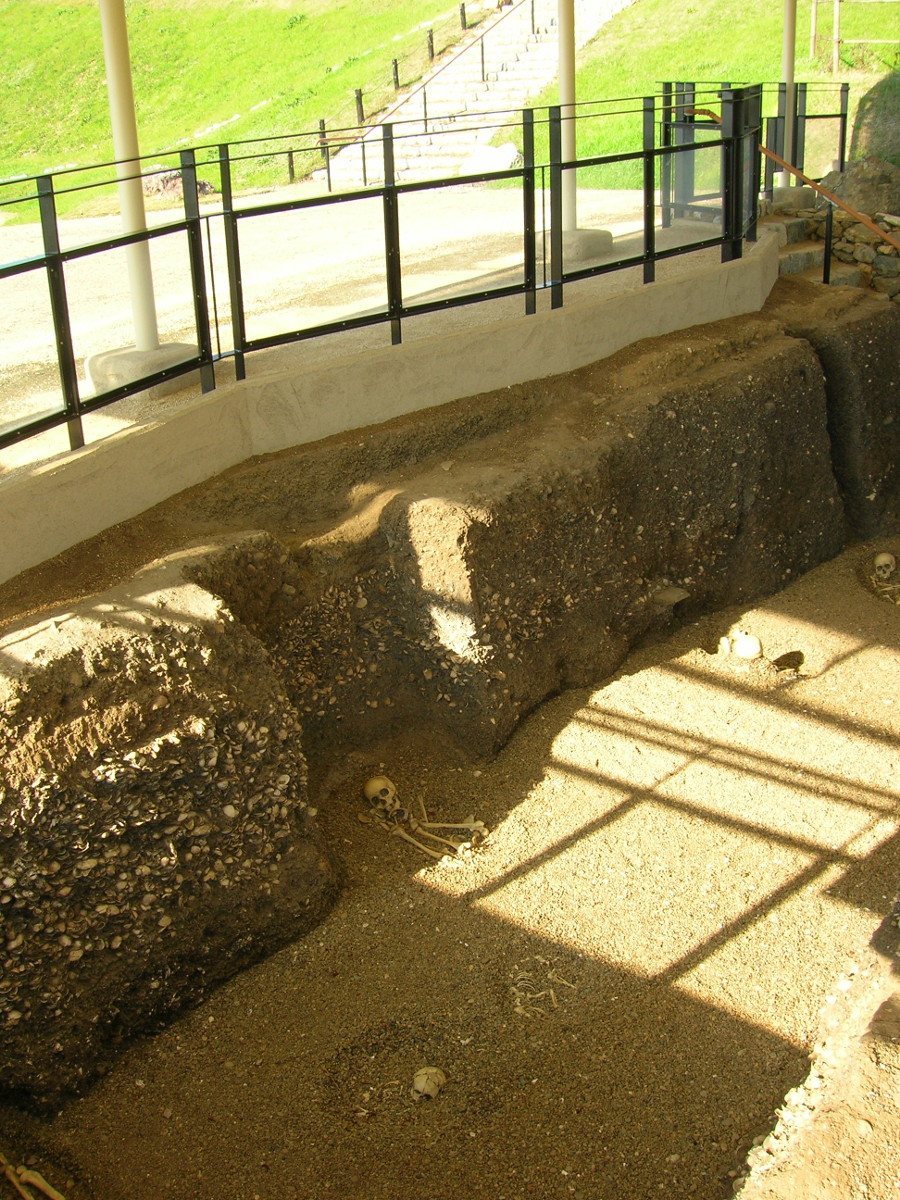
The large Jōmon cemetery has yielded more than 300 human remains. Recorded burials include 163 with the arms bent, known as flexed burials, 16 with the arms extended, and 42 placed in large pottery vessels, or jar burials. Flexed burials were much more common than extended ones. One burial joined an adult and a child. Many skulls show front teeth removed, and a dog burial was also found.
Nearby dwellings
Traces of several pit dwellings, structures built over floors dug into the ground, were found near the mound.
Park structures and preserved remains
Yoshigo Shell Mound Museum
The two-storey museum contains exhibition and hands-on learning rooms. Its displays include finds from the mound and models, with particular attention to the human remains.
Flat-display facility
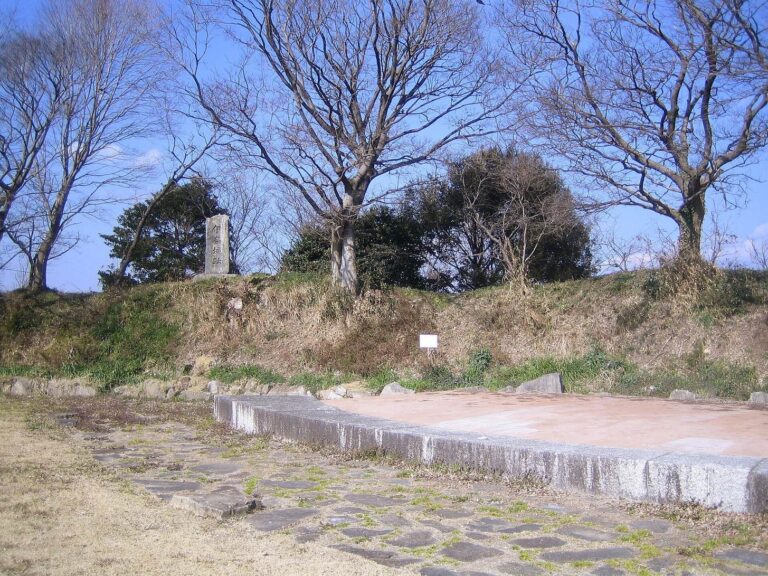
This facility preserves an excavated section of the midden and pottery in the condition in which they were found. The remains are arranged for viewing from above.
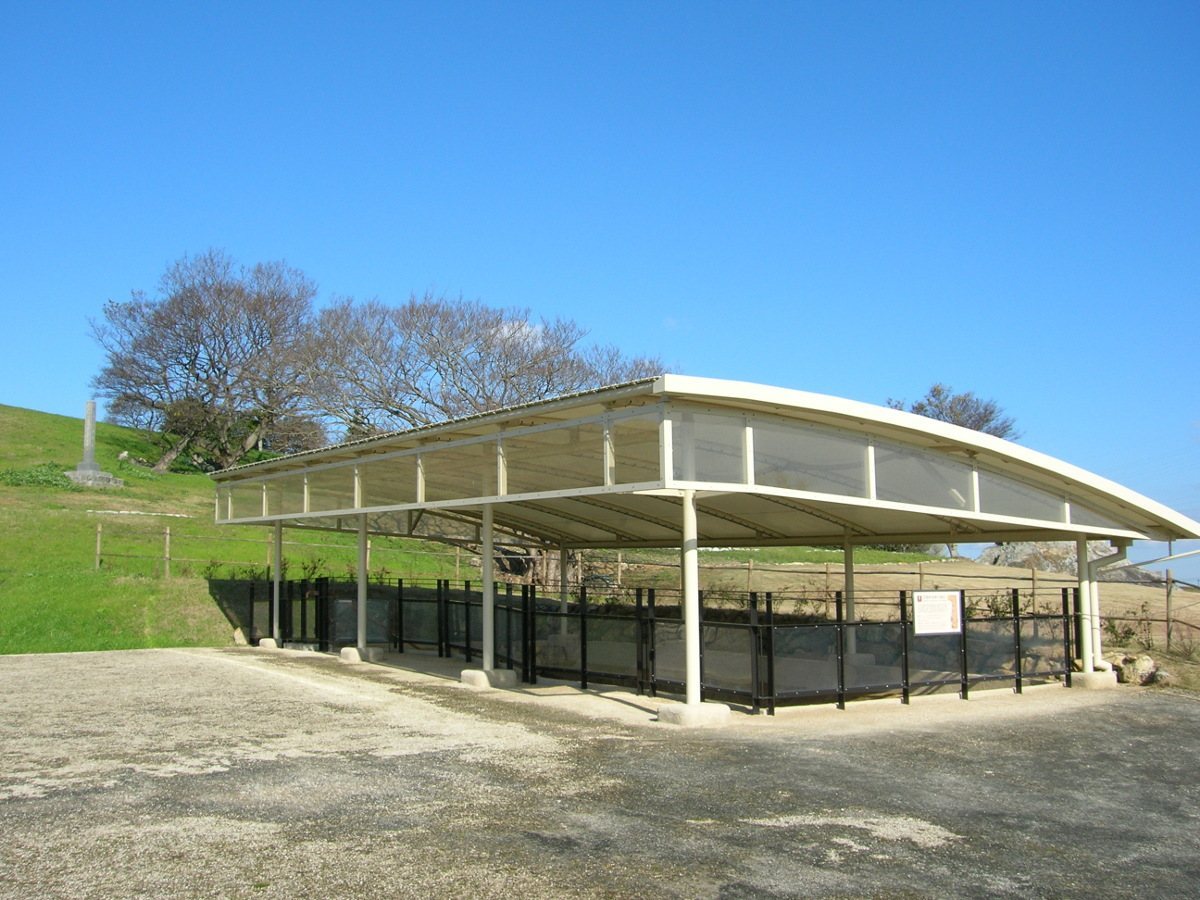
Section-display facility
A separate open-sided facility recreates the deposits and burial positions in the cemetery area excavated in 1951. Its open form makes the relationship between the midden and the surrounding terrain visible.
Outdoor activity area
A grassy area in the park is used for practical activities such as making fire and shaping stone tools.
Yasaki residence walls
Stone walls from the former Yasaki residence remain within the park.