Ina Castle: Headquarters of the Ina Honda Family
Site at a Glance
- Country
- Japan
- Primary era
- Medieval
- Eras represented
- Medieval, Modern
- Civilizations
- Ashikaga shogunate, Japanese, Tokugawa
- Site type
- Military
- Remains
- Castle
On this page8 sections
History
Ina Castle was a flatland fortification in Japan, built around 1440 by Honda Sadatada and another member of the Honda family. For about 150 years, it served as the headquarters of the Ina Honda family, a local branch of the Honda clan.
Changing regional rule
During the Bunmei era (1469–1487), the area came under the direct administration of the shogunate, Japan’s military government, headed by a shogun. Around 1526, the Makino clan held influence in the area. By about 1548, the Honda family had recovered its lands under the rule of the Imagawa clan.
Conflict and the Tokugawa crest tradition
In 1529, Matsudaira Kiyoyasu attacked Yoshida Castle and brought Tahara Castle under his control. Honda Masatada joined Kiyoyasu’s forces and helped them succeed, then hosted him at Ina Castle. A tradition says Masatada served food on leaves gathered beside the castle pond. Kiyoyasu, taking this as a favorable sign, asked to use the Honda family’s standing hollyhock emblem as the Matsudaira family crest. The story connects that choice with the crest later used by the Tokugawa family, which emerged from the Matsudaira house.
Between 1558 and 1570, the Iwase clan attacked the castle, but its defenders turned them back at the willow embankment. In 1563, the Imagawa ordered the Honda family to secure the castle’s entire territory and promised to restore their original lands and provide further support through land grants. The following year, Honda Tadatsugu became subordinate to Tokugawa Ieyasu, founder of the Tokugawa shogunate, as Ieyasu advanced into eastern Mikawa.
Abandonment and later history
In 1590, Ieyasu was transferred to the Kanto region, and the Ina Honda family was moved to Shimosa, a historical province in eastern Japan. The castle was abandoned and remained in ruins for centuries.
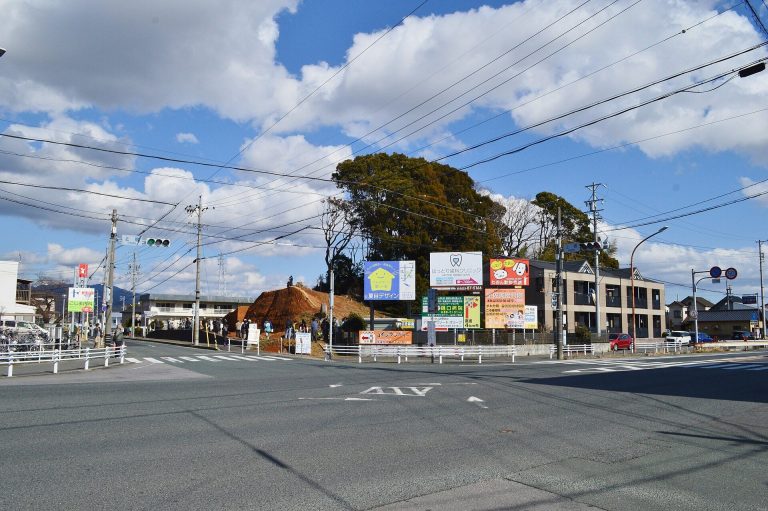
In 1997, the local municipality designated the site a historic site and developed it as a park.
Remains
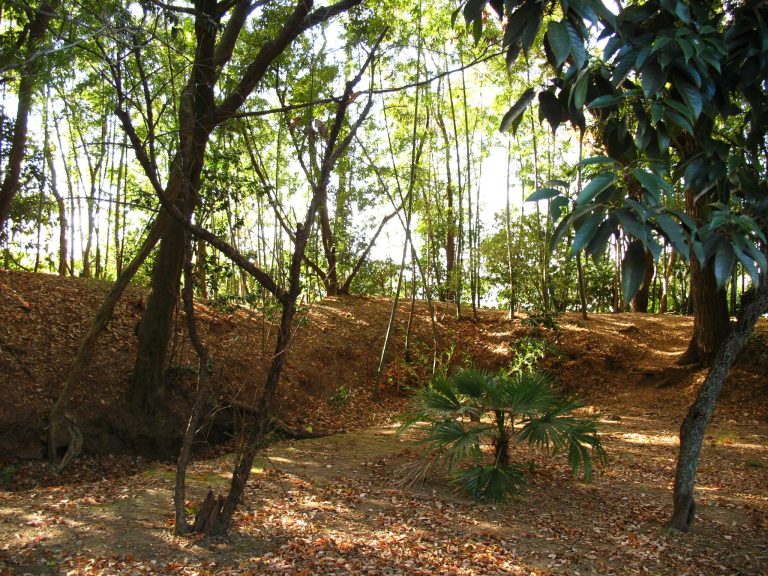
The castle occupied wetland and rice-paddy terrain, with rivers along three sides of its precinct and an inlet on the fourth. Its principal enclosure had a square residential plan, enclosed by earthen ramparts. The waterways were said to have allowed boats to travel from the river mouth to the castle town, bringing supplies from Mikawa Bay.
Enclosure and defenses
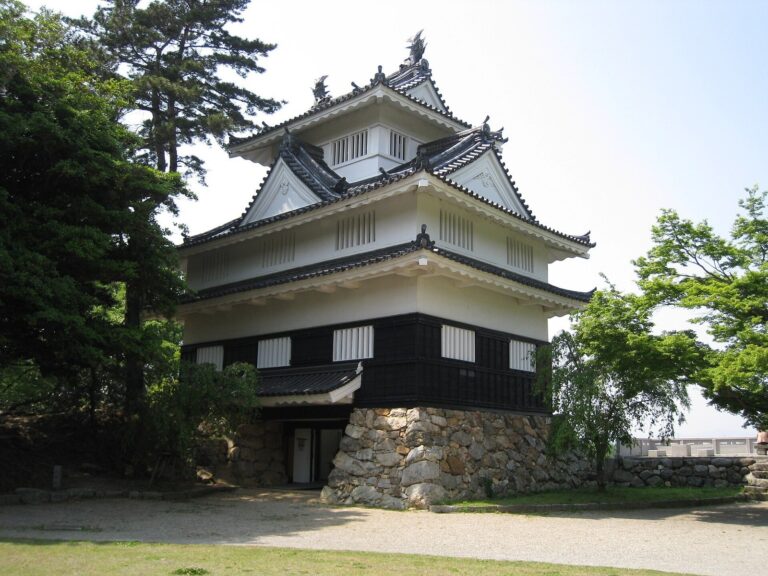
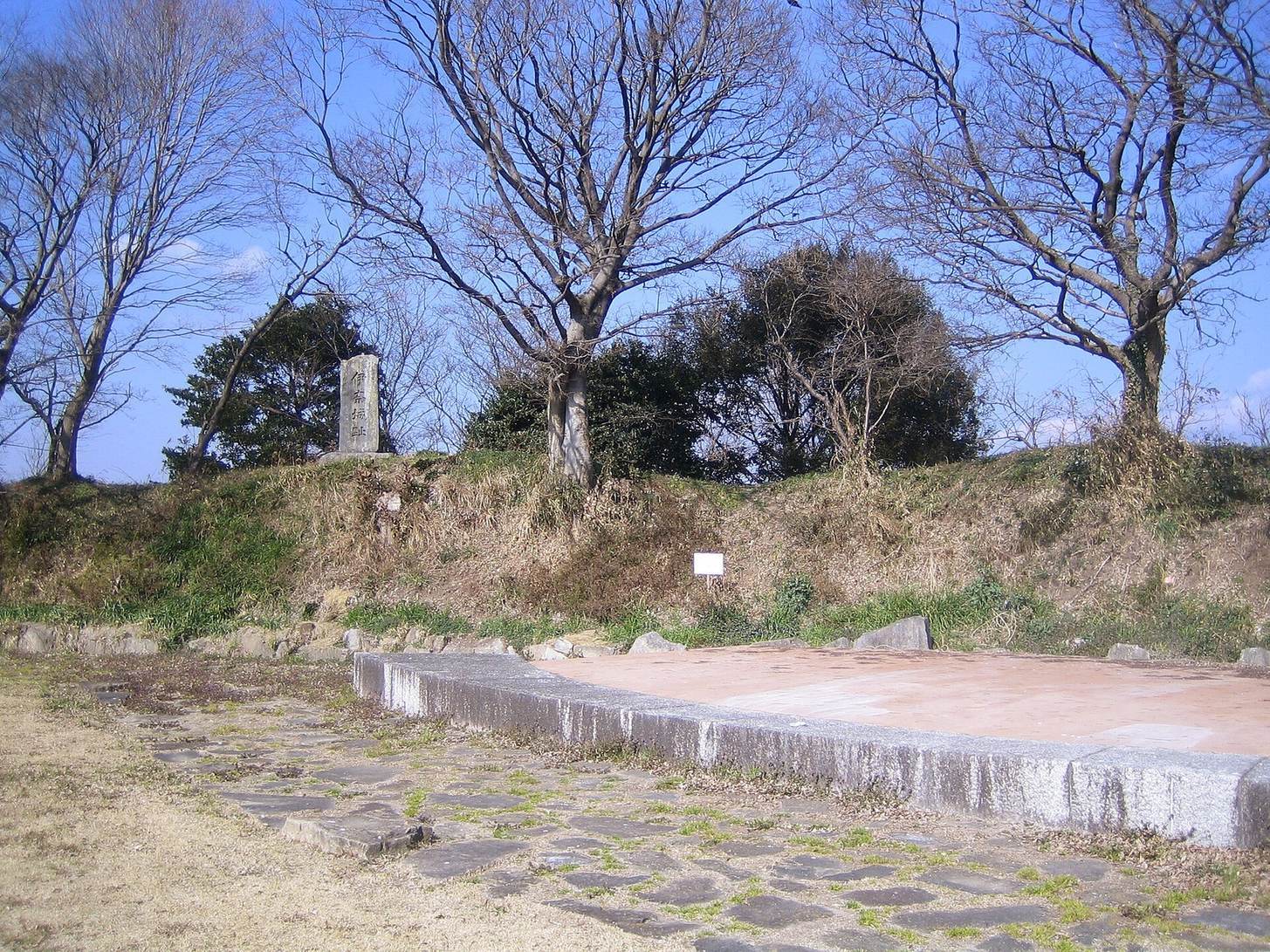
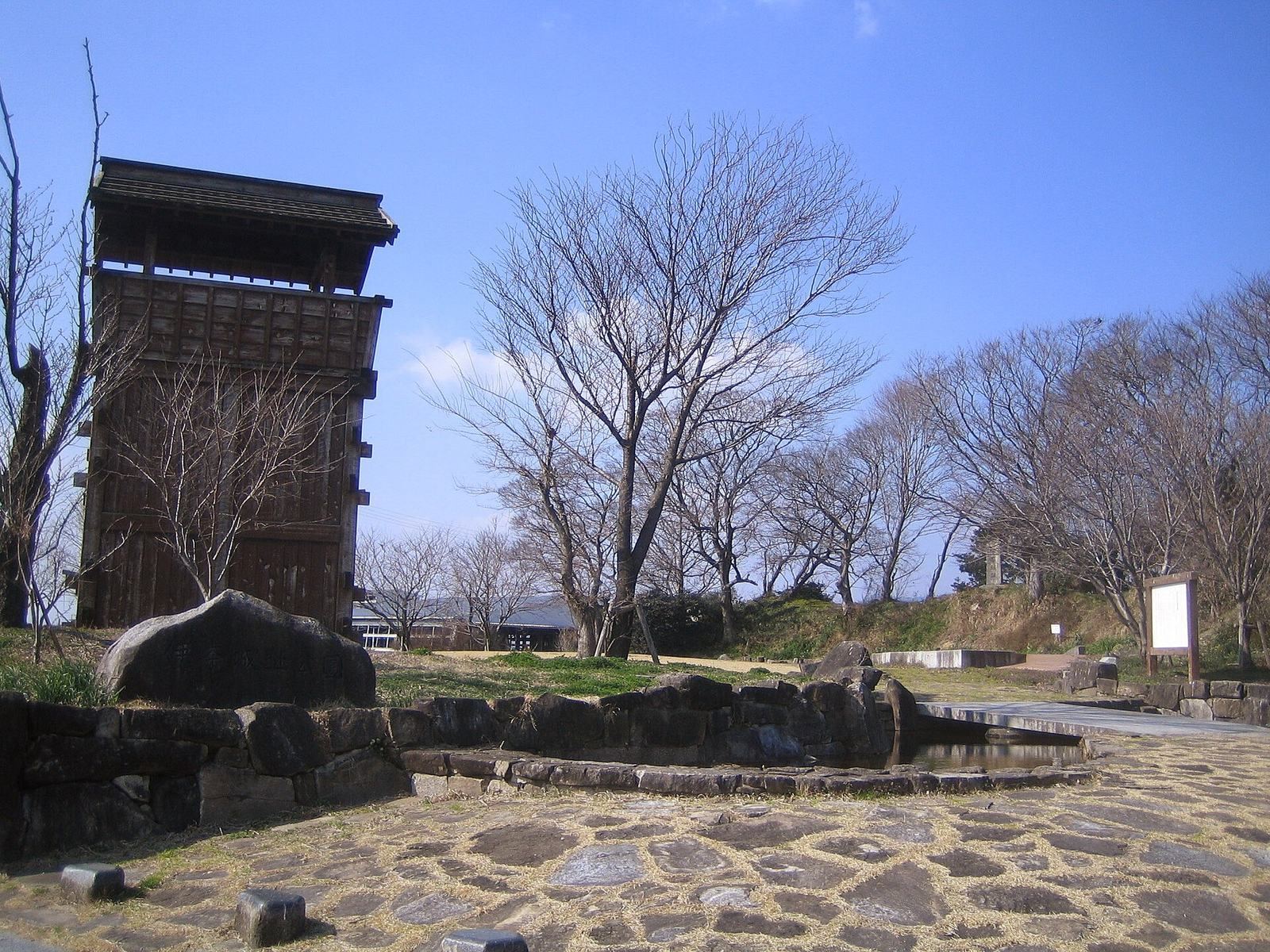
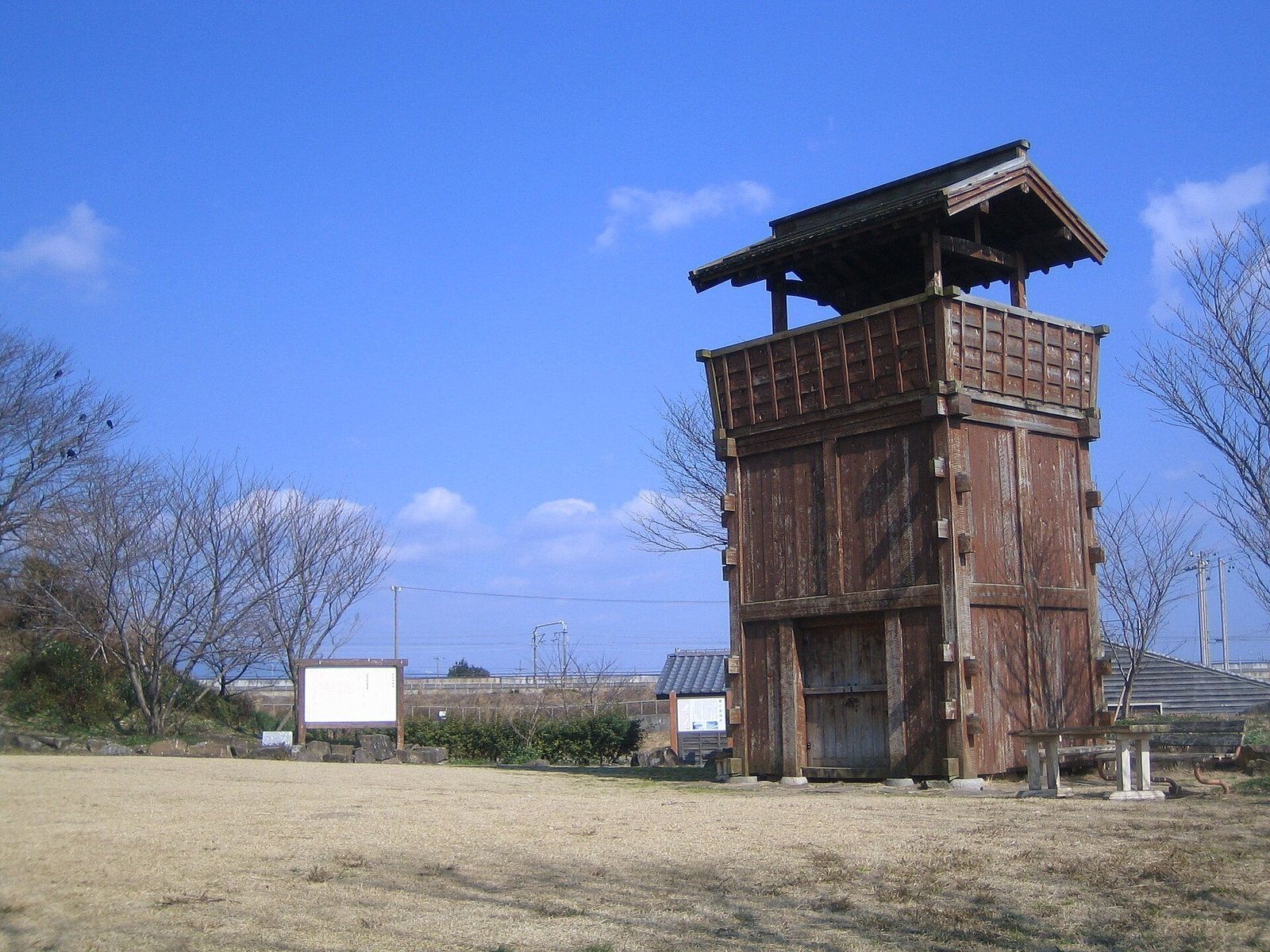
The main enclosure had three watchtowers on its ramparts and a cremation facility within its boundaries. Smaller enclosures adjoined it. At the southern entrance, an outer defensive structure stood before the gate and connected with a castle road leading to a residence to the south. Traces of enclosures and the northern rampart survive. Archaeological investigations in 1994 identified a moat, an abatis (a defensive barrier made from felled trees or branches), and foundation stones. During park development, features modeled on excavated remains, including the moat and abatis, were installed, along with a replica watchtower.
Flower Pond and monuments
Flower Pond, also called Hollyhock Pond, lies within the castle precinct. A stone monument erected there in 1813 stands in the water. Another stone monument, raised on the rampart in 1913, commemorates the 350th death anniversary of an Ina Honda lord. Its front bears calligraphy by a former lord of the Zeze Domain.
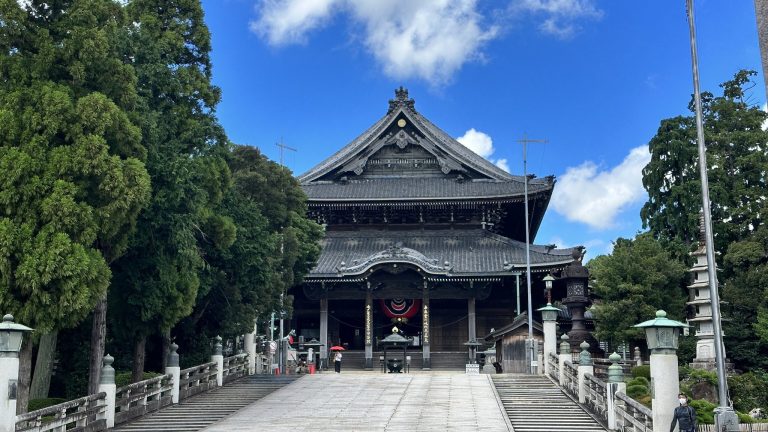
The former castle gate
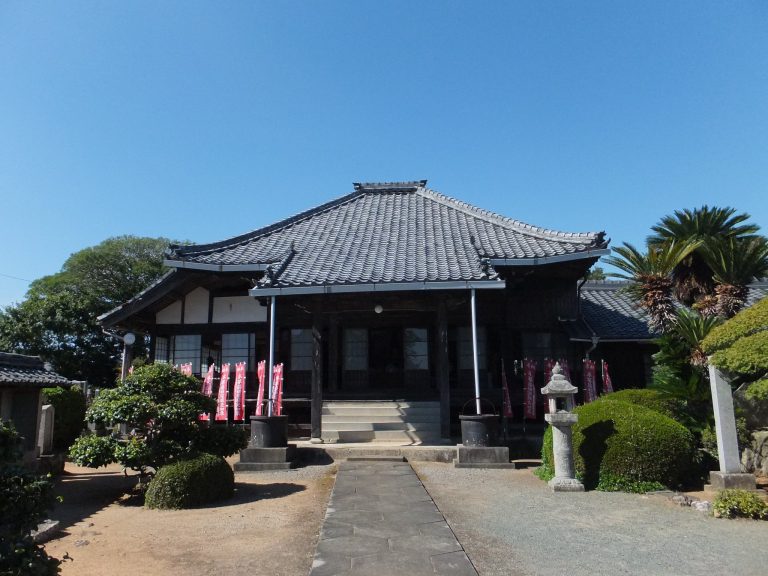
Tradition holds that the castle gate was first transferred to the Ina Honda family’s mortuary temple and later moved to another temple.